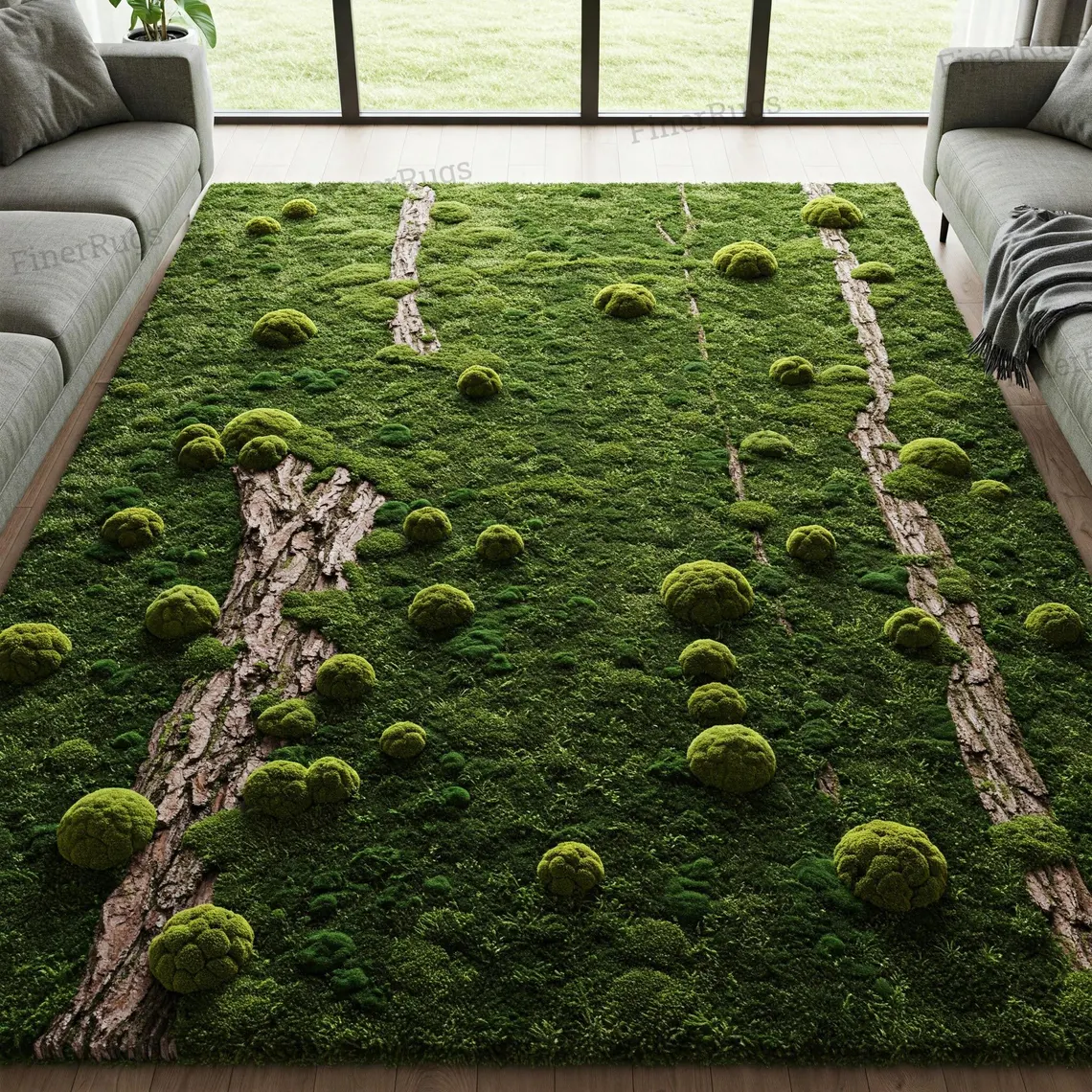
Your home’s environmental impact extends beyond solar panels and recycling bins—it reaches down to what you’re walking on every day.
Modern homeowners are increasingly seeking ways to bring nature indoors, driven by mounting evidence that natural elements reduce stress, improve air quality, and boost overall well-being. This biophilic design movement has sparked intense interest in “moss rugs,” but here’s the problem: the market is flooded with vastly different products all claiming the same “moss rug” label.
From living ecosystems that actively purify your air to synthetic alternatives made from recycled ocean plastic, the choices vary dramatically in their environmental impact, maintenance needs, and the authentic “forest floor” sensation you’re seeking.
Imagine stepping barefoot onto a surface that feels like walking through a pristine forest—soft, cool, and naturally grounding. Now imagine that same surface actively cleaning your home’s air while requiring minimal environmental resources to maintain.
This guide cuts through the marketing confusion to help you choose the most eco-friendly moss rug that truly delivers that soft, natural underfoot sensation you’re craving.
Decoding the Four Types of “Moss Rugs”
The term “moss rug” has become dangerously broad, leading to consumer confusion and mismatched expectations. Here’s what you’re actually choosing between:
1. Live Moss Rugs: Actual Living Ecosystems
Real moss plants attached to breathable, waterproof bases—essentially bringing a piece of the forest floor indoors.
2. Preserved Moss Rugs: Treated Natural Moss
Genuine moss treated with non-toxic solutions to maintain appearance and texture without requiring water or sunlight.
3. Faux Moss Rugs: High-Quality Synthetics
Artificial rugs designed to mimic moss appearance, often made from recycled materials with eco-certifications.
4. Textile “Moss Green” Rugs: Traditional Fiber Rugs
Conventional rugs in moss-inspired colors and textures, made from natural or synthetic fibers.
Live Moss Rugs: The Ultimate Natural Experience
Construction That Mimics Nature
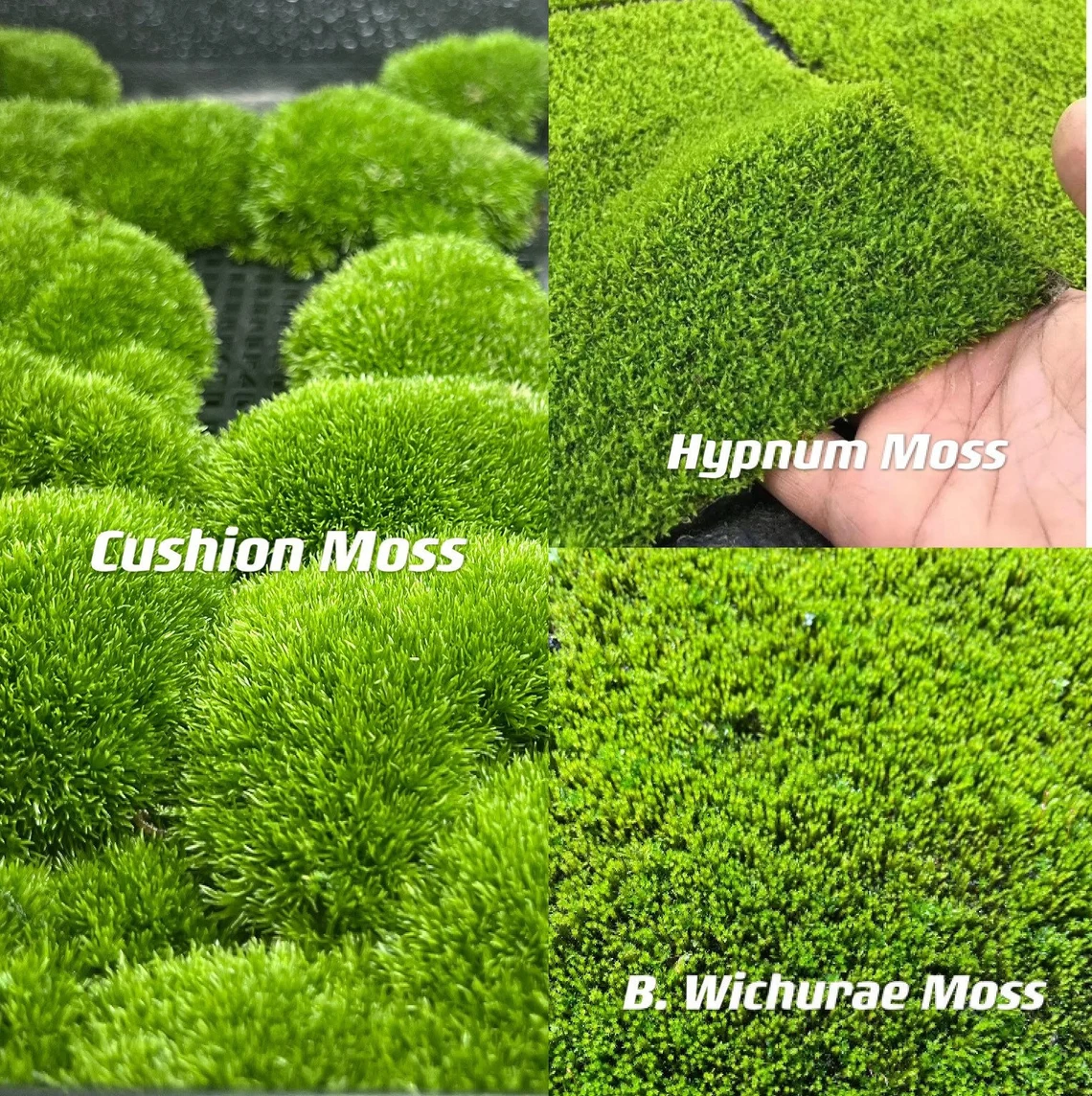
Live Clean and High quality planted Sheet Moss [click to view…]
Live moss rugs represent the pinnacle of authentic natural design. Companies like MountainMoss create “Moss Mats” by carefully attaching varieties like Sheet moss or Sphagnum moss to black landscaping fabric using biodegradable adhesives. This fabric serves dual purposes: weed barrier and moisture retention.
The base materials typically include:
- Waterproof yet breathable substrates (teak, bamboo)
- Open-weave materials for proper drainage
- Biodegradable adhesives like Moss Tac
The Unmatched Sensory Experience
Walking on a live moss rug delivers what enthusiasts describe as “strolling on a cloud” or stepping onto a “cushy forest floor.” The sensation is distinctly soft and cool, providing:
- Enhanced proprioception through dense nerve ending stimulation in your feet
- Psychological grounding similar to Japanese “forest bathing” (Shinrin-yoku)
- Dynamic, evolving texture that changes with humidity and growth
- Natural temperature regulation through the moss’s moisture content
This isn’t just about comfort—it’s about reconnecting with nature in a profound, therapeutic way that synthetic alternatives simply cannot replicate.
Active Environmental Powerhouse
Live moss rugs function as miniature ecosystems, delivering measurable environmental benefits:
Air Purification:
- Actively absorb pollutants including particulate matter and nitrogen oxides
- Large surface area provides superior filtering capacity
- Some cities use moss walls for urban air quality improvement
Carbon Sequestration:
- Absorb CO2 through photosynthesis
- Sphagnum moss particularly effective, storing carbon for thousands of years when it becomes peat
Water Management:
- Retain large quantities of water for extended periods
- Can reduce surface runoff by up to 71.4%
- Filter and purify water naturally
The Maintenance Reality Check
Live moss rugs demand commitment:
Daily Requirements:
- Regular misting (every few days minimum)
- Indirect sunlight or low-light conditions
- Consistent humidity management
- Protection from direct heat sources
Traffic Limitations:
- Most varieties tolerate only light foot traffic
- Sheet moss and Irish moss offer slightly better durability
- Heavy traffic areas require separate walkways
Environmental Sensitivity:
- Temperature fluctuations can cause dormancy or death
- Direct sunlight causes rapid drying and color loss
- Risk of mold or pests if moisture management fails
Cost Considerations:
- Initial investment: approximately $720 for 36 square feet
- Ongoing maintenance time and water costs
- Potential replacement if care requirements aren’t met
Preserved Moss: Natural Beauty Without the Commitment
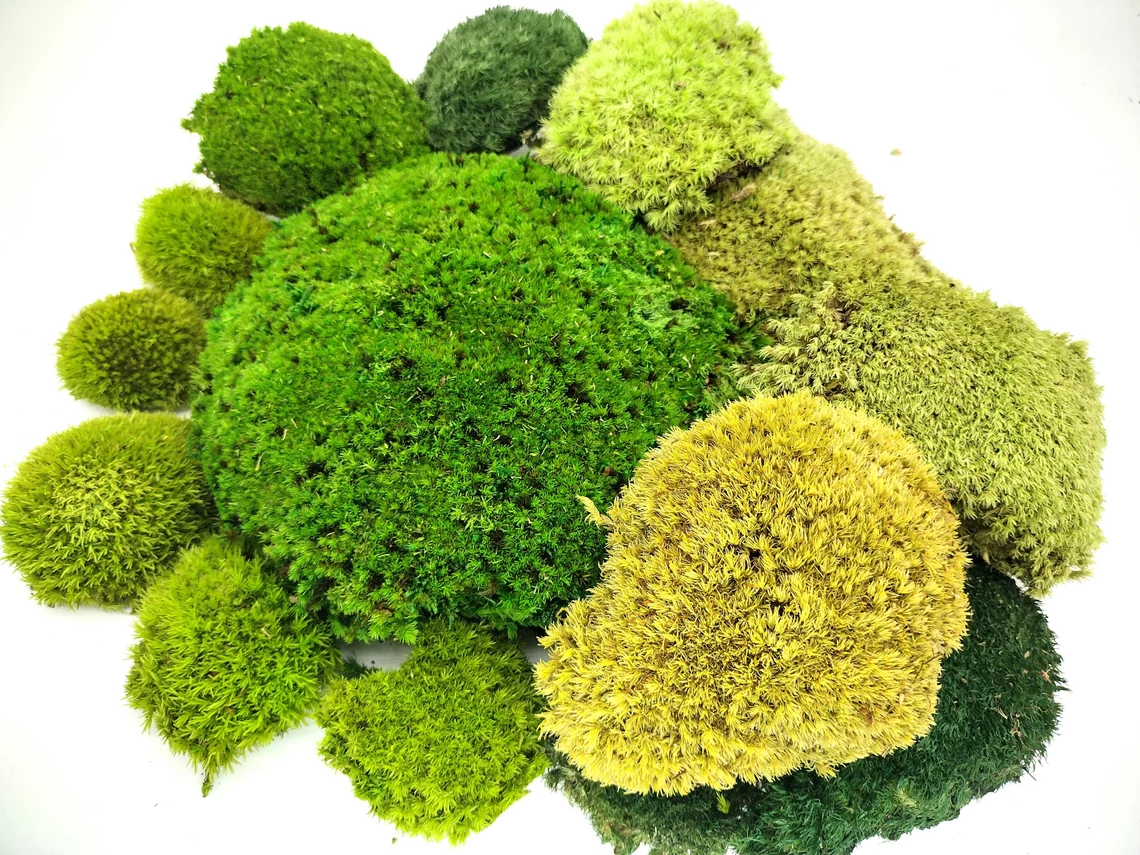
Preserved Pincushion Moss [click to view…]
The Preservation Science
Preserved moss undergoes a specialized treatment process that removes chlorophyll and replaces it with natural food coloring and non-toxic glycerine solutions. This transformation maintains the moss’s:
- Natural appearance and vibrant colors
- Soft, flexible organic texture
- Original structural integrity
Common varieties include reindeer moss, sheet moss, pole moss, and mood moss, typically sourced from sustainable forest harvests.
Static Yet Satisfying Sensory Experience
Preserved moss retains its “velvety soft” feel and intricate natural textures, providing:
- Visual connection to nature without active growth
- Pleasant tactile experience through retained softness
- Calming aesthetic with sophisticated natural colors
- Consistent texture that doesn’t change with conditions
However, it lacks the dynamic, living sensation—the subtle coolness, moisture, or evolutionary feel of live moss.
Passive Environmental Benefits
Preserved moss offers “passive sustainability”:
Resource Conservation:
- Zero water requirements post-installation
- No fertilization or special lighting needed
- Significantly reduced carbon footprint from ongoing maintenance
Sustainable Sourcing:
- Ethical harvesting practices protect natural ecosystems
- 100% natural, often compostable base materials
- Non-toxic preservation treatments
Longevity Factor:
- Lifespan of 5-10 years with proper care
- Reduces replacement frequency compared to living alternatives
Environmental Limitations
Unlike live moss, preserved varieties provide no:
- Air purification capabilities
- Oxygen production
- CO2 sequestration
- Indoor humidity regulation
Care Requirements and Challenges
Minimal Maintenance:
- Occasional dusting with soft brush or compressed air
- No watering, pruning, or lighting needs
- Protection from direct heat and sunlight
Environmental Sensitivities:
- Humidity below 40% causes brittleness
- Temperature fluctuations affect longevity
- Direct sunlight causes fading and drying
- Not inherently fire retardant (safety concern)
Cost Range:
- Small art pieces: $130-$170
- Larger installations: $149-$699
Synthetic and Textile Options: Practical Eco-Solutions
Material Innovation and Certifications
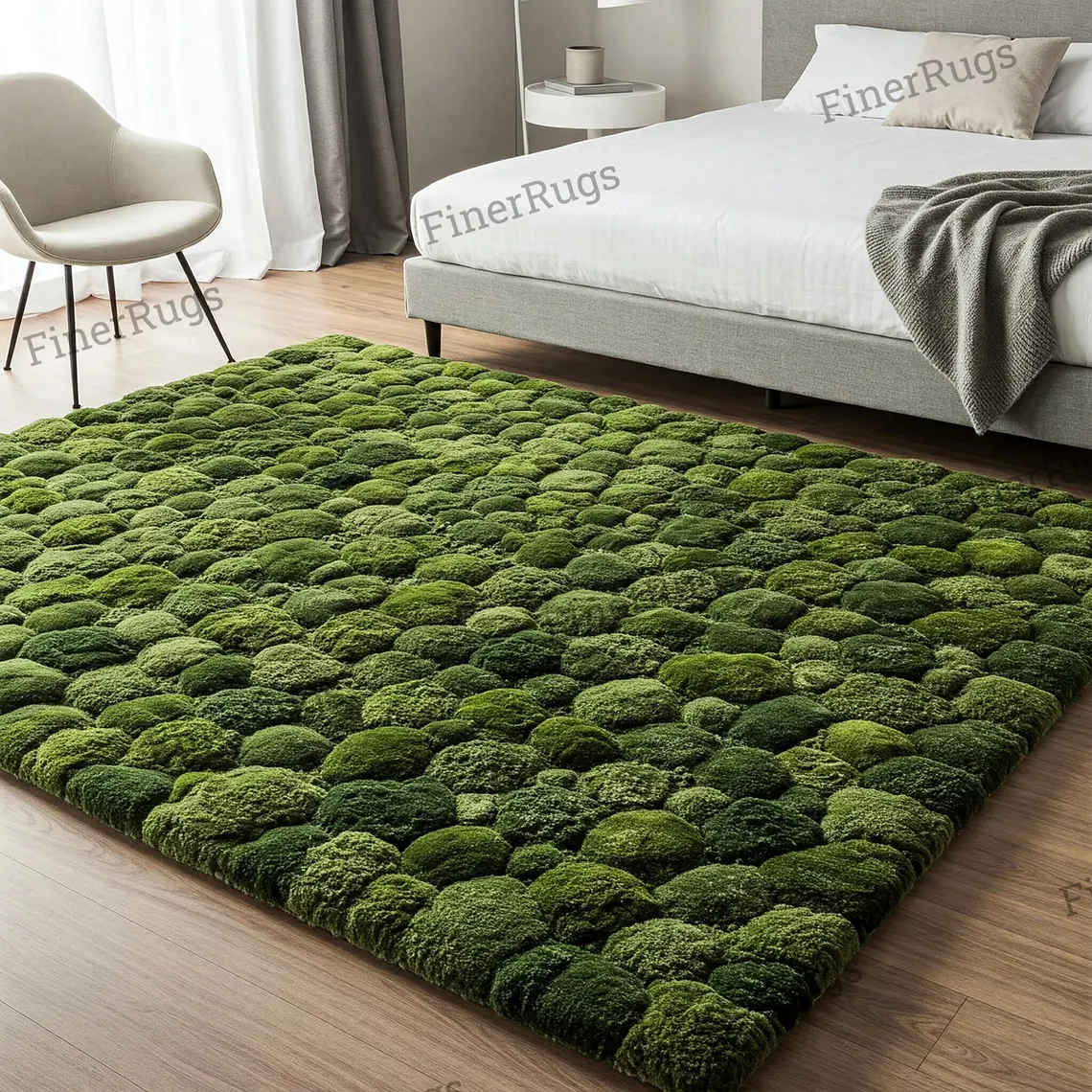
Moss Rug Hand Tufted With Natural Wool [click to view…]
Modern faux and textile moss rugs represent sophisticated approaches to sustainable manufacturing:
Synthetic Options:
- Low-density polyethylene (LDPE) with UV resistance
- Recycled ocean plastic (ECONYL® yarn)
- Non-toxic, eco-friendly manufacturing processes
Natural Fiber Alternatives:
- 100% New Zealand wool (naturally fire-resistant, biodegradable)
- Inherent dirt resistance and hypoallergenic properties
- Sustainable sourcing with minimal environmental impact
Certification Standards to Seek
When choosing synthetic or textile options, prioritize these eco-credentials:
- OEKO-TEX STANDARD 100: Safer chemical usage
- Cradle to Cradle Certified: Circular economy principles
- B Corp Status: Comprehensive environmental and social responsibility
- ECONYL® Yarn: Made from regenerated waste materials
Industrial Sustainability Approach
These options redefine “eco-friendly” through:
Responsible Manufacturing:
- Chemical safety throughout production
- Reduced water usage in processing
- Energy-efficient production methods
End-of-Life Considerations:
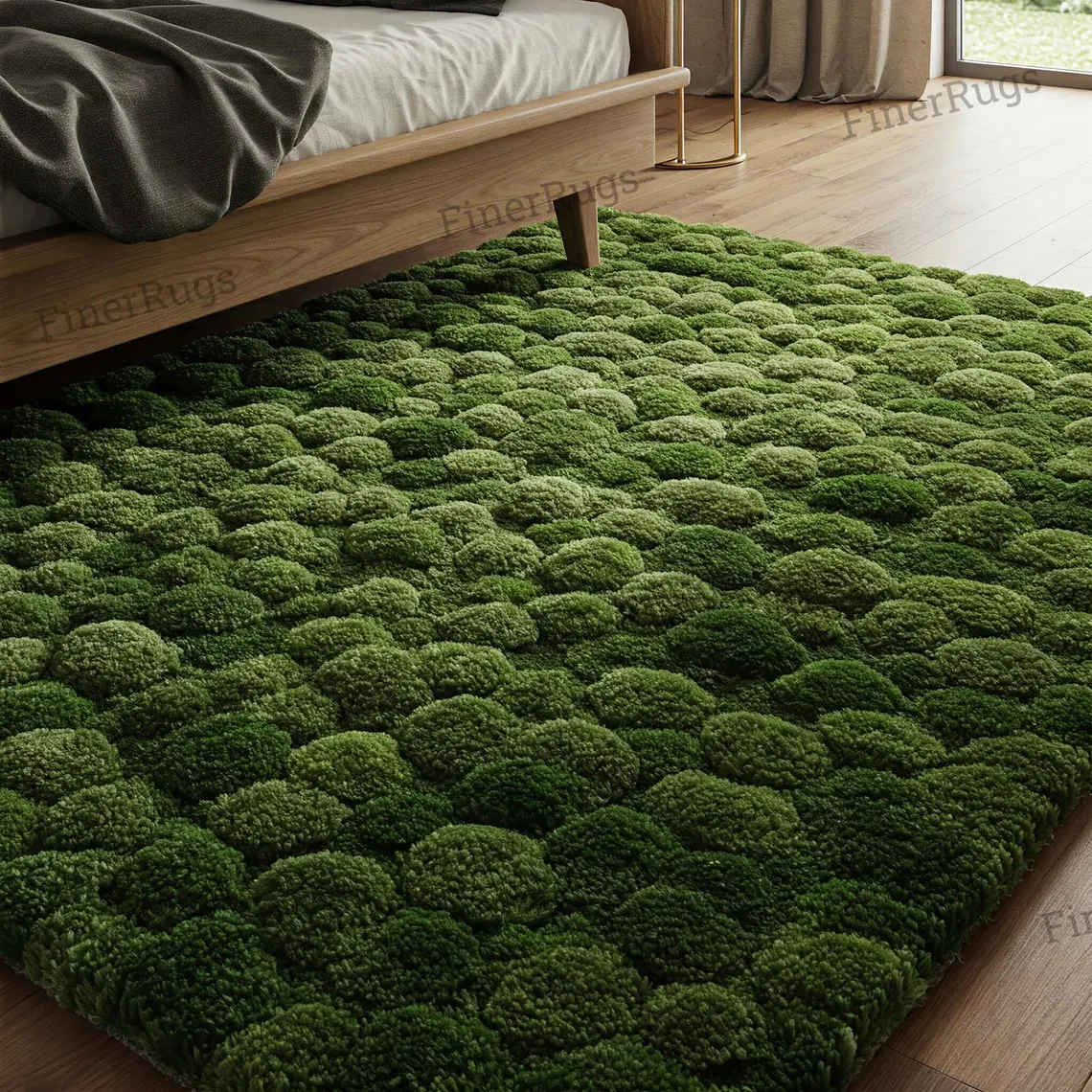
Moss Ball Wool Area Rug [click to view…]
- Natural fibers: completely biodegradable
- Synthetic options: recyclable with proper infrastructure
- Extended product life reduces replacement frequency
Practical Advantages
Durability and Maintenance:
- High-traffic tolerance for busy households
- Machine washable and dryer safe options
- Natural stain resistance (especially wool)
- Water and stain-resistant treatments available
Versatility:
- No humidity or lighting requirements
- Suitable for any indoor environment
- Wide range of designs and textures
- Immediate installation without acclimation period
Cost Efficiency:
- Lower initial investment ($29-$39 for small rugs)
- Minimal ongoing maintenance costs
- Extended lifespan reduces long-term expenses
The Eco-Friendly Verdict: Your Personalized Choice
Comparative Analysis: At-a-Glance Decision Matrix
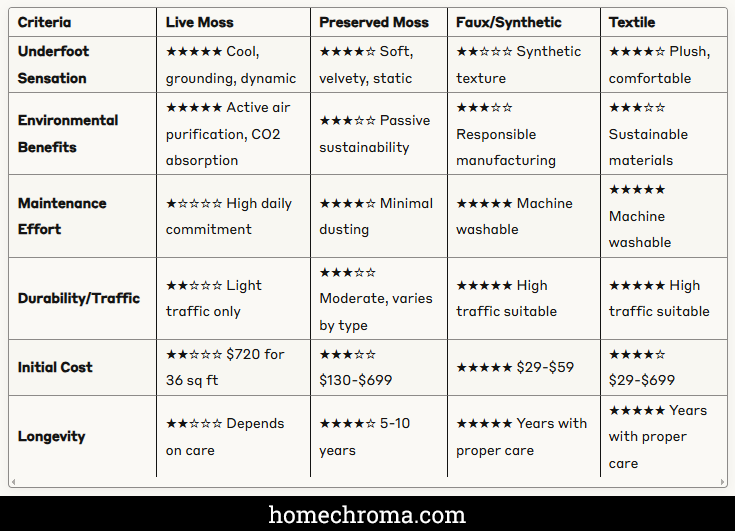
Tailored Recommendations: Finding Your Perfect Match
Choose Live Moss If You:
- Prioritize authentic connection to nature above all else
- Have time for daily maintenance and environmental monitoring
- Want active air purification and CO2 absorption
- Plan to use in low-traffic areas (bathrooms, meditation spaces)
- Value the therapeutic benefits of biophilic design
- Best for: Dedicated nature enthusiasts willing to commit to plant care
Choose Preserved Moss If You:
- Want natural appearance without maintenance demands
- Appreciate authentic moss texture and visual appeal
- Have stable indoor humidity (above 40%)
- Prefer passive sustainability over active benefits
- Need moderate durability with occasional use
- Best for: Aesthetic-focused homeowners seeking natural beauty with minimal effort
Choose Faux/Synthetic If You:
- Prioritize practicality and easy maintenance
- Need high durability for frequent use
- Want modern eco-certifications and recycled materials
- Have budget constraints but still want quality
- Live in environments unsuitable for natural moss
- Best for: Practical households needing reliable, low-maintenance solutions
Choose Textile “Moss” If You:
- Want maximum comfort and plushness underfoot
- Need traditional rug functionality with moss aesthetics
- Prefer natural fibers like wool for health benefits
- Require machine-washable convenience
- Seek long-term durability with minimal replacement
- Best for: Families wanting comfort, convenience, and traditional rug benefits
The True Cost of Ownership
When evaluating eco-friendliness, consider the total lifecycle impact:
Live Moss:
- High initial cost + ongoing water/maintenance + potential replacement = Variable total cost
- Maximum environmental benefit if properly maintained
- Risk of higher footprint if care fails and replacement needed
Preserved Moss:
- Moderate initial cost + minimal ongoing expenses + 5-10 year lifespan = Predictable medium cost
- Passive environmental benefit through reduced resource consumption
- Stable environmental footprint over extended period
Synthetic/Textile:
- Low-moderate initial cost + minimal maintenance + extended lifespan = Lowest total cost
- Environmental benefit through responsible manufacturing and durability
- Consistent, long-term sustainable choice
Conclusion: Cultivating Your Green Sanctuary
The quest for the “most eco-friendly moss rug” isn’t about finding a single perfect solution—it’s about aligning your environmental values with your lifestyle reality.
For the ultimate eco-warrior who wants maximum environmental impact and authentic nature connection, live moss rugs offer unparalleled active benefits but demand unwavering commitment.
For the sustainability-minded homeowner seeking natural beauty without high maintenance, preserved moss provides genuine materials with passive environmental benefits.
For the practical environmentalist who prioritizes responsible manufacturing and long-term durability, synthetic options with strong eco-certifications deliver reliable sustainability.
For the comfort-focused nature lover who wants traditional rug benefits with natural aesthetics, textile moss rugs offer the best of both worlds.
Remember: the most eco-friendly choice is the one you’ll actually use and maintain properly for years to come. A synthetic rug that lasts a decade may have a smaller environmental footprint than a live moss rug that dies after six months due to neglect.
Your perfect moss rug exists—it’s the one that matches your commitment level, lifestyle demands, and environmental priorities. Choose wisely, and you’ll create a green sanctuary that brings the soft, natural sensation of the forest floor into your daily life while supporting your sustainability goals.
Ready to transform your space? Start by honestly assessing your maintenance capacity, then choose the option that aligns with your daily reality. Your feet—and the planet—will thank you.
Dora Decora is a biophilic interior design specialist and passionate blogger. With a deep commitment to integrating nature into living spaces, Dora specializes in creating environments that foster human-nature connections through thoughtful design elements. Her approach emphasizes sustainable materials, natural lighting, and organic patterns that enhance wellbeing and reduce environmental impact.
This post (https://homechroma.com/most-eco-friendly-moss-rug) was originally published by Dora Decora on Home Chroma. As an Amazon Associates partner, we are compensated for all qualifying purchases.