Right now, as you read this, your lower back might be screaming at you. That dull ache, the sharp twinge when you stand up, the constant need to shift positions – these aren’t just minor inconveniences. They’re warning signs of a much bigger problem.
Modern work has trapped millions of people in a cycle of prolonged sitting that’s wreaking havoc on spinal health. Medical research shows that poorly designed office chairs create detrimental posture patterns, leading to chronic pain, stiffness, and long-term musculoskeletal damage. The sustained pressure on spinal discs from improper sitting can ultimately result in serious conditions like disc herniation.
But here’s what most people don’t realize: the right ergonomic chair can actually reverse this damage. Not just mask the symptoms – genuinely fix the underlying postural problems causing your pain.
The difference between suffering through another workday and feeling genuinely comfortable comes down to understanding what makes a chair truly ergonomic versus one that just claims to be.
The Science Behind Real Pain Relief
Why Your Current Chair is Making Everything Worse
Your spine has a natural S-shaped curve that’s designed to distribute weight evenly and absorb shock. When you sit in a poorly designed chair, this curve flattens into a harmful C-shape, putting enormous pressure on your vertebrae and the soft tissues surrounding them.
Here’s what happens inside your body during prolonged poor sitting:
- Spinal discs compress unevenly, leading to inflammation and pain
- Hip flexors tighten, pulling on your lower back muscles
- Core muscles weaken, reducing your spine’s natural support system
- Blood circulation decreases, depriving tissues of oxygen and nutrients
How Ergonomic Chairs Actually Work
Real ergonomic chairs combat these problems through specific, scientifically-designed features that support your body’s natural mechanics:
Essential Features That Make the Difference
1. Dynamic Lumbar Support Systems
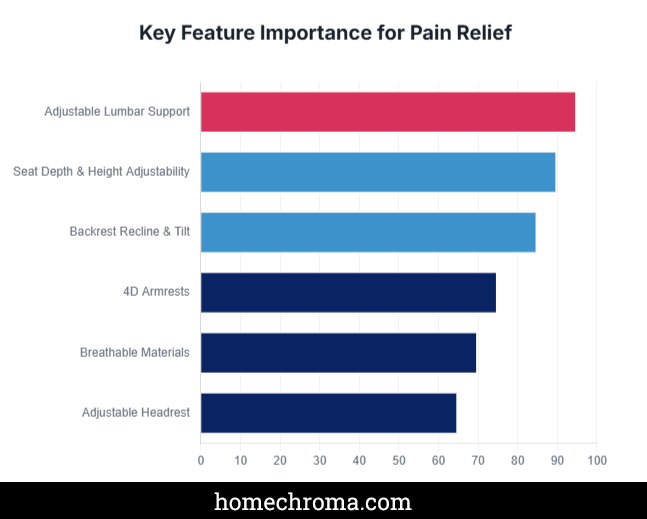
The most critical feature is adjustable lumbar support that maintains your spine’s natural inward curve. Basic fixed lumbar support is better than nothing, but advanced systems adapt to your movements:
Advanced Options:
- Dynamic Variable Lumbar (DVL) – Automatically adjusts with every movement
- PostureFit SL – Supports both sacral and lumbar regions independently
- LiveBack Technology – Mimics natural spine movement and flexes with you
2. Seat Design That Promotes Healthy Circulation
Key Measurements:
- Height range: 16-21 inches to accommodate most users
- Width: 17-20 inches for adequate support
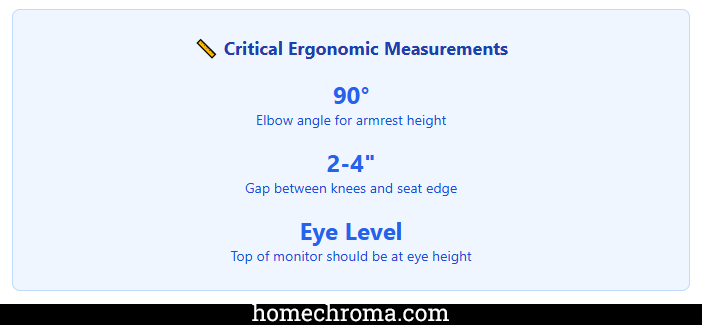
- Depth: Should leave 2-4 inches between back of knees and seat edge
Critical Features:
- Waterfall edge – Reduces pressure behind knees
- Adjustable tilt – Maintains proper pelvic positioning
- High-density foam – Prevents pressure points without losing support
3. Intelligent Recline Mechanisms
Synchro-tilt: Backrest reclines at a higher ratio than seat, keeping you properly supported Natural glide: Seat moves forward as you recline, maintaining screen alignment Weight-sensitive: Automatically adjusts resistance based on your body weight
Top Ergonomic Chair Recommendations by Category
Premium Performance Chairs ($800-$1,500+)
Herman Miller Aeron
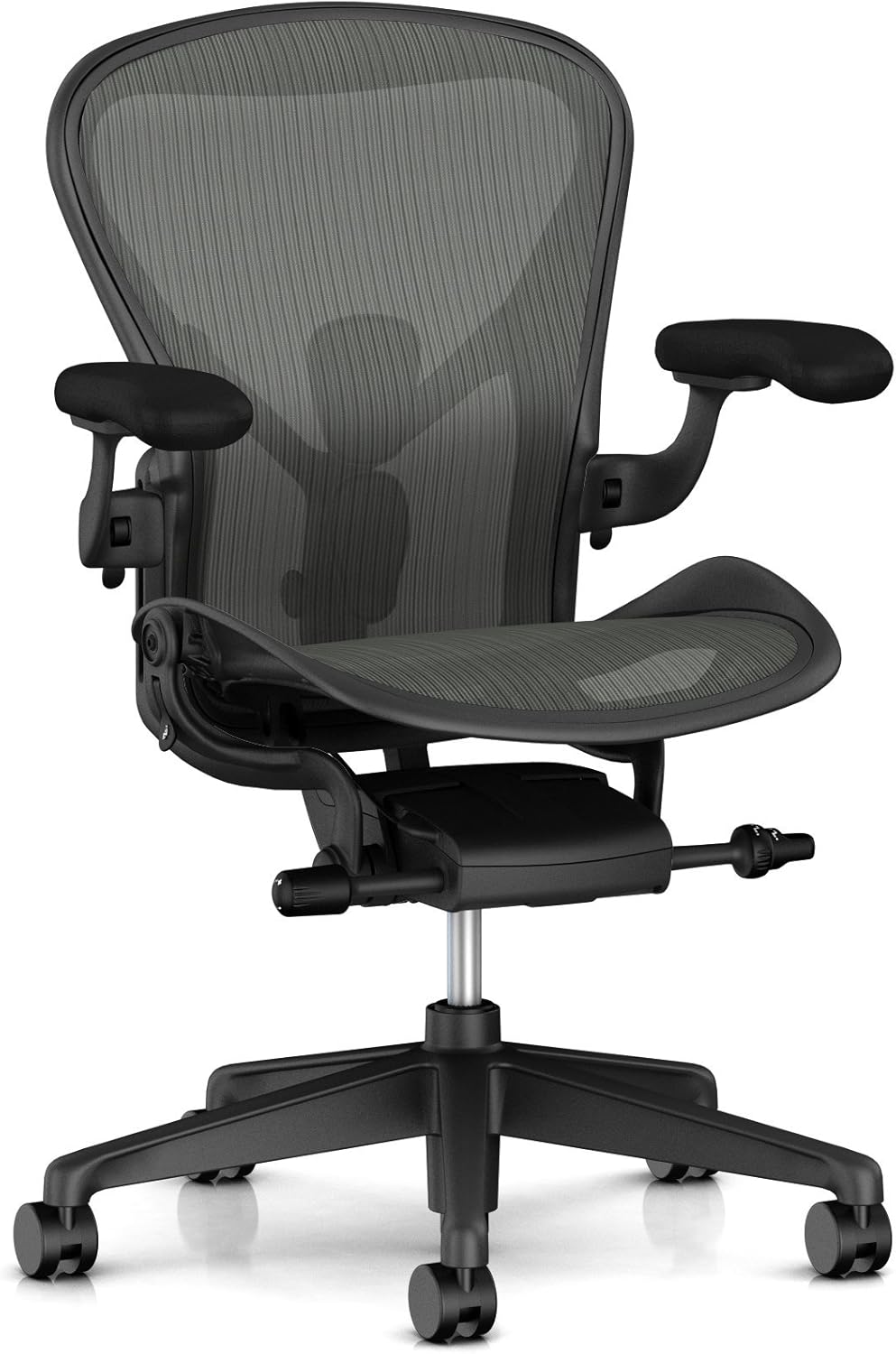
Herman Miller Aeron Ergonomic Chair [click to view…]
Best for: All-day comfort with superior breathability
Key Features:
- Three sizes (A, B, C) for optimal fit
- Pellicle mesh eliminates heat buildup
- PostureFit SL supports sacral and lumbar regions
- Forward tilt promotes healthy pelvic positioning
User Results: Consistently praised for reducing back pain and improving posture, though some find lumbar adjustment challenging.
Steelcase Leap V2
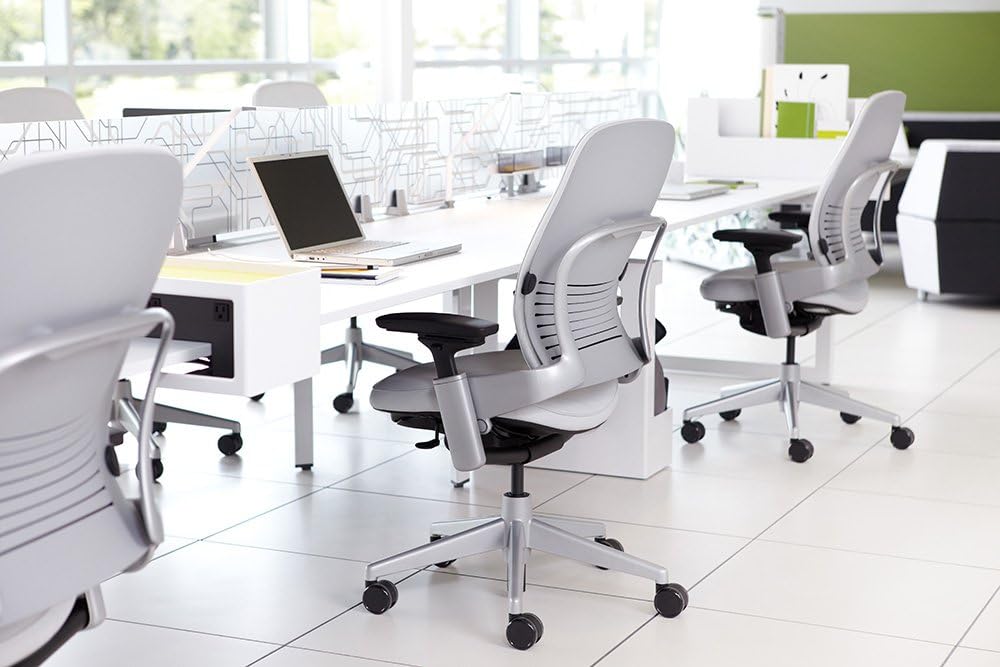
Steelcase Leap Office Chair V2 [click to view…]
Best for: Dynamic movement and adaptability
Key Features:
- LiveBack Technology changes shape with your spine
- Natural Glide System maintains screen alignment during recline
- Adjustable upper and lower back firmness
- 94% recyclable construction
User Results: Excellent for those who shift positions frequently, though some report thin seat padding.
Herman Miller Embody
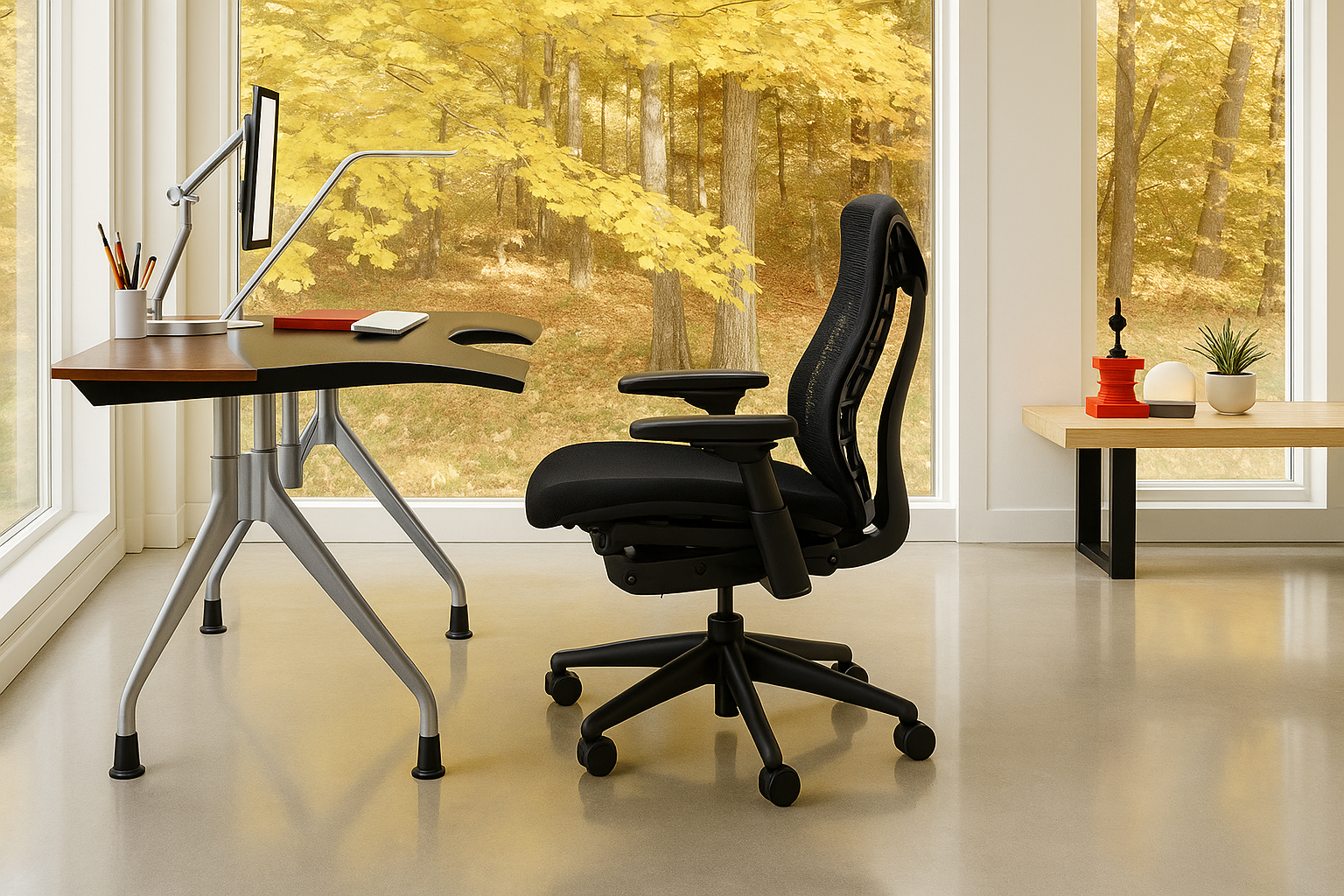
Herman Miller Embody Ergonomic Office Chair [click to view…]
Best for: Chronic pain sufferers
Key Features:
- Pixelated support automatically conforms to micro-movements
- Backrest mimics human spine structure
- Four-layer seat design promotes airflow
- Backfit adjustment aligns with your spine’s natural curve
User Results: Users report a unique “floating” sensation and reduced pressure points.
Value Champions ($200-$600)
Branch Verve
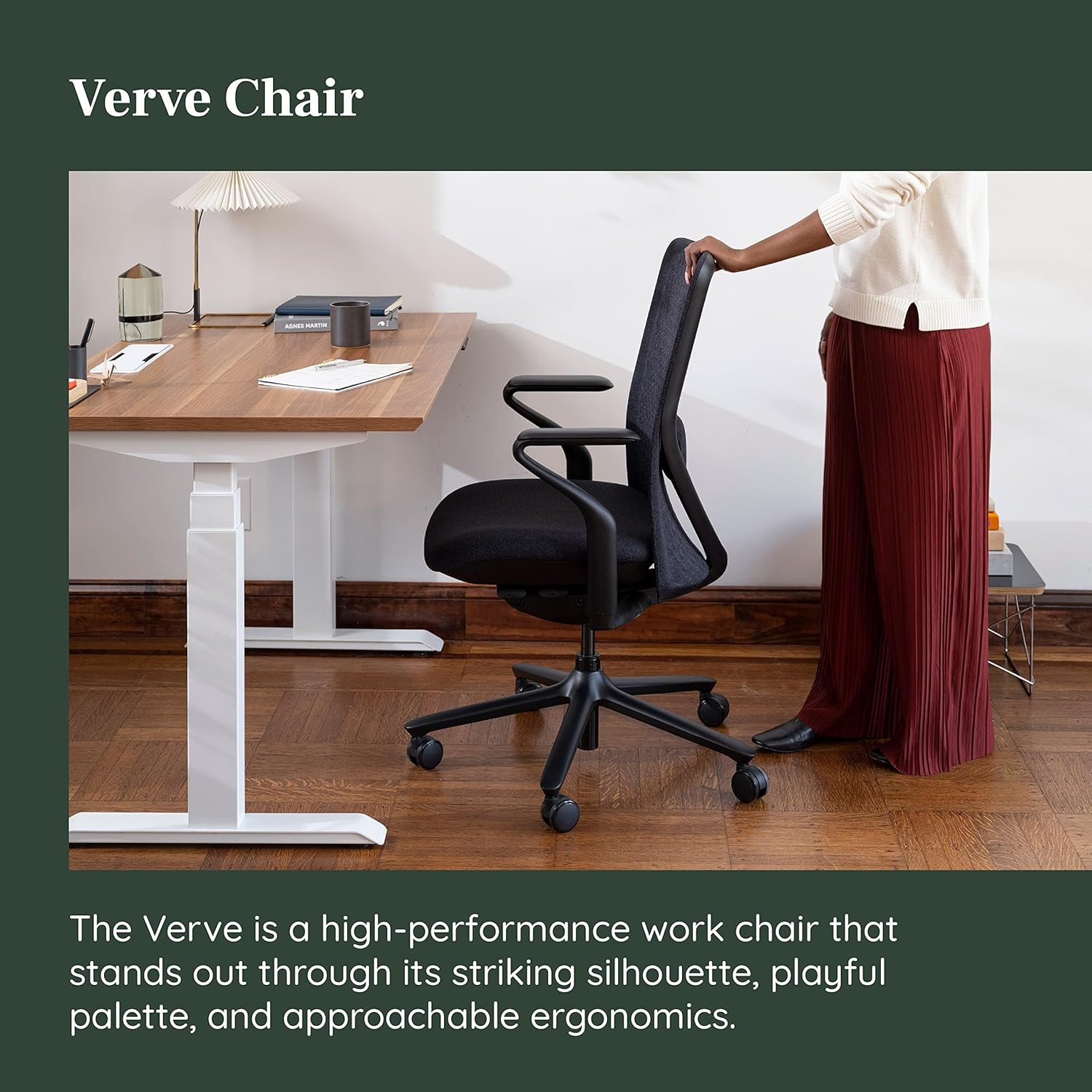
Branch Verve Chair [click to view…]
Best for: Essential ergonomic features at an accessible price
Key Features:
- V-shaped suspended mid-back design
- Adjustable seat depth and lumbar support
- Breathable 3D knit fabric
- 275 lb weight capacity
User Results: Provides excellent lumbar and hip support for 8-hour workdays.
HON Ignition 2.0
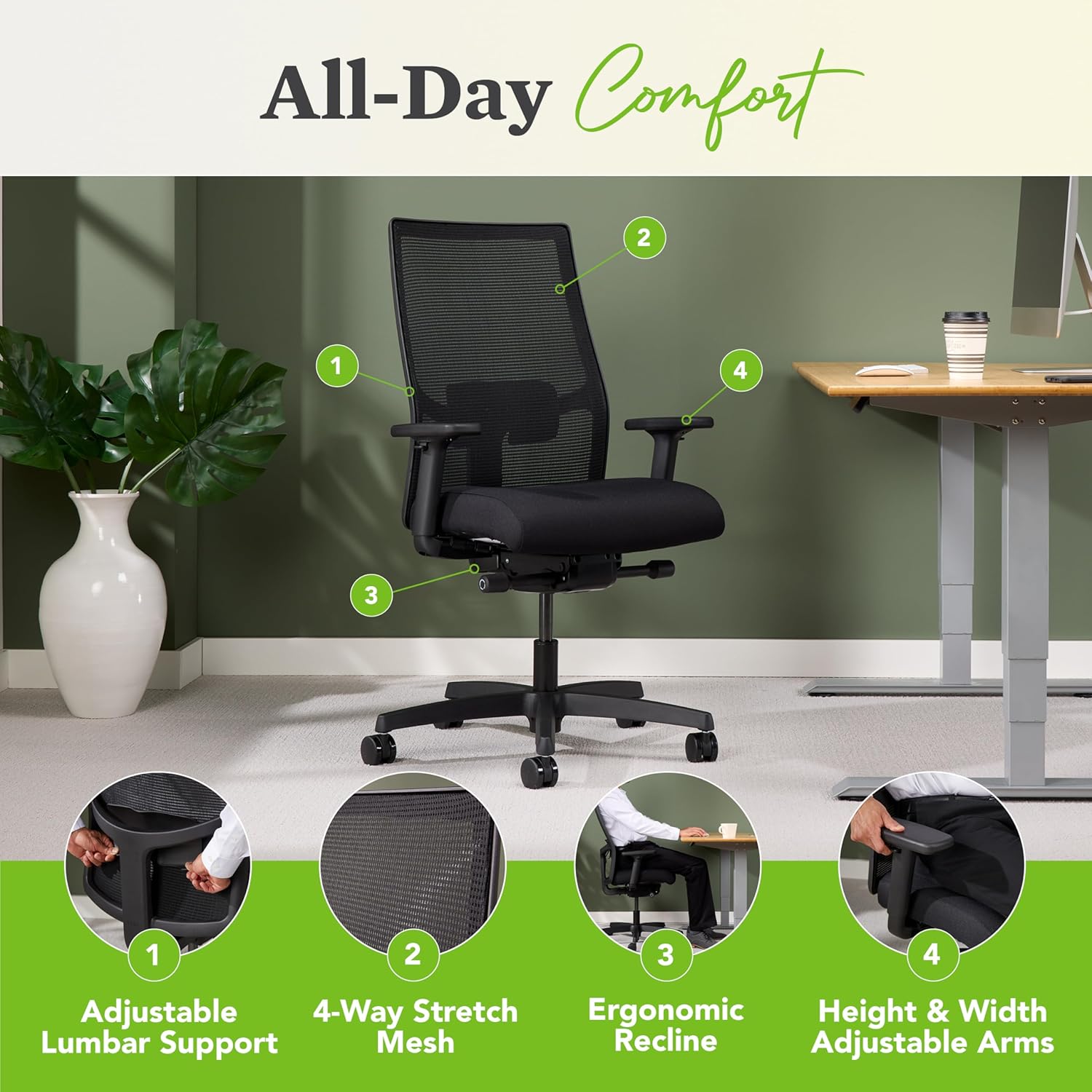
HON Ignition 2.0 Ergonomic Office Chair [click to view…]
Best for: Durability and versatility
Key Features:
- Advanced synchro-tilt mechanism
- 4-way stretch mesh backrest
- Supports up to 300-450 lbs depending on model
- Full lifetime warranty
User Results: Particularly effective for arthritis-related back pain.
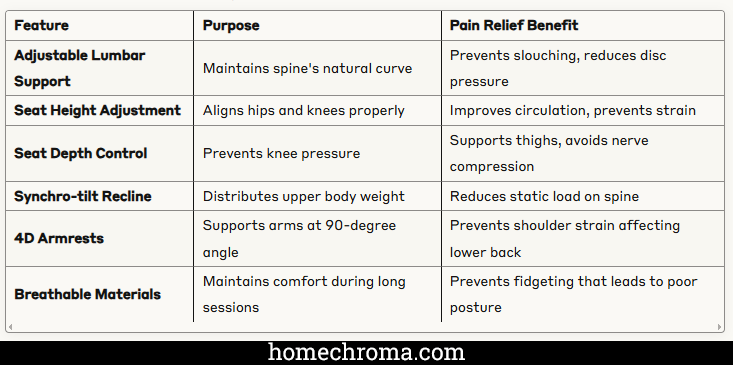
Comparison Table: Key Features at a Glance
Making Your Decision: A Step-by-Step Approach
1. Assess Your Specific Needs
For Chronic Pain: Consider chairs with advanced lumbar systems (Embody, X-Chair X4) For Hot Climates: Prioritize mesh designs (Aeron, SIHOO M59AS)
For Frequent Movement: Choose dynamic support systems (Leap V2, Gesture) For Budget Consciousness: Focus on core adjustability features (Branch Verve, HON Ignition)
2. Test Before You Invest
- Sit for at least 15-30 minutes during your trial
- Adjust all settings to find your optimal configuration
- Pay attention to pressure points after extended sitting
- Consider your daily sitting duration when evaluating comfort
3. Implementation Strategy
Week 1-2: Focus on proper seat height and lumbar support adjustment Week 3-4: Fine-tune armrest and recline settings Ongoing: Make micro-adjustments as your body adapts
Beyond the Chair: Maximizing Your Investment
Even the most advanced ergonomic chair works best as part of a comprehensive approach:
✓ Quick Setup Checklist
Essential Habits:
- Take movement breaks every 30-60 minutes
- Perform simple stretches at your desk
- Maintain proper monitor height to avoid neck strain
- Consider a standing desk converter for position variety
Red Flags to Address:
- Persistent pain after 2-3 weeks of proper chair use
- Numbness or tingling in legs or feet
- Morning stiffness that doesn’t improve
- Pain that worsens throughout the day
Your Next Move
Lower back pain from prolonged sitting isn’t inevitable – it’s preventable and often reversible with the right ergonomic support. The chairs highlighted here represent proven solutions that have helped thousands of people reclaim comfort and productivity.
Your action plan:
- Identify your primary needs (pain relief, breathability, adjustability)
- Set a realistic budget considering this as a health investment
- Test your top choices whenever possible
- Commit to proper adjustment and healthy sitting habits
Remember: the best ergonomic chair is the one that fits your unique body, work style, and comfort preferences. Don’t let another day of pain pass by when the solution might be simpler than you think.
Ready to transform your workday? Start by identifying which category matches your needs, then test the specific models that address your primary pain points. Your spine – and your productivity – will thank you.
Dora Decora is a biophilic interior design specialist and passionate blogger. With a deep commitment to integrating nature into living spaces, Dora specializes in creating environments that foster human-nature connections through thoughtful design elements. Her approach emphasizes sustainable materials, natural lighting, and organic patterns that enhance wellbeing and reduce environmental impact.
This post (https://homechroma.com/best-ergonomic-chairs-for-lower-back-pain) was originally published by Dora Decora on Home Chroma. As an Amazon Associates partner, we are compensated for all qualifying purchases.