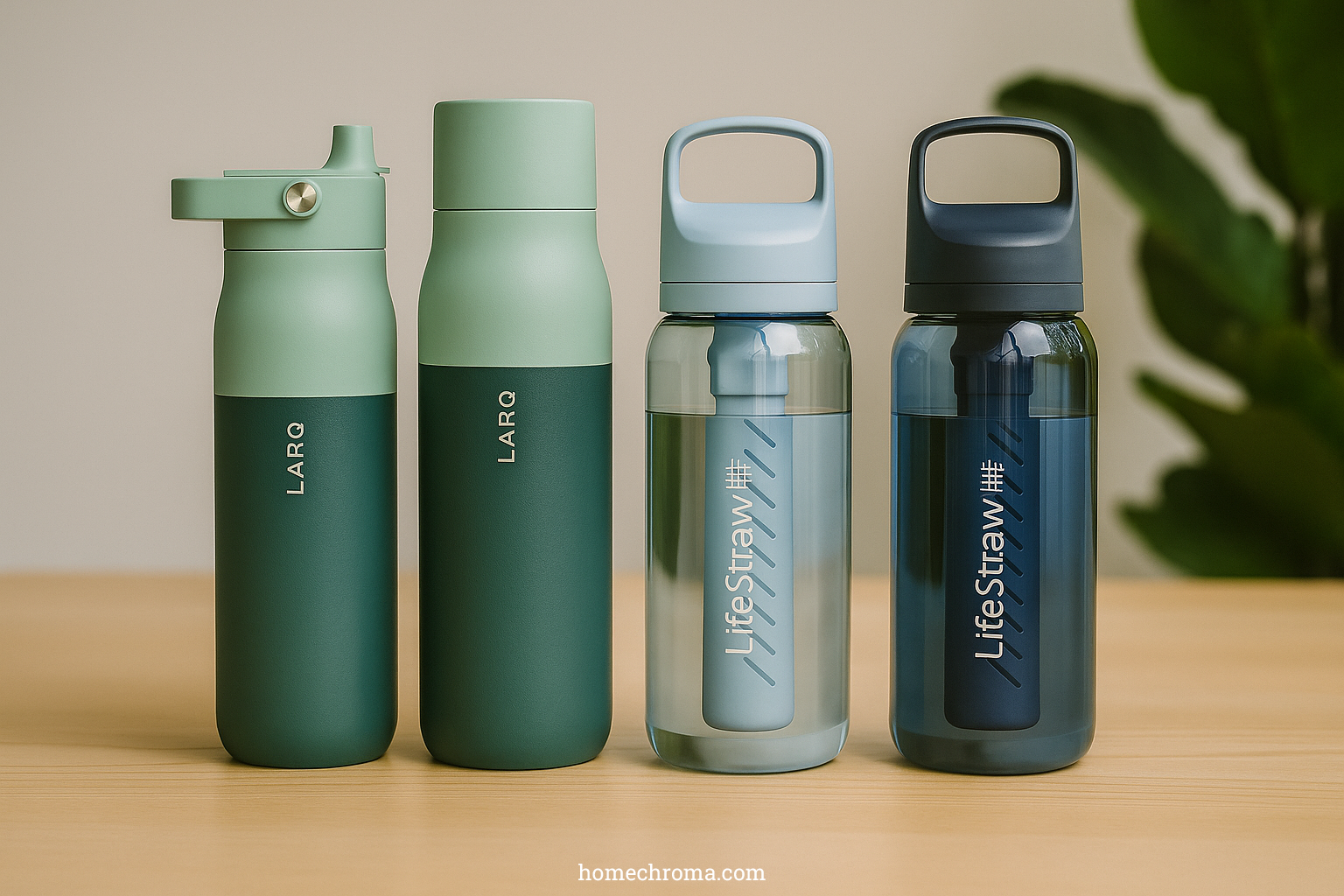
Bottom Line Up Front: LARQ bottles kill viruses but need clear water and battery power. LifeStraw Go filters out physical contaminants and works anywhere but can’t handle viruses. Your choice depends on where you’ll use it.
The Water Quality Problem You’re Facing
You’re standing at an airport water fountain, about to board a flight to Bangkok. Or maybe you’re hiking a mountain trail, staring at a crystal-clear stream. The question hits you: Is this water safe to drink?
Contaminated water causes over 3.4 million deaths annually worldwide. Even in developed countries, aging infrastructure and chemical runoff create uncertainty about tap water quality. Meanwhile, Americans buy 50 billion plastic water bottles yearly, creating an environmental crisis.
Two innovative products promise to solve both problems: the LARQ Bottle and LifeStraw Go. But they take completely different approaches to water purification.
How These Purification Technologies Actually Work
LARQ: UV-C Light Technology
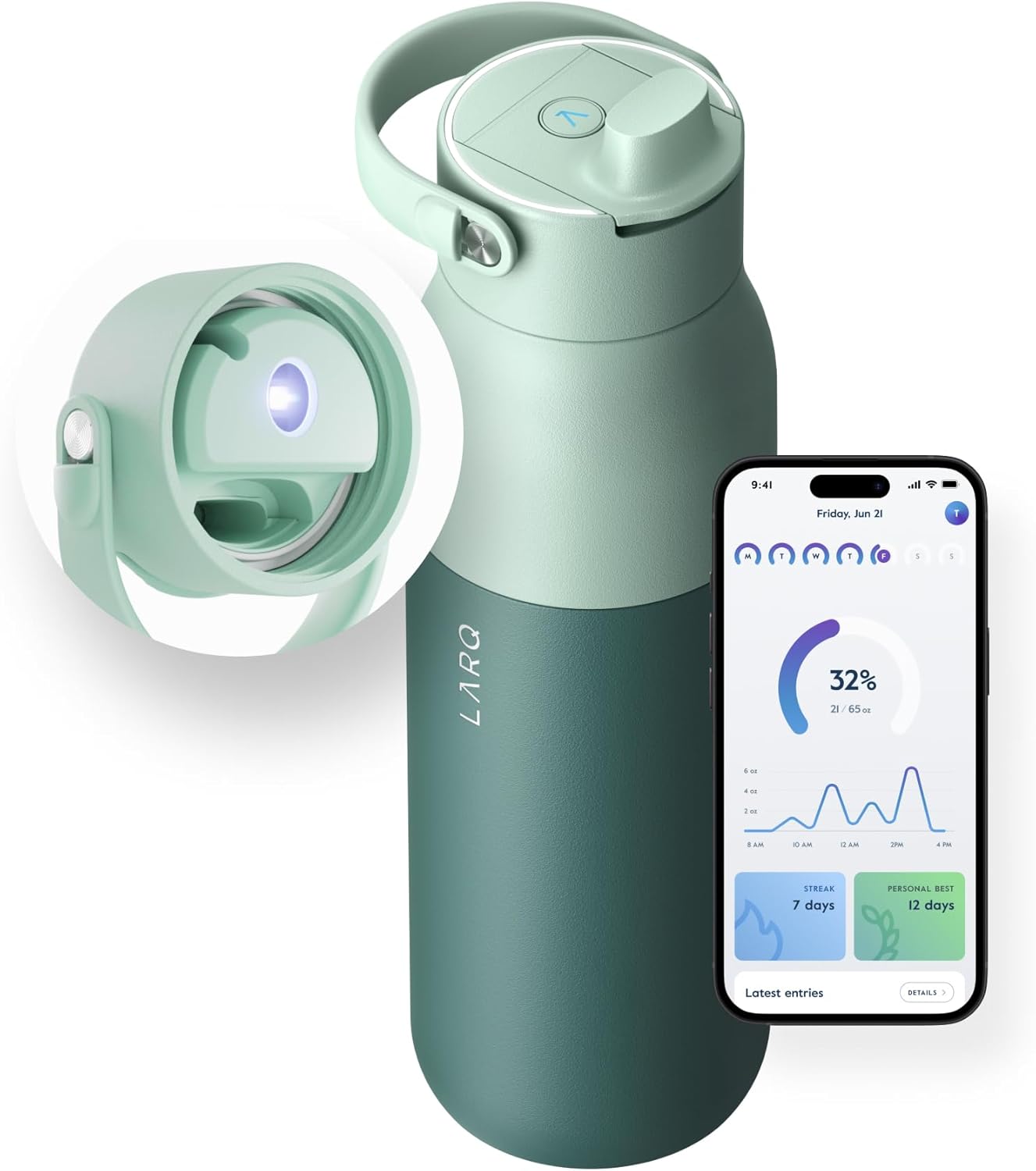
LARQ Bottle PureVis 2 [click to view…]
LARQ bottles use PureVis™ UV-C LED technology that emits light at 280nm wavelength. This destroys the DNA of bacteria and viruses, killing up to 99.9999% of harmful microorganisms.
Key features:
- Self-cleaning: Automatically purifies every 2 hours
- Two modes: Normal (1 minute) and Adventure (3 minutes)
- Chemical-free: No mercury or toxic substances
- App integration: Tracks hydration and filter life
LifeStraw Go: Physical Filtration System

LifeStraw Go Water Filter Bottle [click to view…]
LifeStraw Go uses a two-stage mechanical filter that physically traps contaminants as water passes through.
Stage 1: Membrane microfilter (0.2 micron pore size)
- Removes 99.999999% of bacteria
- Blocks 99.999% of parasites and microplastics
- Filters out silt, sand, and cloudiness
Stage 2: Activated carbon filter
- Reduces chlorine and odors
- Improves taste by removing organic chemicals
What Each Product Actually Removes
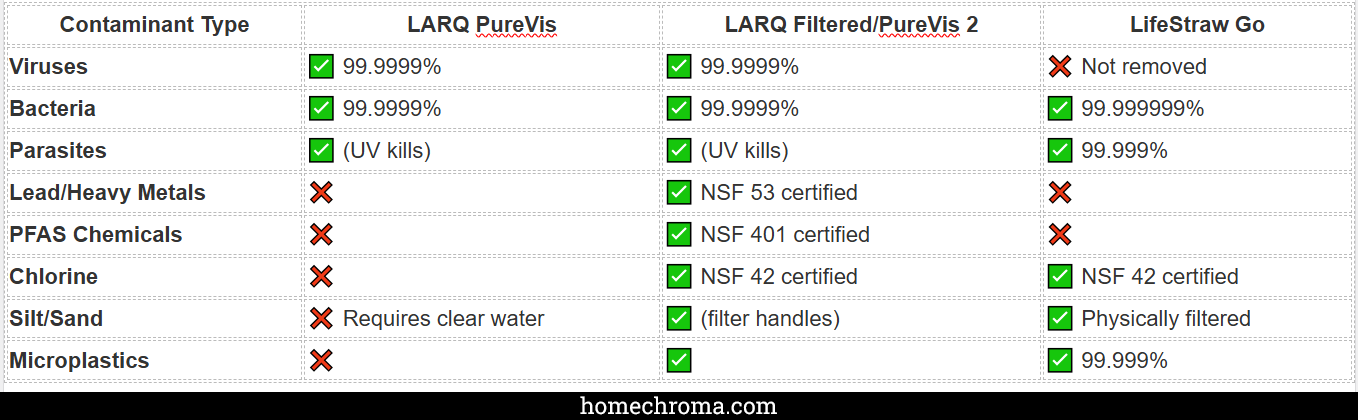
Critical Difference: LARQ kills viruses; LifeStraw Go cannot remove them due to viruses being smaller than the 0.2 micron filter pores.
Real-World Performance: What Users Actually Experience
Drinking Experience
LARQ: Smooth water flow like a regular bottle. No suction required for PureVis models. Filtered models may have reduced flow if not assembled correctly.
LifeStraw Go: Requires significant suction effort to draw water through the filter. Many users complain about the “major sucking power” needed, especially when filters age.
Maintenance Reality
LARQ Maintenance:
- ✅ Self-cleaning prevents odors and biofilm
- ❌ Requires USB-C charging every 2-3 weeks
- ❌ UV light doesn’t reach bottle rim (manual cleaning needed)
- ❌ Not dishwasher safe (electronics in cap)
LifeStraw Go Maintenance:
- ✅ No battery required
- ✅ Dishwasher safe (remove filters first)
- ❌ Carbon filter replacement every 2 months ($10-25)
- ❌ Special storage required (salt solution for long-term)
Durability Issues
LARQ Problems: Users report USB port failures, paint peeling, and malfunctioning UV systems after several months. The premium price makes these failures particularly frustrating.
LifeStraw Go Problems: Pressure build-up causing water to spurt out, especially with temperature/elevation changes. Filters can come loose, and leaking when not kept upright.

When to Choose LARQ
Choose LARQ if you need:
- Virus protection for international travel or uncertain tap water
- Convenience with self-cleaning and no filter replacement schedule
- Chemical removal (Filtered/PureVis 2 models) for urban water with PFAS, lead, or pharmaceuticals
- Smart features like hydration tracking via app
- Clear water sources (UV-C requires visibility to work)
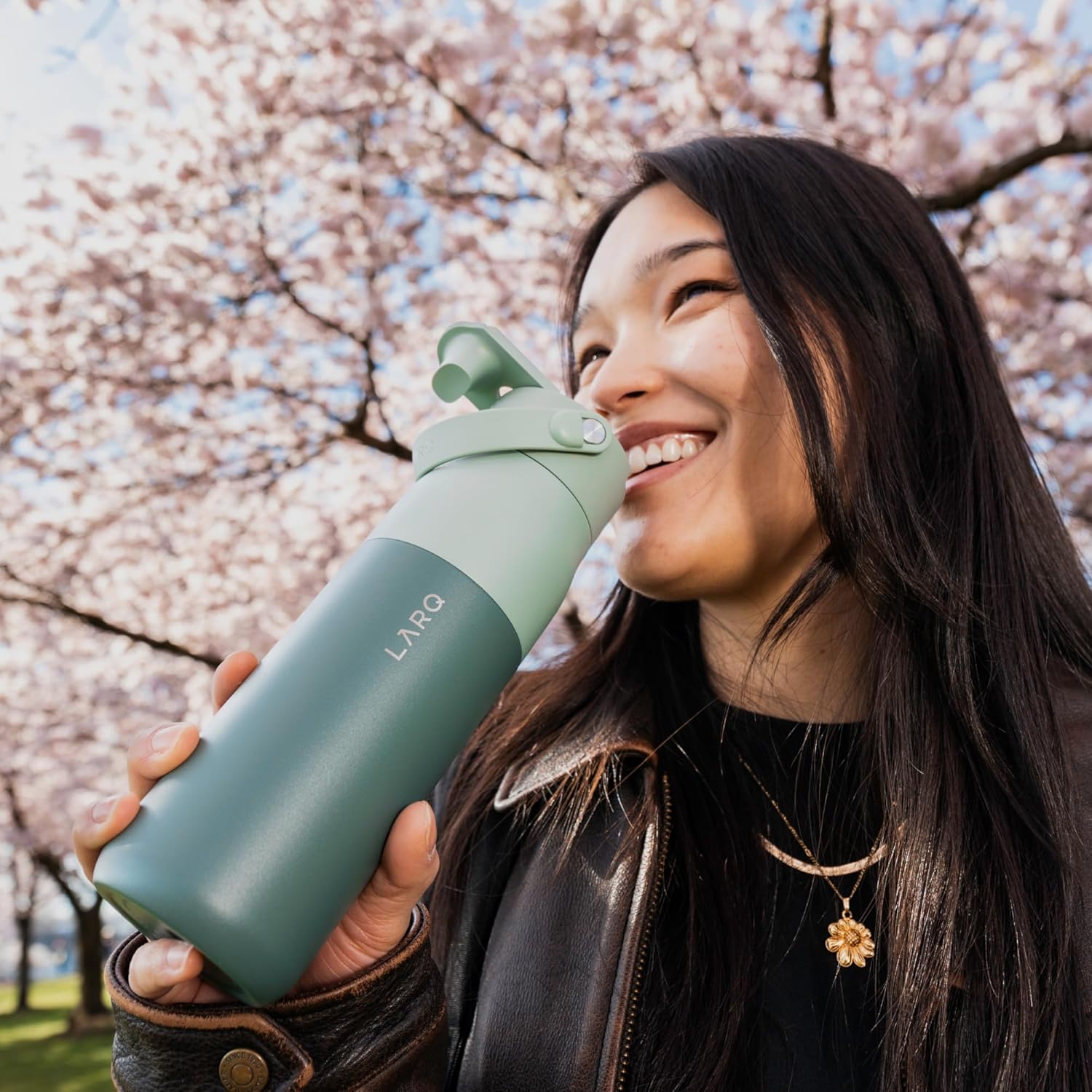
LARQ Bottle PureVis 2 [click to view…]
Best LARQ models:
- PureVis 2: Ultimate protection (UV + filtration) – $198
- Movement PureVis: Lighter for hiking – $128
- Bottle Filtered: Chemical removal without UV – $78
When to Choose LifeStraw Go
Choose LifeStraw Go if you need:
- Outdoor reliability for camping, hiking, emergency prep
- Physical filtration for murky or sediment-heavy water
- Budget-friendly option with lower upfront cost
- No charging required – purely mechanical system
- Long filter life (membrane lasts up to 5 years)
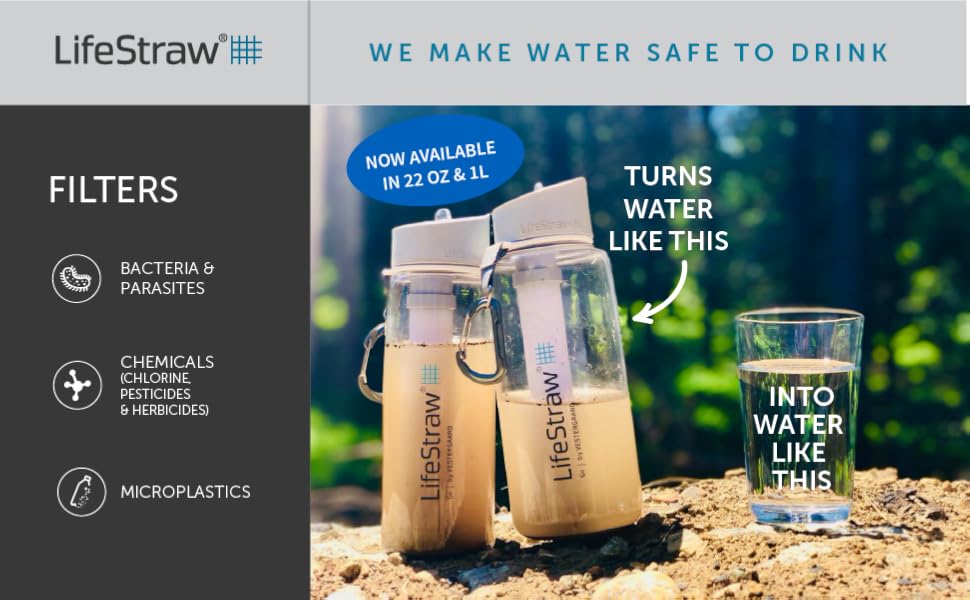
LifeStraw Go Water Filter Bottle [click to view…]
LifeStraw Go models:
- Plastic version: Lightweight, 50% recycled materials – $45
- Stainless steel: Insulated, more durable – $65-85
Price Breakdown: Initial Cost vs. Long-Term Ownership
Upfront Investment
- LARQ bottles: $78-$198
- LifeStraw Go: $35-$85
Annual Operating Costs
LARQ Filtered models:
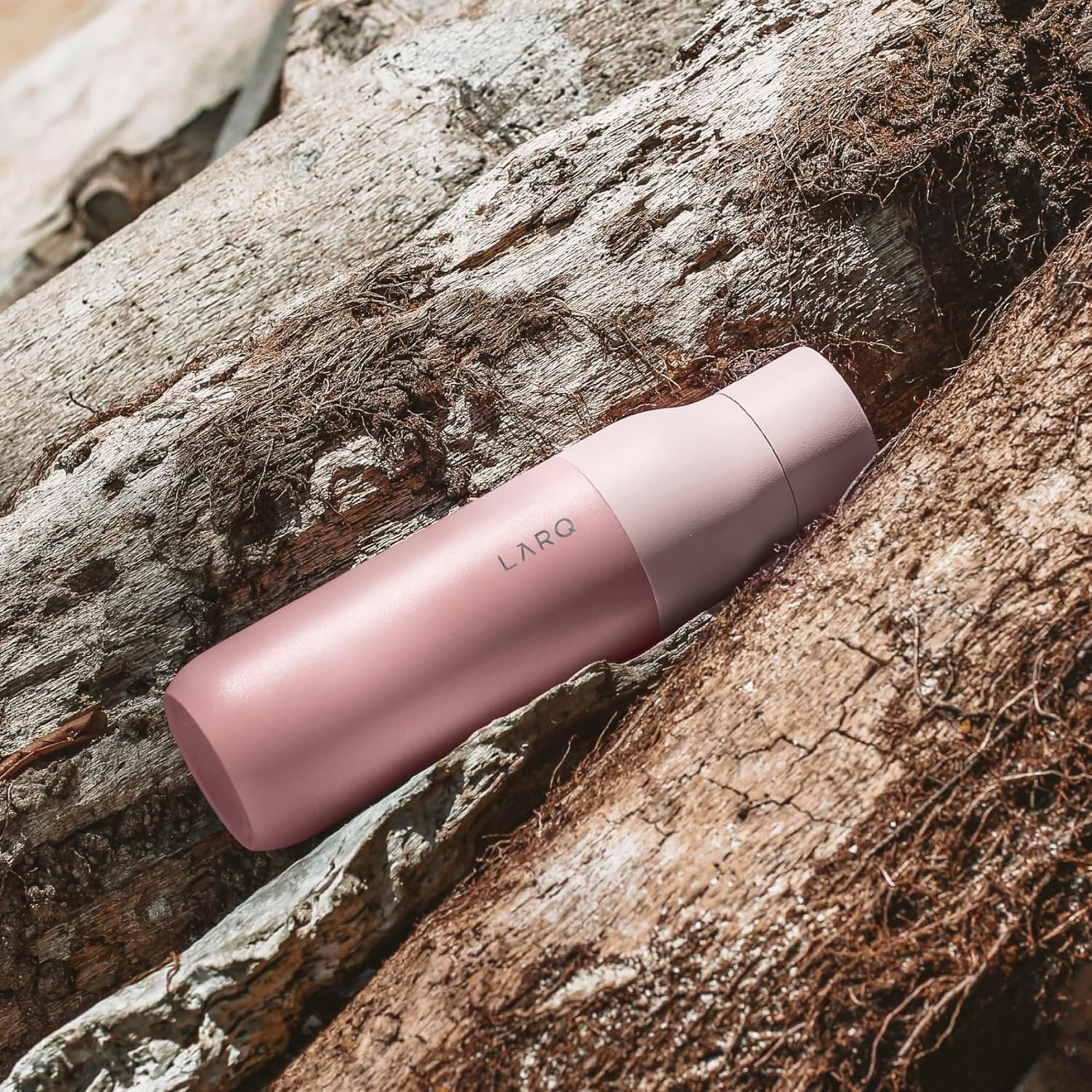
LARQ Bottle PureVis 17 oz [click to view…]
- Essential filter: $30 every 2 months = $180/year
- Advanced filter: $50 every 2 months = $300/year
LifeStraw Go:
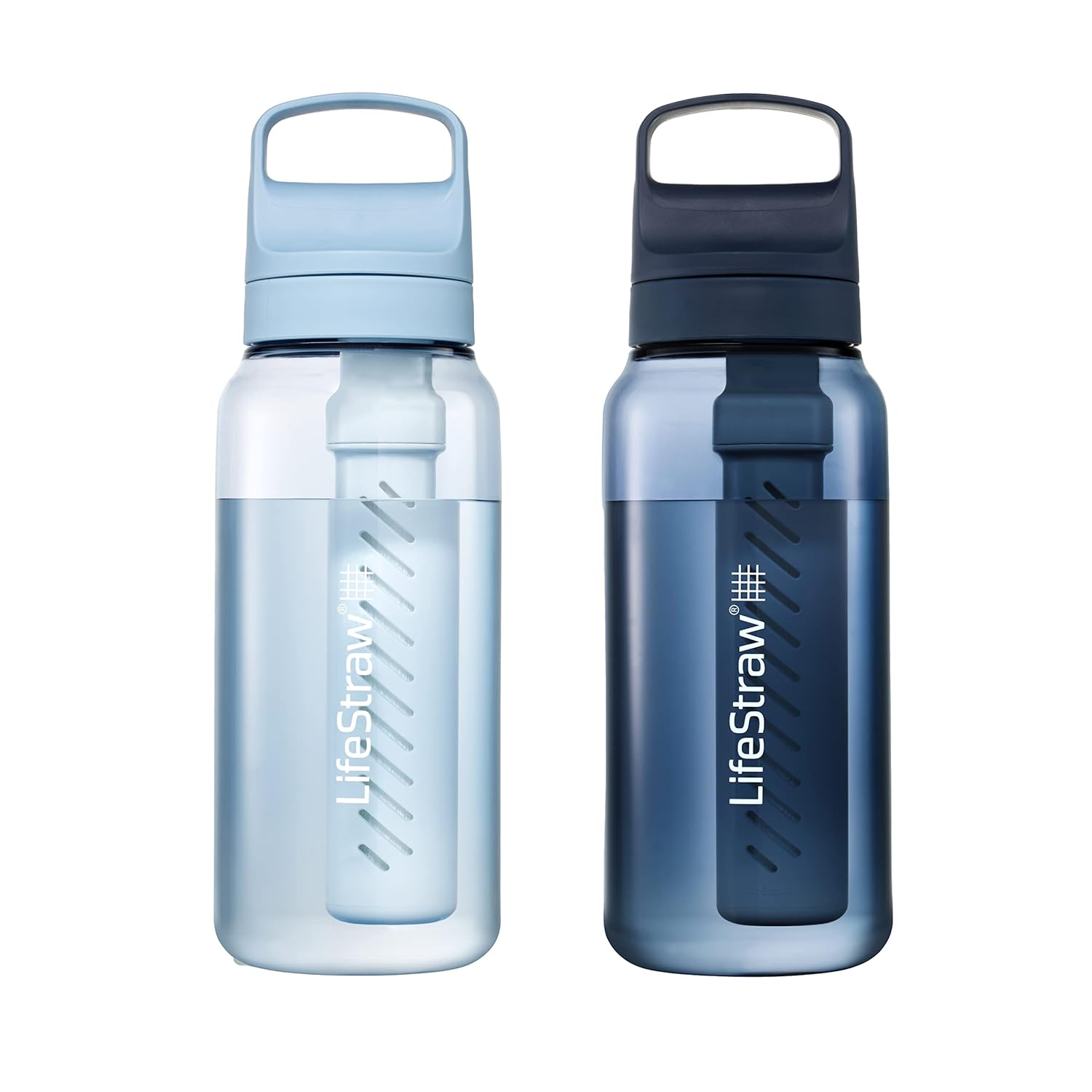
LifeStraw Go Series [click to view…]
- Carbon filter: $15 every 2 months = $90/year
- Membrane filter: $30 every 5 years = $6/year
- Total: ~$96/year
Winner for budget: LifeStraw Go costs significantly less long-term.
The Decision Matrix: Which One Fits Your Life?
Choose LARQ if you’re:
- Business traveler visiting developing countries
- Urban commuter concerned about tap water quality
- Tech enthusiast who wants smart features
- Chemical-conscious and worried about PFAS/lead
Choose LifeStraw Go if you’re:
- Outdoor adventurer hiking/camping regularly
- Budget-conscious buyer seeking good value
- Emergency prepper wanting reliable backup
- Environmentally focused (B Corp certified brand)
Red Flags for Each Option
Avoid LARQ if:

LARQ Bottle PureVis 25 oz [click to view…]
- You frequently use murky/cloudy water sources
- You forget to charge devices regularly
- You’re on a tight budget
- You need something foolproof for emergencies
Avoid LifeStraw Go if:

LifeStraw Personal Water Filter for Hiking [click to view…]
- Virus contamination is a real concern
- You have weak jaw muscles or breathing issues
- You need chemical filtration beyond taste improvement
- You want minimal maintenance hassle
Final Recommendation: Pick Your Battle
For most travelers: LARQ PureVis 2 ($198) offers the most comprehensive protection against biological and chemical threats.
For outdoor enthusiasts: LifeStraw Go stainless steel ($75) provides reliable mechanical filtration without battery dependence.
For budget-conscious users: LifeStraw Go plastic ($45) delivers excellent bacteria/parasite protection at an unbeatable price.
For urban daily use: LARQ Movement PureVis ($128) balances weight, features, and virus protection for city life.
The water you’ll encounter determines which technology you need. Clear but potentially contaminated sources (airports, international hotels) favor LARQ’s UV technology. Visibly questionable sources (streams, wells, emergency situations) favor LifeStraw’s physical filtration.
Both products significantly reduce plastic waste and provide safer drinking water. The question isn’t which is “better” – it’s which matches your specific water challenges and lifestyle needs.
Ready to buy? Check current prices and read recent user reviews before making your final decision. Your health and hydration habits depend on choosing the right tool for your water purification needs.
Dora Decora is a biophilic interior design specialist and passionate blogger. With a deep commitment to integrating nature into living spaces, Dora specializes in creating environments that foster human-nature connections through thoughtful design elements. Her approach emphasizes sustainable materials, natural lighting, and organic patterns that enhance wellbeing and reduce environmental impact.
This post (https://homechroma.com/larq-bottle-vs-lifestraw-go-portable-water-purifier) was originally published by Dora Decora on Home Chroma. As an Amazon Associates partner, we are compensated for all qualifying purchases.