TriField TF2 Review – At a Glance
Overall Rating: ⭐⭐⭐⭐☆ (4.5/5 stars)
Pros:
- 3-in-1 functionality (AC magnetic, AC electric, RF fields)
- True 3-axis magnetic sensor for accurate readings
- Peak Hold function captures wireless device pulses
- Frequency-weighted modes for biological relevance
- Crystal clear LCD display with backlight
Cons:
- 1-axis sensors for electric and RF fields require manual scanning
- Limited accuracy for precise mitigation verification
- RF range doesn’t cover high-band 5G frequencies
Best For: Beginners, DIY enthusiasts, general home EMF assessment
Price: $170-186 USD
Where to Buy: [click to view…]
With growing concerns about electromagnetic field exposure from our wireless devices and home electronics, people need reliable tools to measure their environment. The TriField TF2 stands out as the most recommended entry-level EMF meter.
What makes this device different? Unlike single-purpose meters, the TF2 combines three essential EMF measurements into one portable unit. This means you can detect magnetic fields from appliances, electric fields from wiring, and radio frequencies from wireless devices.
Product Overview and First Impressions
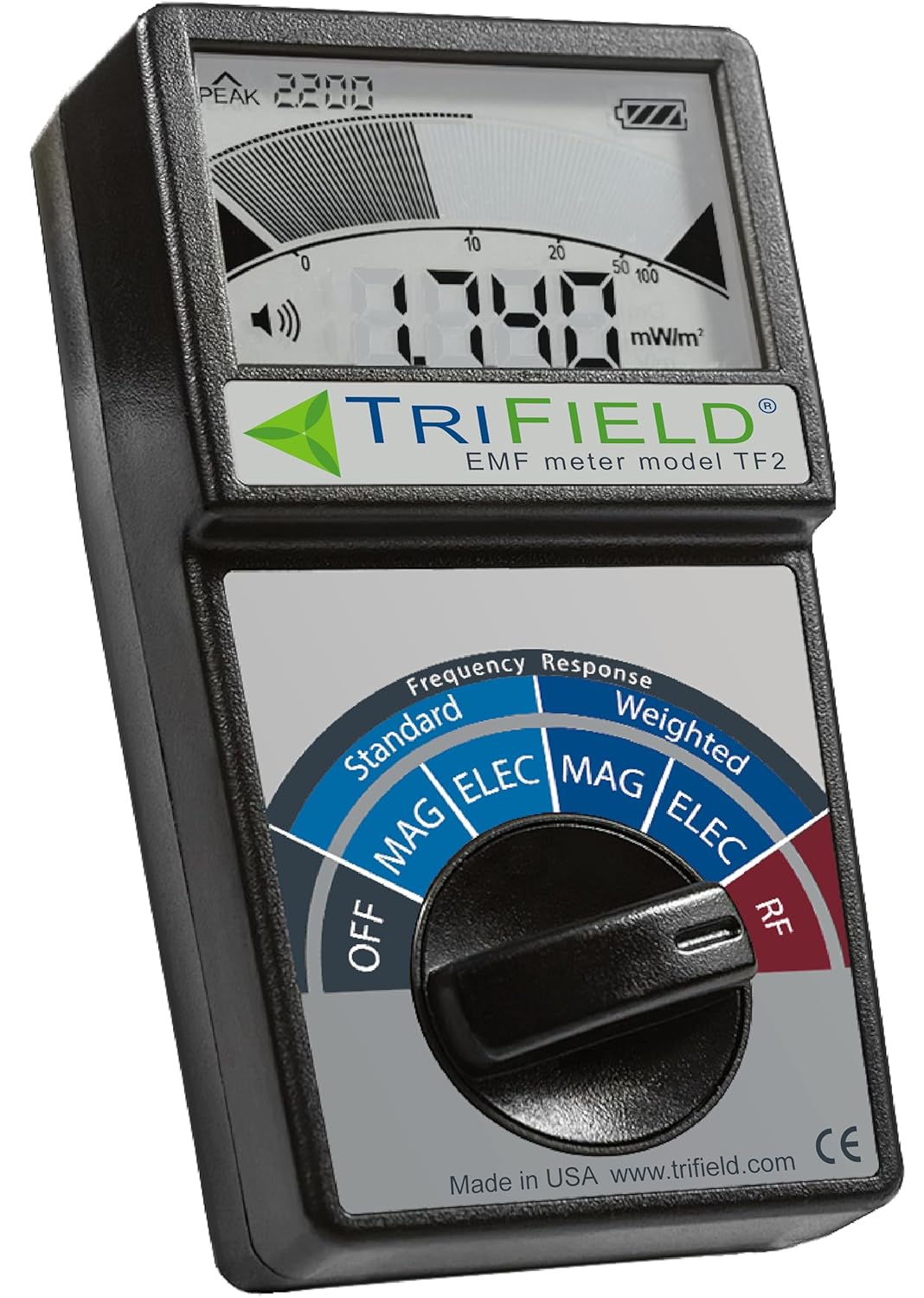
TriField EMF Meter Model TF2 [click to view…]
The TriField EMF Meter Model TF2 comes from AlphaLab, Inc., serving as the successor to the popular TF1 model. Right out of the box, you’ll notice the meter’s compact, lightweight design and clear LCD display.
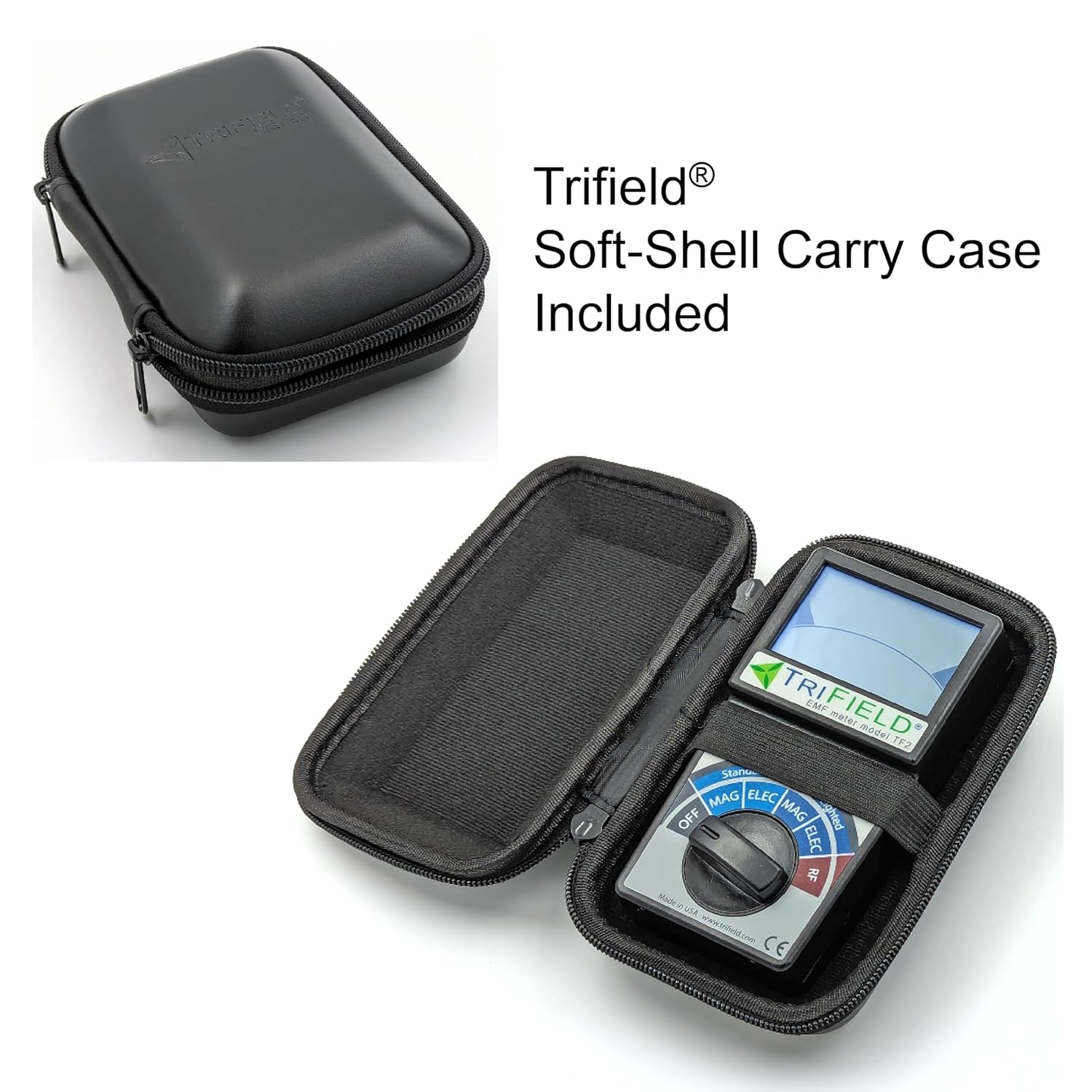
The soft carry case included makes it perfect for travel. The build quality feels solid for the price point, and the large display shows multiple readings simultaneously – current field measurement, peak measurement, and percentage indicators.
Setting up the TF2 takes seconds. Insert a 9V battery, select your measurement mode, and you’re ready to start detecting EMF sources around your home or office.
Key Features Breakdown
Triple-Measurement Capability
The TF2’s biggest strength is measuring three EMF types with one device:
AC Magnetic Fields: Detects emissions from power lines, appliances, and electrical wiring using three ferrite-core coils positioned in X, Y, and Z directions.
AC Electric Fields: Measures voltage-related fields from energized circuits, ungrounded devices, and wall outlets using a metal plate sensor.
Radio Frequency Fields: Captures wireless signals from cell phones, Wi-Fi routers, smart meters, and Bluetooth devices across 20 MHz to 6 GHz.
Advanced Display and Interface
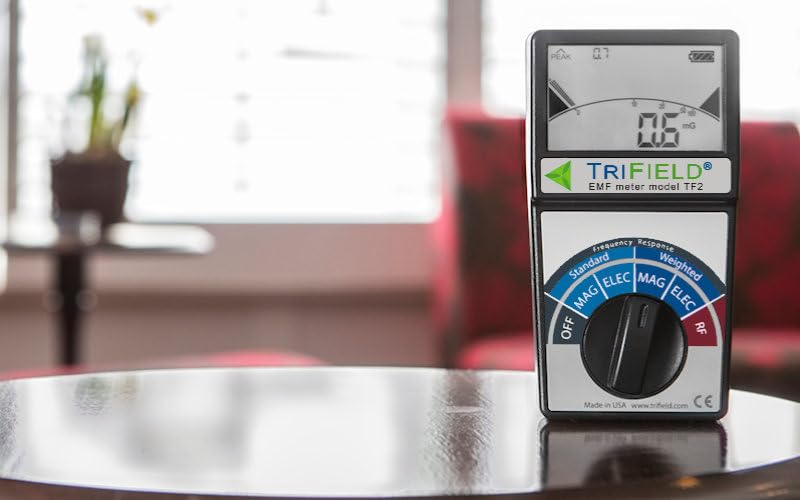
TriField EMF Meter Model TF2 [click to view…]
The large LCD screen provides crystal clear readings even in low light thanks to the adjustable backlight. You’ll see real-time measurements, peak values, and circular bar graphs showing field intensity percentages.
The audio indicator proves invaluable for pinpointing EMF sources. As you move closer to a source, the tone changes, helping you locate hot spots without constantly watching the display.
Peak Hold Function
Modern wireless devices transmit in short, high-intensity bursts. The TF2’s Peak Hold feature captures these brief pulses for 3-5 seconds, ensuring you get accurate readings from cell phones, Wi-Fi routers, and smart meters.
Without this function, you’d miss the true exposure levels from digital communication devices that only pulse intermittently.
Real-World Performance Testing
AC Magnetic Field Accuracy
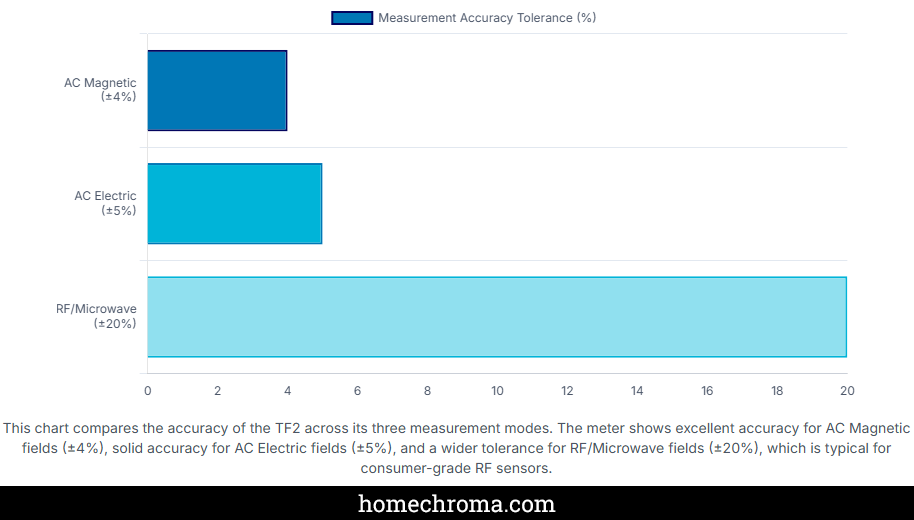
Measuring AC magnetic fields represents the TF2’s strongest performance area. The 3-axis sensor configuration means you get true magnitude readings regardless of how you hold the meter.
Frequency Range: 40 Hz to 100 kHz
Accuracy: ±4% at 50/60 Hz
Maximum Range: 100.0 milligauss
Sensitivity: 0.1 milligauss
Testing around common household items showed reliable detection of fields from refrigerators, microwaves, and circuit breaker panels. The meter quickly identified wiring errors and current flowing through plumbing pipes.
AC Electric Field Performance
Electric field measurement uses a 1-axis metal plate sensor, requiring more user technique for comprehensive readings.
Frequency Range: 40 Hz to 100 kHz
Accuracy: ±5% at 50/60 Hz
Maximum Range: 1000 V/m
Sensitivity: 1 V/m
The TF2 excels at pinpointing electric field sources like ungrounded laptops and energized wall circuits. However, you must move the meter in figure-eight motions to capture peak exposures due to the single-axis design.
Radio Frequency Capabilities
RF measurement covers most common wireless technologies but has important limitations.
Frequency Range: 20 MHz to 6 GHz
Accuracy: ±20% at 1 GHz
Maximum Range: 19.999 mW/m²
Sensitivity: 0.001 mW/m²
Testing revealed good sensitivity for detecting Wi-Fi routers, cell towers, and smart meters. The meter successfully identified hidden RF cameras in hotel rooms during travel testing.
The limitation? The 6 GHz upper frequency limit misses high-band 5G frequencies above 8.5 GHz and millimeter-wave bands at 24 GHz and above.
Standard vs. Weighted Measurement Modes
TriField EMF Meter Model TF2 [click to view…]
The TF2 offers unique frequency-weighted modes for magnetic and electric field measurements. This feature sets it apart from basic meters that only provide raw field strength.
Standard Mode: Measures field strength with flat frequency response, giving equal sensitivity to all frequencies from 40 Hz to 100 kHz.
Weighted Mode: Scales measurements to indicate induced currents inside the human body. Higher frequencies create stronger readings because they generate more electric current in biological tissue.
For health-conscious users, weighted mode provides more biologically relevant measurements than raw field strength alone.
Battery Life and Portability
The TF2 runs for over 20 hours on a single 9V alkaline battery with the backlight off. With backlight activated, expect 12+ hours of operation.
The compact design and included carry case make it perfect for travel. Whether checking hotel rooms or vacation rentals, the meter slips easily into luggage or a backpack.
Proper Measurement Techniques
TriField EMF Meter Model TF2 [click to view…]
Getting accurate readings requires proper technique, especially for electric and RF measurements:
Hold Position: For electric and RF modes, hold only the bottom half of the meter. Your hand can shield RF signals or concentrate electric fields if you cover the top sensor plate.
Scanning Motion: Move the meter in figure-eight patterns to capture peak electric and RF exposures. The 1-axis sensors require multiple orientations to find maximum field strength.
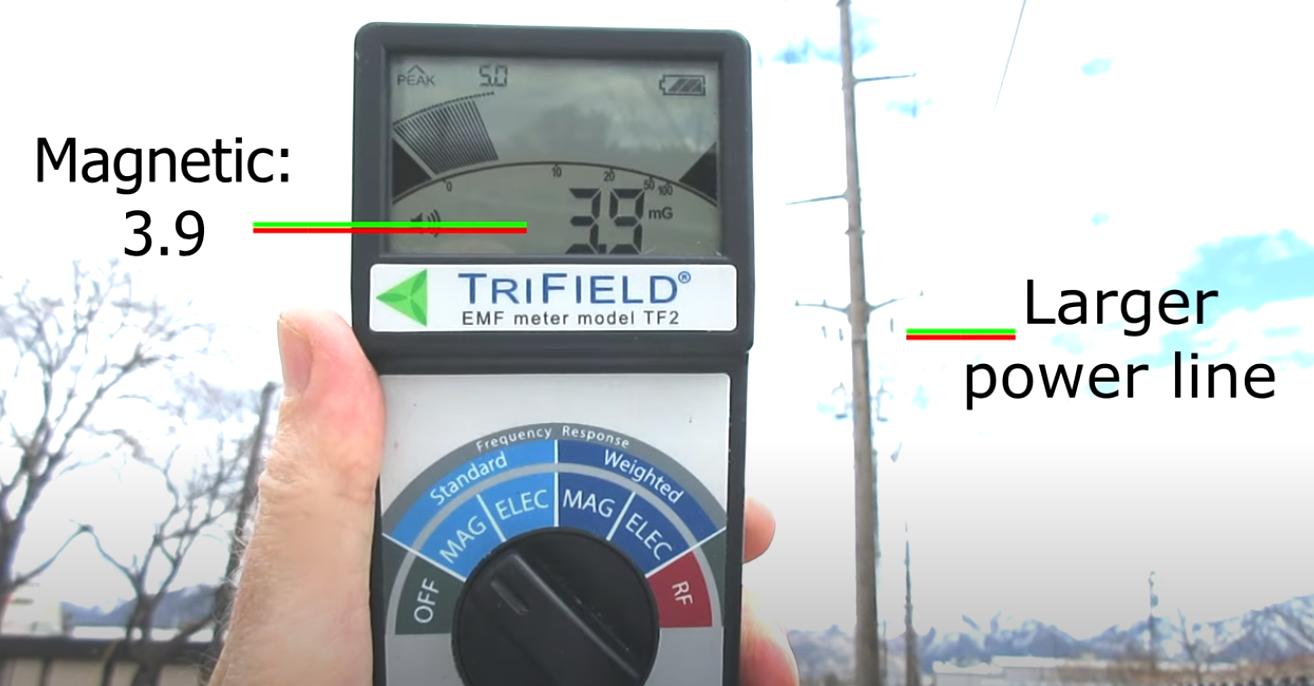
Peak vs. Field Readings: Use Peak measurements for pulsed wireless devices like cell phones and Wi-Fi. Use Field measurements for constant sources like power lines and appliances.
Understanding Your Readings
TriField EMF Meter Model TF2 [click to view…]
Interpreting EMF measurements requires context. Here are general guidelines for “low EMF” environments:
Magnetic Fields: Less than 3.0 mG (Standard) or 5.0 mG (Weighted)
Electric Fields: Less than 50 V/m
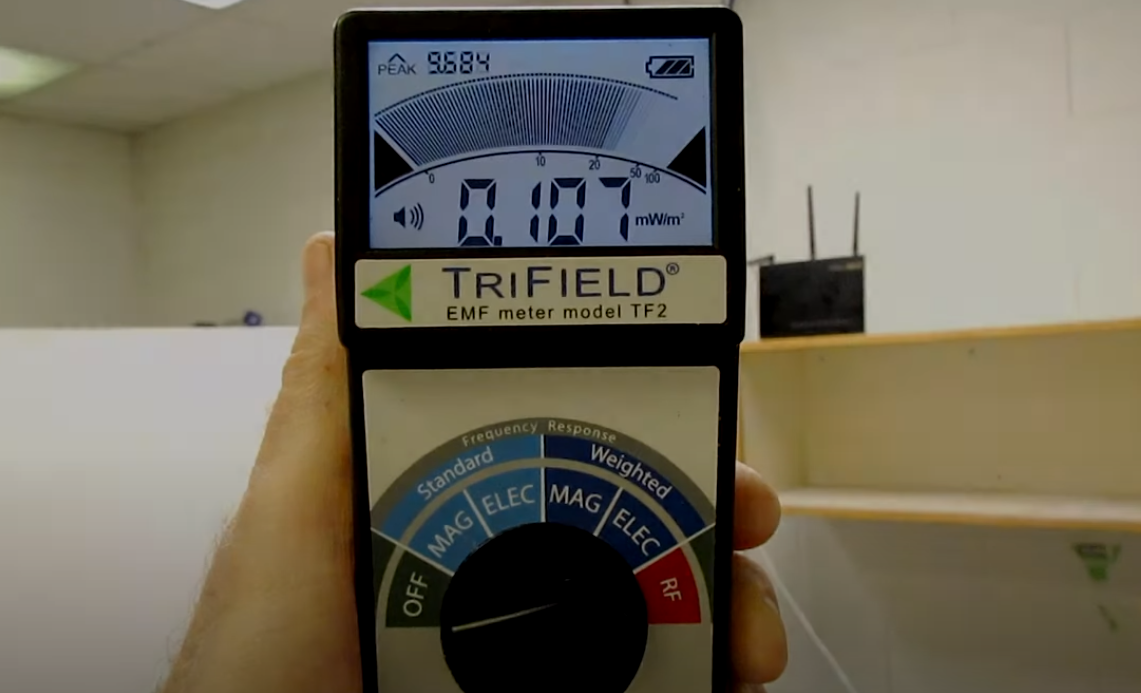
RF Fields: Less than 1.000 mW/m² (Peak) or 0.200 mW/m² (Field)
Building Biologists recommend even lower levels for sleeping areas: 1.5 mG magnetic, 1.5 V/m electric, and 10 µW/m² RF.
Remember that legal exposure limits are much higher than these health-focused recommendations.
Comparisons with Competitors
Entry-Level Alternatives
Cornet ED88TPLUS: Similar price point with quad-mode functionality. Includes light flicker detection but may lack the TF2’s build quality and user interface clarity.
Gigahertz ME3830B: Focuses specifically on AC electric and magnetic fields with extended frequency range for dirty electricity. More expensive but doesn’t include RF measurement.
Safe and Sound EM3: Offers 3D magnetic and 1D electric measurement plus body voltage testing. Lower price but limited to low-frequency fields only.
Professional-Grade Meters
The TF2 serves as an entry point before investing in professional equipment:
Gigahertz NFA1000: What professionals use for AC field analysis. Offers 0.01 mG sensitivity (vs. TF2’s 0.1 mG) and 3-axis sensors for all measurements. Significantly more expensive.
Gigahertz HFE59B/HFW59D: Professional RF meters with 27 MHz to 10 GHz range and multiple antenna options. Costs several times more than the TF2.
Practical Applications
The TF2 excels in these real-world scenarios:
Home Assessment: Identify EMF hot spots around appliances, find wiring errors, and measure wireless device emissions.
Bedroom Optimization: Ensure sleeping areas meet low-EMF guidelines by checking for electric fields from wall circuits and magnetic fields from nearby electronics.
Travel Safety: Assess hotel rooms, vacation rentals, and temporary accommodations. Detect hidden surveillance devices or problematic wireless installations.
Appliance Shopping: Compare EMF emissions between different models of microwaves, induction cooktops, and other high-EMF devices.
Limitations and Considerations
While excellent for its price range, the TF2 has important limitations:
Mitigation Verification: The 1-axis electric and RF sensors may not provide sufficient accuracy for verifying shielding effectiveness in sensitive areas.
Frequency Coverage: Missing high-frequency 5G bands means incomplete assessment of modern wireless networks.
Professional Applications: Lacks the sensitivity and data logging features needed for scientific studies or regulatory compliance testing.
Value Analysis
At $170-186, the TF2 delivers exceptional value for beginners and casual users. You get three EMF meters in one device with features like Peak Hold and weighted measurements typically found in more expensive equipment.
For the price of some single-purpose professional sensors, you obtain comprehensive EMF assessment capabilities suitable for most home applications.
The investment pays off quickly when you identify and address major EMF sources, potentially avoiding the need for expensive professional consultations.
Final Verdict and Recommendation
The TriField TF2 earns its reputation as the best entry-level EMF meter available. Its combination of functionality, accuracy, and user-friendly design makes EMF assessment accessible to everyone.
Highly Recommended For:
- First-time EMF meter buyers
- Health-conscious individuals wanting environmental awareness
- Parents concerned about children’s wireless device exposure
- Travelers needing portable EMF assessment
- DIY enthusiasts ready to take control of their electromagnetic environment
Consider Alternatives If:
- You need professional-grade accuracy for scientific work
- Precise mitigation verification is critical
- High-frequency 5G assessment is required
- Budget allows for specialized professional meters
For most users, the TF2 provides the perfect introduction to EMF measurement. It empowers you to identify sources, understand exposure levels, and make informed decisions about your electromagnetic environment.
Frequently Asked Questions
How accurate is the TriField TF2 compared to professional meters?
The TF2 offers ±4% accuracy for magnetic fields at 50/60 Hz, which is excellent for an entry-level meter. Professional meters like the Gigahertz NFA1000 provide higher sensitivity (0.01 mG vs. 0.1 mG) but cost significantly more.
Can the TF2 measure dirty electricity?
No, the TF2 doesn’t measure dirty electricity or line noise. You need a separate meter like the TriField Line EMI Meter EM100 for electrical interference on power lines.
Does it detect all 5G frequencies?
The TF2 covers 20 MHz to 6 GHz, which includes sub-6 GHz 5G frequencies. However, it misses high-band 5G frequencies above 8.5 GHz and millimeter-wave bands at 24 GHz and above.
How long does the battery last?
Over 20 hours with backlight off, and 12+ hours with backlight on using a standard 9V alkaline battery. The LCD displays a low battery indicator when replacement is needed.
Is the TF2 suitable for professional EMF consultations?
While useful for initial assessments and client education, professional consultants typically require more sensitive meters with data logging capabilities for detailed analysis and reporting.
What’s the difference between Standard and Weighted modes?
Standard mode measures raw field strength with flat frequency response. Weighted mode scales readings to indicate induced currents in the human body, giving higher readings to frequencies that create more biological current.
Dora Decora is a biophilic interior design specialist and passionate blogger. With a deep commitment to integrating nature into living spaces, Dora specializes in creating environments that foster human-nature connections through thoughtful design elements. Her approach emphasizes sustainable materials, natural lighting, and organic patterns that enhance wellbeing and reduce environmental impact.
This post (https://homechroma.com/trifield-tf2-emf-meter-review) was originally published by Dora Decora on Home Chroma. As an Amazon Associates partner, we are compensated for all qualifying purchases.