Your baby’s first bites aren’t just about nutrition—they’re training their mouth, tongue, and jaw for a lifetime of eating and speaking. Choose the wrong tool, and you could delay critical developmental milestones by months.
Most parents obsess over what to feed their baby but completely miss how that food’s texture shapes their child’s oral motor development. Here’s the truth pediatricians wish every parent understood: the appliance you choose determines whether your baby develops proper chewing skills—or struggles with feeding problems that can last for years.
The 6-Month Window That Changes Everything
Baby’s mouth is constantly learning. Between 6-12 months, they must master a complex sequence of oral motor skills that determine their future relationship with food.
Stage 1 (6-7 months): The Smooth Start
- Babies can only handle thin, completely smooth purees
- Their tongues move in basic up-down motions
- Any lumps trigger gagging reflexes
Stage 2 (7-9 months): The Texture Transition
- Jaw stability develops
- Lateral tongue movements emerge
- Ready for slightly lumpy, mashed textures
Stage 3 (9-12 months): Chewing Champion
- True rotary chewing patterns develop
- Can handle soft, chopped table foods
- Preparing for family meals
Miss these windows, and your baby may develop:
- Persistent gagging with textured foods
- Feeding aversion and mealtime battles
- Delayed speech development
- Long-term chewing difficulties
The appliance you choose directly impacts which stage your baby can successfully navigate.
Blender vs Food Mill: The Make-or-Break Difference
Baby Food Blenders: The Smooth Operator
What They Do: Blenders use high-speed blades to create perfectly smooth, uniform purees. They’re ideal for Stage 1 feeding but can become a developmental trap if overused.
Types Available on Amazon:
1. All-in-One Systems
Baby Brezza One Step Deluxe ($110-150)
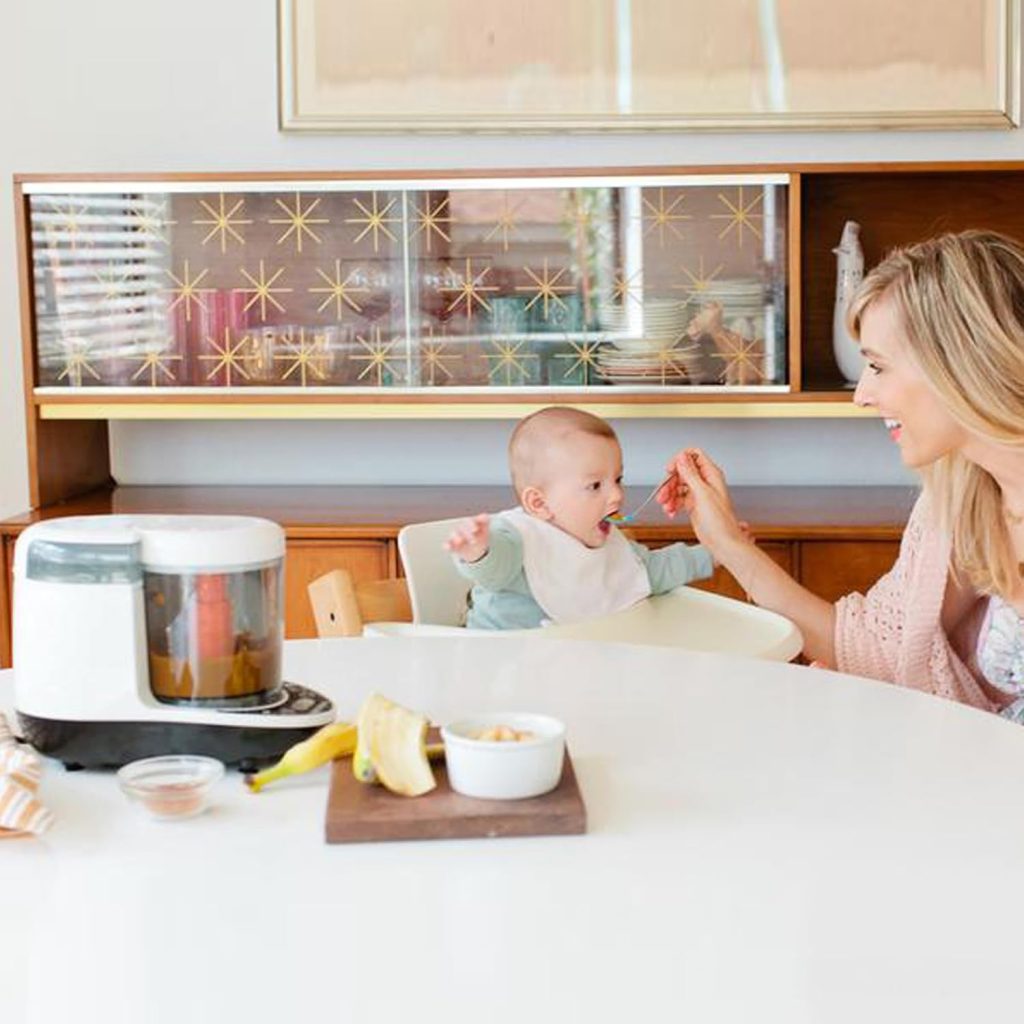
Baby Brezza One Step Baby Food Maker Deluxe [click to view…]
- Steams and blends automatically
- 3.5-cup capacity
- Glass bowl (no plastic contact)
- One-button operation
BEABA Babycook Neo ($200-280)
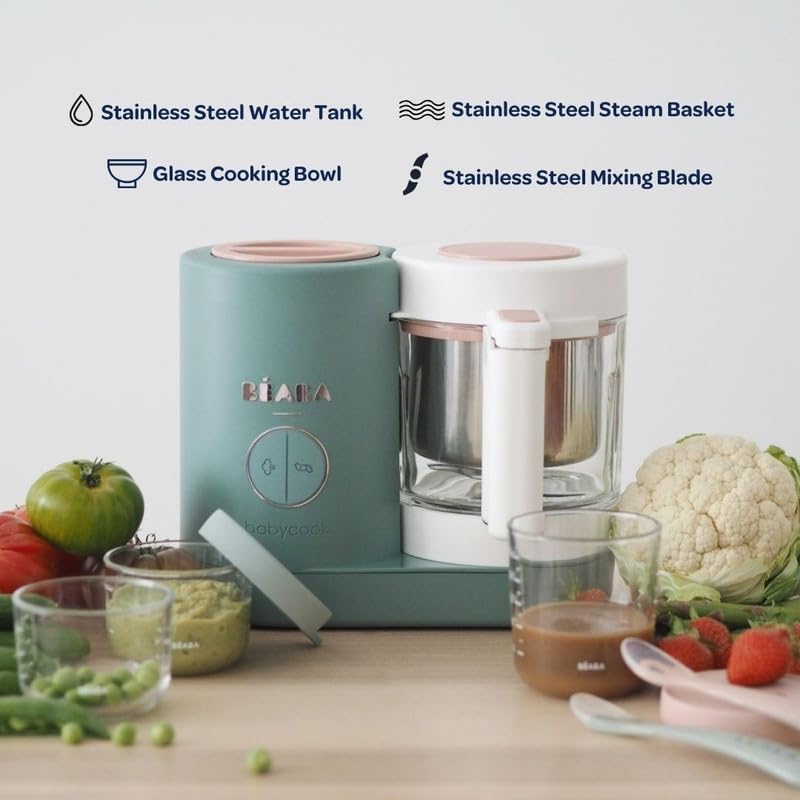
BEABA Babycook Neo Baby Food Maker [click to view…]
- Premium glass/stainless construction
- 5.5-cup capacity (largest available)
- Requires manual food transfer
- Sleek European design
2. Dedicated Baby Blenders
NutriBullet Baby Complete System ($50-70)

NutriBullet NBY-50100 Baby Complete Food-Making System [click to view…]
- 32oz capacity
- Includes freezer trays and storage cups
- Date-dial system for organization
- Compact countertop footprint
Nuby Mighty Blender Set ($50-70)
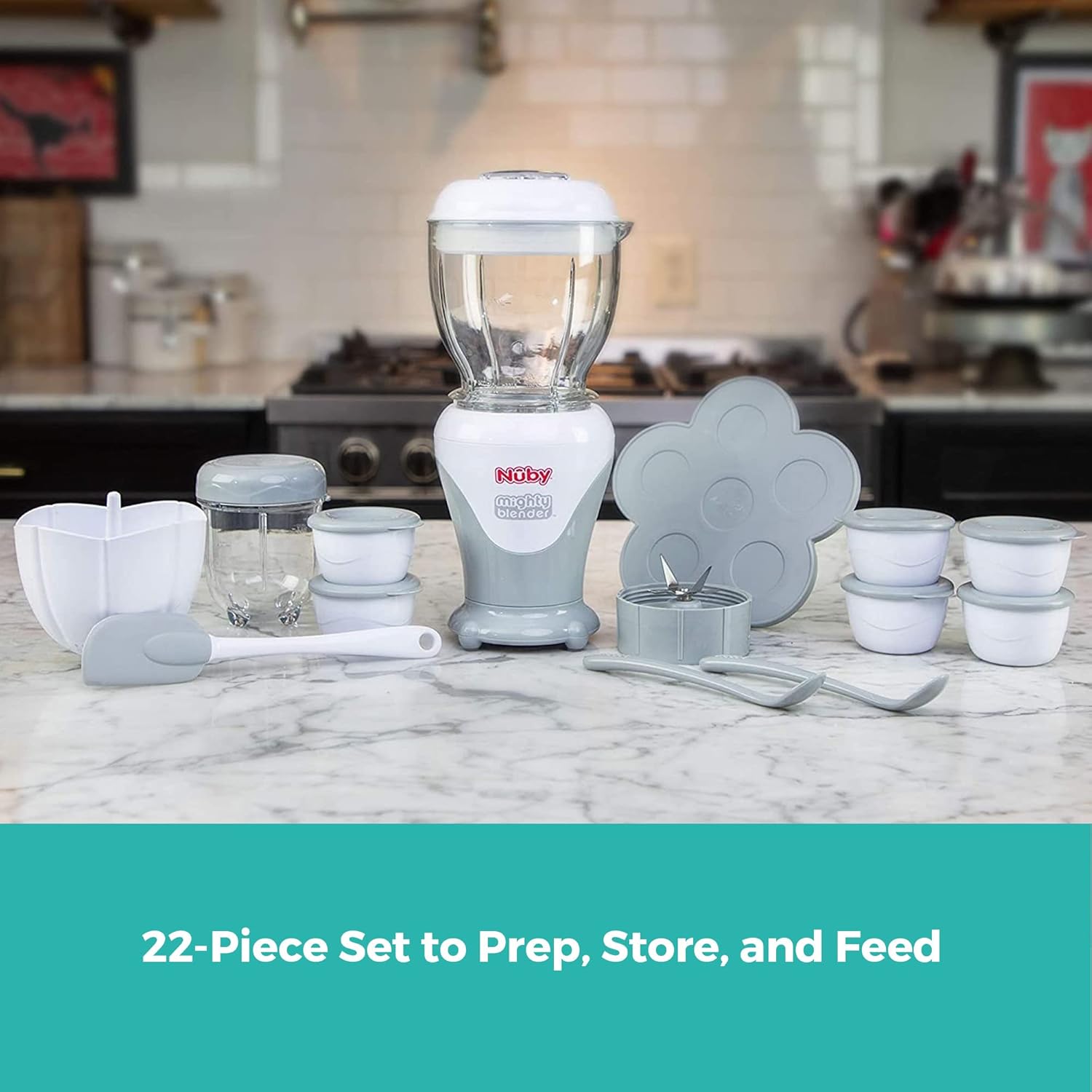
Nuby Mighty Blender [click to view…]
- Budget champion with 22-piece kit
- Microwave steamer included
- 200-watt motor (adequate for baby portions)
- Space-saving design
3. Versatile Kitchen Workhorses
- Ninja Foodi Power Blender ($150-200)
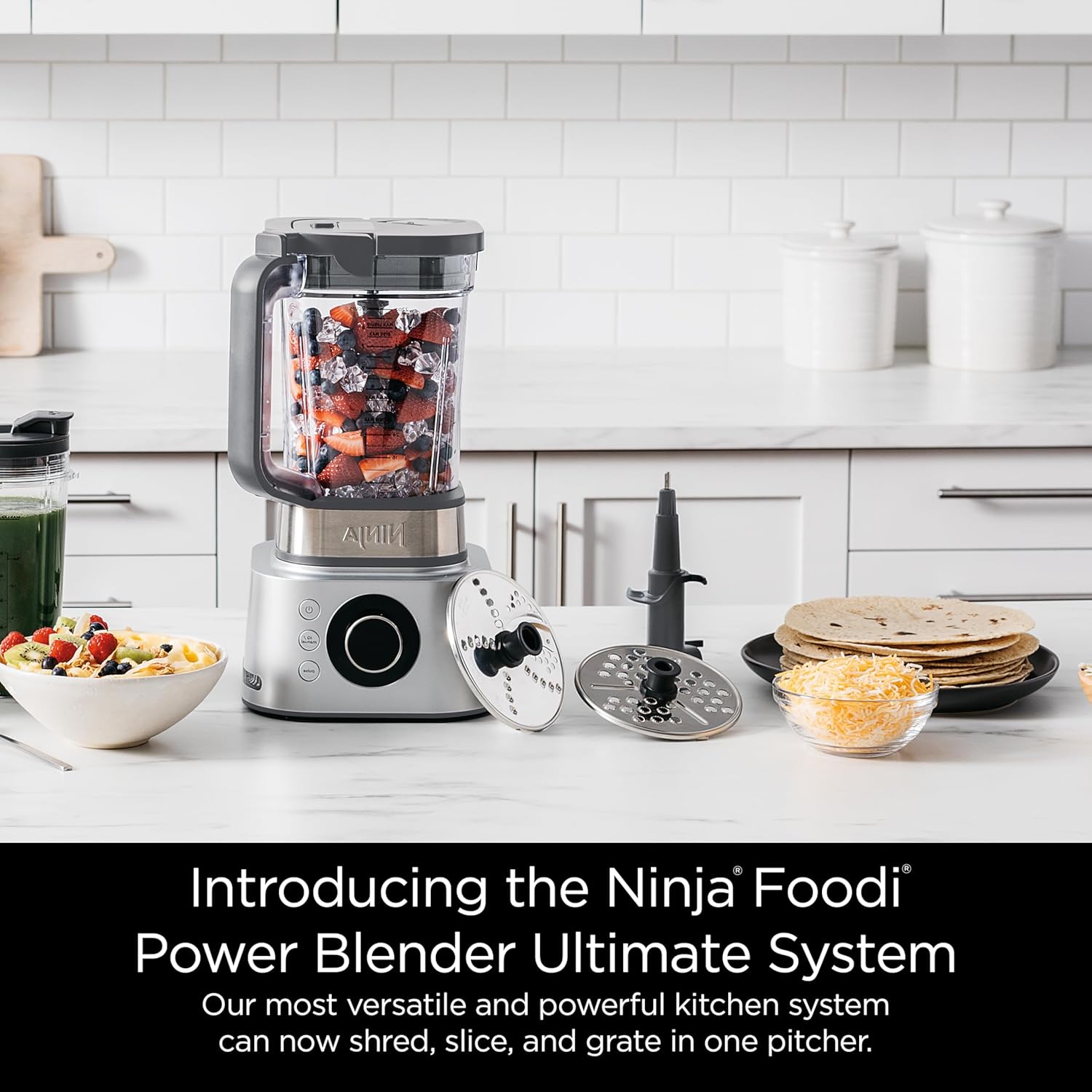
Ninja Blender & Food Processor Combo [click to view…]
- Variable speeds for different textures
- Large capacity for batch cooking
- Multi-functional (grows with family needs)
- Powerful motor handles anything
Food Mills: The Texture Teacher
What They Do: Manual food mills create “textured purees” with small, soft lumps that train your baby’s mouth to chew. This texture is impossible to achieve with blenders.
Top Amazon Pick:
- OXO Tot Mash Maker ($12-30)
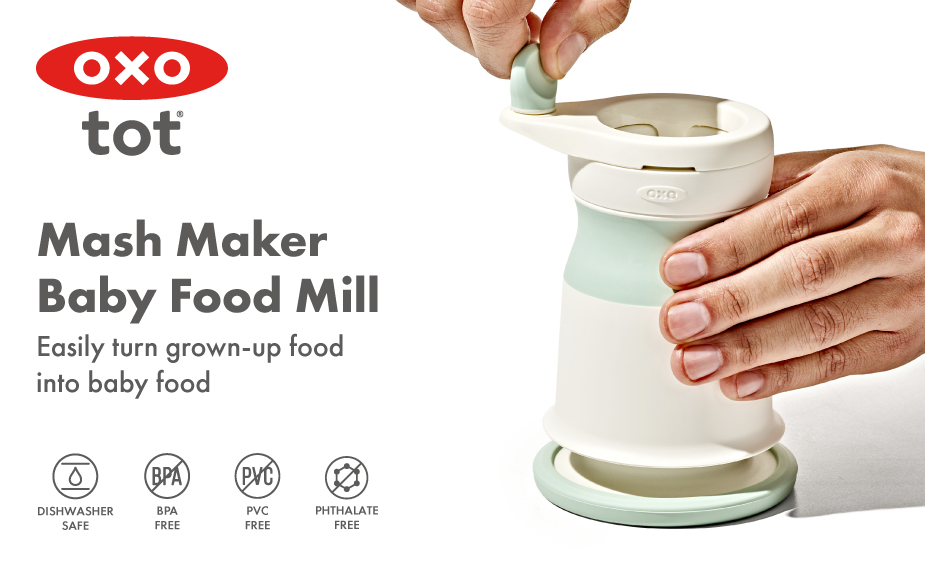
OXO Tot Mash Maker Baby Food Mill [click to view…]
- Creates perfect lumpy texture
- Highly portable for restaurants/travel
- Non-skid base for stability
- Requires pre-cooked soft foods
The Health Consequences of Choosing Wrong

Choosing Blender-Only: The Smooth Food Trap
Immediate Problems:
- Baby never learns to move food around their mouth
- Tongue muscles remain underdeveloped
- Transition to table foods becomes traumatic
Long-term Consequences:
- Feeding aversion lasting into toddlerhood
- Speech delays (same muscles used for talking)
- Difficulty with age-appropriate textures
- Mealtime battles and nutritional concerns
Choosing Food Mill Too Early: The Texture Shock
Immediate Problems:
- Excessive gagging and choking risks
- Baby rejects all solid attempts
- Stressful mealtimes for entire family
Long-term Consequences:
- Delayed solid food introduction
- Nutritional gaps during critical growth period
- Fearful relationship with food textures
Your Strategic Game Plan: When to Use What
Months 6-7: Blender Territory
Goal: Introduce eating skills with completely smooth textures
Best Choices:
- Budget Option: Nuby Mighty Blender Set
- Convenience Pick: Baby Brezza One Step
- Investment Choice: Ninja Foodi (grows with family)
Months 7-9: The Critical Transition
Goal: Introduce texture while maintaining safety
Strategy: Start with blender, gradually introduce food mill
- Week 1-2: Pure smooth purees (blender)
- Week 3-4: Add small amounts of milled texture
- Monitor baby’s comfort and adjust pace
Essential Tool: OXO Tot Mash Maker for texture progression
Months 9-12: Food Mill Focus
Goal: Prepare for family meals with appropriate textures
Best Approach:
- Use food mill for most meals
- Blender only for specific smooth needs
- Gradually increase lump size and variety
Product Comparison: Your Decision Matrix
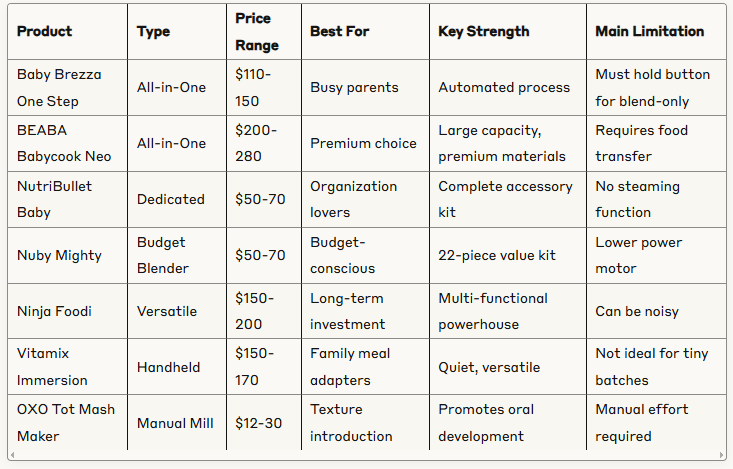
The Winning Strategy: Your Action Plan
For Maximum Development Success:
- Start Right (6-7 months): Choose any quality blender for smooth purees
- Transition Smart (7-9 months): Add OXO Tot Mash Maker to your toolkit
- Progress Purposefully (9-12 months): Use food mill as primary tool
Recommended Combinations:
Budget-Conscious Setup ($62-100):
- Nuby Mighty Blender Set + OXO Tot Mash Maker
- Total investment under $100
- Covers all developmental stages
Convenience-Focused Setup ($122-180):
- Baby Brezza One Step + OXO Tot Mash Maker
- Automated blending with manual texture control
- Perfect for busy schedules
Investment Setup ($162-230):
- Ninja Foodi + OXO Tot Mash Maker
- Long-term family appliance plus developmental tool
- Grows with your child’s needs
The Bottom Line: Don’t Risk Your Baby’s Development
The “wrong” choice isn’t about buying an inferior product—it’s about using the right tool at the wrong developmental stage. Your baby’s oral motor skills follow a predictable timeline, and the texture of their food must match their capabilities.
Remember:
- Smooth purees (6-7 months) = Blender territory
- Textured purees (7-9 months) = Food mill introduction
- Soft chopped foods (9-12 months) = Food mill focus
The smartest parents don’t choose between a blender OR a food mill—they use both tools strategically to support their baby’s natural development progression.
Your next step: Start with a quality blender for those crucial first purees, then add a food mill around 7 months. Your baby’s future eating habits—and your family’s mealtime peace—depend on getting this timing right.
Ready to make the right choice for your baby’s development? Click the product links above to find these recommended options on Amazon and start your baby’s feeding journey with confidence.
Dora Decora is a biophilic interior design specialist and passionate blogger. With a deep commitment to integrating nature into living spaces, Dora specializes in creating environments that foster human-nature connections through thoughtful design elements. Her approach emphasizes sustainable materials, natural lighting, and organic patterns that enhance wellbeing and reduce environmental impact.
This post (https://homechroma.com/baby-food-blender-vs-baby-food-mill) was originally published by Dora Decora on Home Chroma. As an Amazon Associates partner, we are compensated for all qualifying purchases.