You’re watching dark clouds race across the Montana sky. Thunder rumbles. You have three minutes—maybe less—before the downpour hits.
Can you get your tent up before you’re soaked?
If you’re using a traditional ground tent, the answer is no. Those pole-and-stake setups take 10-15 minutes on a good day. Add wind and rain? You’re looking at 20 minutes of frustration while getting drenched.
Hard-shell roof tents solve this problem with a method that seems too simple to work: gas struts pop the entire shelter open in 15-60 seconds. No poles to assemble. No stakes to hammer. Just release the latches and watch the tent deploy itself.
I tested this during an actual Montana thunderstorm last summer. Thirty seconds after releasing the latches, I was inside with the door zipped shut. The storm raged for two hours. I stayed completely dry.
Hard Shell vs. Soft Shell: Why Speed Matters
Roof tents come in two types: hard shell and soft shell. The difference in setup time is massive.
Soft Shell Tents:
- Require removing a protective cover
- Need manual unfolding of the base
- Often require installing support poles
- Take 3-10 minutes to set up
- Examples: Thule Approach M, Yakima SkyRise HD
Hard Shell Tents:
- Use gas struts for automatic deployment
- Pop open with just latch release
- Ready in 10-90 seconds
- Examples: Naturnest Sirius, VEVOR, iKamper Skycamp
The speed advantage isn’t just about convenience. In severe weather, every second counts. Hypothermia can set in faster than you think. Getting out of the wind and rain quickly isn’t luxury—it’s survival.
The Two Hard Shell Designs
Hard shell tents use two main designs, each with different deployment speeds:
Vertical Pop-Up Tents
- Lift straight up like a box
- Fastest deployment: 10-60 seconds
- More compact footprint
- Better wind stability
- Examples: VEVOR Hard Shell, Roofnest Falcon
Clamshell Tents
- Fold out horizontally
- Setup time: 30-90 seconds
- Larger interior space when open
- Can store bedding inside when closed
- Examples: Naturnest Sirius 1 Plus, iKamper Skycamp
Both styles easily beat the 3-minute requirement. The choice comes down to whether you prioritize absolute speed (pop-up) or maximum space (clamshell).
Top Fast-Deploying Roof Tents
Naturnest Sirius 1 Plus – The Speed Demon
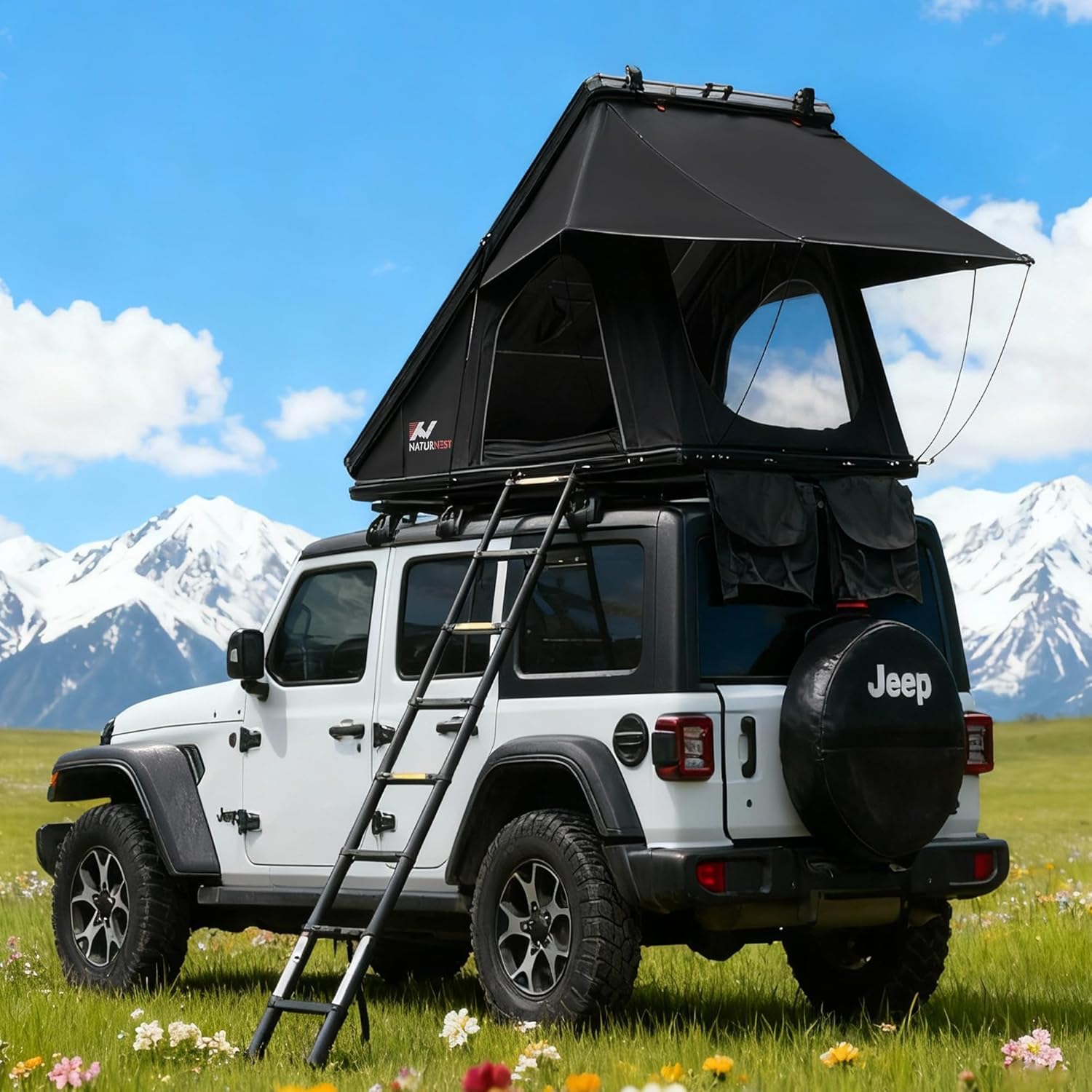
Bayati Naturnest Rooftop Tent Hard Shell [click to view…]
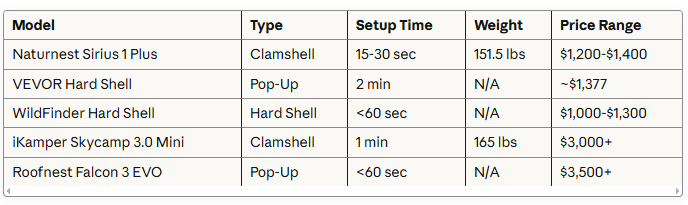
Setup Time: 15-30 seconds Capacity: 2-3 people Weight: 151.5 lbs Approximate Price: $1,200-$1,400
This clamshell tent claims the fastest deployment time on the market. Users confirm it opens in under 30 seconds. The ABS shell with aluminum frame provides solid protection from rain and wind.
The catch? The stock mattress is terrible. You’ll want to budget an additional $200-300 for a quality replacement foam pad. Factor this into your total cost.
VEVOR Hard Shell – The Verified Performer
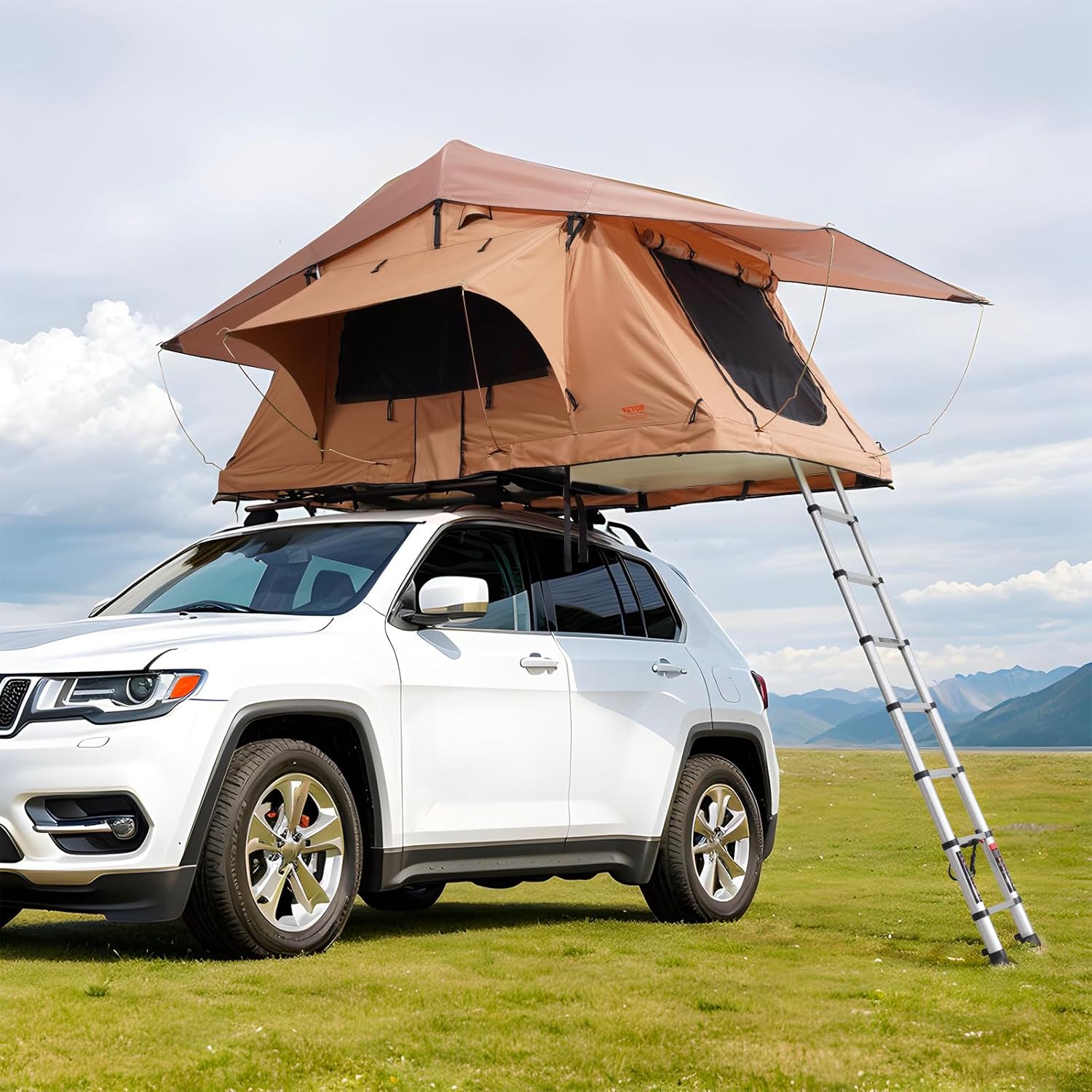
VEVOR Rooftop Tent [click to view…]
Setup Time: 10 seconds (claimed), 2 minutes (verified by users) Capacity: 2 adults + 1 child Waterproof Rating: 2000MM Price: Around $1,377
Real customers report setting this tent up in 2 minutes and taking it down in 5 minutes. The air pressure rods make deployment effortless. The manufacturer rates this tent for Level 6 winds.
The 420D Oxford fabric with 2000MM waterproof rating handles moderate rain well, though it’s not rated for the most severe downpours.
WildFinder Hard Shell – The Pleasant Surprise
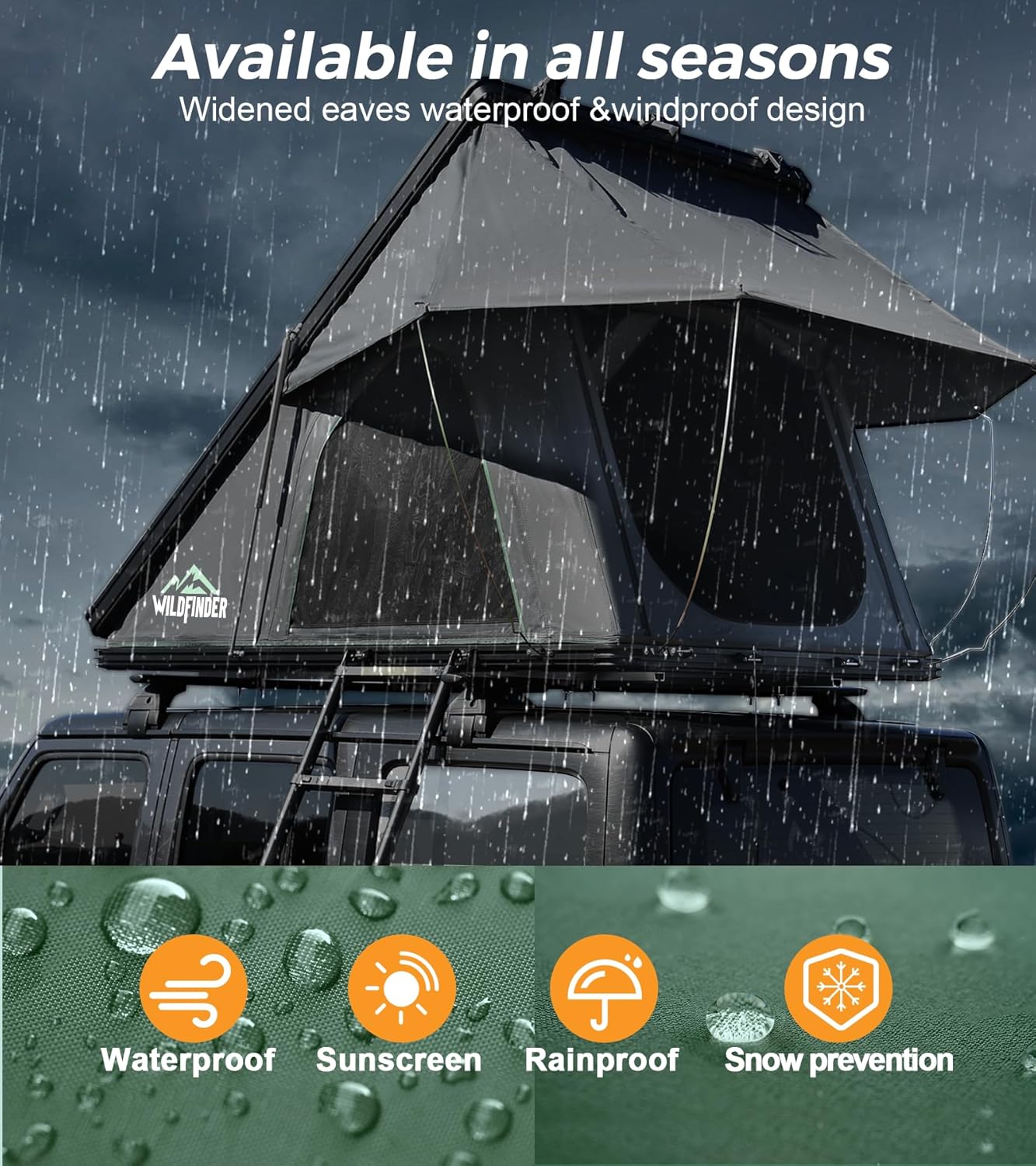
WildFinder Rooftop Tent Hard Shell [click to view…]
Capacity: 2-3 people Setup Time: Under 60 seconds Price: Approximately one-third the cost of premium alternatives
Users consistently report being surprised by the build quality relative to the price. The tent includes LED light strips and multiple mesh screens—features you’d expect from higher-priced models.
Premium Benchmarks ($2,500+)
iKamper Skycamp 3.0 Mini – The Condensation Killer
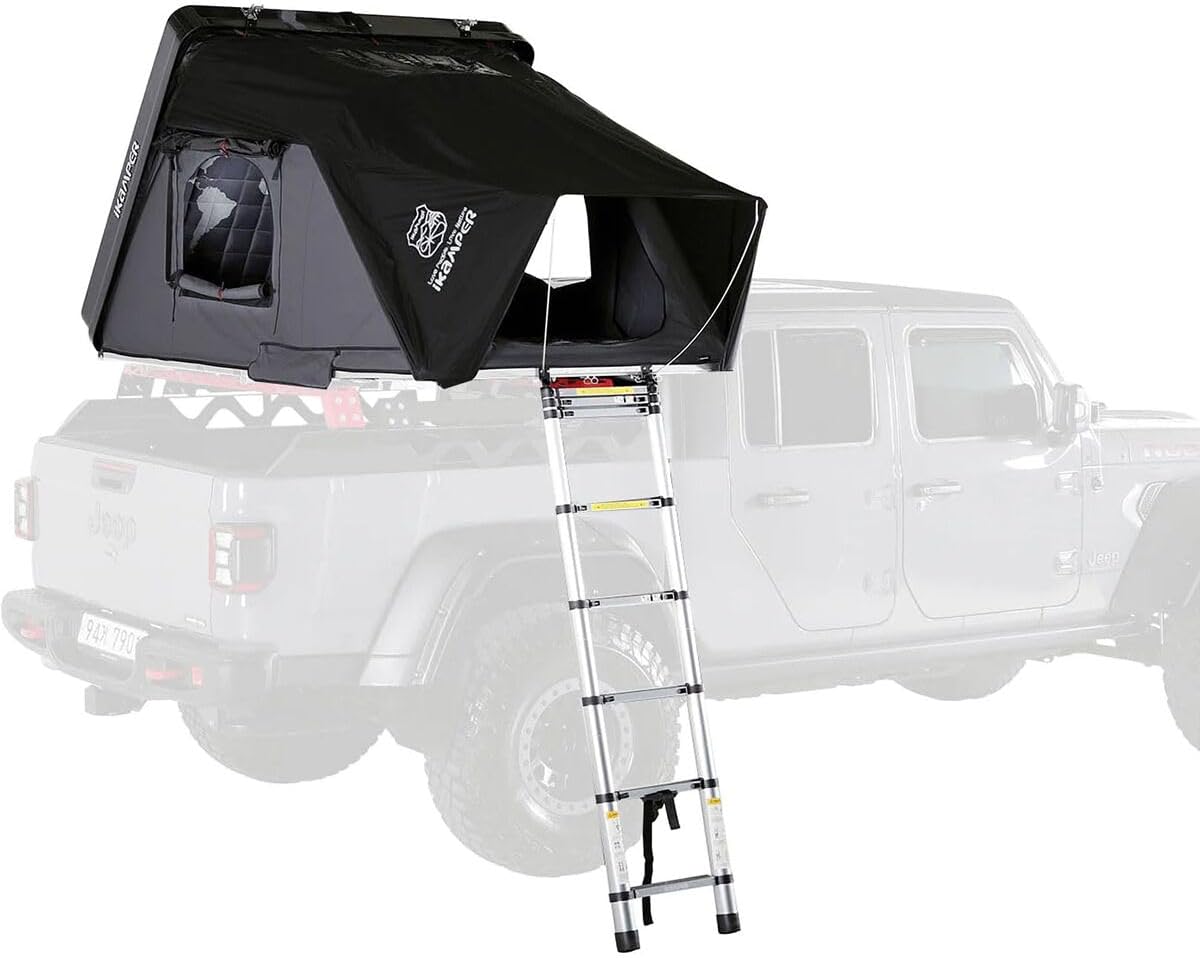
Mini Skycamp 3.0 by iKamper [click to view…]
Setup Time: 1 minute (patented system) Capacity: 2 people Weight: 165 lbs Price: $3,000+
This tent justifies its premium price with quilted insulation lining the interior shell. This layer keeps the tent warmer in cold weather and dramatically reduces condensation—a critical feature for mountain camping where temperatures drop fast.
The insulation creates a thermal break between the cold outer shell and warm interior, preventing your breath from condensing on the tent walls and soaking your sleeping bag.
Roofnest Falcon 3 EVO – The Tank
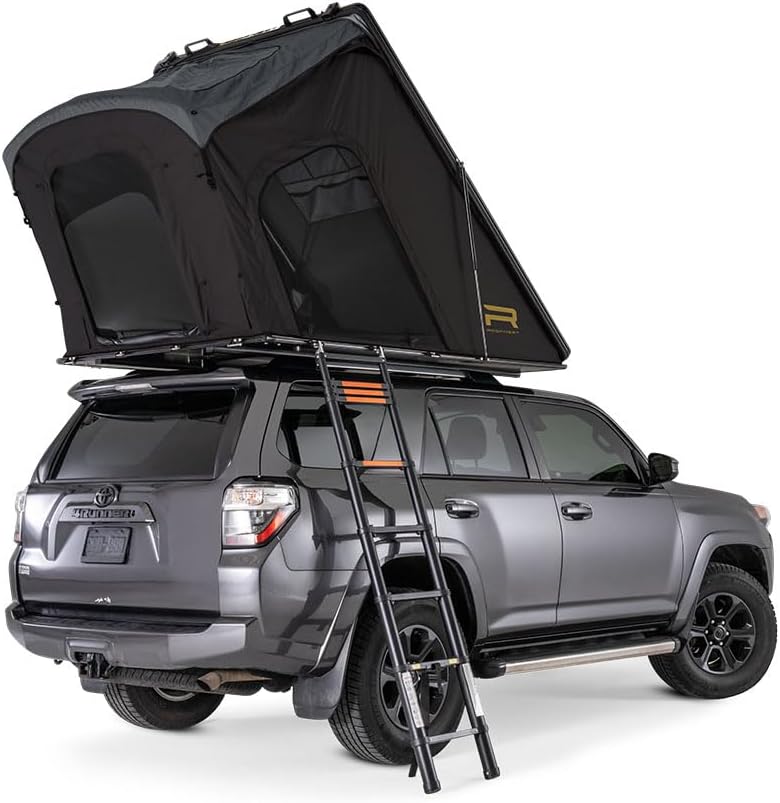
Falcon 3 Evo XL Air Hard-Shell Aluminum Roof Top Tent [click to view…]
Setup Time: Under 60 seconds Capacity: 2 people Price: $3,500+
The Falcon’s shell uses PC/ABS composite reinforced with LINE-X coating. This material resists hail, stone strikes, and UV degradation far better than standard ABS plastic. The tent also includes a 2-inch self-inflating foam mattress—no need for upgrades.
If you’re serious about four-season camping or frequent severe weather, this construction quality pays off over years of use.
Speed Comparison Table
Weather Resistance: Beyond Just Speed
Fast deployment means nothing if the tent leaks or collapses in high winds. Here’s what separates good tents from great ones.
Shell Materials Matter
Standard ABS Plastic
- Used in budget tents
- Adequate for most conditions
- Degrades from UV exposure over time
- Less impact resistant
Composite Shells (Premium)
- PC/ABS blends with protective coatings
- Resist hail and stone strikes
- Better long-term UV resistance
- Higher price point but longer lifespan
The Roofnest Falcon’s LINE-X coating is similar to truck bed liner material—nearly indestructible. If you camp frequently in areas with hail or rough terrain, this durability difference becomes significant.
Waterproof Ratings Explained
Waterproof ratings measure how much water pressure fabric withstands before leaking. Higher numbers mean better protection:
- 2000MM: Handles light to moderate rain (VEVOR)
- 3000MM: Good for most conditions
- 5000MM: Excellent for heavy rain (Tuff Stuff Alpha)
A Montana thunderstorm can produce intense rainfall. While 2000MM works for most situations, severe storms with wind-driven rain can overwhelm lower-rated fabrics at the seams.
The Condensation Problem
Hard shell tents seal well—which creates a condensation issue. When you breathe out warm, humid air inside a cold tent, that moisture condenses on the inner walls. By morning, everything can be damp.
Premium tents address this with:
- Quilted insulation (iKamper Skycamp)
- Better ventilation systems
- Higher-quality fabric that breathes better
Budget tents often lack these features. You’ll need to crack windows for airflow, which lets in some cold air. The trade-off is staying dry versus staying warm.
Vehicle Compatibility: The Safety Factor
The most common mistake first-time buyers make? Not checking their vehicle’s load rating.
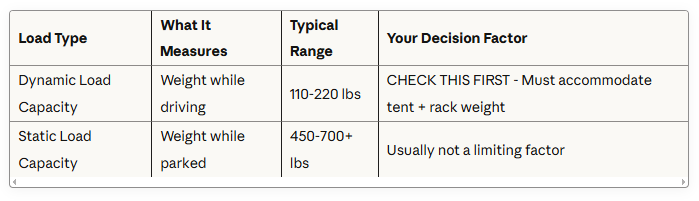
Dynamic Load Capacity (DLC) – The Critical Number
This is the maximum weight your vehicle’s roof can safely carry while driving. Most SUVs and trucks have a DLC of 110-220 lbs (50-100 kg).
Here’s the problem: Most hard shell tents weigh 150-175 lbs. Add a 30-50 lb roof rack, and you’re pushing or exceeding the limit on many vehicles.
You must check your vehicle’s owner manual for the specific DLC rating before buying any roof tent.
Exceeding the DLC:
- Raises your vehicle’s center of gravity
- Affects handling and braking
- Increases rollover risk
- Can damage your roof structure
- Voids warranties
Static Load Capacity – Less Concern
This is the weight your roof supports when parked. Most vehicles handle 450-700+ lbs of static load easily. The tent weight plus two adults and gear fits comfortably within this limit.
The static capacity doesn’t affect your purchase decision—the dynamic rating does.
Off-Road Considerations
If you’re camping on unpaved roads, many manufacturers recommend halving your vehicle’s DLC. A vehicle rated for 165 lbs on pavement might only safely carry 82 lbs off-road.
This limitation forces off-road campers to choose the lightest possible tents or upgrade to vehicles with higher load ratings.
Safety Checklist
The Hidden Cost: Mattress Quality
Here’s what many Amazon reviewers found after receiving their budget roof tents: the mattress is often the weakest component.
Users of the Naturnest specifically mention the stock foam mattress “sucks” and requires immediate replacement. The VEVOR claims to include a “thick, non-deforming foam mattress,” but reviews suggest otherwise.
Cost of Quality Mattress Upgrades:
- Generic memory foam replacement: $150-200
- High-performance RTT mattress (HEST Dually): $300-400
This hidden expense narrows the price gap between budget and premium tents. The Naturnest at $1,400 plus a $300 mattress puts you at $1,700—compared to the Roofnest Falcon with its included premium mattress at $3,500.
You’re still saving money with the budget option, but the difference isn’t as dramatic as the initial price suggests.
The 4-Step, 3-Minute Deployment
Here’s how to maximize your setup speed when weather hits:
Step 1: Position Your Vehicle (30 seconds) Park facing into the wind. This reduces buffeting on clamshell designs and provides a more stable structure.
Step 2: Release Latches and Deploy (15-60 seconds) Unlatch the 2-4 external locks. The gas struts automatically lift the roof and tension the fabric walls. No manual effort required.
Step 3: Deploy and Secure Ladder (30-60 seconds) Extend the telescoping ladder and lock it in place. The ladder supports part of the static load when you’re inside, so secure positioning matters for safety.
Step 4: Enter and Seal (30-60 seconds) Climb inside and zip all doors and windows closed. You’re now protected from the elements.
Total elapsed time: 105-210 seconds. Well under the 3-minute target.
Which Tent Should You Buy?
If Budget is Your Priority: Get the VEVOR Hard Shell or Naturnest Sirius 1 Plus. Both deploy fast (under 2 minutes), handle moderate weather well, and cost roughly one-third the price of premium alternatives. Plan to upgrade the mattress immediately.
Check your vehicle’s dynamic load capacity first. If your vehicle’s DLC is marginal, the slightly lighter Naturnest might be the safer choice.
If Performance and Durability Matter More: Choose the iKamper Skycamp 3.0 Mini or Roofnest Falcon 3 EVO. The superior materials, integrated insulation, and premium mattresses provide better comfort and longer lifespan. The higher upfront cost pays off if you camp frequently in severe weather or cold temperatures.
The iKamper’s condensation control gives it an edge for cold-weather camping. The Roofnest’s impact-resistant shell wins for rough terrain and hail-prone areas.
Final Pre-Purchase Checklist
Before you buy any roof tent:
✓ Check your vehicle’s Dynamic Load Capacity in the owner’s manual ✓ Verify your roof rack system is rated for the total weight (tent + rack) ✓ Measure your vehicle’s height with the tent mounted (garage clearance) ✓ Budget for a mattress upgrade if buying a budget tent ✓ Practice deployment several times before your first camping trip ✓ Test the setup at home, not during an actual storm
The Bottom Line
A 3-minute roof tent deployment isn’t “crazy”—it’s the standard performance of modern hard-shell technology. Gas struts and quick-release latches have made emergency shelter setup remarkably fast and reliable.
Budget options from Naturnest and VEVOR deliver on the speed promise at prices that make this technology accessible. Premium options from iKamper and Roofnest justify their higher costs through superior materials, better insulation, and longer-term durability.
The right choice depends on your camping frequency, typical weather conditions, and budget for both the initial purchase and necessary upgrades.
One thing’s certain: once you’ve deployed a hard-shell roof tent in 2 minutes during a surprise storm, you’ll never go back to wrestling with poles and stakes again.
Dora Decora is a biophilic interior design specialist and passionate blogger. With a deep commitment to integrating nature into living spaces, Dora specializes in creating environments that foster human-nature connections through thoughtful design elements. Her approach emphasizes sustainable materials, natural lighting, and organic patterns that enhance wellbeing and reduce environmental impact.
This post (https://homechroma.com/best-car-roof-tents-for-camping) was originally published by Dora Decora on Home Chroma. As an Amazon Associates partner, we are compensated for all qualifying purchases.