Every winter, the same thing happens. You buy a pair of leggings labeled “thermal,” “brushed,” or “fleece-lined.” You wear them on the first cold day. By lunch, you’re shivering, clammy, or convinced the product is a fraud.
It’s not the product. It’s the purchase.
Three predictable mistakes drive nearly every complaint about cold-weather leggings—and they repeat year after year because most buyers don’t understand what they’re actually buying. Fix these mistakes, and you’ll stay genuinely warm. Miss them, and the best-rated pair on the market won’t save you.
Why Fleece Lining Works (and Why It Can Still Fail You)
Before the mistakes, you need to understand the mechanism.
Fleece-lined leggings work through loft. The brushed interior raises thousands of tiny fibers that trap a dense layer of still air against your skin. Air is a poor heat conductor—its thermal conductivity is roughly 0.024 W/m·K—which makes it an excellent insulator when it’s not moving. The fleece lining holds it in place. That’s it. That’s the whole system.
When that system is disrupted—by moisture, wind, or the wrong insulation weight for your activity—the warmth disappears fast. The three mistakes below all attack the loft mechanism from different angles.
Mistake #1: Confusing Base Layers With Standalone Leggings
This is the most common error in the market, and the terminology doesn’t help.
Words like “thermal,” “brushed,” and “lined” appear on both base layers (underwear designed to go under pants) and standalone leggings (meant to be worn alone). They’re not the same product.
The squat test problem
Standalone leggings must be opaque under tension. If you can see through them when you squat or bend, they’re not designed to be worn alone—they’re base layers. Wearing sheer base layers as outerwear doesn’t just create an aesthetic issue. These garments typically prioritize moisture transport over wind resistance, which leaves you exposed to wind-chill the moment temperatures drop.
Structure matters too
Standalone leggings from brands like Baleaf or CRZ Yoga are built with high-rise waistbands and internal drawstrings. The waistband stays up during movement. Base layers use minimal elastic designed to lie flat under other clothes—which means they slip, bunch, and create thermal gaps when worn alone.
What to look for:
- Fabric density that passes the squat test in the product photos or reviews
- A high-rise waistband (typically 3.5–5 inches)
- An internal drawstring on the waist
- No mention of “worn under” or “base layer” in the product description

Mistake #2: Choosing Cotton or Cotton Blends
Cotton feels soft. It’s familiar. It’s also one of the worst possible fibers for cold-weather performance, and buyers choose it every season based on comfort assumptions that don’t hold up in winter conditions.
The physics are brutal
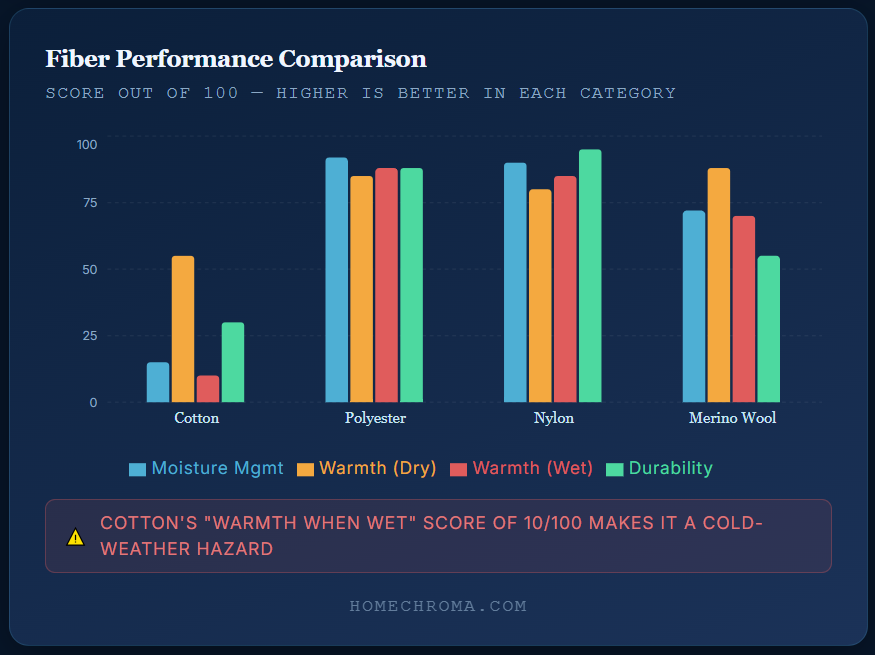
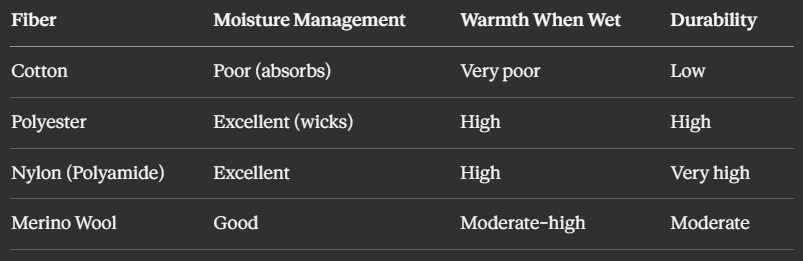
Cotton absorbs up to 27 times its weight in water. Even a casual winter walk generates perspiration. Once cotton fibers absorb that moisture, the air pockets that provide insulation are replaced by water—a material that conducts heat away from your body at a dramatically faster rate than dry fabric. The moment you stop moving, the wet fabric accelerates heat loss. This is how hypothermia starts in outdoor recreation scenarios: not from cold air alone, but from wet clothing against skin.
What actually works: synthetics
Polyester, nylon (polyamide), and elastane are the correct materials for cold-weather leggings. They’re hydrophobic—they repel moisture rather than absorb it—and they wick sweat away from the skin before it has a chance to saturate the fabric.
The two leading blends in the current market:
- 87% Polyester / 13% Spandex — Baleaf’s Laureate line uses this ratio. It wicks well and retains shape over time.
- 87% Polyamide / 13% Spandex — CRZ Yoga’s thermal line uses nylon instead of polyester, producing a smoother, more wind-resistant exterior that performs better in high-wind conditions.
A minimum of 10–15% Spandex or Elastane is critical in either blend. Without it, the legging loses its compressive fit over time, creating gaps between the fabric and skin where cold air can enter.
Merino wool is a legitimate alternative for those who prefer natural fibers—it manages moisture better than cotton and retains warmth when damp—but it’s significantly more expensive and less durable than quality synthetics.
Mistake #3: Assuming Thicker Always Means Warmer
This mistake is counterintuitive. More insulation sounds like it can only help. In practice, over-insulating for your activity level is as uncomfortable—and sometimes as dangerous—as under-insulating.
The sweat-freeze cycle
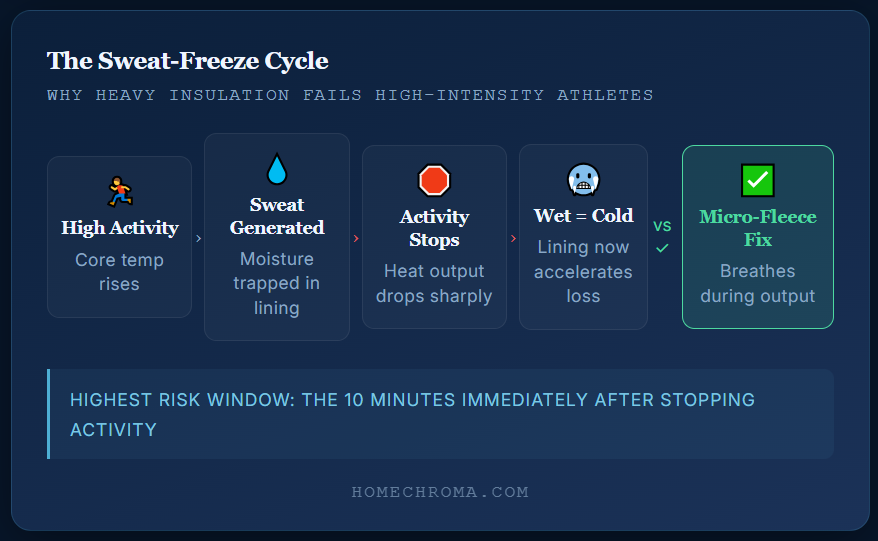
High-intensity activity like winter running raises core temperature significantly. If you’re wearing heavy plush-lined leggings during a run, your body generates heat faster than the garment can release it. You sweat. The moisture gets trapped inside a thick, dense lining that wasn’t built to manage high-output moisture. Then you stop running. The saturated lining cools rapidly. You’re now wearing cold, wet insulation—exactly the opposite of what you intended.
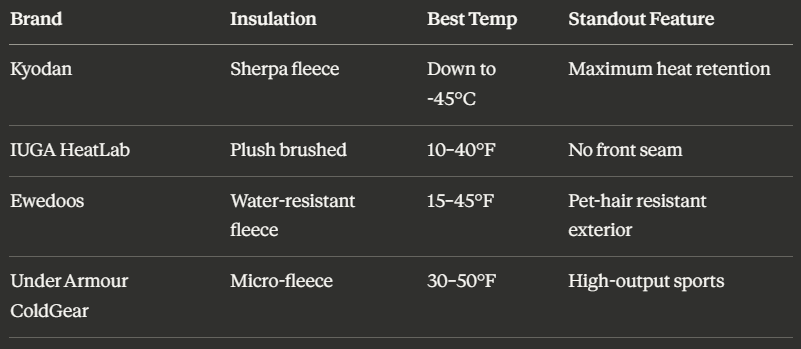
Match insulation to activity
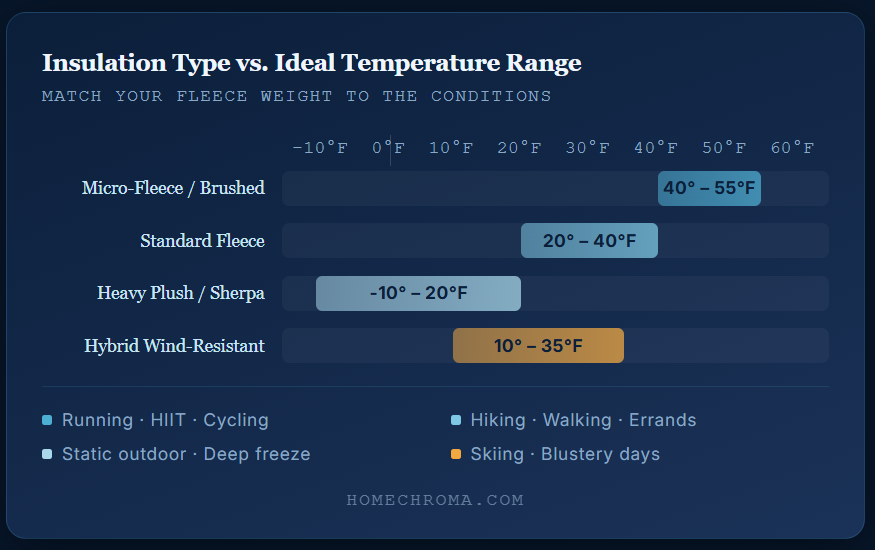
Use this as a starting point:
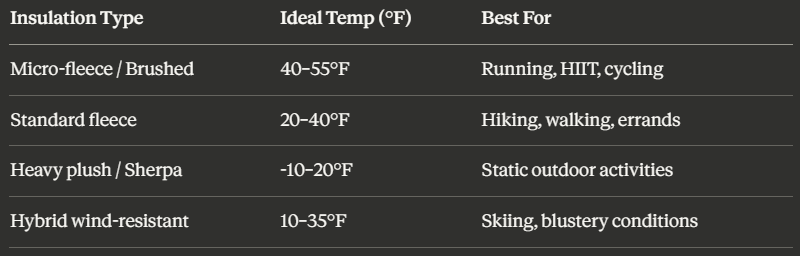
The transition problem
The highest-risk moment isn’t during activity—it’s the 10 minutes after. Moving from high output to standing still creates what’s called the “sweat-freeze cycle.” Technical gear from brands like Baleaf and 90 Degree by Reflex addresses this through body-mapping construction, where different fabric weights are used in different zones of the legging based on how much heat that area typically produces. It’s a detail most buyers never notice, but it matters significantly on days where you’re moving between indoor and outdoor environments.
The Top Brands Breaking Down by Use Case
Now that the mistakes are clear, here’s how the leading brands stack up against them:
Baleaf — Best for Multi-Activity Versatility
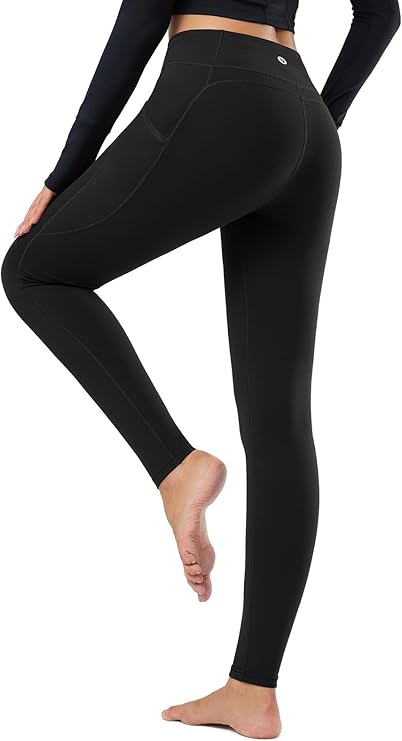
Baleaf’s Laureate line is built around the 87% Polyester / 13% Spandex ratio with a water-resistant coating and three-pocket construction. The high-waist design with internal drawstring solves the base layer confusion problem directly. Ratings consistently land around 4.7–4.8/5 across thousands of reviews.
One consistent complaint: Baleaf leggings pill if washed on high heat or with fabric softener. Wash cold, air dry, skip the softener—problem solved.
Price range: $32–$49
CRZ Yoga — Best for Wind Resistance and Aesthetics
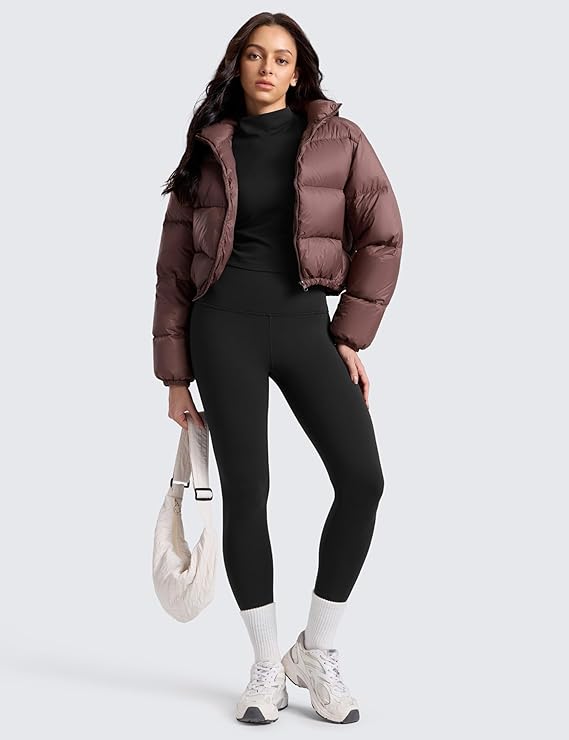
CRZ Yoga’s thermal fleece-lined leggings use polyamide (nylon) instead of polyester. Nylon creates a smoother, denser exterior that blocks wind more effectively than standard knit fabrics. Buyers in high-wind regions like the Rockies consistently rate this construction as noticeably superior on blustery days.
The internal drawstring addresses slipping during high-impact cardio. The brand is frequently positioned as a premium alternative at a mid-range price point, and the technical construction justifies that positioning.
90 Degree by Reflex — Best Budget Entry Point
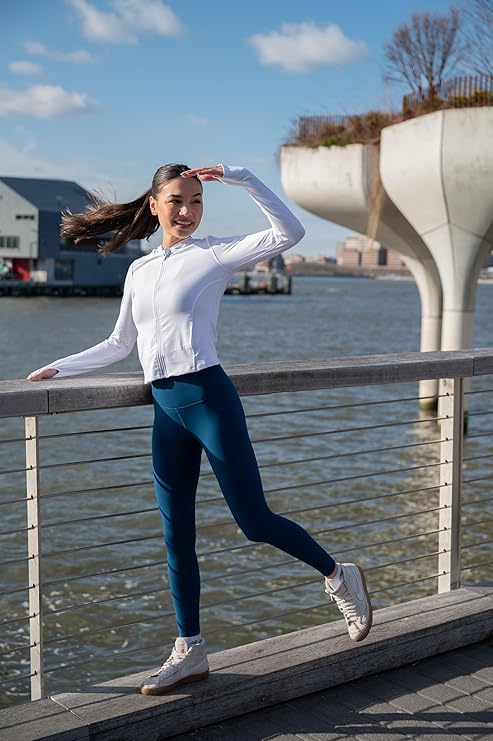
The standard blend here is 88% Polyester / 12% Spandex with a 4.5-inch elastic waistband that provides both warmth and compression. Colorway selection is extensive, which drives accessibility.
Same caveat as Baleaf: pilling is a risk without proper washing technique. Using a mesh laundry bag and cold water prevents most of it.
Yogipace — Best for Fit and Length
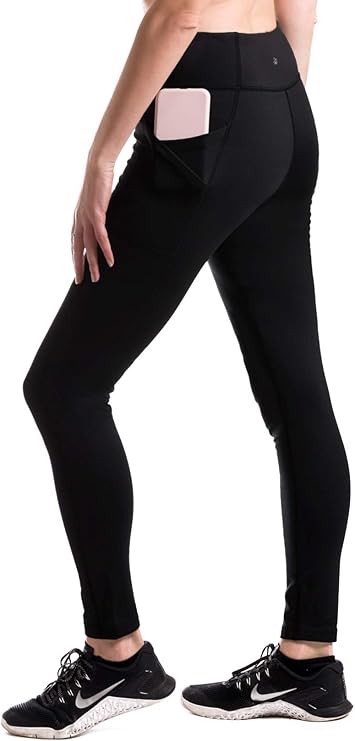
Most brands offer one inseam length. Yogipace offers four:
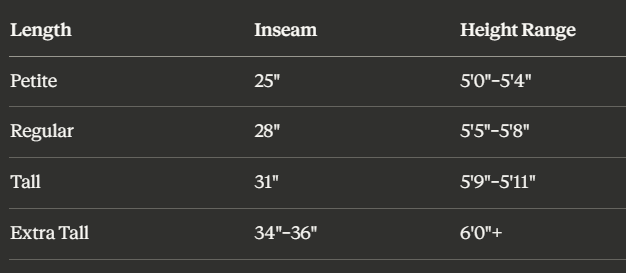
This matters for thermal performance, not just aesthetics. A legging that’s too short creates an ankle gap—a direct cold air entry point that undermines the entire insulation system. The water-resistant model also includes a zippered back pocket, preferred by runners who need secure storage without side-pocket bulk.
Specialty Picks for Extreme Cold
Kyodan Sherpa-Lined Leggings
Kyodan uses a full Sherpa lining—a thick, wool-like polyester pile significantly denser than brushed fleece. Rated to approximately -45°C (-49°F), these are the warmest standalone leggings currently available. The tradeoff is bulk: these won’t work under fitted clothing or for high-activity use.
Standard market leaders are sufficient for most winter conditions. Polar vortex situations require a different approach.
IUGA HeatLab
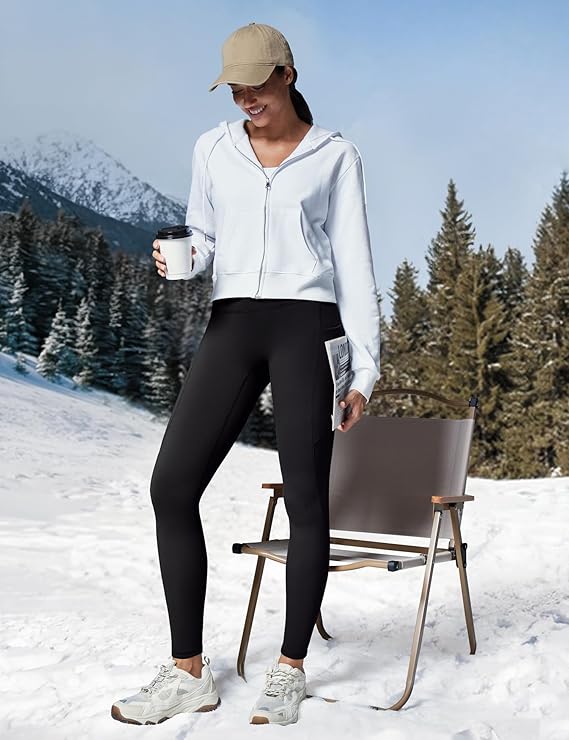
The HeatLab series gained viral traction for a specific design decision: no front seam. This eliminates a common comfort complaint while the fabric runs 20% thicker than the previous generation. Best suited for long periods of static cold—standing at a bus stop, attending outdoor events, waiting in lines.
Fake Sheer Tights: The Overlooked Category
A specific product type solves a specific problem: staying warm in skirts and dresses without thick, visible tights.
“Fake sheer” fleece-lined tights use a two-layer construction. The inner layer is a thick, skin-tone fleece in multiple shades. The outer layer is a sheer black or neutral mesh. The fleece shows through the mesh, creating the visual appearance of sheer hosiery while the thermal lining does its job.
Verified options:
- Hue Faux Sheer Fleece-Lined Tights — ~$20, well-reviewed for realistic appearance and secure waistband
- X-CHENG Fleece-Lined Tights — Under $15, 9,600+ reviews, multiple shades, multi-pack availability
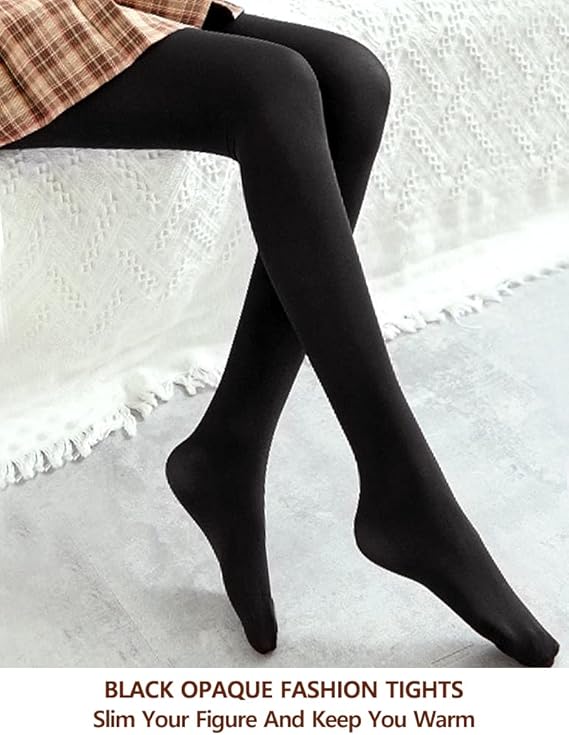
- Vero Monte Opaque Fashion Tights — Jewel tones for professional settings where full opacity is preferred. Pictured below:
Maintenance: The Part Most Buyers Skip
The most common complaints—pilling, stretched-out waistbands, reduced warmth—trace back to washing errors more often than product defects.
What destroys the loft:
- High-heat drying “singes” the micro-fibers, causing them to clump and permanently reducing insulating performance
- Fabric softeners coat fibers with a waxy layer that blocks moisture-wicking function entirely
The correct protocol:
- Turn leggings inside out before washing
- Cold water, gentle cycle
- Skip fabric softener entirely
- Air dry whenever possible; if using a dryer, lowest heat setting only
- Use a mesh laundry bag to reduce pilling friction
This adds about 30 seconds to laundry prep and extends the functional life of the garment by years.
The Bottom Line
Three mistakes. One fix each.
- Categorization error — Buy standalone leggings, not base layers. Check for opacity, high-rise waistbands, and drawstrings before purchasing.
- Cotton selection — Choose polyester or nylon blends with at least 10–15% Spandex. Cotton absorbs moisture; synthetics wick it away.
- Over-insulating — Match the fleece weight to your activity. Brushed fleece for running. Standard fleece for walking. Heavy Sherpa for standing in -20°F.
The market has the right products for every temperature range and activity level. Baleaf for versatile multi-sport use, CRZ Yoga for wind resistance, Yogipace for proper fit, Kyodan for deep-freeze conditions. The leggings work when you know what you’re buying—and avoid the three traps that send shoppers back to return queues every January.
Dora Decora is a biophilic interior design specialist and passionate blogger. With a deep commitment to integrating nature into living spaces, Dora specializes in creating environments that foster human-nature connections through thoughtful design elements. Her approach emphasizes sustainable materials, natural lighting, and organic patterns that enhance wellbeing and reduce environmental impact.
This post (https://homechroma.com/best-fleece-lined-leggings) was originally published by Dora Decora on Home Chroma. As an Amazon Associates partner, we are compensated for all qualifying purchases.