You know the drill.
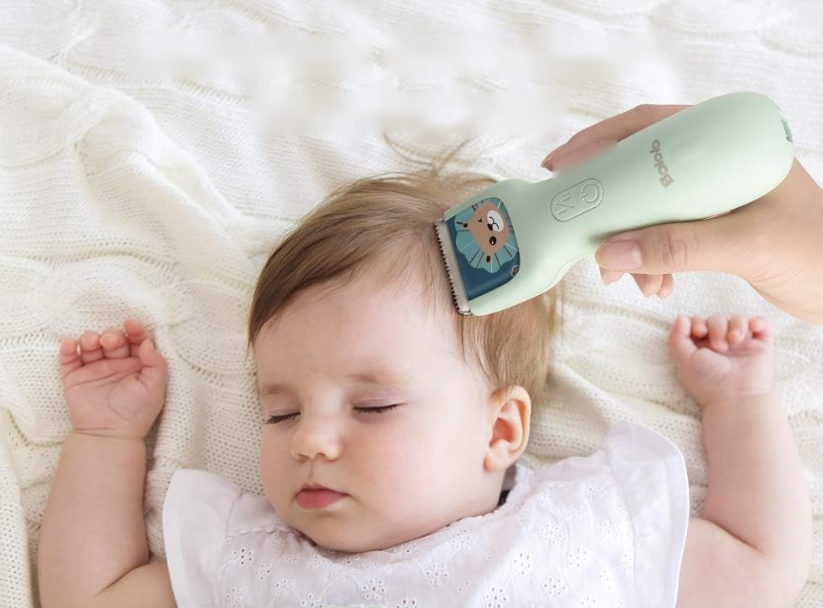
You grab the clippers. The buzz starts. Your toddler takes one look at you and bolts.
Twenty minutes later, you have a half-finished haircut, a crying child, and clipper marks on the kitchen table.
It doesn’t have to be this way.
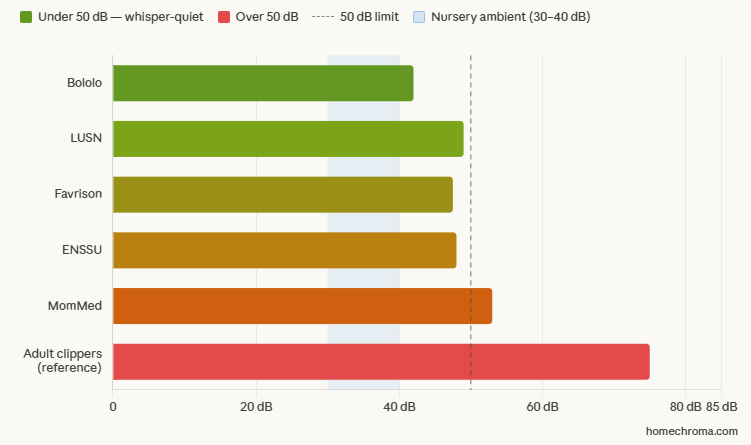
The right clippers run at 42 to 48 decibels — roughly the volume of a quiet conversation. Quiet enough to finish the job while your child naps. Quiet enough that they stop flinching the moment you switch them on.
This guide breaks down exactly which models work, what the specs actually mean, and how to get through a haircut without a scene.
Why Noise Is the Real Problem
Standard adult clippers run at 70 to 80 decibels. That’s close to the noise level of a vacuum cleaner.
For a toddler, that triggers a stress response. Fight or flight. Every time.
A quiet nursery sits between 30 and 40 decibels. To avoid waking a sleeping child, your clippers need to stay within roughly 10 decibels of that background level.
The best pediatric clippers today operate between 42 and 53 decibels. That’s the difference between a child who tenses up and one who stays calm — or keeps sleeping entirely.
The 50 dB rule: Anything below 50 dB qualifies as whisper-quiet. That’s the benchmark to shop by.
What to Look for Before You Buy
Decibel Rating
This is the most useful number on the spec sheet. Target under 50 dB. Some models go as low as 42 dB.
Blade Material
Ceramic blades stay cooler than steel during use. For a child who’s still or sleeping, heat buildup from steel blades can cause discomfort or trigger a waking response. Ceramic is the standard for infant-safe designs.
Rounded Blade Tips
Look for R-shaped rounded corner blades. The tips are widened and curved so the cutting edge never makes sharp contact with the scalp — even if your hand angle shifts.
IPX7 Waterproofing
IPX7 means the device can be submerged up to one meter for 30 minutes. That matters for cleaning. You can rinse the whole unit under a tap rather than picking hair out with a brush.
Battery Life
Longer runtime means fewer interruptions. For sleeping-baby cuts especially, you don’t want to stop to recharge mid-session.
Vacuum System (Optional)
Integrated suction captures cut hair before it hits the neck and face. That loose-hair itch is one of the main reasons kids develop aversion to haircuts. Worth considering if your child has sensitive skin or gets agitated post-cut.
The 5 Best Quiet Baby Hair Clippers
1. Bololo Ultra-Silent Baby Hair Clipper — Best Overall for Sleep Cuts
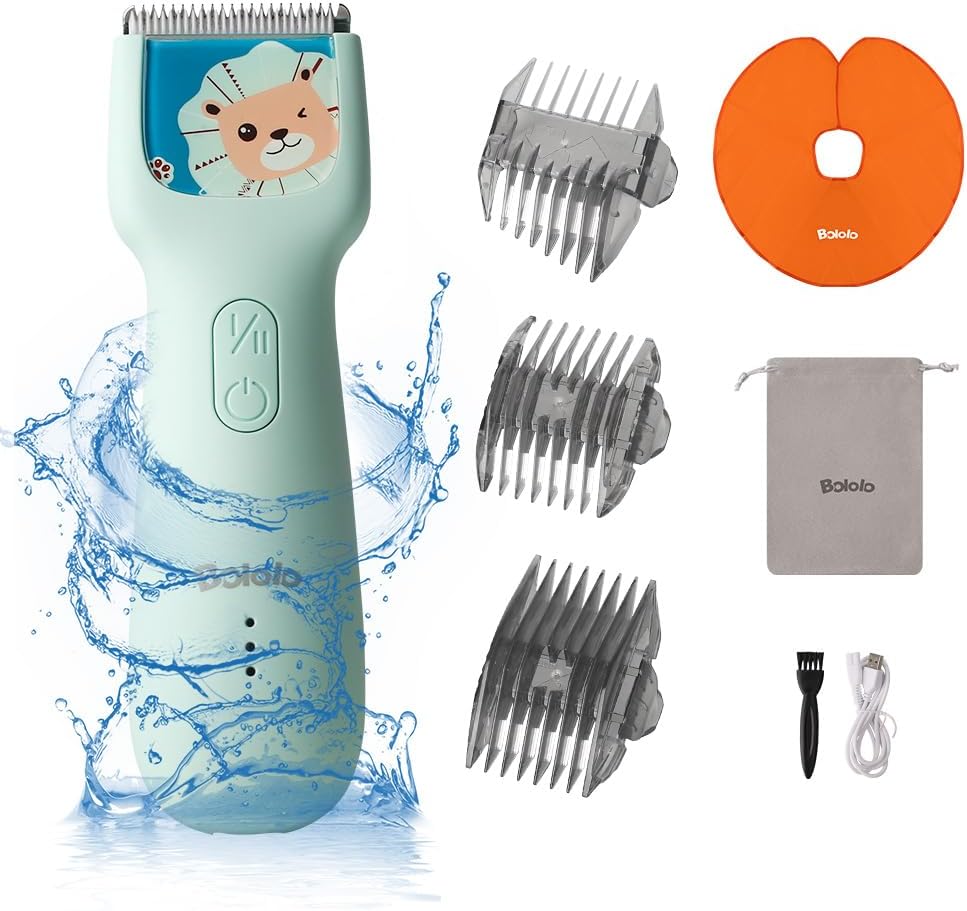
Noise level: 42 dB
This is the quietest motor currently available in the commercial pediatric space. At 42 dB, it sits just above the ambient noise level of a quiet room.
Key specs:
- 800mAh battery — up to 120 minutes of runtime (the highest in this category)
- Ceramic blades
- Intelligent monitoring system that prevents hair pulling if the battery dips or the hair is too thick
- IPX7 waterproof
- Positioned as a premium pick for sensory-sensitive children
The 120-minute battery is a standout feature. You could cut three or four children on a single charge. For parents managing long or thick hair, this runtime eliminates battery anxiety entirely.
Best for: Light sleepers, sensory-sensitive kids, parents who want the absolute quietest option.
2. LUSN Baby Hair Clippers with Vacuum — Best Value
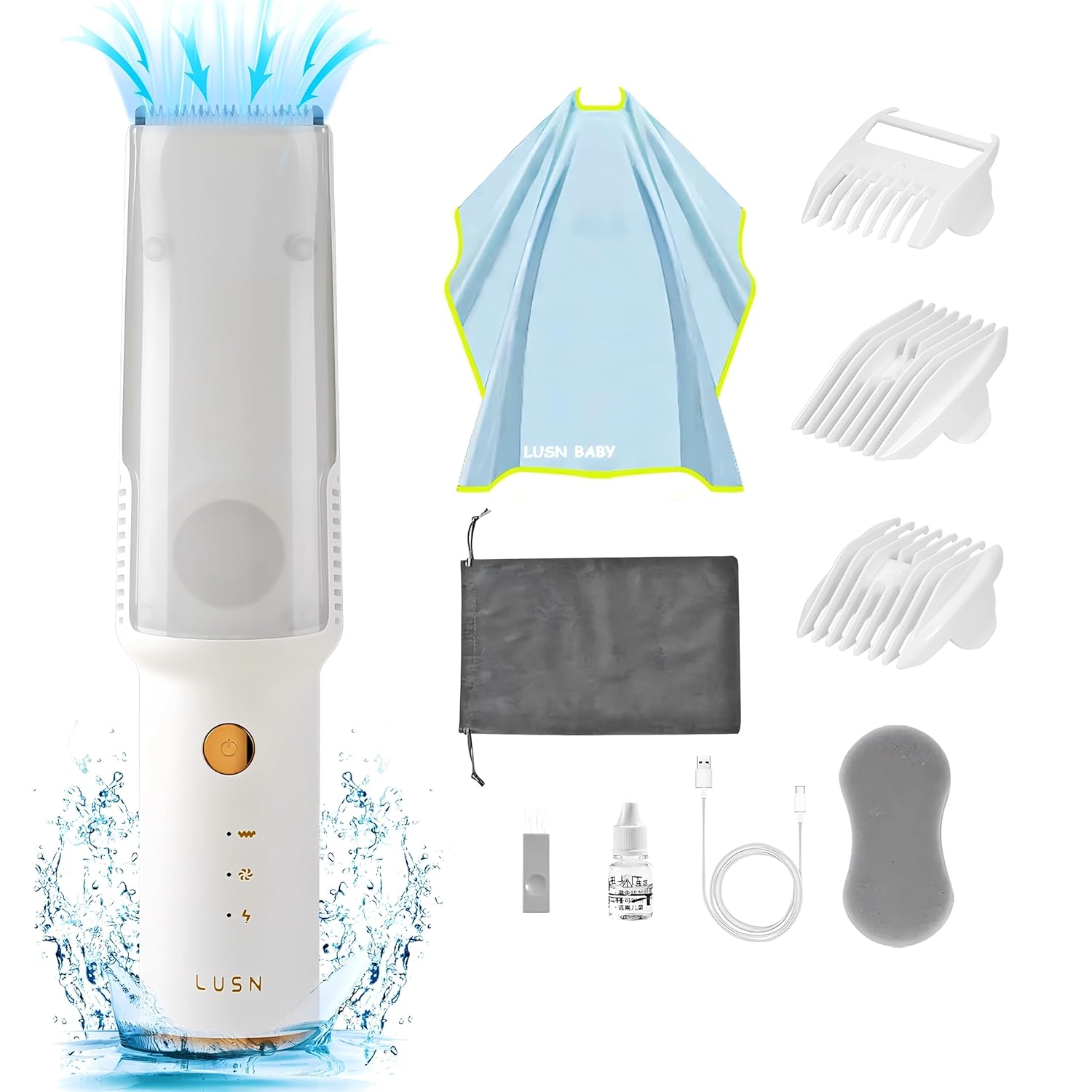
Noise level: Under 50 dB
LUSN packs a vacuum system into a competitively priced kit — making it the rare value pick that doesn’t strip out the features parents actually use. The dual-core motor handles both cutting and suction, capturing up to 99% of cut hair before it reaches your child’s neck.
Key specs:
- Dual-core motor with integrated vacuum (99% hair capture)
- 28-tooth patented blade head with R-shaped corner design
- Three guide combs covering 0mm–12mm
- IPX7 waterproof — rinse the whole unit under a tap
- 45 minutes of runtime
- 18-piece kit: cape, cleaning sponge, lubricant, brush, charging cable, and manual
The 0mm comb option makes this one of the few value-tier models capable of a close buzz cut without the bare blade touching skin. The R-shaped blade corners are rounded specifically to prevent nicks when working around ears and the nape.
One honest trade-off: the manufacturer notes the vacuum fan runs slightly louder than the clipper alone. For sleep cuts, run it in clipper-only mode.
Best for: Parents who want vacuum-level cleanliness without paying vacuum-tier prices.
3. ENSSU Quiet Baby Hair Clippers — Best for Versatility
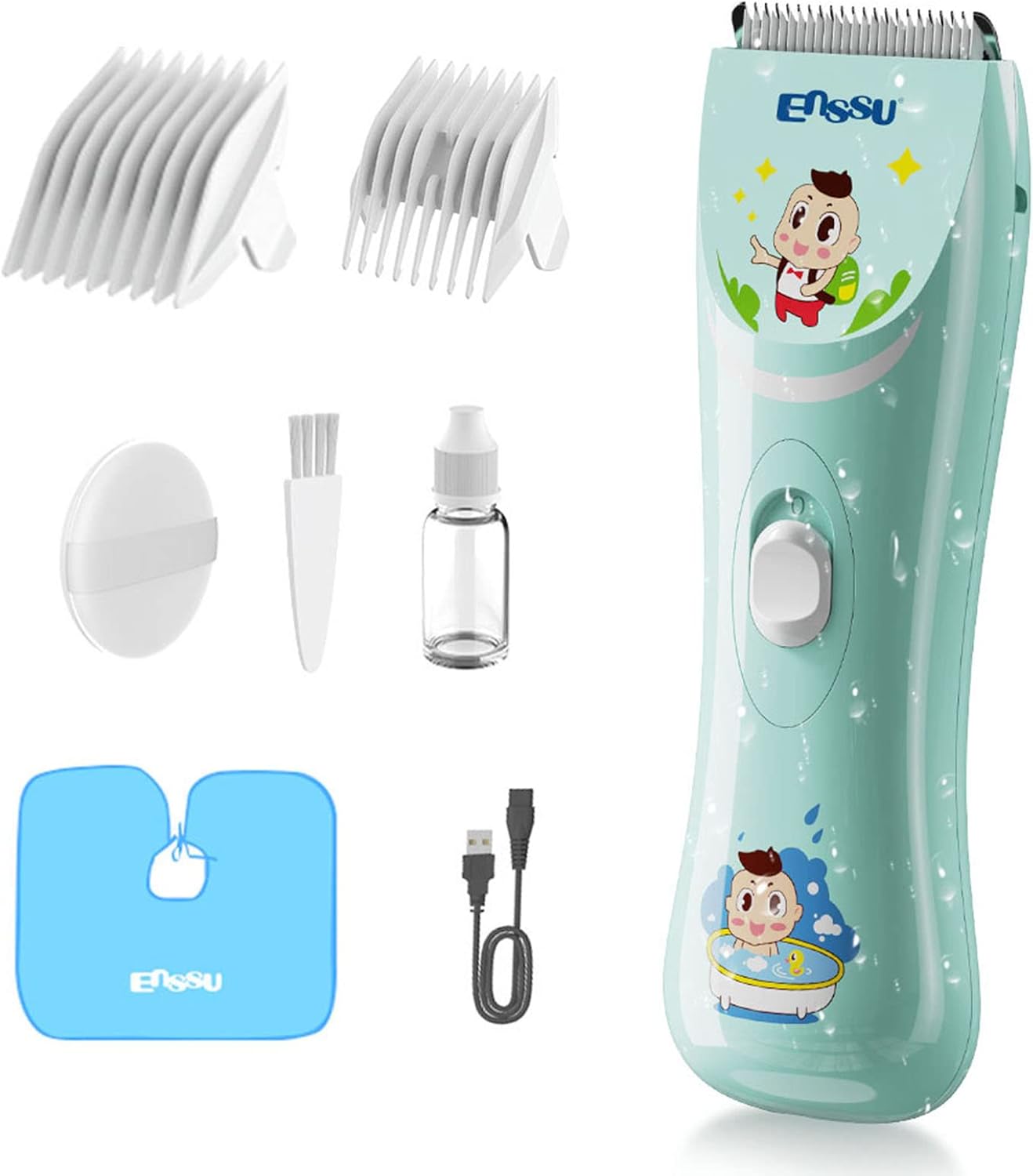
Noise level: 48 dB
ENSSU is one of the longer-standing names in pediatric clippers. The brass movement motor reduces resonance — the low-frequency vibration that travels through a child’s pillow or your hand.
Key specs:
- 0.5mm safety gap between blade teeth and scalp surface
- 60 minutes of runtime
- USB rechargeable (compatible with power banks)
- IPX7 waterproof
- Designed for ages 0–12
The power bank compatibility is a practical detail many parents overlook until they’re mid-cut and the wall outlet is across the room. The ENSSU charges from any standard USB source.
Best for: Parents who want a trusted, mid-range option that covers all ages from newborn through early school years.
4. MomMed Baby Hair Clippers with Vacuum — Best for Cleanliness
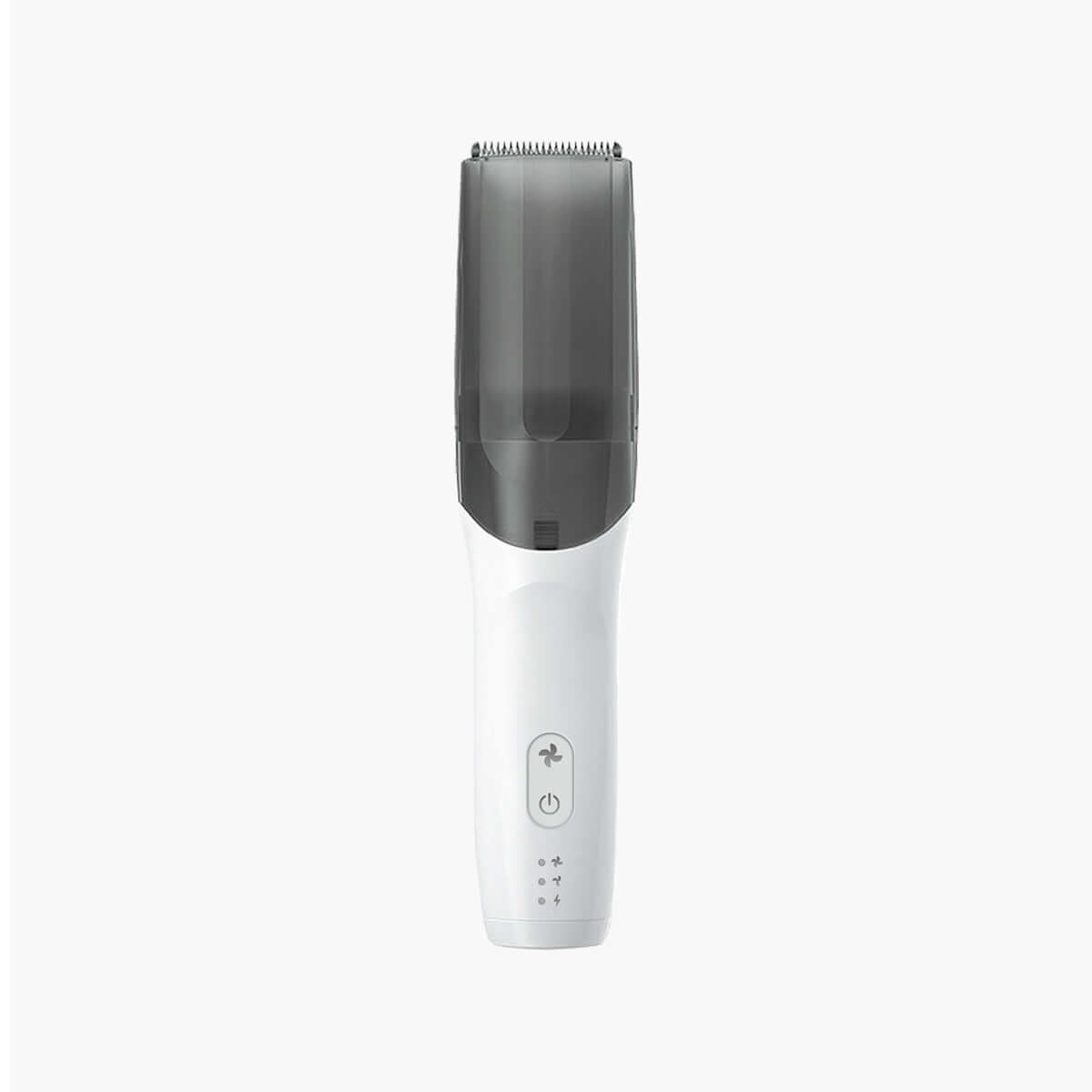
Noise level: Under 53 dB
The MomMed sits slightly above the 50 dB threshold, but the trade-off is the integrated dual-motor vacuum system. It captures approximately 90% of cut hair before it reaches the child’s neck.
Key specs:
- Three modes: Haircut, Suction 1, Suction 2
- 500mAh battery — 40 to 45 minutes of runtime
- 1-hour full charge time
- IPX7 waterproof
- 4.4 to 4.6 star rating with over 2,000 units sold per month
The variable suction modes let you dial down power for fine hair (quieter) or dial up for thicker hair (more effective capture). User feedback notes it’s most effective on short, dry hair — longer or damp hair can clog the intake port.
Best for: Parents whose kids react badly to the post-cut itch, or for cuts in the living room where cleanup matters.
5. Favrison Professional Quiet Hair Trimmer — Best Seller
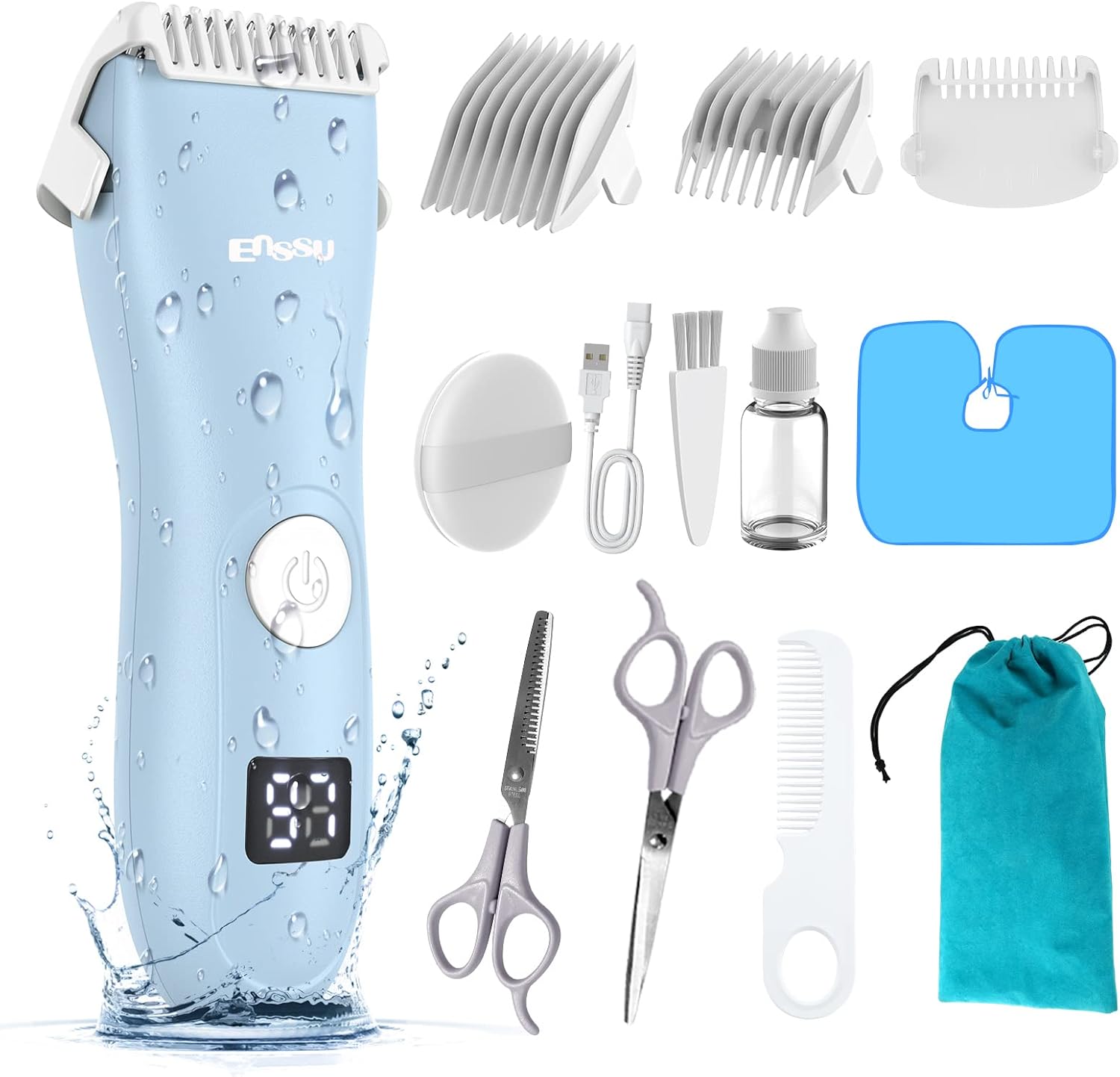
Noise level: 45–50 dB
Favrison recently held the #1 ranking in the baby hair clippers category, with over 1,000 units purchased per month. The standout feature is the 1mm guide comb specifically designed for newborns — a length no other model in this list includes as standard.
Key specs:
- 1mm guide comb for newborns
- 45–50 dB operating range
- Marketed as “autism-friendly” based on noise and vibration profile
- Strong repeat purchase rate based on verified buyer volume
The newborn comb makes this the logical choice for parents starting young. Most standard baby clippers start at 3mm.
Best for: Newborns, parents with children with sensory processing differences, anyone wanting the bestselling option in the category.
Bonus: Calming Clipper — For Children Who Can’t Tolerate Any Motor
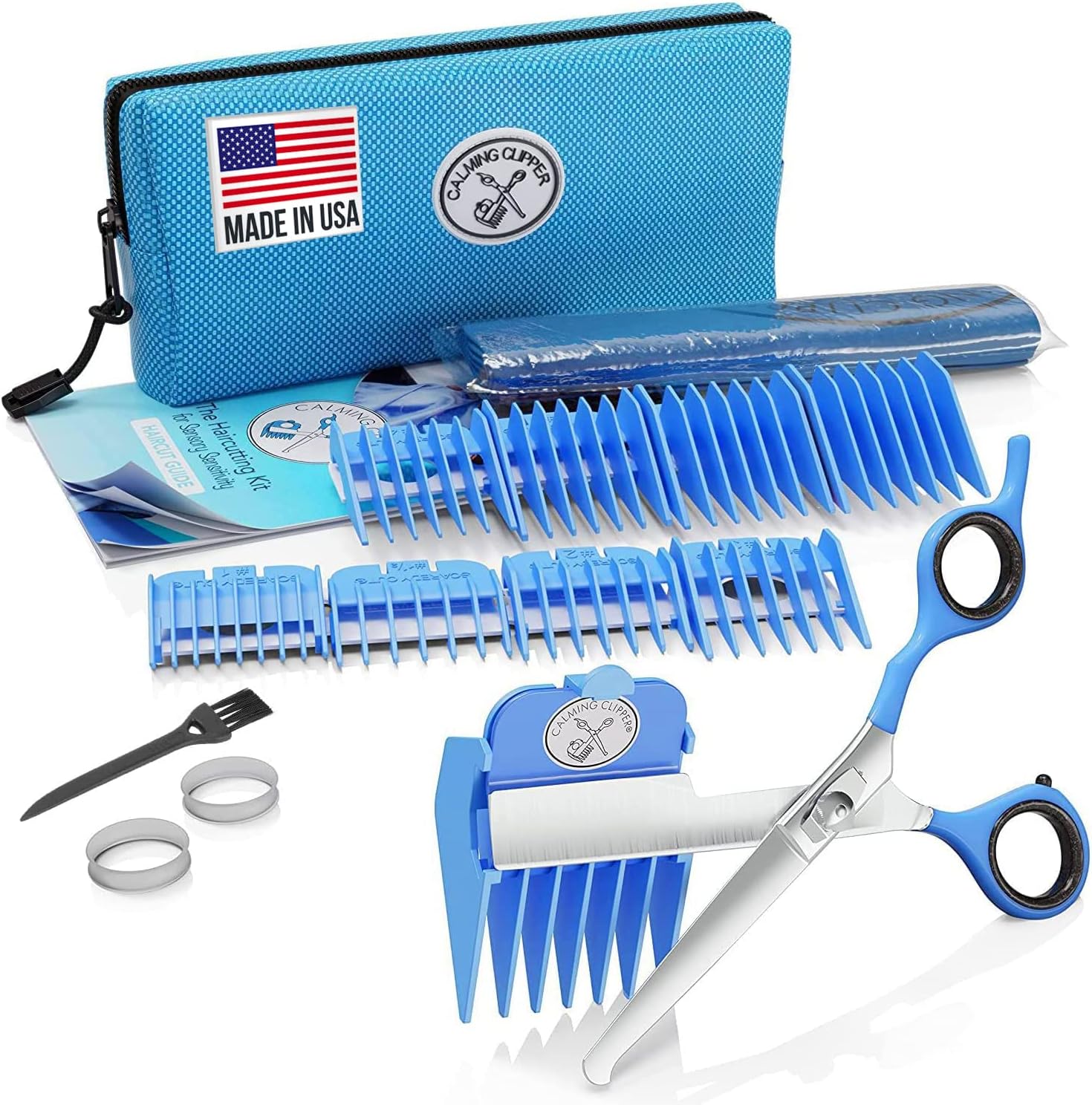
Noise level: Silent (manual)
For a subset of children — particularly those with severe sensory processing challenges or auditory processing disorders — even a 42 dB motor is too much.
The Calming Clipper solves this with a non-electric approach: standard stainless steel scissors that work with clipper-style guards. The result is a uniform cut length (7 to 9 comb options, covering 1/2 to 1.5 inches) with zero noise and zero vibration.
It works as both a long-term grooming solution and a desensitization tool — building tolerance for haircuts in a completely stress-free environment before introducing any electric tool.
Best for: Children with severe auditory sensitivity, autism, or extreme haircut aversion.
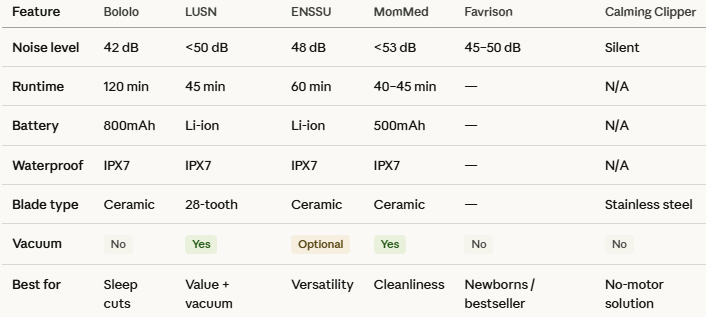
Head-to-Head Comparison
How to Cut Hair While Your Baby Sleeps
The whisper-quiet motor makes sleep cuts possible. This technique makes them reliable.
1. Start at the nape of the neck. This keeps the clippers away from the ears at first. The low vibration travels through the pillow slowly, giving the child time to acclimate before you move to more sensitive areas.
2. Use ceramic blades only. Steel blades heat up during use. Stationary skin — like a sleeping child’s scalp — is more sensitive to that heat than active, moving skin. Ceramic stays at or near body temperature throughout the cut.
3. Add white noise if your child is a light sleeper. A white noise machine running before you start masks any residual motor sound. Use this alongside the Bololo for the best result.
4. Keep the battery charged. A low battery forces some motors to work harder, which increases both noise and vibration. The Bololo’s intelligent monitoring system will actually stop cutting if the battery is too low — useful protection, but not a situation you want mid-cut.
5. Work in sections. Don’t rush. The advantage of a sleeping child is time. Slow, deliberate passes produce a cleaner cut and reduce the chance of a sudden movement waking them mid-clip.
Maintenance: Keeping Your Clippers Quiet Over Time
The most common failure point isn’t the motor — it’s the blade and battery.
Lubrication. Even ceramic blades need occasional clipper oil. Increased friction means increased noise and heat. A drop of oil on the blade before each session extends both blade life and quiet performance.
Battery habits. Don’t leave lithium-ion clippers on the charger indefinitely unless the model has overcharge protection (MomMed’s charging base does). Partial charging shortens runtime over time.
Drop protection. Ceramic is harder than steel but more brittle. A drop on a tile floor can crack the blade teeth. Many brands sell universal replacement ceramic heads — worth keeping a spare on hand.
FAQ
What’s the quietest baby hair clipper? The Bololo operates at 42 dB, making it the quietest commercially available pediatric clipper. The IWEEL is close behind at under 45 dB.
Can I cut my baby’s hair while they sleep? Yes — with the right clippers. Models under 45 dB operating in a room with ambient white noise can stay below the threshold that triggers the startle reflex in most sleeping infants. Start at the nape of the neck and use only ceramic blades.
What does IPX7 waterproof mean? IPX7 means the device can be fully submerged in water up to one meter deep for 30 minutes. For clippers, this means you can rinse the entire unit under a tap after use.
Are vacuum clippers worth it? If your child has a history of post-cut irritation from loose hair clippings, yes. The MomMed captures roughly 90% of cut hair. The trade-off is slightly more noise (under 53 dB) and shorter runtime (40–45 minutes).
What clippers work for children with sensory sensitivity? The Favrison is specifically marketed as autism-friendly. The Bololo’s 42 dB rating makes it one of the most tolerable electric options. For children who can’t manage any electric motor at all, the Calming Clipper is the only silent alternative that still produces a uniform cut.
What guide comb lengths do I need? For newborns, a 1mm comb (Favrison only) or 3mm. For toddlers, 6mm to 12mm covers most standard lengths. The IWEEL’s four-comb set (3, 6, 9, 12mm) handles most ages from infant through school-age without buying extras.
Dora Decora is a biophilic interior design specialist and passionate blogger. With a deep commitment to integrating nature into living spaces, Dora specializes in creating environments that foster human-nature connections through thoughtful design elements. Her approach emphasizes sustainable materials, natural lighting, and organic patterns that enhance wellbeing and reduce environmental impact.
This post (https://homechroma.com/best-baby-hair-clippers) was originally published by Dora Decora on Home Chroma. As an Amazon Associates partner, we are compensated for all qualifying purchases.