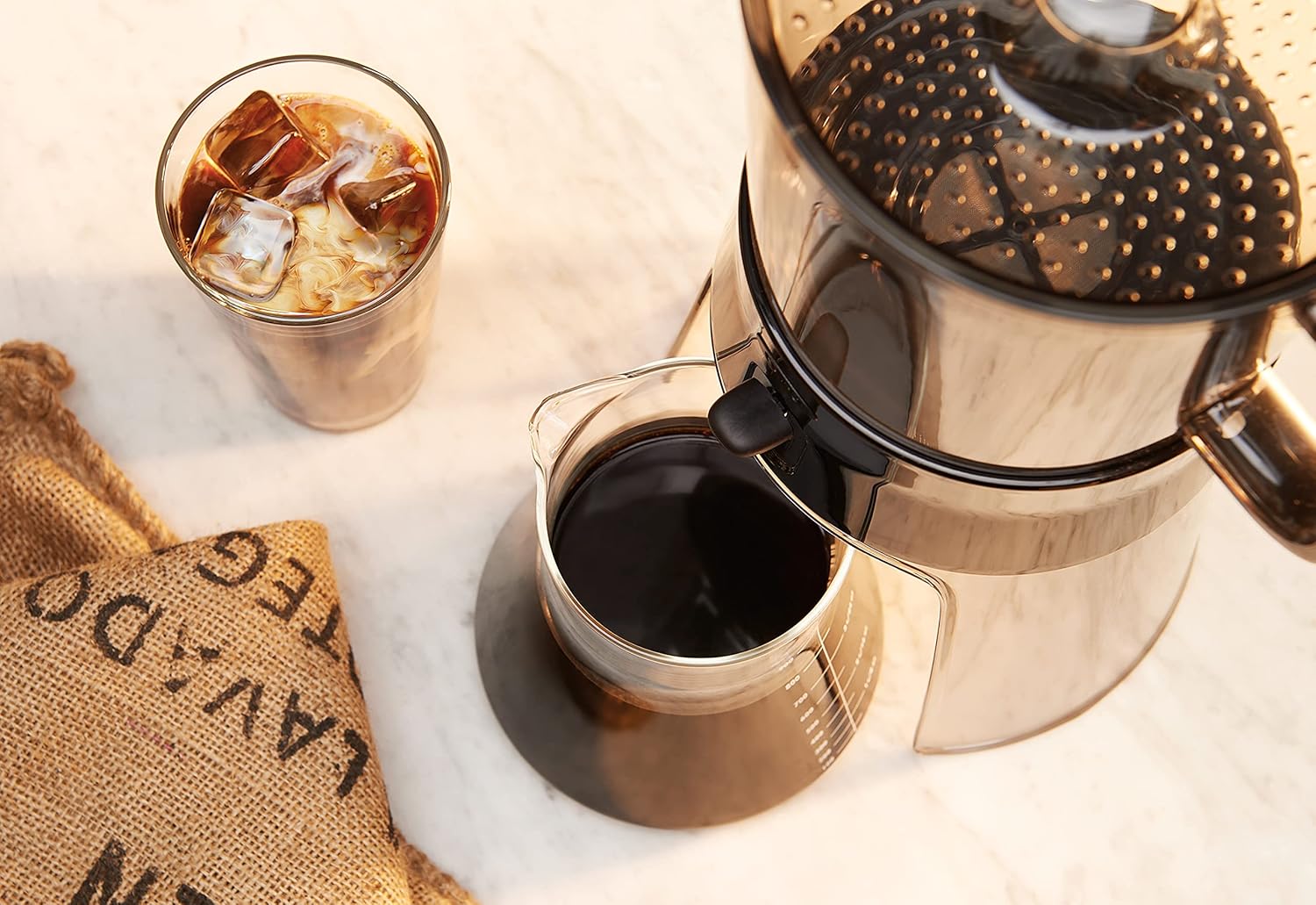
 You already know cold brew hits different.
Smoother. Less acidic. That heavy, almost syrupy body that chilled drip coffee never quite pulls off. The problem isn’t the coffee. It’s the tab — $6, $7, sometimes $9 a cup, every single day, for something you can make at home in a mason jar.
At $42 a week, that’s over $2,000 a year walking out the door for a product that cost maybe 75 cents to make.
This guide breaks down the best cold brew coffee machines on the market right now — by brewing method, budget, and who each one is actually built for.
Why Cold Brew Tastes Better (The Short Version)
Heat is an aggressive solvent. When you brew hot coffee, it extracts everything — including the acidic compounds and bitter oils responsible for that sharp, stomach-irritating edge. It also oxidizes fast. A pot of hot coffee starts degrading within 30 minutes.
Cold brew skips all of that.
By steeping coarsely ground coffee in cold or room-temperature water for 12–24 hours, you get selective extraction. The acids and tannins stay largely trapped in the grounds. What you get in the cup is dominated by sugars, chocolate, and caramel notes — plus a concentrate that stays fresh in the fridge for up to two weeks.
The standard concentrate ratio is 1:8 — one part coffee to eight parts water by weight. That’s roughly double the strength of drip coffee, which typically runs 1:15 to 1:18. You dilute it before drinking. The result is more potent, smoother, and chemically more stable than anything brewed hot.
Types of Cold Brew Machines
There are four main categories. Each produces a different flavor profile and suits a different lifestyle.
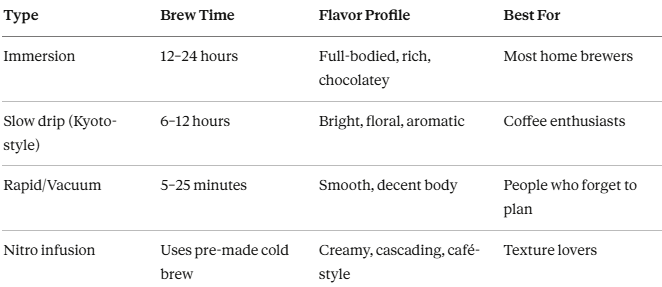
The Best Cold Brew Coffee Machines, by Category
Best Overall: OXO Good Grips 32-Ounce Cold Brew Coffee Maker
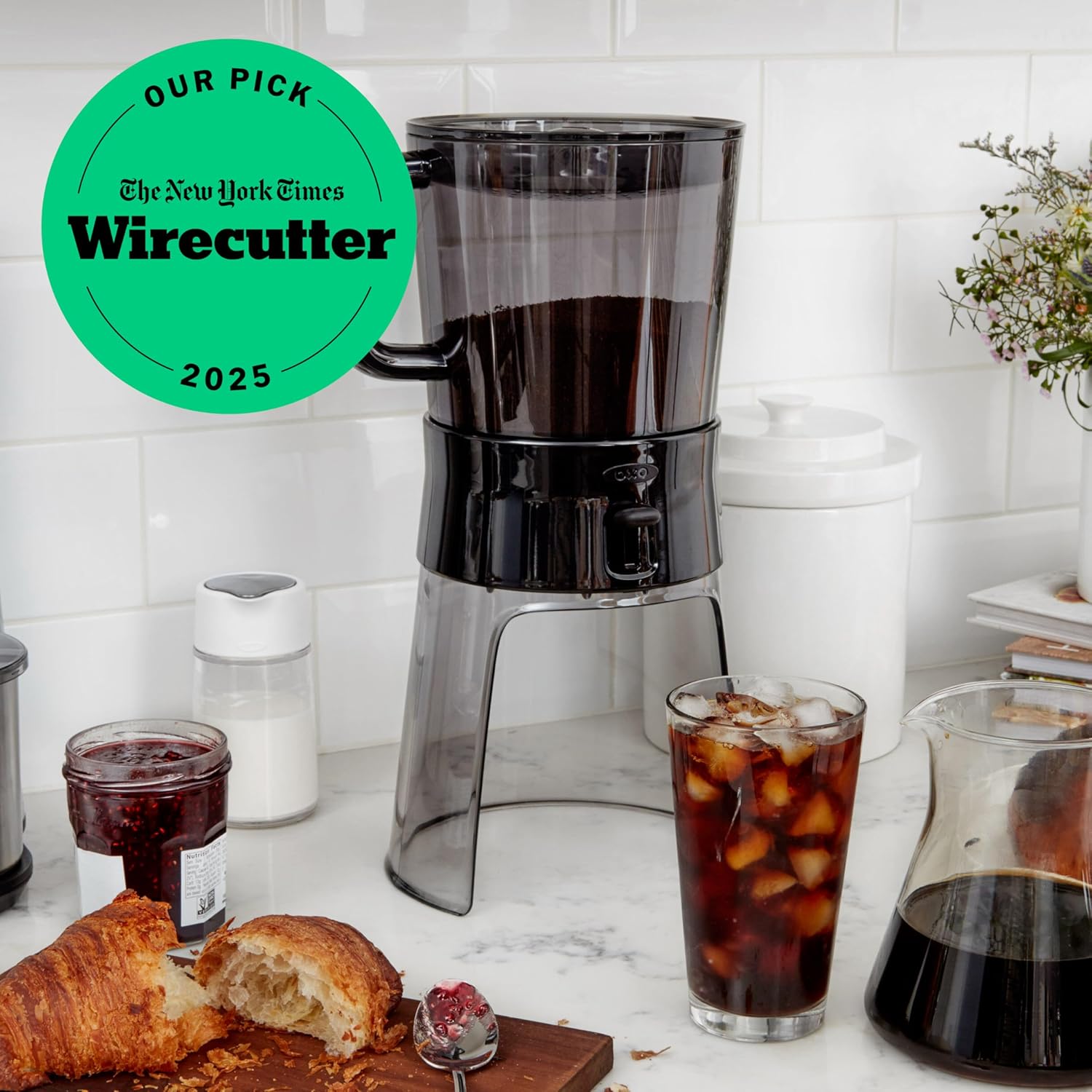
Price: ~$52–$60
Brew time: 12–24 hours
Capacity: 32 oz concentrate
This is the machine that most reviewers keep coming back to — and for good reason.
The standout feature is the “Rainmaker” lid: a perforated distribution plate that disperses water evenly over the coffee bed, the same way rainfall hits the ground. That matters because immersion brewing’s biggest enemy is dry pockets — areas of coffee that never get properly saturated, leading to under-extraction and a thin, watery result.
Once steeping is done, a single flip of the spring-loaded lever drains the concentrate into the borosilicate glass carafe below. You don’t pour, you don’t squeeze, you don’t make a mess. Walk away and come back in an hour.
You can also drop in a paper filter above the stainless steel mesh for extra clarity — useful if you’re using medium-fine grounds or want a cleaner, less oily cup.
The case for it: Simple to use, easy to clean, and consistently outperforms machines that cost twice as much.
The case against it: 32 ounces of concentrate is only about 8–10 servings once diluted. High-volume households will be brewing every few days.
Best for High Volume: Toddy Cold Brew System
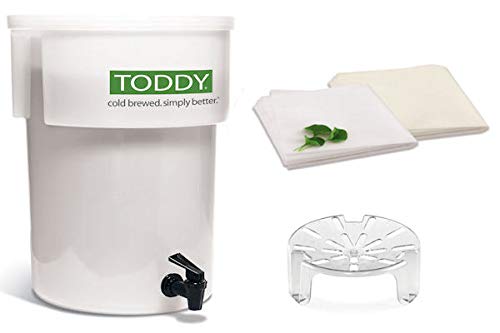
Price: ~$35–$45
Brew time: 24 hours
Capacity: ~38 oz concentrate (~20 servings)
The Toddy has been around since 1964 and the design hasn’t changed much. That’s not a weakness — it’s proof the method works.
What makes the Toddy different is its thick felt filtration. Stainless steel mesh lets fine oils and silt pass through. Felt doesn’t. The result is an exceptionally clean, mellow concentrate — some people describe it as the smoothest of any immersion brewer.
Load a full 16-oz bag of coffee, steep for 24 hours, and you get nearly 20 servings of concentrate. Brew once every two weeks and you’re set.
The case for it: Unbeatable volume and filter quality for the price. Replacement felt filters run about $25 for a 12-pack — roughly two cents per cup.
The case against it: More involved cleaning process. The felt filters need to stay moist and refrigerated between uses, or mold becomes a problem. Not as grab-and-go as the OXO.
Best for Refrigerator Storage: KitchenAid Cold Brew Coffee Maker (KCM5912SX)
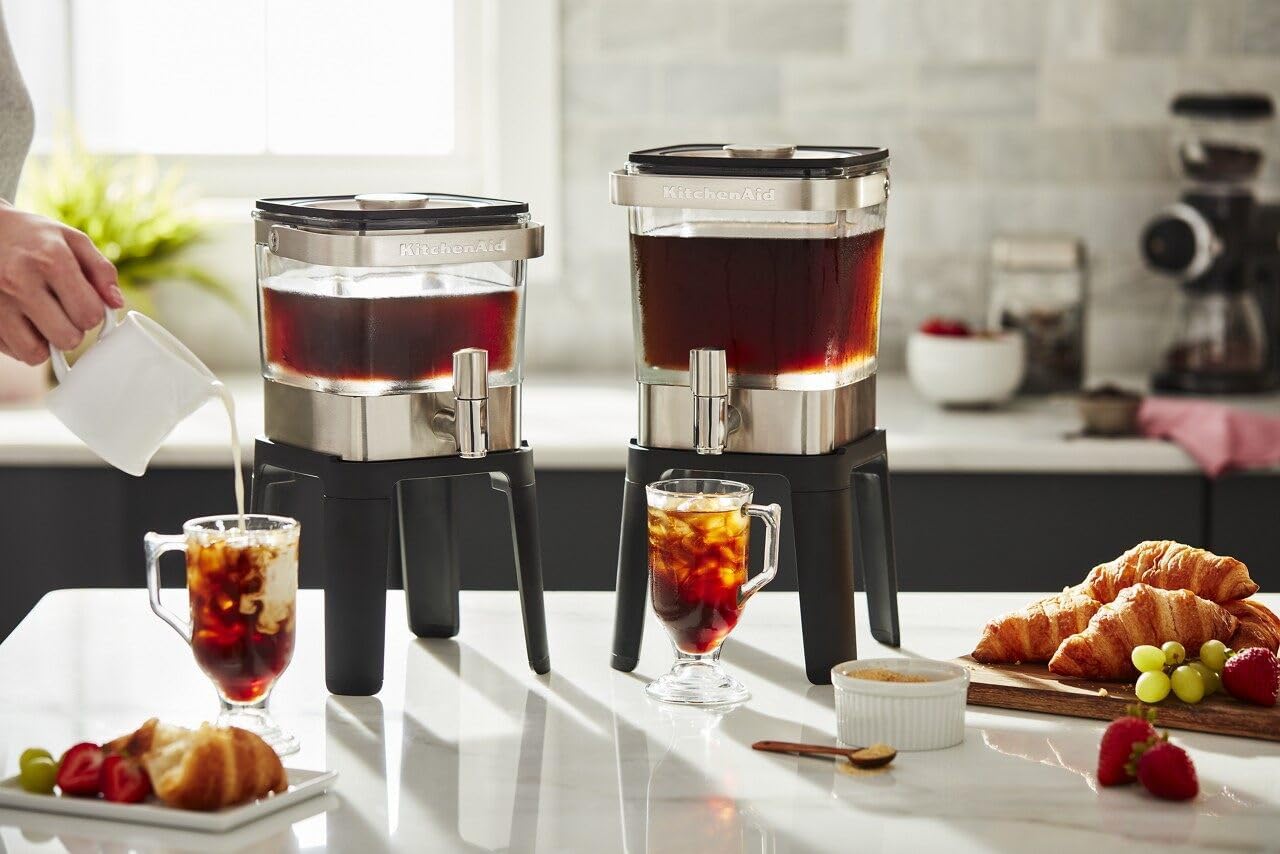
Price: ~$100–$130
Brew time: 12–24 hours
Design: Built-in tap, made to live on your fridge shelf
The KitchenAid solves the transfer problem. Most immersion brewers make you move the concentrate from a brewing vessel into a separate storage container. The KitchenAid brews and stores in one heavy glass-and-stainless unit with a built-in tap — pull it out of the fridge, pour straight from the spout, put it back.
It works. It looks good. It’s built to last.
The tradeoff is flavor. The filter basket geometry is shallower and wider than the OXO’s, which can reduce water-to-ground contact efficiency in smaller batches. Most users find it slightly less robust than the Toddy or OXO at equivalent ratios. The tap also requires regular disassembly and cleaning — coffee residue in the spout mechanism builds up fast and affects taste over time.
The case for it: Best convenience experience of any standard immersion brewer. Aesthetically the nicest on a fridge shelf.
The case against it: Costs more and produces a slightly lighter concentrate than the top immersion brewers.
Best for Flavor Clarity: Yama Glass Cold Brew Drip Tower
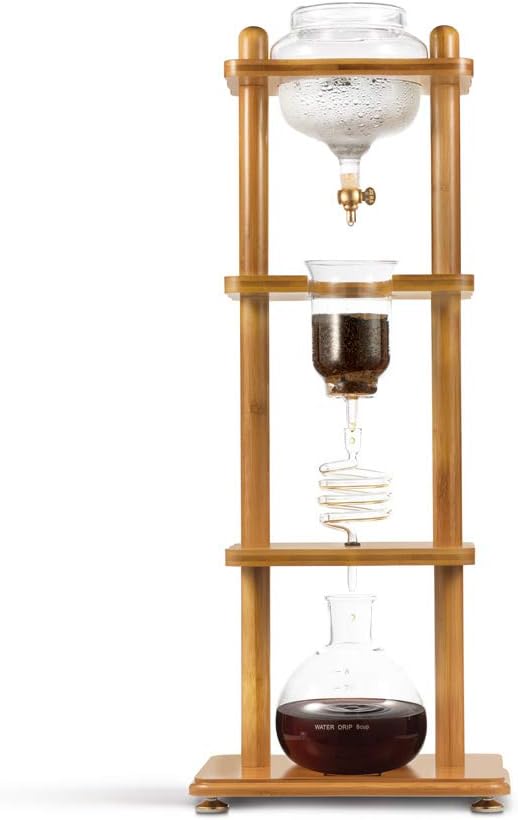
Price: ~$250–$315 (6–8 cup / 32 oz model)
Brew time: 3–8 hours
Type: Kyoto-style slow drip
This is a different machine for a different kind of coffee drinker.
Slow drip brewing works by letting cold water fall one drop at a time through a column of coffee grounds. The contact is continuous but brief for each drop — which produces a very different extraction than passive immersion. Less body, more clarity. Floral and citrus notes come through in ways immersion tends to suppress.
The Yama Tower is a multi-tiered glass apparatus sitting 44 inches tall (in the 25-cup version) on a bamboo or wood frame. It’s as much a conversation piece as a brewing device.
Using it takes patience. You need to calibrate the brass valve to about one drop every 1.5 seconds, and adjust as the water level in the top reservoir changes the head pressure. Pre-wetting the grounds with a spray bottle before starting prevents channeling — that’s when water carves a path through the grounds and leaves sections dry.
The case for it: Produces the most complex, aromatic cold brew of any home brewer. Worth it if origin notes matter to you.
The case against it: High price, high maintenance, large footprint. Not a weekday morning machine.
Best Compact Drip Option: Soulhand Ice Drip Coffee Maker (350ml)
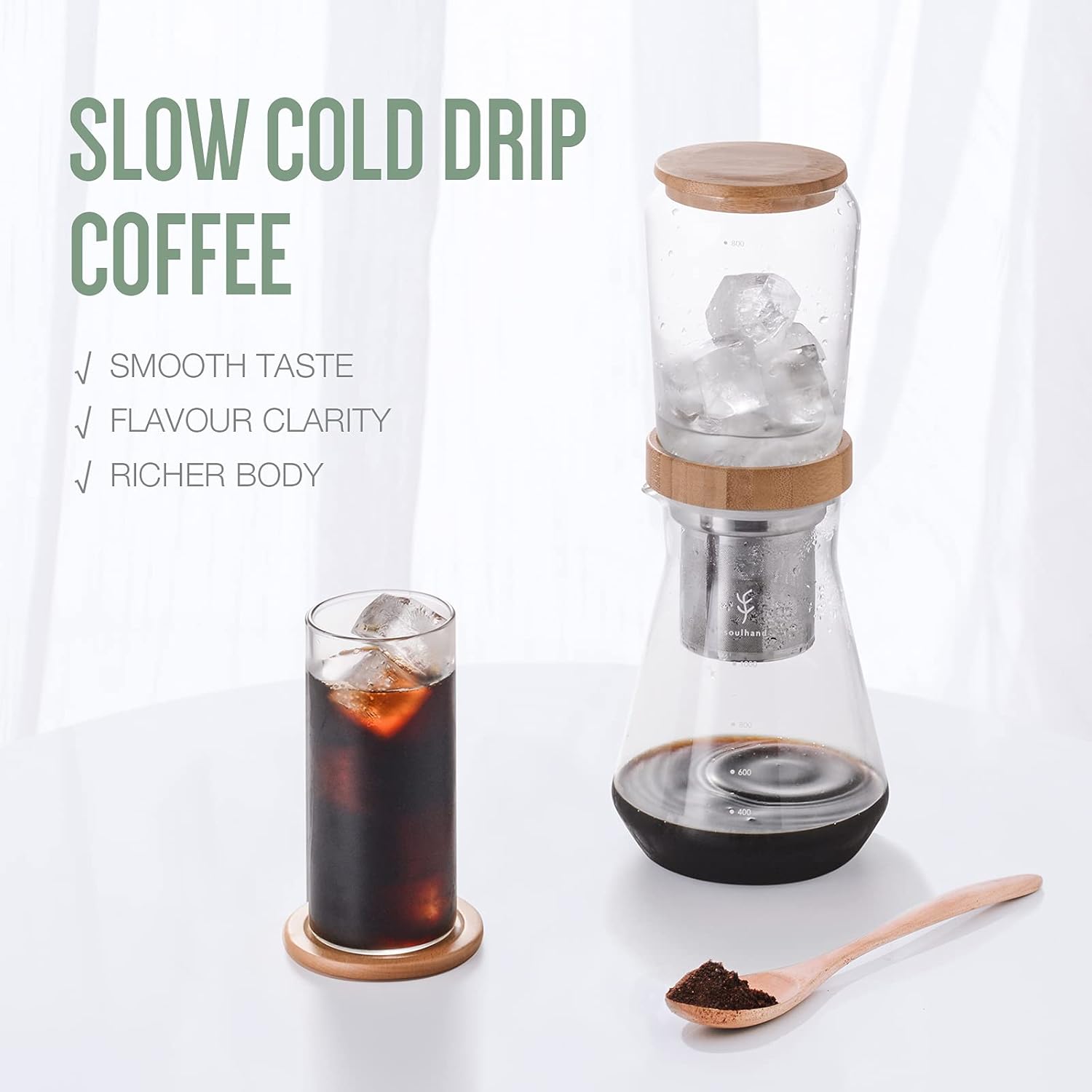
Price: ~$40–$60
Brew time: 6–12 hours
Design: Single vertical column, fits inside the fridge
The Soulhand takes the Kyoto drip concept and shrinks it into a refrigerator-safe column. Adjustable valve, double-layer stainless steel filter, no bamboo frame required.
Set it up, put it in the fridge, come back in 6–8 hours. The smaller batch size (350ml) means it’s suited for 1–2 person households. The in-fridge brewing also keeps temperatures low throughout — which some argue produces cleaner extraction than room-temperature immersion.
Best for People Who Forget to Plan: DASH Rapid Cold Brew Maker
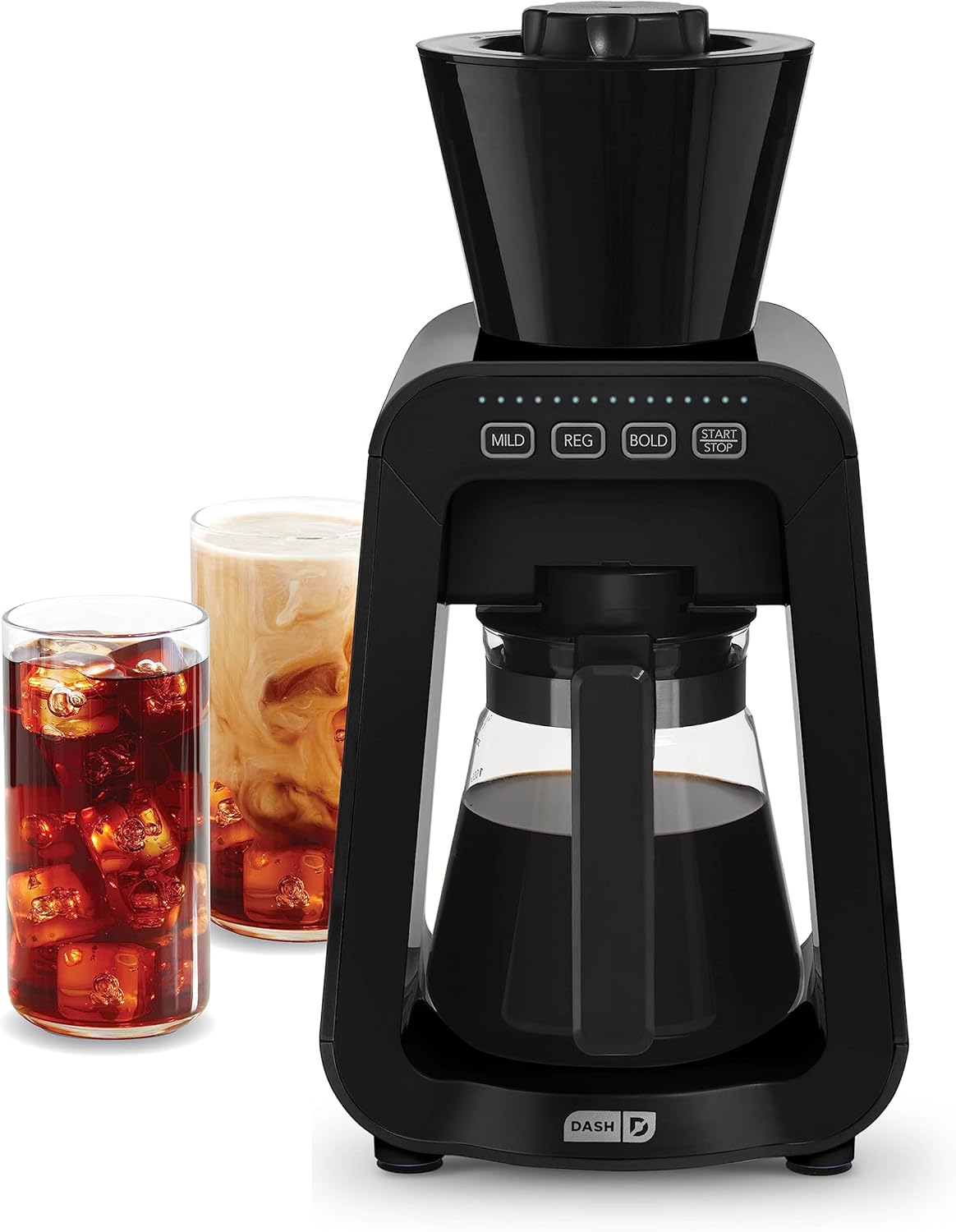
Price: ~$50–$80
Brew time: 15 minutes
Technology: Vacuum pressure cycling
The DASH uses a vacuum-press mechanism — cycling pressure to force water into the cellular structure of the coffee grounds at a rate time alone can’t match. The result in 15 minutes is remarkably close to a 24-hour steep.
It’s smooth. It’s low-acid. And it’s genuinely convenient for anyone who wakes up wanting cold brew and doesn’t have a batch ready.
The honest tradeoff: it lacks the full mouthfeel and syrupy body of a traditionally steeped concentrate. Blind tests consistently show that slow-steeped cold brew has more “body” and richness. For everyday drinking, most people won’t notice or care.
Best Rapid Brewer with More Control: Vinci Express Cold Brew
Price: ~$60–$90
Brew time: 5–25 minutes
Settings: Light (5 min), Medium (10 min), Bold (15 min), Extra Bold (25 min)
The Vinci does what the DASH does but adds four programmable strength cycles. If you like a lighter, tea-adjacent cold brew, run it on Light. For a concentrate closer to what you’d use in a latte, go Extra Bold.
The multiple settings make it the better choice for households with varying taste preferences.
Best All-In-One Premium Machine: Ninja Luxe Café Pro Series (ES701)
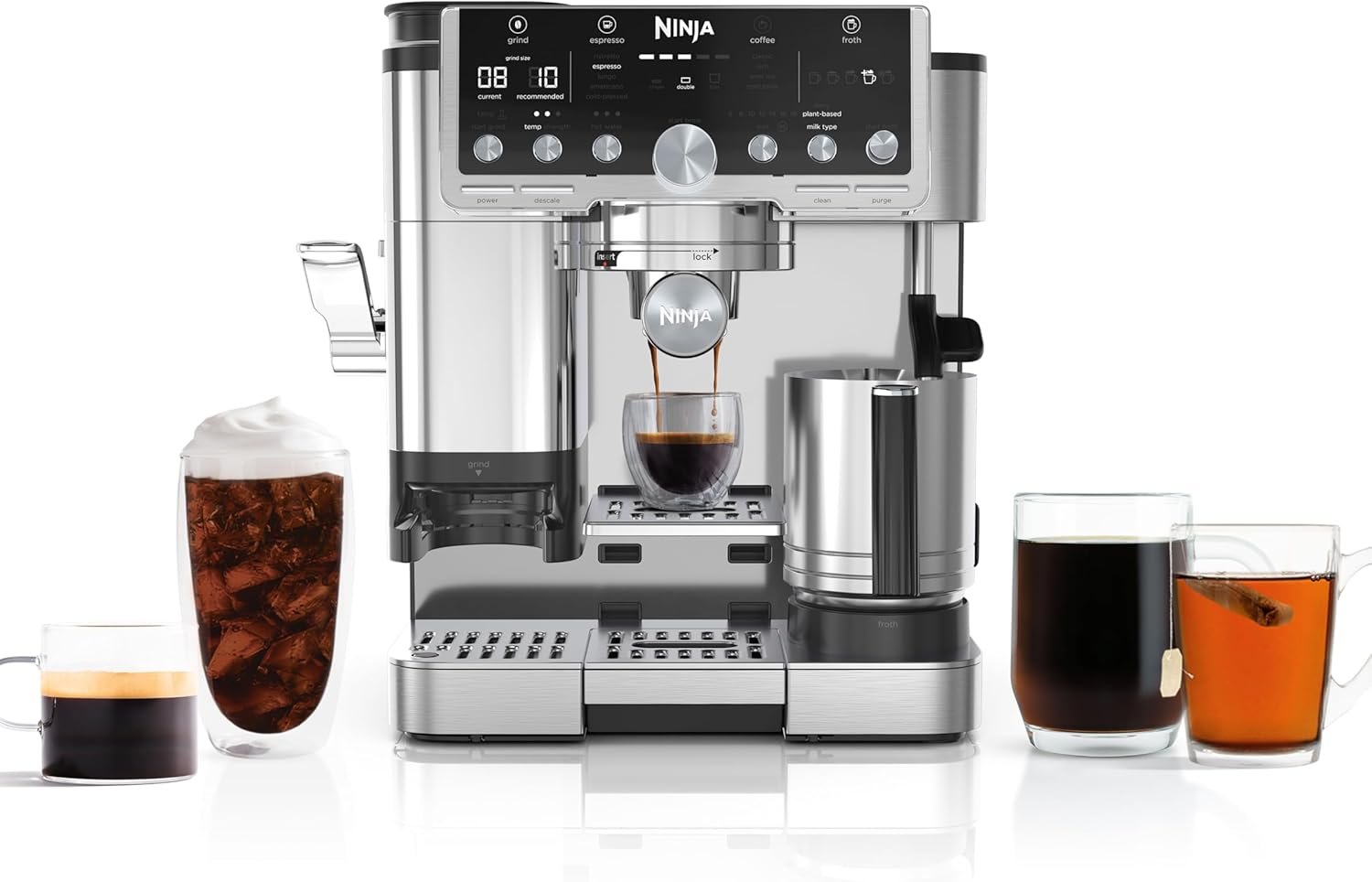
Price: ~$499–$749
Technology: Integrated burr grinder + cold-pressed extraction
Drink modes: Espresso, drip, cold brew, hot water
This is the machine for people who want everything handled in one unit.
The Ninja Luxe uses a genuine cold-pressed extraction profile — not the shortcut approach where machines simply brew hot coffee at extra strength and chill it. It integrates a built-in burr grinder, so you’re working with freshly ground coffee for every batch. Fresh grind matters more than most brewing variables.
At $499–$749, it’s a significant investment. But if you’re currently running a separate grinder, a cold brew maker, and an espresso machine — you’re already paying for multiple footprints and multiple machines to clean.
The case for it: The most capable home setup that doesn’t require a dedicated barista counter. Genuine cold brew extraction, not a workaround.
The case against it: Price. And it requires monthly descaling if your water is hard — skip that and you’ll shorten the pump’s lifespan.
Best Nitro Experience: Royal Brew Nitro Cold Brew System
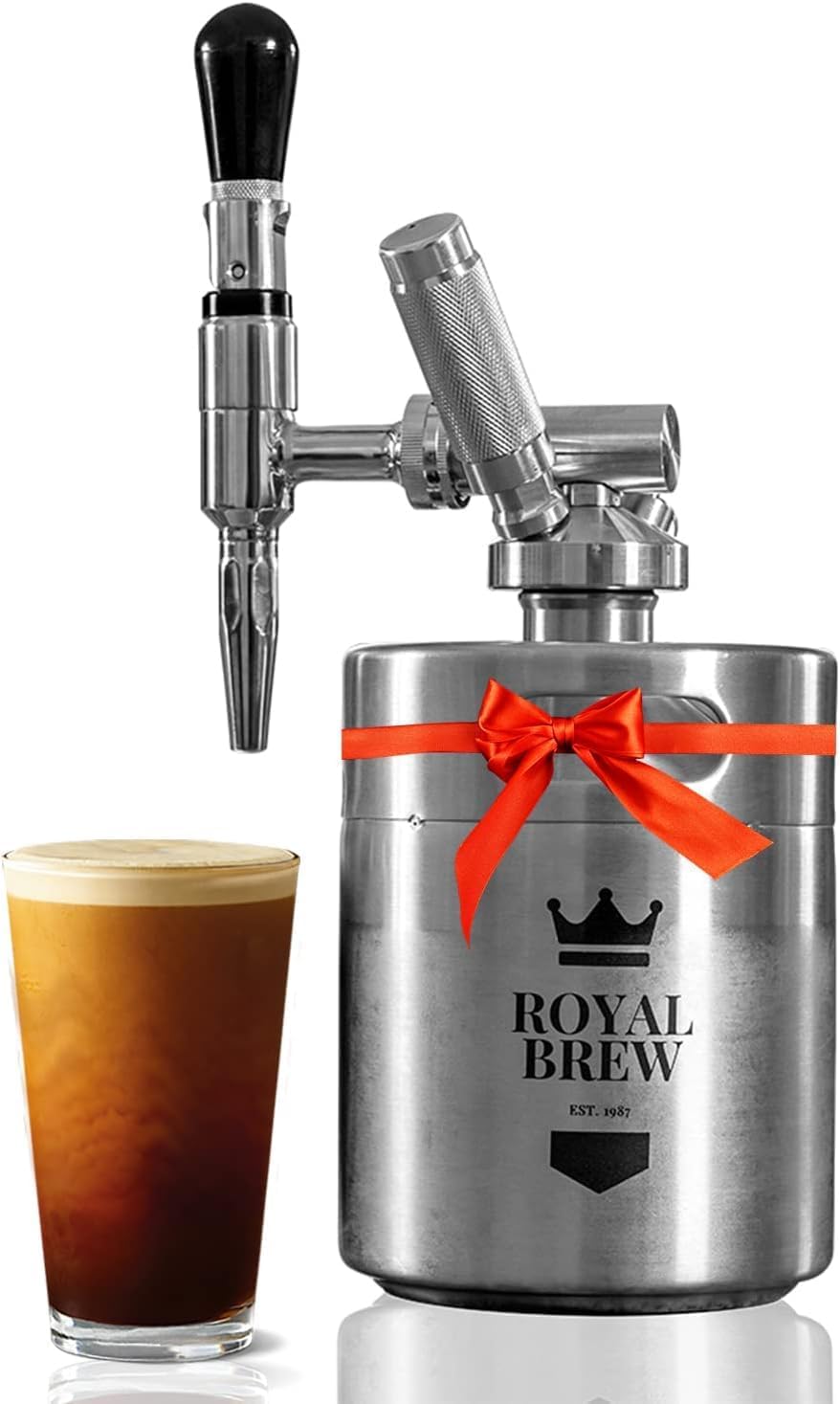
Price: ~$60–$100 (64 oz keg)
Capacity: 64 oz or 128 oz
Infusion: N₂ and N₂O compatible
Warranty: Lifetime
Nitro cold brew works by infusing pre-made cold brew concentrate with nitrogen gas. N₂ doesn’t dissolve easily into liquid — instead, it forms the thousands of tiny micro-bubbles responsible for the cascading visual effect and creamy, stout-like mouthfeel that’s nearly impossible to replicate any other way.
The Royal Brew keg is food-grade stainless steel and comes with a pressure-relief safety valve rated at 75 PSI. It works with both standard 2g N₂ chargers (for the classic cascade and thick head) and 8g N₂O chargers (more soluble, adds a subtle natural sweetness). The lifetime warranty covers faucet and spear replacements.
One flag to note: As of early 2026, some user reports suggest Royal Brew may have reduced operations. Verify current stock and support availability before purchasing.
Maintenance reality check: The creamer disc — the perforated plate in the faucet that creates the foam — must be disassembled and cleaned regularly. Bacteria accumulates fast in dairy-adjacent equipment. Don’t skip this.
For an alternative: the GrowlerWerks uKeg Nitro ($120–$150, 50 oz) offers double-wall vacuum insulation that keeps the brew cold for up to 12 hours without refrigeration. Great for outdoor use. Downside: proprietary 16g cartridges that cost more than standard chargers, and internal plumbing that’s harder to clean.
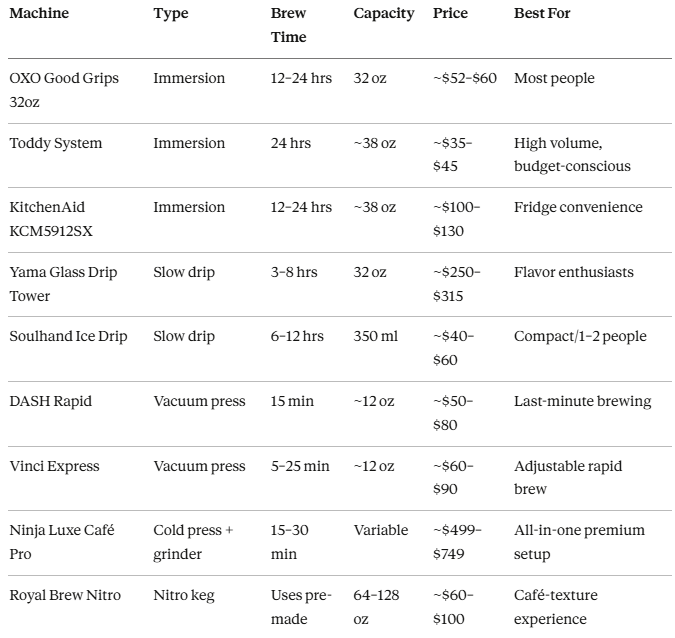
Full Comparison Table
Which Machine Is Right for You?
You brew for yourself, 3–5 times a week: Start with the OXO. Easy setup, consistent results, and the flip-lever drain makes the whole process feel effortless.
You go through cold brew fast (family, multiple cups daily): The Toddy. Load a full pound of coffee, get 20 servings, repeat every two weeks.
You want it out of the fridge without transferring containers: The KitchenAid. Built-in tap, stays on the shelf, no fussing with pour-over carafes.
You care deeply about how your coffee actually tastes: Save up for the Yama Tower. The floral clarity you get from slow drip is genuinely different — and for specialty beans, it’s worth every dollar.
You keep forgetting to make cold brew the night before: The DASH or Vinci. Fifteen to twenty-five minutes and you have something smooth enough to satisfy.
You want the full café experience at home: The Royal Brew Nitro paired with a batch from the OXO or Toddy. That cascading pour and creamy head changes how the coffee feels completely.
You want one machine for everything: The Ninja Luxe Café Pro. High entry cost, but it replaces three separate appliances and delivers genuine cold-press extraction, not a workaround.
The Math That Makes This a No-Brainer
At $6 per café cold brew, you’re spending $2,190 per year for a product that costs about $0.63–$1.15 to make at home.
The OXO pays for itself in fewer than 10 batches.
Even the Ninja Luxe at $749 hits break-even within six months for a daily drinker — after that, the savings run over $150 a month.
The upfront cost isn’t a barrier. It’s just a math problem.
Frequently Asked Questions
What’s the best ratio for cold brew concentrate? 1:8 by weight (coffee to water) for a standard concentrate. Use 100g of extra-coarse ground coffee per 800ml of water. Dilute 1:1 with water or milk before drinking.
How long does cold brew last in the fridge? Up to 14 days for concentrate. Once diluted, drink it within 2–3 days.
Do I need to use cold water to make cold brew? No. Room-temperature water works fine for most immersion brewers and actually speeds extraction slightly. Cold water produces the cleanest result for slow-drip systems.
What grind size should I use? Extra-coarse for immersion (like French press grind). Medium-coarse for slow drip. Using a finer grind forces over-extraction and produces bitterness regardless of brew method.
Can I use regular coffee in a nitro maker? Nitro systems infuse pre-made cold brew — they don’t brew from scratch. Make your concentrate first in any immersion brewer, then transfer to the keg for infusion.
Are rapid cold brew machines worth it? For daily convenience, yes. For the best possible flavor, no. The 24-hour steep produces a richer, fuller body. Rapid machines close most of the gap — but not all of it.
Dora Decora is a biophilic interior design specialist and passionate blogger. With a deep commitment to integrating nature into living spaces, Dora specializes in creating environments that foster human-nature connections through thoughtful design elements. Her approach emphasizes sustainable materials, natural lighting, and organic patterns that enhance wellbeing and reduce environmental impact.
This post (https://homechroma.com/best-cold-brew-coffee-machine) was originally published by Dora Decora on Home Chroma. As an Amazon Associates partner, we are compensated for all qualifying purchases.