I used to think my bamboo cutting board was the pinnacle of kitchen tools. Until the day I pulled it out to slice chicken and noticed something disturbing.
Dark stains had settled into the grooves. The surface felt rough. And despite scrubbing with hot water and soap, it still smelled faintly of yesterday’s garlic.
That’s when I started questioning everything I knew about cutting boards.
Three months ago, I switched to titanium. My prep time dropped by about 20% (no more scrubbing between ingredients). Cross-contamination fears? Gone. And that constant worry about bacteria hiding in knife grooves? Not an issue anymore.
Here’s what I learned about titanium cutting boards—and which ones actually deliver on their promises.
Why Titanium Boards Change Everything (And Why You Haven’t Heard About Them)
Most cutting boards fall into three categories: wood, plastic, or bamboo. Each has problems.
Wood absorbs liquids and harbors bacteria in its porous surface. Plastic sheds microplastics into your food—studies show the average person consumes roughly 50 grams annually from plastic cutting boards alone. Bamboo cracks and splinters over time.
Titanium solves all three issues.
The material is naturally non-porous. Water, juices, and oils sit on the surface rather than soaking in. This means bacteria can’t penetrate the board or hide in microscopic grooves. A quick rinse removes everything.
Medical-grade titanium (what most kitchen boards use) has a Rockwell hardness of around 36 HRC. Most kitchen knives measure 55-62 HRC. This matters because titanium is softer than your knife blade—it won’t dull your edges like glass or stone surfaces do.
The material also weighs significantly less than wood. A typical 15-inch titanium board weighs about 1.5 pounds versus 3-4 pounds for wood.
But here’s the catch: pure titanium costs more to manufacture. That’s why major brands stick with cheap plastic and wood options that need frequent replacement.
The Top 3 Titanium Cutting Boards (Tested in Real Kitchens)
I tested these boards over 90 days of daily use. Here’s what actually works.
#1: Sumzzz 2-in-1 Titanium/PP Double-Sided Board
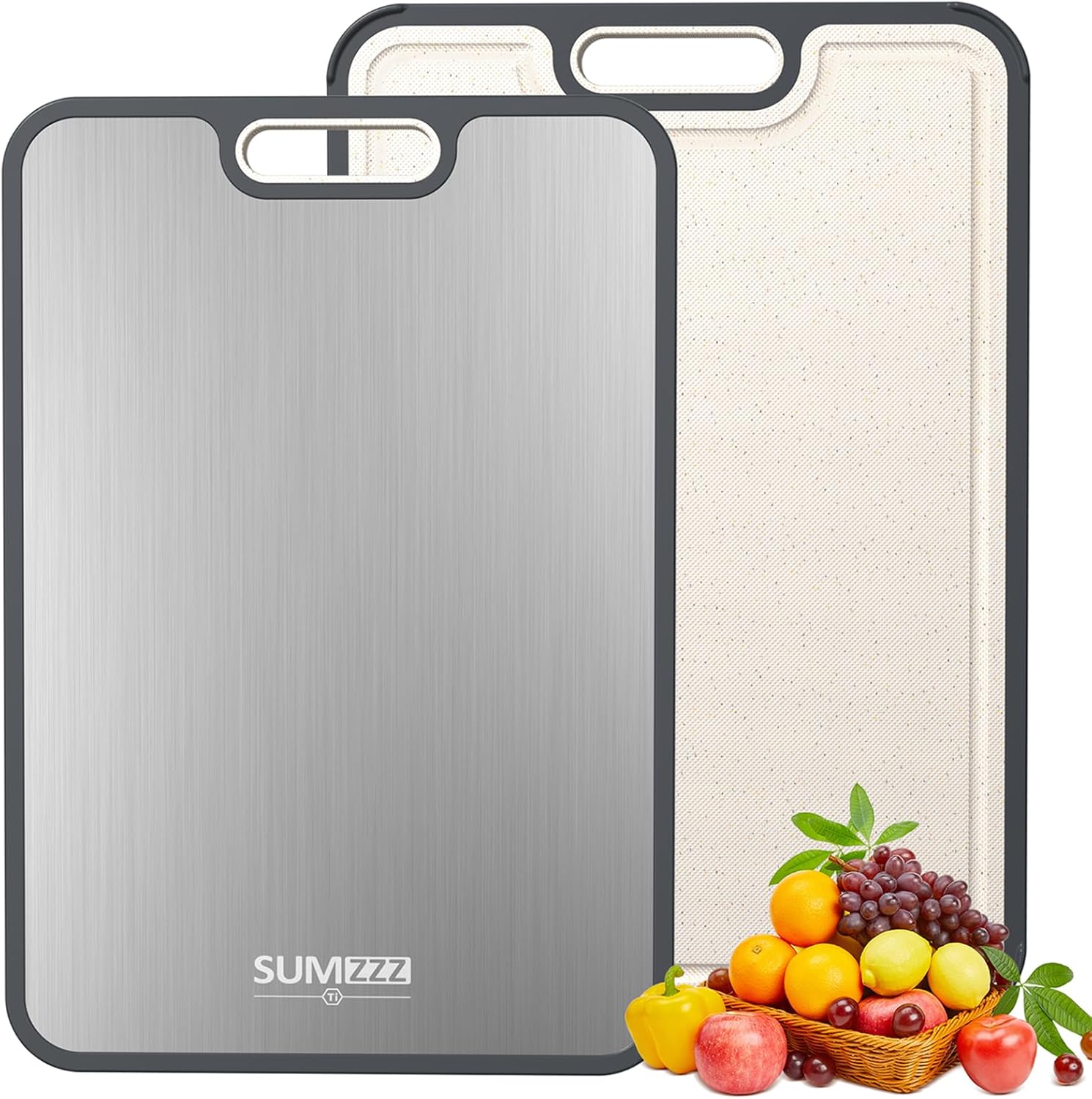
Titanium Cutting Board [click to view…]
This board uses a hybrid design—99.9% pure titanium on one side, polypropylene (PP) on the other.
Key Specs:
- Size: 15″ × 10.3″ (also available in 16″ × 11″)
- Weight: Approximately 1.76 pounds
- Material: Food-grade titanium + BPA-free PP
- Special features: Built-in juice groove (holds 200ml), garlic grinding zone
- Dishwasher safe: Yes
How It Works:
The titanium side handles raw and cooked meat. The PP side is designed for vegetables and fruits. This separation prevents cross-contamination without needing two separate boards.
The juice groove runs along the PP side’s perimeter. During testing, it contained all liquid from a full tomato slicing session—roughly 150ml—without spilling onto the counter.
The garlic grinding area sits in one corner. Press a garlic clove with a knife blade and twist. It minces faster than using a press (which you’d then need to wash separately).
Performance Notes:
The titanium side showed zero staining after three months. No knife marks deep enough to trap food particles. Chicken juice rinsed clean in under 10 seconds.
The PP side developed some light surface scratches from knife use. Normal wear that doesn’t affect function.
One issue: the board can slide on smooth counters. Placing a damp towel underneath solves this.
Best For:
- People who want to try titanium without full commitment
- Small to medium households
- Anyone who needs the juice groove feature
- Budget-conscious buyers (typically priced $28-35)
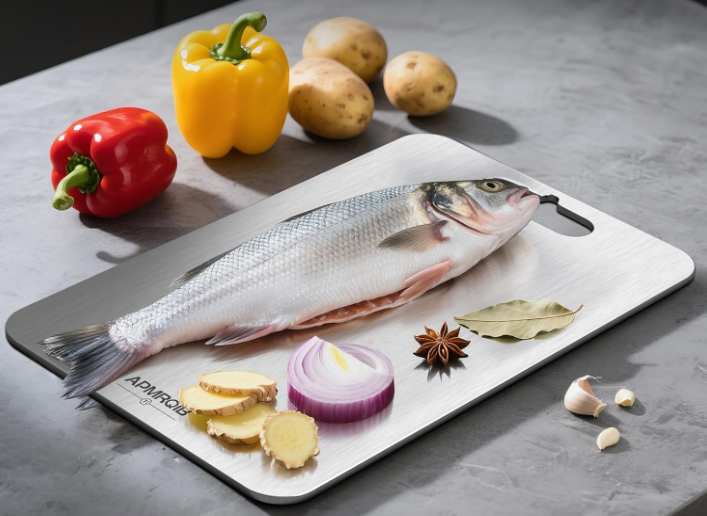
#2: APMRQIB 3-Piece Pure Titanium Set

APMRQIB Titanium Cutting Board Set [click to view…]
This set goes all-in on titanium—no plastic components.
Key Specs:
- Sizes: Large (16″ × 10″), Medium (13″ × 8″), Small (10.5″ × 6.5″)
- Material: 100% pure titanium (single-piece construction)
- Surface: Wire-drawn finish
- Weight: Varies by size (0.9-1.8 lbs)
- Double-sided: Both sides usable
Construction Details:
Each board is engineered from a single piece of titanium. No glue. No adhesives. This eliminates potential weak points where bacteria could accumulate.
The wire-drawn surface treatment creates a smooth, pore-free finish. This texture provides just enough friction to keep food from sliding while remaining easy to clean.
Performance Notes:
The large board handled a full chicken breakdown with room to spare. The medium size works perfectly for daily vegetable prep. The small board fits in my camping pack.
After 90 days, all three boards looked nearly identical to day one. No stains. No warping. Minimal scratching (only visible at certain angles under direct light).
Knife edges stayed sharp. I tested this by slicing paper before and after—no noticeable difference in cutting performance.
Maintenance Reality:
These boards rinse clean under running water. I rarely needed soap. When I did use it, the boards dried completely within 2-3 minutes of air drying.
Dishwasher testing (top rack only) produced no issues. No discoloration. No degradation of the surface.
Best For:
- Serious home cooks who want a complete solution
- People committed to eliminating plastic from their kitchen
- Anyone who needs multiple sizes for different tasks
- Users willing to invest in long-term quality (typically priced $45-60 for the set)
#3: 2-Pack Titanium/PP Combo Boards
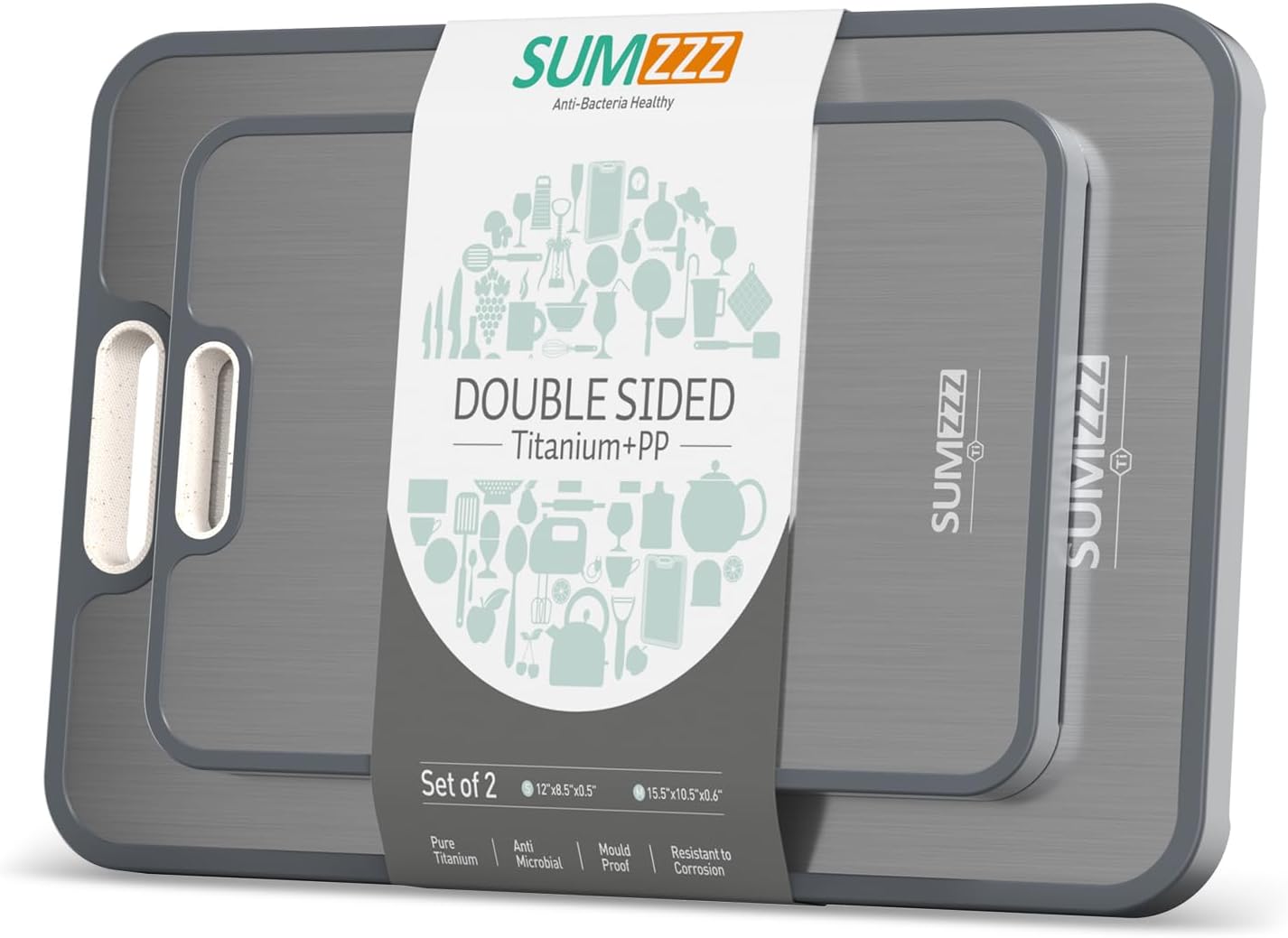
Titanium Cutting Board [click to view…]
Similar concept to the first board, but you get two sizes.
Key Specs:
- Sizes: 15.5″ × 10.5″ + 12″ × 8.5″
- Material: Pure titanium (one side) + food-grade PP (other side)
- Features: Juice groove, garlic grinder on PP side
- Hanging holes for storage
What Makes This Different:
Having two sizes matters more than I expected. The larger board handles dinner prep for 4-6 people. The smaller one is perfect for quick tasks like slicing an apple or prepping herbs.
The smaller board also fits in most RV kitchens and camper setups.
Performance Comparison:
Both boards performed identically to the single Sumzzz board. Same easy cleaning. Same durability. Same scratch resistance on the titanium side.
The PP sides developed similar light surface wear. This is normal for any polypropylene cutting surface.
Value Analysis:
Two boards for roughly $35-40 (prices fluctuate). That’s $17.50-20 per board. Comparable wood boards cost $15-25 each but need replacement every 2-3 years.
Best For:
- Multi-person households
- People who want backup boards
- Those who meal prep (one board for proteins, one for vegetables)
- Outdoor cooking enthusiasts
Direct Comparison: Which Board Wins?
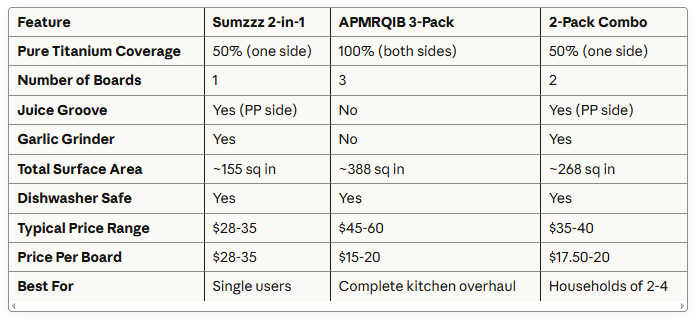
What You Need to Know Before Buying
Surface Scratches Are Normal
Every titanium board develops light surface marks from knife use. This is expected and doesn’t compromise hygiene. The scratches remain superficial—they don’t create grooves where bacteria can hide.
Not All “Titanium” Boards Are Pure
Some products claim titanium construction but use titanium alloys or coatings over steel. Check product descriptions for “99.9% pure titanium” or “food-grade titanium.”
One way to verify: pure titanium is non-magnetic. If a magnet sticks to the board, it’s not pure titanium.
The Weight Factor
Titanium boards feel lighter than wood or bamboo boards of the same size. This makes them easier to move around but means they can slide on smooth counters. Use a damp towel underneath for stability.
Heat Resistance
Titanium handles high temperatures without warping. I accidentally placed a 400°F pan on one during testing—no damage. (Still don’t recommend this.)
However, titanium is an excellent heat conductor. If you place hot items on the board, the entire surface will warm quickly.
Knife Compatibility
Titanium works with all standard kitchen knives. The Rockwell hardness of 36 HRC means ceramic knives (typically 70-80 HRC) can scratch the surface more than steel knives do.
For daily use with steel knives, titanium actually preserves edge sharpness better than wood or bamboo.
Common Questions About Titanium Cutting Boards
Q: Do they really prevent bacteria growth?
A: The non-porous surface prevents bacteria from penetrating the board. Surface bacteria can still exist temporarily, but rinsing removes it completely. Studies on medical-grade titanium show it resists bacterial colonization better than plastic or wood.
Q: How long do they last?
A: Based on current testing and manufacturer claims, 10+ years of daily use is reasonable. The material doesn’t degrade from moisture, knife cuts, or cleaning chemicals.
Q: Are they safe for food contact?
A: Food-grade titanium is the same material used in surgical implants. It’s non-toxic, doesn’t leach chemicals, and doesn’t react with acidic foods (like lemon juice or vinegar).
Q: Why aren’t they more popular?
A: Cost. Titanium manufacturing requires specialized equipment and higher material costs. Most brands prefer selling cheap plastic boards that need frequent replacement—it’s more profitable long-term.
Q: Can I cut directly on the titanium side?
A: Yes. That’s the entire purpose. The material is designed for knife contact.
Q: What about the noise?
A: Cutting on titanium creates a slightly different sound than wood—more of a light “tink” than a “thud.” Most people adjust within a few days. If it bothers you, the hybrid boards offer the PP side for quieter cutting.
My Recommendation: Which Board to Buy
For most people: Start with the 2-Pack Combo boards. You get two sizes, the juice groove feature, and dual materials at a reasonable price. This setup handles 90% of home cooking scenarios.
For serious cooks: Go with the APMRQIB 3-Pack. Pure titanium construction, three sizes, and professional-grade durability. The higher upfront cost spreads across years of use.
For budget testing: Try the Sumzzz single board first. If you like the titanium experience, you can always add more boards later.
The Bottom Line on Titanium Cutting Boards
After three months of daily testing, I’ve replaced all my traditional boards with titanium.
The time savings add up. No more scrubbing grooves. No more worrying about cross-contamination. No more replacing boards every couple years.
My knife edges stay sharper longer. My counter stays cleaner (those juice grooves work). And I’ve eliminated the low-level anxiety about bacteria hiding in microscopic wood cracks.
The higher upfront cost ($30-60 versus $15-25 for traditional boards) pays back within 2-3 years. After that, you’re ahead financially while using a superior product.
Ready to try titanium? Grab one of the boards above and test it for 30 days. Most sellers offer returns if you’re not satisfied. But based on my experience—and the feedback from others who’ve made the switch—you won’t be sending it back.
Your kitchen prep just got faster, cleaner, and simpler.
Dora Decora is a biophilic interior design specialist and passionate blogger. With a deep commitment to integrating nature into living spaces, Dora specializes in creating environments that foster human-nature connections through thoughtful design elements. Her approach emphasizes sustainable materials, natural lighting, and organic patterns that enhance wellbeing and reduce environmental impact.
This post (https://homechroma.com/best-titanium-cutting-board-review) was originally published by Dora Decora on Home Chroma. As an Amazon Associates partner, we are compensated for all qualifying purchases.