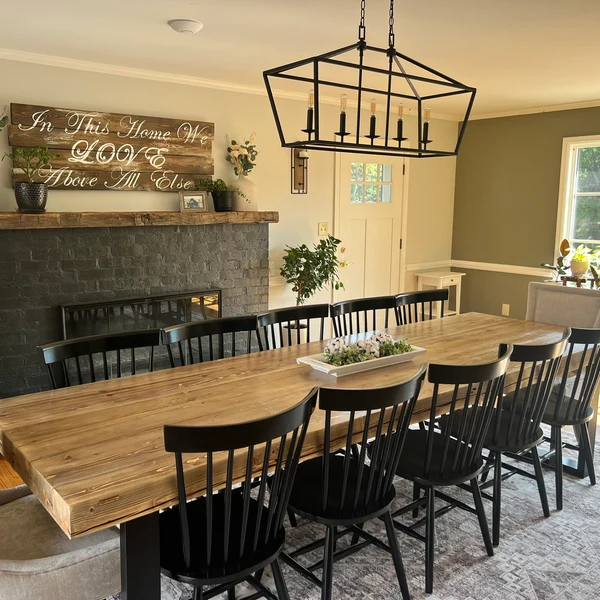
Reclaimed wood dining tables have surged in popularity, and with good reason. These tables aren’t just conversation starters—they’re built to last generations. Made from timber salvaged from old barns, factories, warehouses, and other structures, reclaimed wood brings history to your dining room while offering surprising advantages in durability over newly harvested wood.
But what makes these tables truly stand the test of time? Let’s explore the science and practical benefits that put reclaimed wood ahead in the durability race.
The Science Behind Reclaimed Wood’s Durability
Old-Growth Timber Advantage
Most reclaimed wood comes from trees harvested between the 18th and early 20th centuries. These old-growth forests produced trees that:
- Grew slowly in dense ecosystems
- Developed tightly packed growth rings
- Formed denser heartwood than modern, fast-grown timber
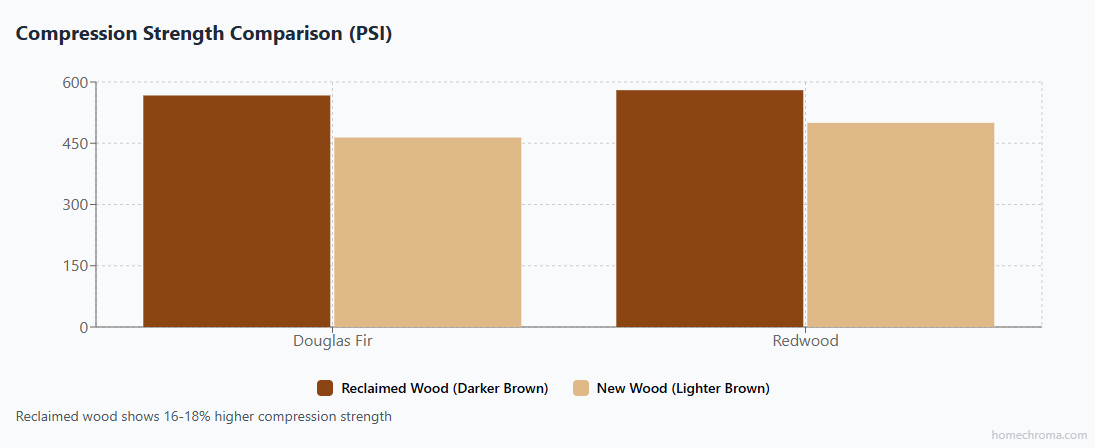
This structural difference isn’t just theoretical. Compression testing shows reclaimed Douglas fir can withstand 18% greater pressure (567 PSI) than new fir (464 PSI). Similarly, reclaimed redwood outperforms new redwood by 16% in compression strength tests.
Density and Stability Factors
The aging process itself contributes to reclaimed wood’s durability. Decades of environmental exposure have:
- Fully polymerized the lignin (the natural polymer binding wood fibers)
- Stabilized the cellular structure
- Reduced internal moisture content
- Minimized the wood’s tendency to warp or crack
For dining tables—furniture that regularly faces spills, temperature changes, and heavy use—this stability provides a significant durability advantage.
Superior Grain Patterns
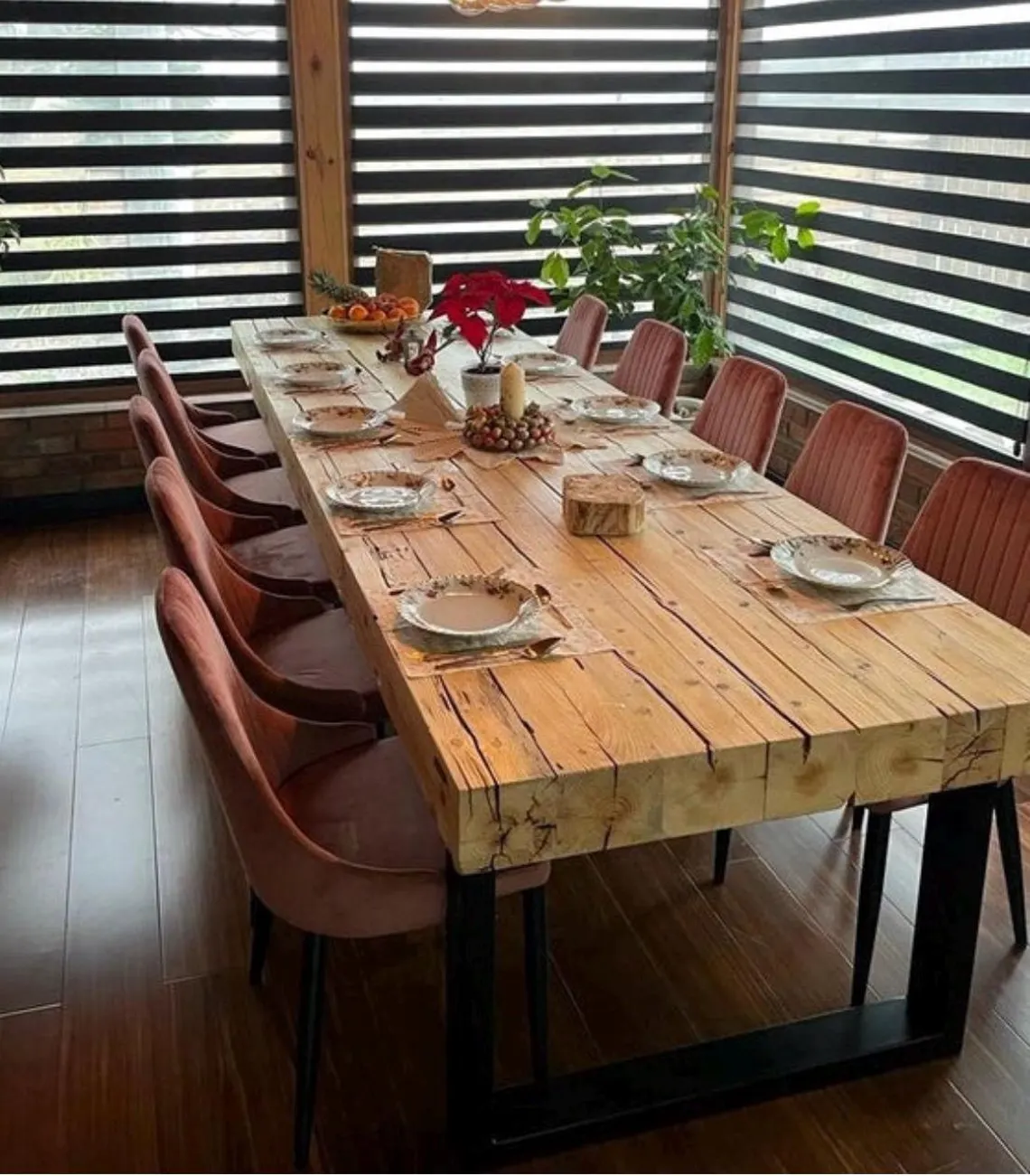
Reclaimed Beams Dining Table with Black Steel Legs [click to view…]
Unlike the uniform grain of commercially produced new wood, reclaimed timber features varied, irregular grain patterns that:
- Distribute weight and stress more evenly across the surface
- Reduce weak points that might develop cracks
- Create natural reinforcement against warping
A table that maintains its flat surface without developing gaps or cracks will remain functional and attractive much longer.
How Reclaimed Wood Outperforms New Wood: By the Numbers
Hardness Comparison
The Janka hardness scale measures wood’s resistance to denting and wear—critical for dining tables that face daily use.
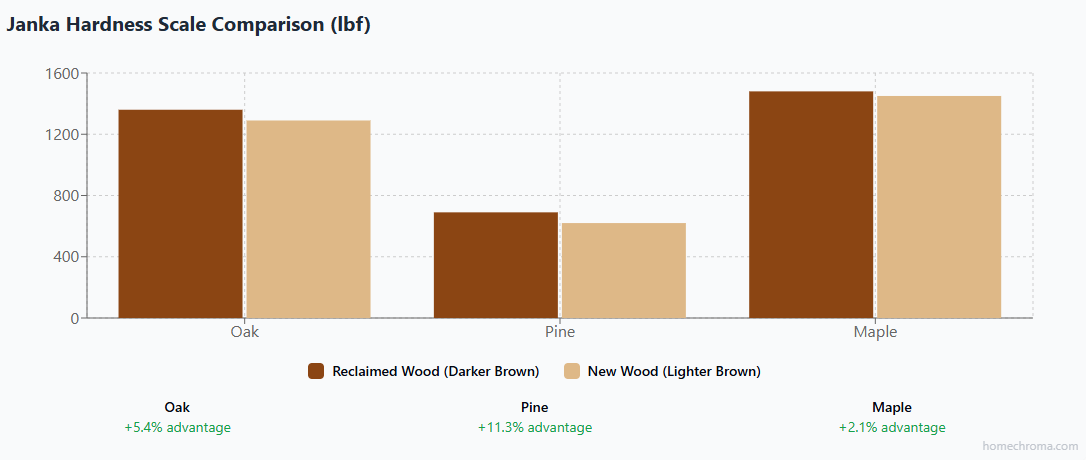
This increased hardness means reclaimed wood dining tables better withstand impacts from dinnerware, serving dishes, and everyday use.
Moisture Resistance
Properly treated reclaimed wood absorbs 12-15% less water than new wood. This translates to:
- Reduced swelling and shrinking with humidity changes
- Lower risk of warping in humid environments
- Better resistance to water rings and spills
- Less susceptibility to rot or mold
Seasonal Movement
A key study tracking seasonal movement found that reclaimed wood experienced 30% less expansion and contraction than new wood under identical humidity conditions. For dining tables, this means:
- Fewer gaps developing between planks
- Reduced risk of surface cracking
- More stable joinery that stays tight
- Better long-term flatness
Beyond Durability: Additional Benefits of Reclaimed Wood Tables
Sustainable Choice with Character

Reclaimed Wood Table Top [click to view…]
Reclaimed wood’s benefits extend beyond pure durability:
- Zero new trees harvested
- Lower embodied carbon (bypasses energy-intensive logging and initial milling)
- Each piece tells a unique story through its patina, nail holes, and grain
- Natural variations create one-of-a-kind furniture
Biophilic Design Elements
Reclaimed wood connects strongly with biophilic design principles—our innate tendency to seek connections with nature:
- Natural textures create visual interest
- Varied coloration provides depth
- Tactile surfaces engage multiple senses
- Materials with history create emotional attachment
This psychological connection often leads owners to maintain and preserve their tables more diligently, further extending their functional lifespan.
Smart Shopping: What to Look For
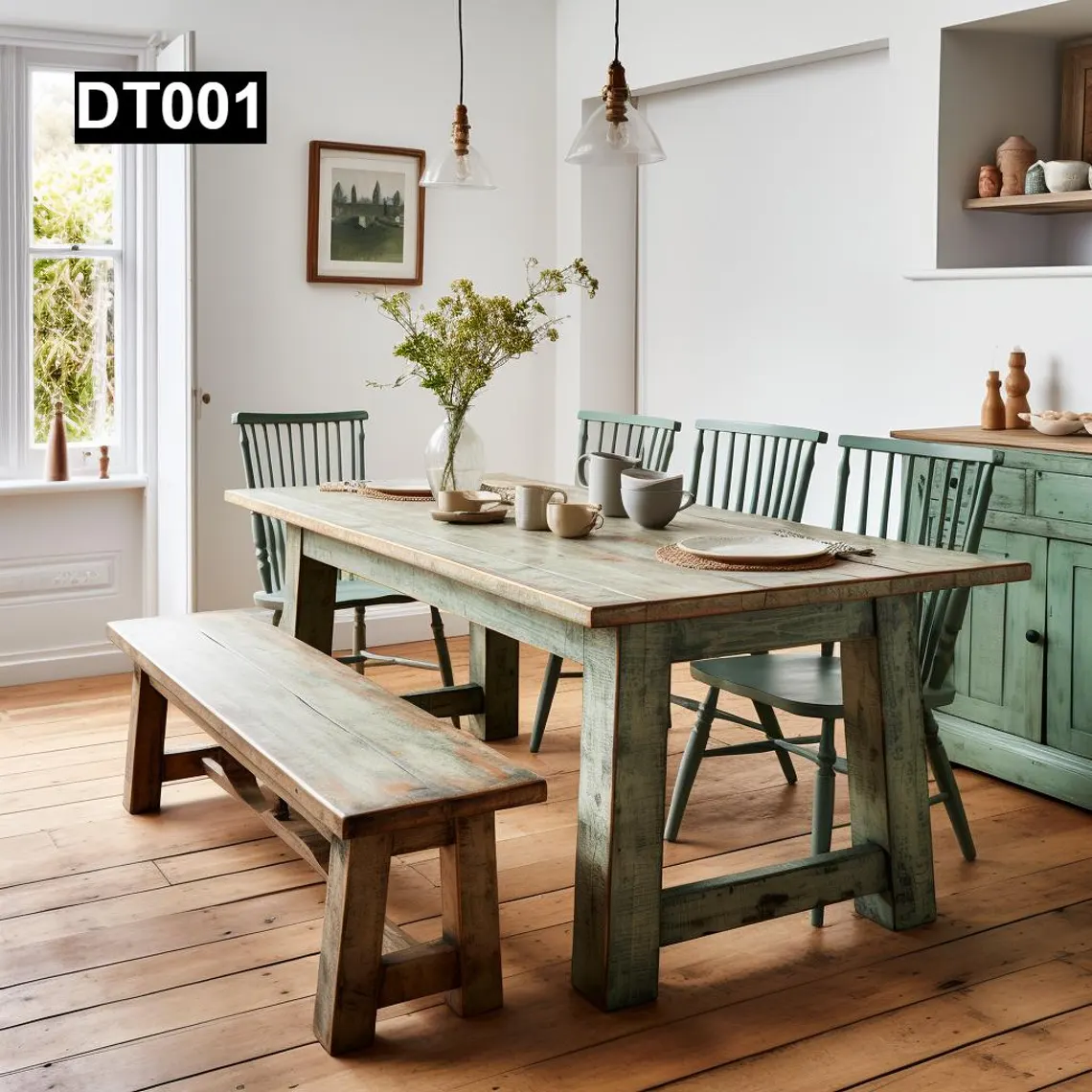
Rustic Reclaimed Wood Dining Tables [click to view…]
When shopping for a reclaimed wood dining table, focus on these quality indicators:
- Proper kiln drying – Look for moisture content between 6-8%
- Solid construction techniques – Mortise and tenon joints or other quality joinery
- Reputable sources – Sellers who can verify the wood’s origin
- Appropriate thickness – At least 1.5″ thick for dining surfaces
- Quality finish – Oil-based finishes that penetrate the wood rather than just coat the surface
Ask questions about:
- Where the wood was sourced
- How it was processed and dried
- What type of joinery was used
- What finish was applied
Maintaining Your Reclaimed Wood Table
Reclaimed wood tables require simple but consistent care:
- Apply oil-based finishes (linseed or tung oil) every 12-18 months
- Use coasters and placemats for hot items and to prevent moisture damage
- Clean with a damp cloth and mild soap, never harsh chemicals
- Avoid direct sunlight exposure for extended periods
- Address spills promptly to prevent staining
Unlike veneered new wood tables, solid reclaimed tables can be sanded and refinished multiple times. A case study documented a reclaimed oak table refinished four times over 50 years while retaining 90% of its original thickness.
Cost Considerations
While reclaimed wood dining tables typically cost 20-40% more than comparable new wood tables, their durability economics make sense:
- Longer functional lifespan (often 50+ years versus 15-20 for many new wood tables)
- Better resistance to damage means fewer repairs
- Ability to refinish multiple times extends usable life
- Timeless appeal reduces the urge to replace for style reasons
- Often retains or increases in value over time
Common Myths About Reclaimed Wood
Myth: “Reclaimed wood is weaker due to age and weathering.”
Reality: Testing shows reclaimed wood is typically stronger and more stable than new wood of the same species.
Myth: “Reclaimed wood requires special maintenance.”
Reality: It requires similar care to any solid wood furniture, sometimes less due to its inherent stability.
Myth: “All reclaimed wood has a rustic appearance.”
Reality: While some pieces showcase rustic character, reclaimed wood can be processed to appear quite refined and contemporary.
Making Your Choice
When deciding between reclaimed and new wood dining tables, consider:
- Durability needs – How long do you want this table to last?
- Usage patterns – Will it face heavy use or occasional dining?
- Aesthetic preferences – Do you value character and uniqueness?
- Environmental priorities – Is sustainability important to you?
- Investment perspective – Are you buying furniture to last generations?
For those prioritizing longevity, sustainability, and character, reclaimed wood offers clear advantages. Its proven structural benefits—superior hardness, stability, and moisture resistance—make it particularly well-suited for dining tables, which face some of the most challenging conditions in home furniture.
Conclusion
Reclaimed wood dining tables stand out as both practical and beautiful choices for homeowners seeking durability. Their material properties—density, stability, and hardness—significantly outperform new wood in measurable ways. Combined with their sustainability benefits and unique character, these tables represent an investment in quality that pays dividends in longevity.
Rather than simply a trendy choice, reclaimed wood tables are a return to traditional furniture values: materials chosen for their inherent qualities, built to serve for generations, and designed to improve with age. In our disposable culture, they offer a refreshing alternative—furniture made to last.
Dora Decora is a biophilic interior design specialist and passionate blogger. With a deep commitment to integrating nature into living spaces, Dora specializes in creating environments that foster human-nature connections through thoughtful design elements. Her approach emphasizes sustainable materials, natural lighting, and organic patterns that enhance wellbeing and reduce environmental impact.
This post (https://homechroma.com/reclaimed-wood-dining-tables-how-they-compare-in-durability-to-new-wood) was originally published by Dora Decora on Home Chroma. As an Amazon Associates partner, we are compensated for all qualifying purchases.