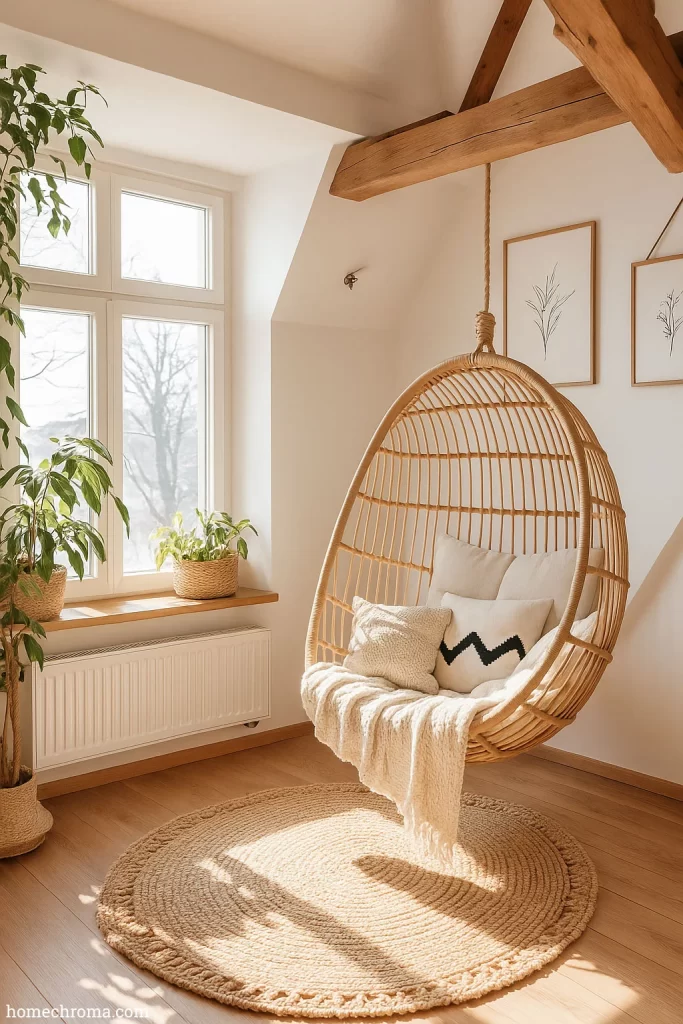
Picture this: You scroll through Instagram, spot that perfect boho hanging chair, and imagine yourself reading novels while gently swaying in your personal oasis. Fast forward three months, and that same chair has become the world’s most expensive clothing rack.
This scenario plays out in countless homes because most people choose hanging chairs based on photos rather than the factors that determine whether you’ll actually want to sit in them daily. The difference between a chair that gets used and one that collects dust isn’t the brand name or price tag—it’s understanding comfort science, material reality, and installation practicality.
The Comfort Foundation: Why Ergonomics Trump Aesthetics
Your body doesn’t care how photogenic your chair looks. After 30 minutes of sitting, only one thing matters: does this chair support you properly?
The Science Behind Sustained Comfort
Real comfort in hanging chairs comes from three biomechanical principles:
- Even weight distribution – Prevents pressure points that cause fidgeting
- Spinal alignment support – Maintains your natural back curve
- Dynamic movement capability – Allows gentle swaying that reduces muscle tension
Many chairs marketed as “ergonomic” fail because they optimize for average body types while ignoring individual fit requirements.
Critical Comfort Specifications
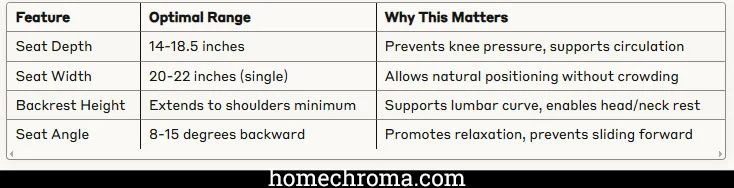
The Cushion Quality Reality
Here’s what manufacturers won’t tell you: the chair frame is secondary to cushion quality for actual comfort. High-density, thick cushions consistently receive the highest user satisfaction ratings across all chair shapes.
Look for:
- Thickness: Minimum 1.5-2 inches
- Density: Firm support layer with softer top
- Removable covers: Essential for cleaning and replacement
- Weather-appropriate materials: Sunbrella or Outdura for outdoor use
Chair Shape Comfort Profiles
- Egg/Pod shapes: Provide cocoon-like privacy and acoustic separation
- Basket designs: Offer excellent support with transitional aesthetics
- Teardrop styles: Allow semi-reclined positioning for reading
- Open-weave/Hammock: Require quality cushioning to prevent discomfort
Material Intelligence: Matching Your Environment
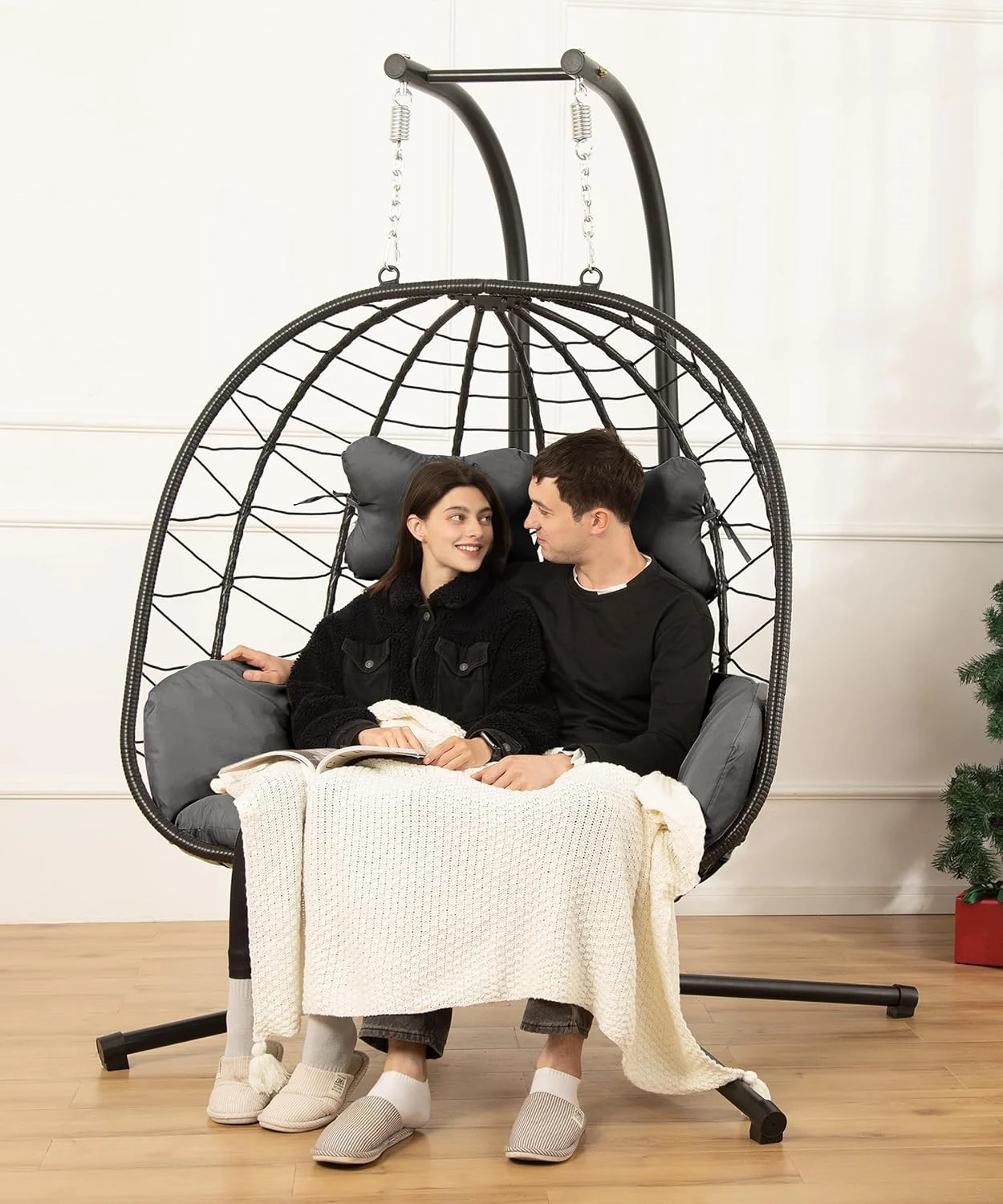
Double Egg Chair wth Stand [click to view…]
The biggest mistake people make is choosing materials based on appearance rather than their intended use environment.
Natural Rattan: Indoor Excellence
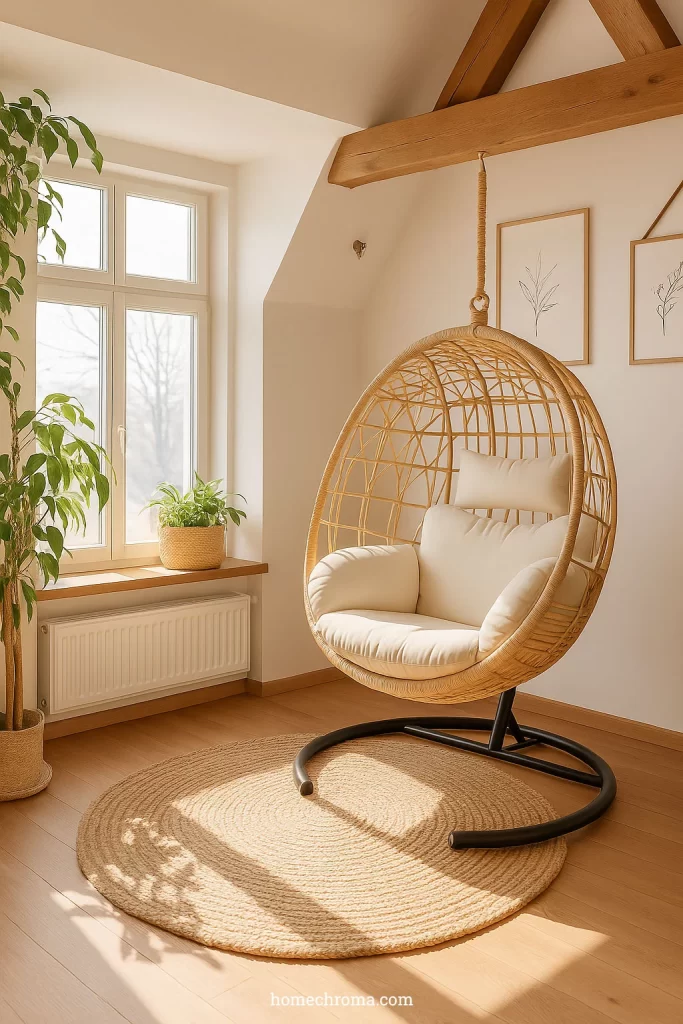
LUTINLIX Oversized Hanging Egg Chair [click to view…]
Natural rattan works beautifully—indoors or in covered outdoor spaces only.
Advantages:
- Authentic texture and traditional appeal
- Indoor durability of 10-30+ years with care
- Eco-friendly when responsibly harvested
- Superior flexibility for intricate designs
Critical Limitations:
- Moisture vulnerability: Rot, mold, and mildew develop quickly
- UV sensitivity: Direct sunlight causes cracking and fading
- Maintenance intensity: Requires regular dusting, oiling, and protection
- Cost premium: Higher price due to natural origin and craftsmanship
Synthetic Wicker: Outdoor Resilience
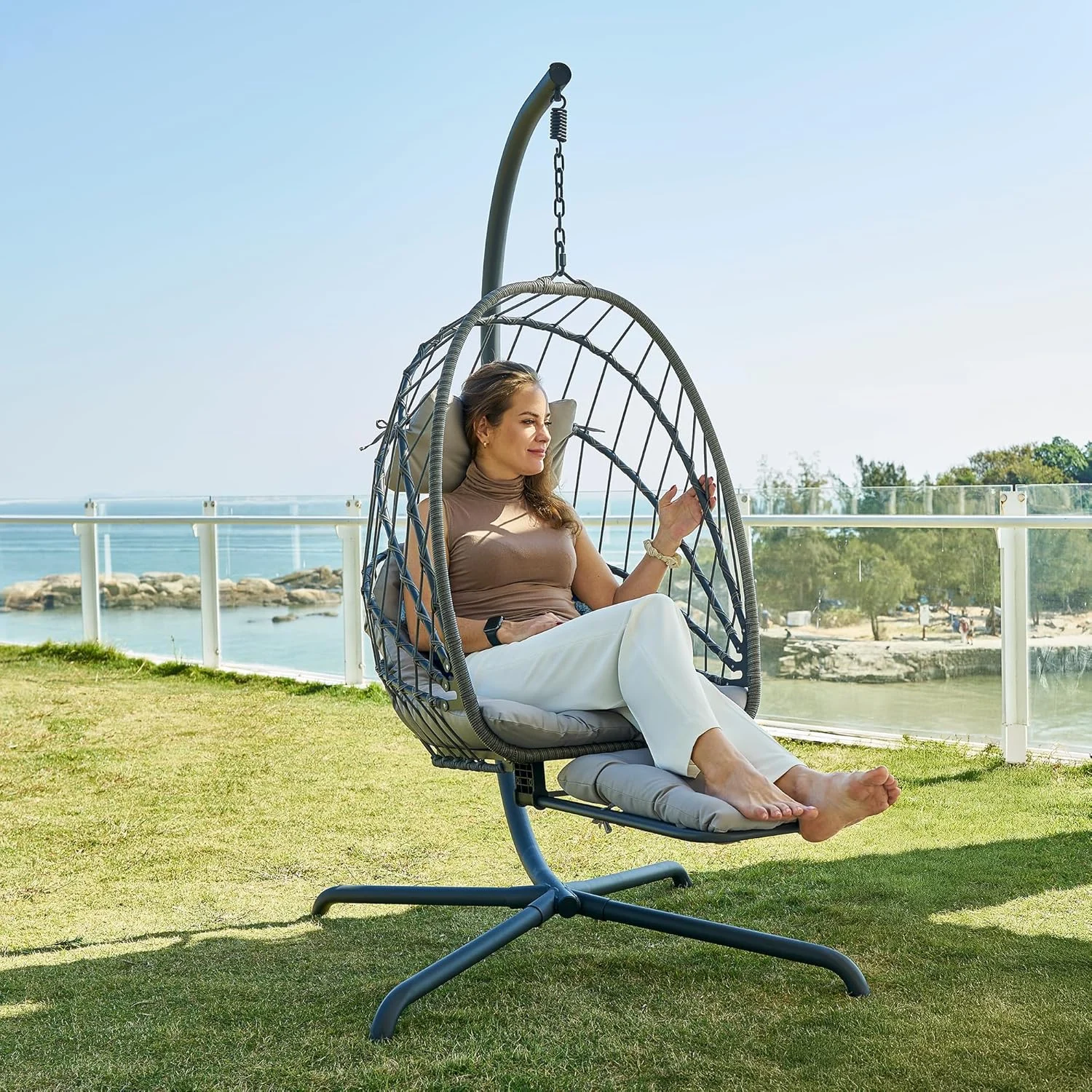
Hanging Egg Chair with Stand [click to view…]
Engineered specifically for weather exposure, synthetic options prioritize durability.
Advantages:
- Weather resistance against moisture, UV damage, and temperature extremes
- Low maintenance requiring only periodic cleaning
- Color variety and contemporary styling options
- Budget-friendly pricing with 10-20 year outdoor lifespan
Trade-offs:
- Artificial feel compared to natural materials
- Environmental impact from plastic production
- Gradual fading despite UV resistance
- Less authentic aesthetic appeal
Frame Material Impact
Your chair’s underlying structure determines stability and longevity:
- Steel/Iron frames: Maximum weight capacity (350+ lbs) but heavier and prone to rust without proper coating
- Aluminum frames: Rust-resistant and lighter weight for easier repositioning
- Wood frames: Natural charm but requires weather sealing for outdoor use
Installation Reality: Safety First, Aesthetics Second
Even the most comfortable chair becomes useless if improperly installed or unsafe.
Space Requirements for Actual Use
Hanging chairs need room to move—that’s their primary appeal. Required clearances:
- Side clearance: Minimum 14 inches from walls or obstacles
- Rear clearance: At least 3 feet for full swinging motion
- Height positioning: 18-24 inches off ground for easy entry/exit
- Ceiling clearance: 3-4 feet minimum from standard ceiling height
Cushion Longevity Strategy
Cushions typically require replacement before frames:
- Choose: Removable, washable covers from day one
- Store: Indoors during harsh weather seasons
- Budget: Plan for replacement every 2-3 years for outdoor use
- Quality: Invest in water-resistant (not waterproof) materials
Common Problems and Solutions
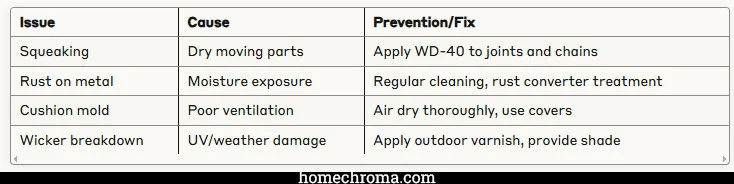
Smart Shopping: Avoiding Expensive Mistakes
User feedback reveals consistent patterns that predict long-term satisfaction.
Red Flag Reviews to Avoid
- Assembly nightmares with misaligned parts or missing hardware
- Thin, uncomfortable cushions that flatten quickly
- Headrest designs that push head forward uncomfortably
- Paint chipping or rust appearing within months
- Scratchy wicker causing skin irritation
Green Flag Indicators
- Specific comfort praise for thick, supportive cushions
- Easy assembly with clear instructions and complete hardware
- Sturdy frame construction with appropriate weight ratings
- Positive long-term durability reports after 6+ months
- Responsive customer service for part replacement
Pre-Purchase Checklist
Before buying any hanging chair:
- Measure your space – Confirm adequate clearance for safe swinging
- Assess your structure – Verify ceiling joist capacity or plan for stand
- Match materials to environment – Indoor vs. outdoor use requirements
- Read detailed reviews – Focus on 6+ month usage experiences
- Understand maintenance – Ensure you’re prepared for care requirements
- Check warranty terms – Verify coverage for common failure points
- Plan for cushion replacement – Budget for future comfort maintenance
Your Hanging Chair Success Formula
The secret to choosing a hanging chair you’ll actually use comes down to honest self-assessment across four critical areas:
Comfort Reality Check: Will you actually sit in this chair for 30+ minutes regularly? Focus on ergonomic specifications over visual appeal.
Material Match: Does your chosen material align with where you’ll use the chair and how much maintenance you’re willing to provide?
Installation Commitment: Are you prepared for the installation requirements, or should you choose a stand-alone option for immediate usability?
Maintenance Honesty: Will you actually perform the required care, or do you need a lower-maintenance synthetic option?
The difference between a hanging chair that becomes a beloved retreat and one that becomes expensive decoration isn’t the initial purchase decision—it’s choosing based on how you’ll actually live with it daily. When comfort, materials, installation, and maintenance align with your real lifestyle, your hanging chair transforms from Instagram fantasy to daily sanctuary.
Dora Decora is a biophilic interior design specialist and passionate blogger. With a deep commitment to integrating nature into living spaces, Dora specializes in creating environments that foster human-nature connections through thoughtful design elements. Her approach emphasizes sustainable materials, natural lighting, and organic patterns that enhance wellbeing and reduce environmental impact.
This post (https://homechroma.com/the-secret-to-choosing-a-rattan-hanging-chair) was originally published by Dora Decora on Home Chroma. As an Amazon Associates partner, we are compensated for all qualifying purchases.