 In our modern world where concrete jungles often disconnect us from nature, biophilic design offers a solution by bringing natural elements indoors. This design approach isn’t just about aesthetics—it’s backed by science showing it reduces stress, improves focus, and boosts overall wellbeing. But what happens when you want to create a nature-inspired space in a room that lacks direct sunlight? North-facing rooms present unique challenges with their cooler, diffused light that can make colors appear dull or overly cold. Let’s explore how to select colors that not only thrive in these conditions but also strengthen your connection to the natural world.
How North-Facing Light Affects Color Perception
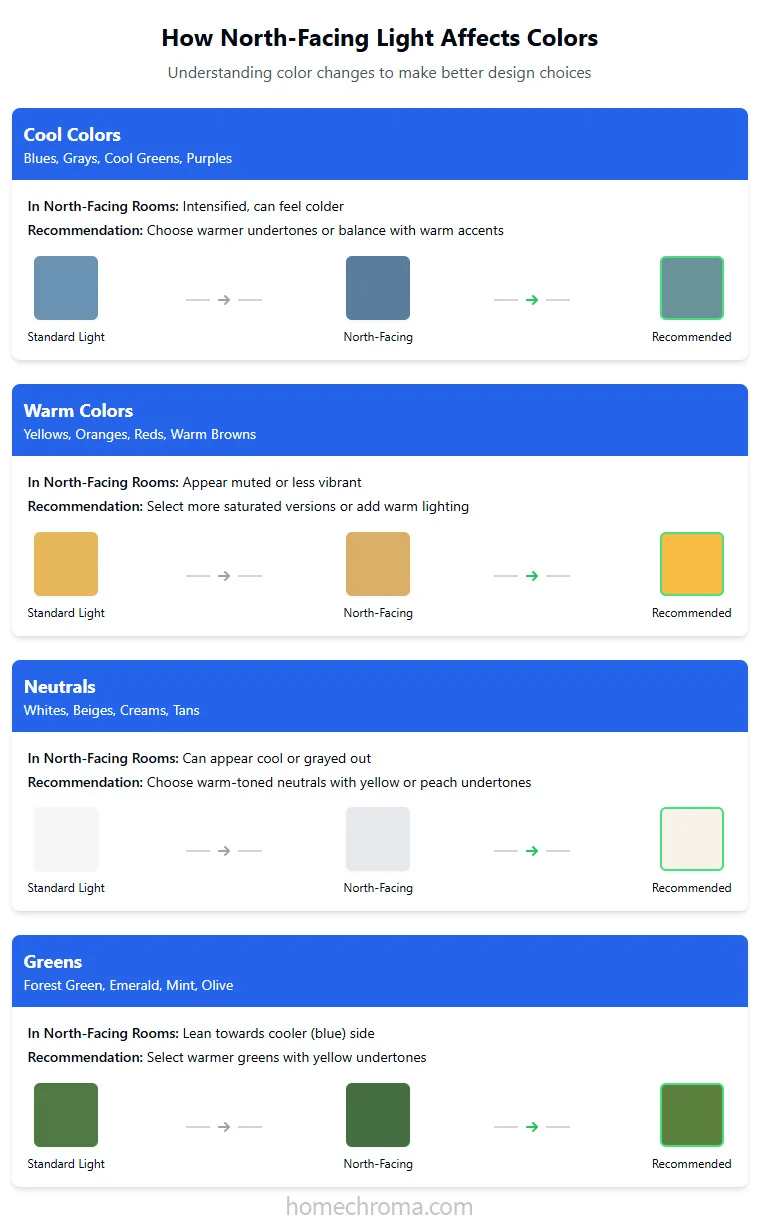 North-facing rooms receive a distinct quality of natural light that differs significantly from other exposures. In the northern hemisphere, sunlight primarily comes from the south, meaning north-facing spaces receive indirect light with a bluish cast throughout the day. This cool, diffused light creates several color perception challenges:
- Blues and grays appear more intense, potentially making the space feel colder
- Warm colors like yellows and reds often look muted or less vibrant
- Dark colors look even darker due to limited illumination
- Neutrals like white can appear grayer or cooler than intended
- Greens tend to lean toward their cooler, bluish undertones
Understanding these effects is crucial when selecting biophilic colors that will perform well and create the intended feeling in your space.
Biophilic Design Principles for Color Selection
Before diving into specific color palettes, it’s helpful to understand how color fits into the broader principles of biophilic design:
- Nature in the Space – Direct experiences of natural elements within built environments, such as plants, water, and natural light. Colors should support and enhance these elements.
- Natural Analogues – Indirect references to nature through materials, patterns, colors, and shapes that evoke natural elements. Color is a key component here.
- Nature of the Space – Spatial configurations that evoke natural settings, such as prospect (open views) and refuge (cozy, protected spaces). Color can influence how we perceive these spatial qualities.
When selecting colors for a north-facing room, consider how your choices support these principles while accounting for the unique lighting conditions.
Top Biophilic Color Palettes for North-Facing Rooms
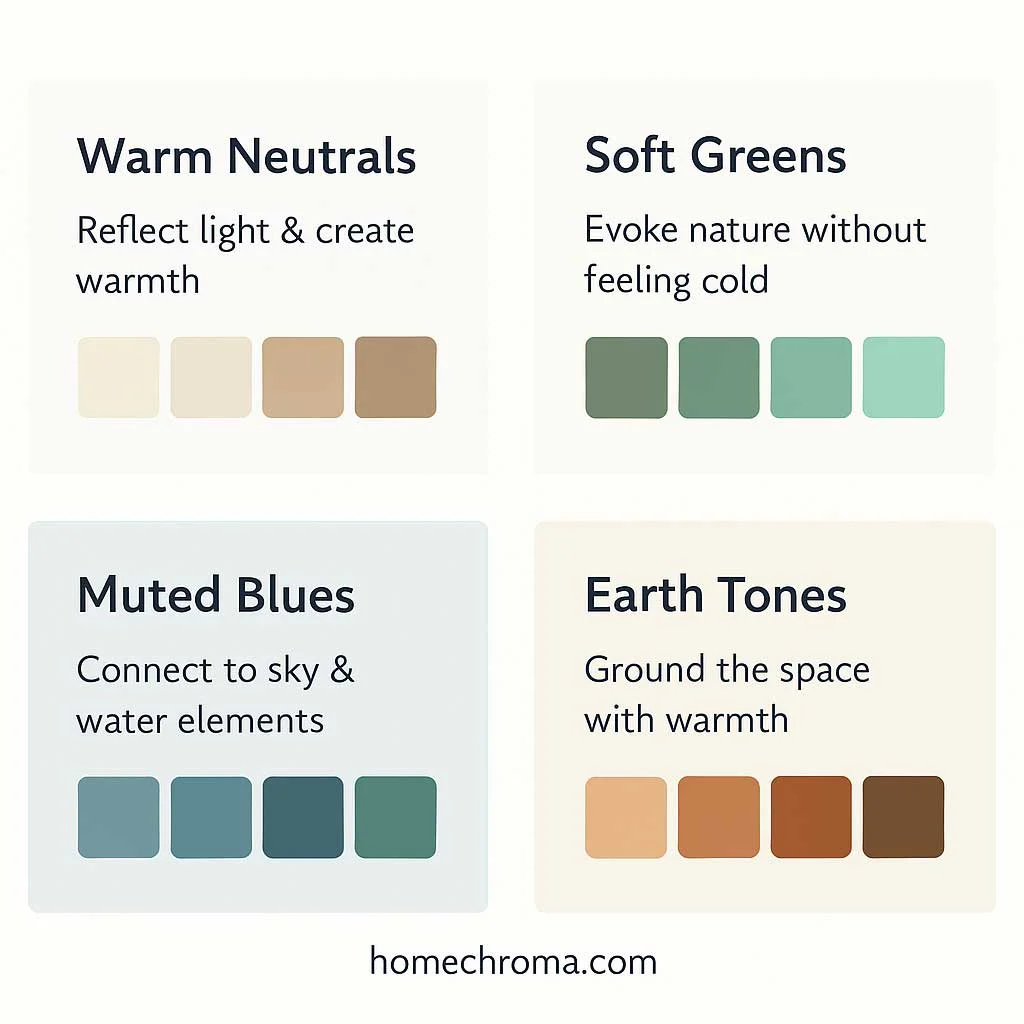
1. Warm Neutrals
Warm whites, creams, beiges, and light tans are excellent foundations for north-facing rooms. These colors possess underlying warm tones like yellow, peach, or beige that help reflect limited light without feeling stark or cold. Why they work:
- Counter the cool bluish cast of northern light
- Provide a versatile backdrop for other biophilic elements
- Create a sense of warmth even with limited direct sunlight
- Reflect available light to brighten the space
Best applications:
- Wall colors throughout the space
- Larger furniture pieces
- Flooring options that reflect light upward
Consider Benjamin Moore whites with yellow undertones or COAT Paints’ curated warm neutrals specifically designed for north-facing spaces.
2. Soft Greens
Muted, warmer-toned greens like sage, olive, and moss effectively bring nature indoors without appearing too cold under north-facing light. Why they work:
- Directly connect to vegetation and foliage in nature
- Create calming, restorative environments
- Warmer green varieties avoid exacerbating coolness
- Add life without requiring actual plants (though combining both is ideal)
Best applications:
- Accent walls
- Upholstery and textiles
- Cabinetry and built-ins
- Paired with natural wood elements
Sage green in particular adds serenity to north-facing rooms while maintaining enough warmth to prevent the space from feeling chilly.
3. Muted Blues with Warm Undertones
While blue can be tricky in north-facing rooms, carefully selected blue tones can work beautifully. Look for blues with warmer undertones like teal (blue-green) or indigo (blue-violet), or choose softer, dustier blue shades. Why they work:
- Connect to natural elements like sky and water
- Create tranquil, open-feeling spaces
- Specific varieties with green or violet undertones add subtle warmth
- Can make smaller north-facing rooms feel more spacious
Best applications:
- Bedrooms and bathrooms where calmness is desired
- Office spaces where focus is important
- Combined with warm-toned woods and metals
- Balanced with warm accent colors
Even darker blues like rich royal blue can create depth and intimacy in north-facing spaces when paired with proper lighting and warm accents.
4. Earthy Tones
Browns, terracottas, and sandy hues reflect the colors of soil, wood, and natural landscapes, bringing inherent warmth and grounding to north-facing rooms. Why they work:
- Directly counterbalance cool northern light
- Create cozy, grounded environments
- Connect to earth elements like soil and stone
- Often match natural materials like wood and leather
Best applications:
- Living areas where warmth is desired
- Dining rooms for a cozy atmosphere
- Accent furniture and larger textiles
- Combined with plants for color contrast
The spectrum from rich chocolate brown to lighter camel shades, along with warm terracottas and clay colors, provides numerous options for creating a cozy, nature-connected atmosphere.
Enhancing Warmth in North-Facing Biophilic Designs
Strategic Use of Warm Accent Colors
Introduce warm accent colors to balance cooler base tones and add visual interest:
- Vibrant yellows and oranges in small doses can energize the space
- Burnt orange creates beautiful contrast with blue-green schemes
- Peachy pinks add subtle warmth without overwhelming
- Golden yellows mimic sunlight in spaces that receive little direct sun
These warmer accents echo the colorful elements found in nature, such as flowers, autumn leaves, or sunset skies.
Warm-Toned Lighting Solutions
Lighting plays a crucial role in north-facing rooms:
- Use fixtures with warm color temperatures (2700-3000K)
- Add table and floor lamps rather than relying solely on overhead lighting
- Incorporate warm metallic finishes like brass or copper in fixtures
- Position mirrors to maximize light reflection
- Use yellow-based wall colors to bounce more light around the room
Thoughtful lighting can transform how colors appear, especially during evening hours when natural light is absent.
Natural Textures for Depth and Warmth
Incorporating natural materials adds another dimension to biophilic design:
- Wood elements in medium to warm tones
- Natural fibers like wool, linen, and jute
- Woven elements such as rattan or bamboo
- Stone with warm undertones
- Cork and other sustainable natural materials
These textures not only add visual and tactile interest but also strengthen the connection to nature while adding warmth to potentially cool-toned spaces.
Real-World Applications
Here are three examples of successful biophilic color schemes for different north-facing rooms:
Living Room 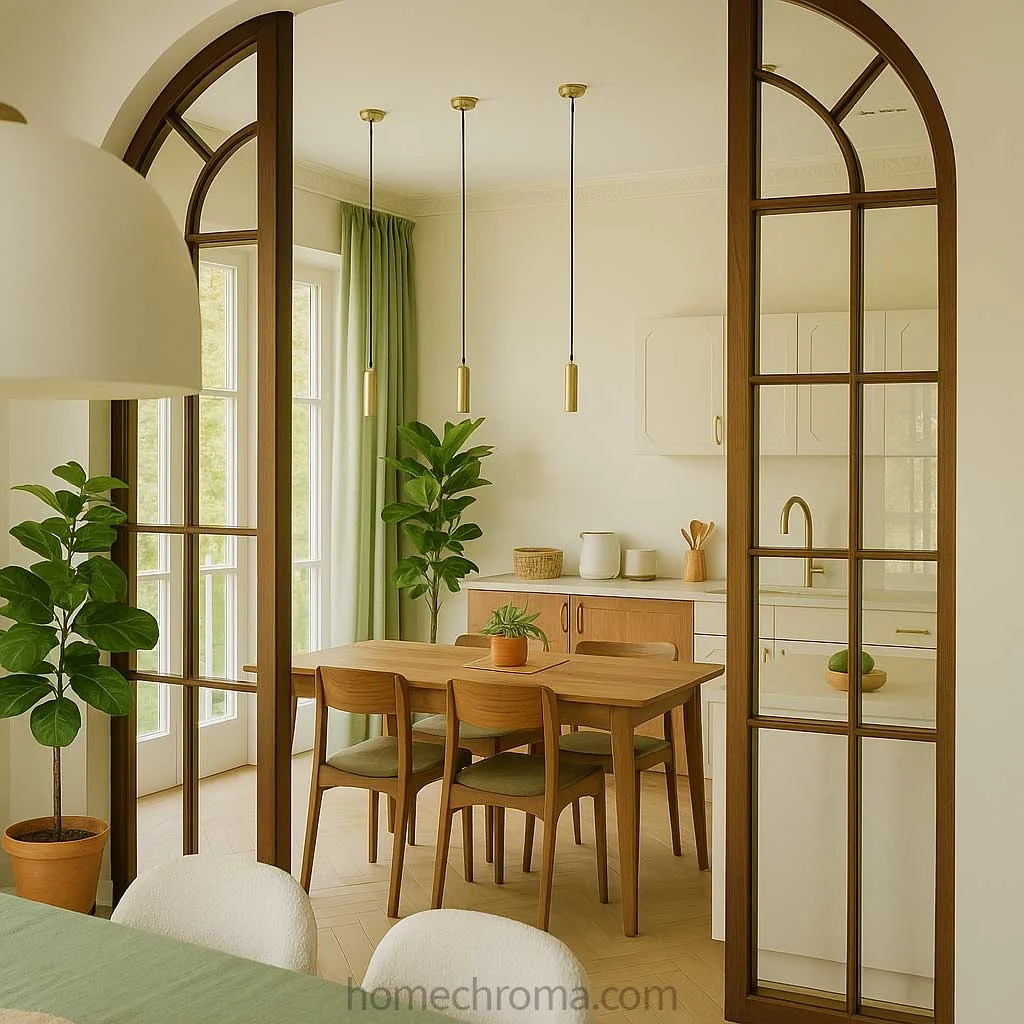
- Walls: Warm creamy white
- Main furniture: Medium-toned natural wood
- Accents: Sage green plants and textiles
- Accessories: Brass lighting fixtures and small terracotta elements
Bedroom 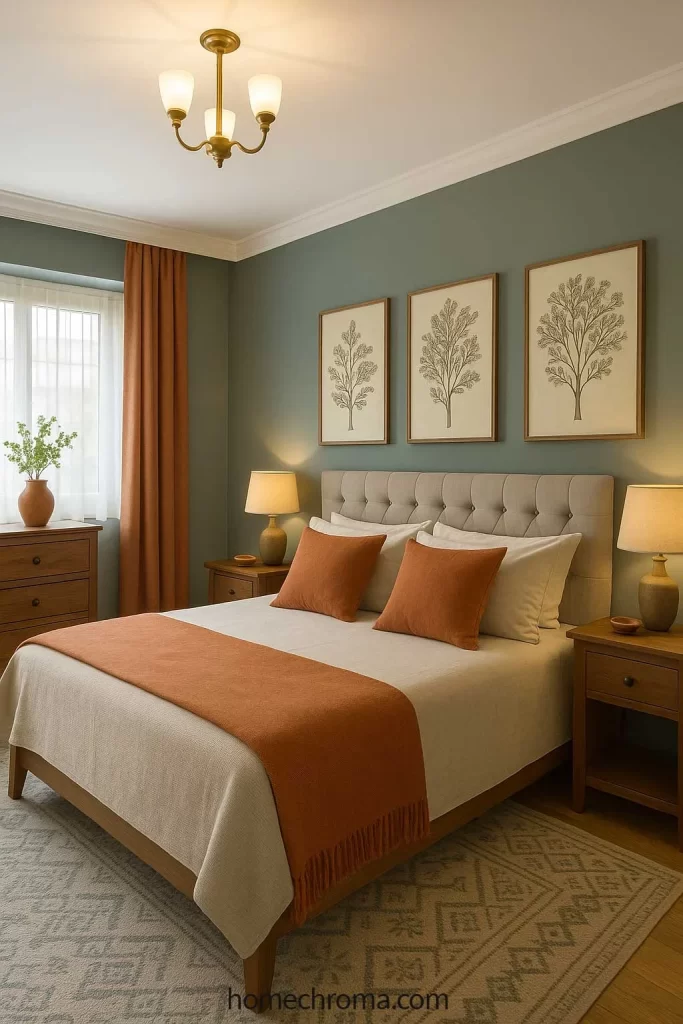
- Walls: Muted dusty blue with green undertones
- Bedding: Natural linen in warm beige
- Accents: Terracotta throws and cushions
- Accessories: Warm wood nightstands and nature-themed artwork
Home Office 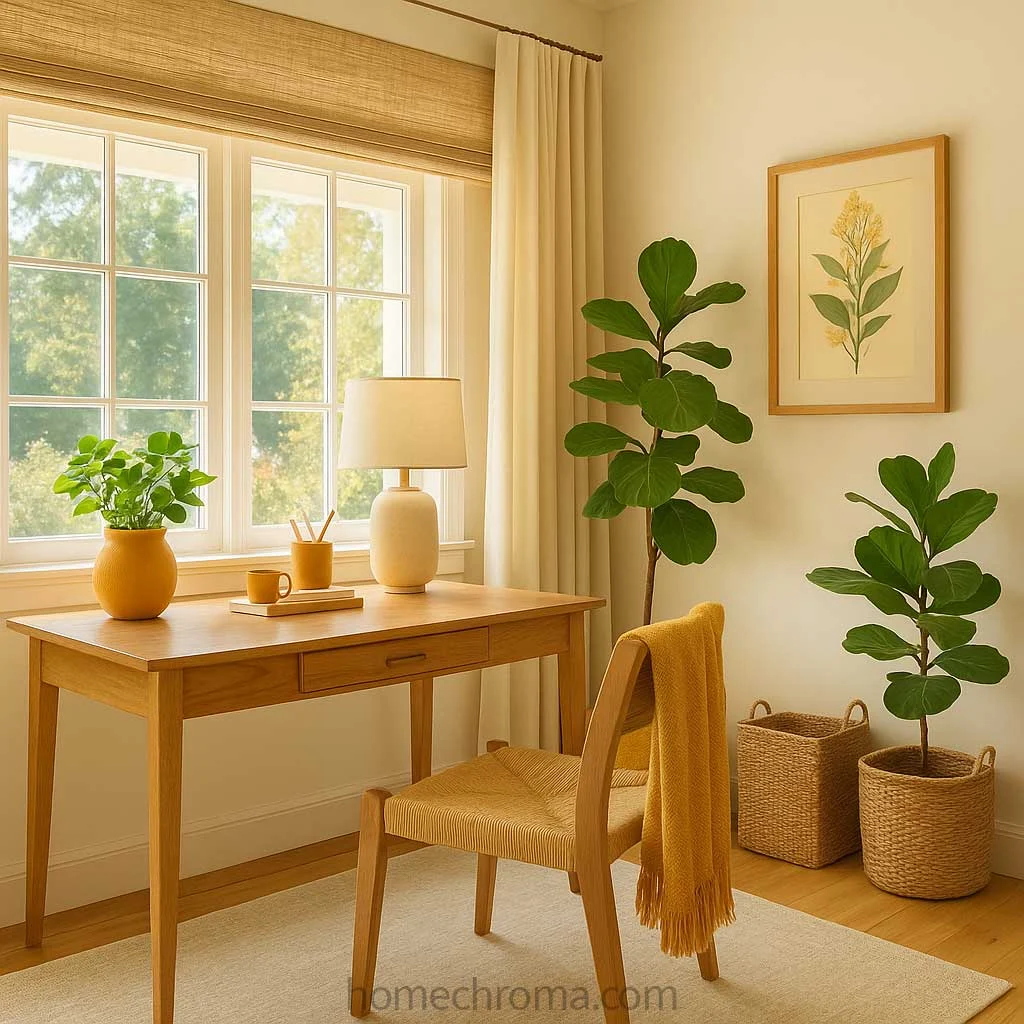
- Walls: Light beige with yellow undertones
- Desk: Natural wood in medium tone
- Accents: Mustard yellow accessories and indoor plants
- Accessories: Nature-inspired artwork and woven storage baskets
Each of these examples balances the cool north-facing light with warm elements while maintaining a strong connection to nature through color, material, and texture.
Psychological Benefits of Biophilic Colors
The colors we choose affect not just aesthetics but also how we feel and function:
Greens promote calm and foster creativity. Research shows exposure to green can reduce anxiety and enhance creative thinking—particularly valuable in north-facing spaces that might otherwise feel cool or sterile.
Blues (when properly selected) can enhance productivity and focus while creating a sense of tranquility. In north-facing rooms, the right blues contribute to a peaceful atmosphere without feeling cold.
Earth tones ground us psychologically, creating feelings of stability and security. These colors help establish comfortable, welcoming environments that counteract any harshness from north-facing light.
Warm neutrals foster versatility and calmness while allowing other elements to shine. They create an ideal background for both focus and relaxation.
Practical Recommendations
When creating biophilic color schemes for north-facing rooms:
- Test before committing – Colors appear differently in each space depending on exact orientation, surrounding buildings, and interior elements. Always test samples on multiple walls.
- Layer different elements – Combine color with texture, plants, and natural materials for a complete biophilic experience.
- Consider the room’s function – Bedrooms might benefit from calming sage greens, while home offices might need the energy of warmer accent colors.
- Balance cool and warm – Even when using cooler colors like greens and blues, ensure they have warmer undertones or are balanced with warm elements elsewhere.
- Adapt to seasonal changes – North-facing rooms may feel different in summer versus winter. Consider adaptable elements like textiles that can be changed seasonally.
By thoughtfully selecting colors that both perform well in north-facing light and connect us to the natural world, we can create spaces that feel warm, inviting, and aligned with our innate attraction to nature—even without direct sunlight. Creating a successful biophilic north-facing room isn’t about fighting against the light conditions but working harmoniously with them, selecting colors that both thrive in this environment and strengthen our connection to the natural world outside.
Dora Decora is a biophilic interior design specialist and passionate blogger. With a deep commitment to integrating nature into living spaces, Dora specializes in creating environments that foster human-nature connections through thoughtful design elements. Her approach emphasizes sustainable materials, natural lighting, and organic patterns that enhance wellbeing and reduce environmental impact.
This post (https://homechroma.com/the-top-biophilic-color-designs-for-north-facing-rooms/) was originally published by Dora Decora on Home Chroma. As an Amazon Associates partner, qualifying purchases are compensated.