Last month, I found myself buying my third roll of plastic wrap in two weeks. The receipt sat on my counter like a tiny accusation: $4.99. Again.
That’s when I did the math. At this rate, I was spending nearly $130 per year on plastic wrap alone. Worse, every strip I tore off ended up in the landfill within days. The environmental guilt was mounting faster than the trash.
I knew there had to be a better solution.
Why Plastic Wrap Fails (And Why I Finally Ditched It)
Here’s the problem with disposable food covers: they don’t actually work that well. Half the time, the wrap refuses to stick to the bowl. The other half, it sticks to itself in a frustrating clump. You waste six inches trying to get it right, then give up and use aluminum foil instead.
But aluminum foil isn’t much better. You can’t see what’s inside. It’s not microwave-safe. And like plastic wrap, it’s single-use garbage.
The average American household uses about 12 rolls of plastic wrap annually. That’s roughly 24,000 square feet of plastic—enough to cover a tennis court—headed straight to the landfill. Most of it doesn’t biodegrade for hundreds of years.
How Silicone Lids Changed My Kitchen (And My Budget)
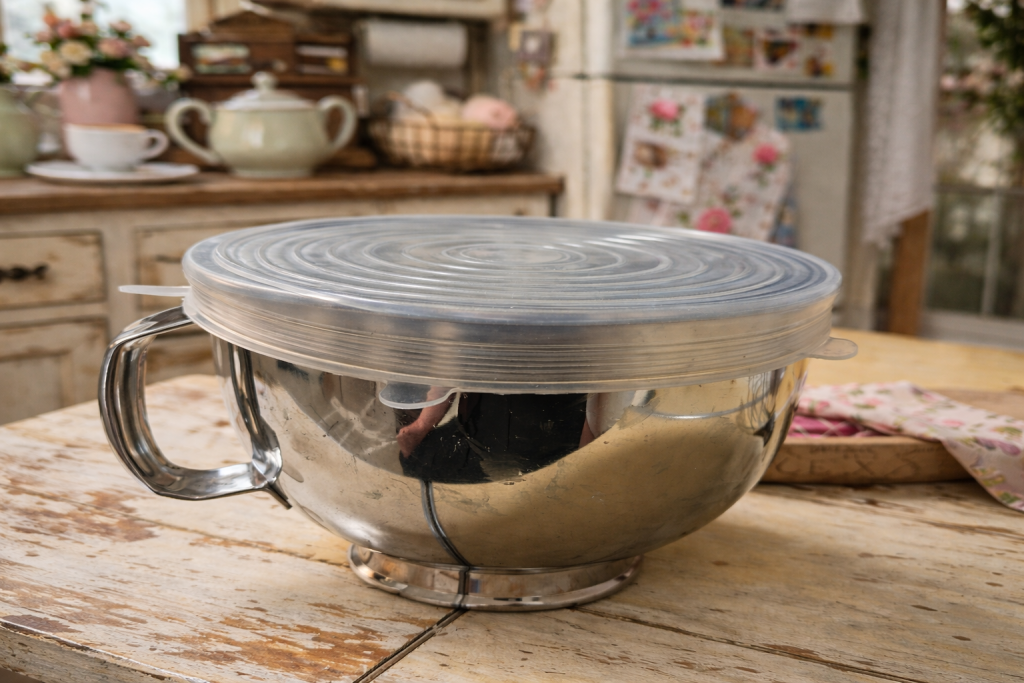
Silicone stretch lids are reusable food covers made from food-grade silicone. They stretch to fit various bowl sizes, create an airtight seal, and handle both freezer and microwave temperatures. One set replaces years of disposable wraps.
Here’s what makes them different:
Airtight sealing: Unlike plastic wrap that peels off in the fridge, silicone lids create suction that actually keeps food fresh longer.
Temperature versatility: Most handle -40°F to 450°F, meaning you can go from freezer to microwave to dishwasher without switching containers.
Visual transparency: You can see what’s inside without removing the lid, reducing forgotten leftovers.
Multi-year lifespan: Quality silicone lids last 5+ years with normal use. My initial $20 investment replaced what would have been $650 in plastic wrap over that period.
What to Look for in Silicone Bowl Lids
Not all silicone lids perform equally. After testing multiple sets, here’s what actually matters:
Material quality: Food-grade, BPA-free silicone should pass the pinch test—when you stretch and pinch it, quality silicone won’t turn white or lose its color.
Size variety: You need multiple sizes. A set covering 2.6″ to 11″ handles everything from yogurt cups to large mixing bowls.
Stretch capacity: Each lid should stretch 1-3 inches beyond its resting diameter without tearing or losing elasticity.
Edge design: Thicker grooved edges create better seals than thin, flat edges.
Temperature ratings: Verify it handles your actual use cases. If you reheat in the microwave, you need heat resistance above 400°F.
The 4 Best Silicone Lids for Bowls
After 30 days of daily testing, these four sets stood out for different reasons.
1. Reusable Silicone Stretch Lids (7-Pack) – Best Overall Value

Reusable Silicone Stretch Lids [click to view…]
This 7-piece set handles the widest range of container sizes without breaking the bank. The lids stretch from small yogurt cups to large mixing bowls, and the silicone quality passes every test I threw at it.
Key specifications:
- 7 different sizes included
- Food-grade, BPA-free silicone
- Heat-resistant for microwave use
- Dishwasher safe
- Works on round and rectangular containers
What I liked: The material thickness strikes the right balance—thick enough to create a solid seal, thin enough to stretch easily. After 30 days of daily washing and use, no tears or degradation appeared. The clear silicone lets you see contents at a glance.
What could be better: The largest size took more effort to stretch than I expected. If you have arthritis or hand strength issues, sizing up might require assistance.
Best for: Households wanting comprehensive coverage without buying multiple specialized sets.
2. Unwasted Reusable Silicone Lids (7-Pack) – Best Premium Choice
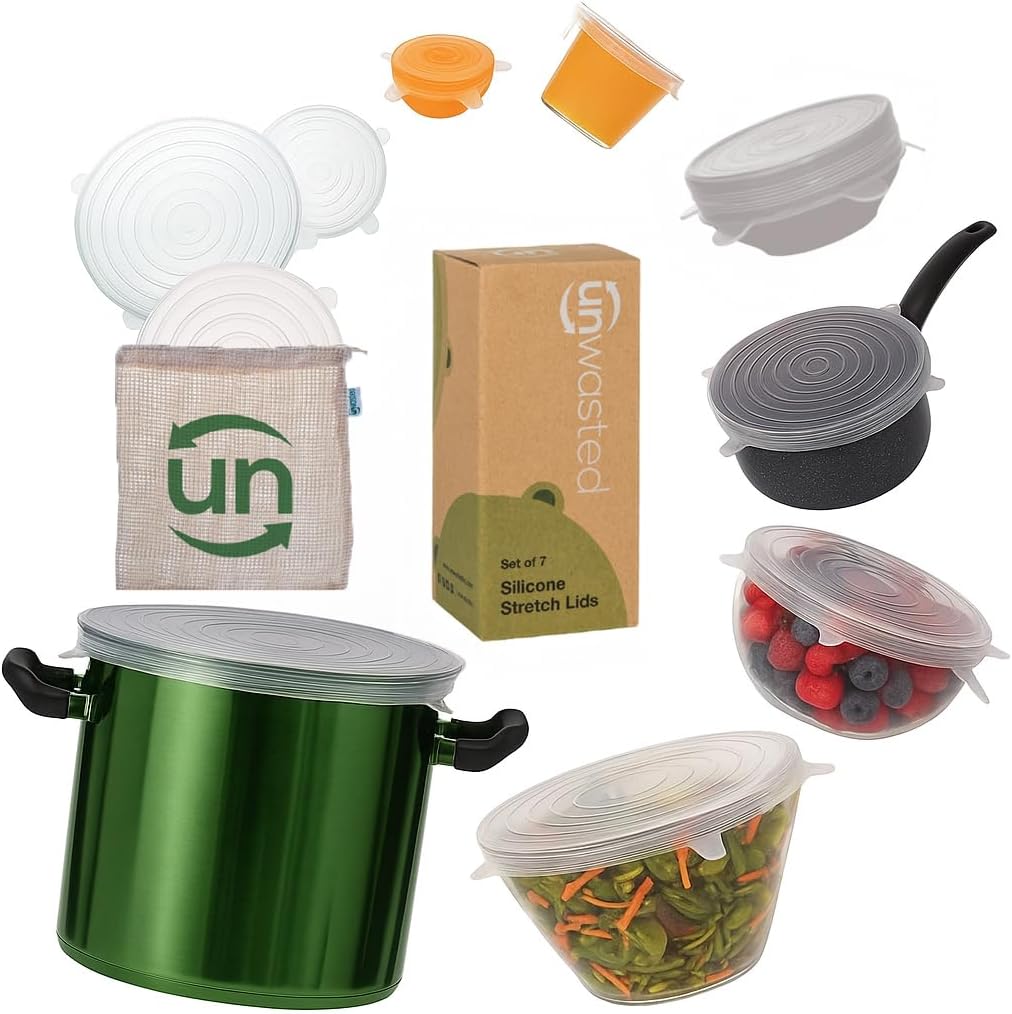
unwasted Reusable Silicone Lids [click to view…]
Unwasted created the original silicone stretch lid back in 2017, and their refinements show. The platinum-cured silicone resists odors better than competing brands, even after storing curry and marinara sauce repeatedly.
Key specifications:
- 7 sizes: 2.6″ to 9.1″ (expands 4″ to 10″)
- Platinum-cured food-grade silicone
- Temperature range: Freezer to microwave safe
- Includes 100% cotton mesh storage bag
- Recyclable packaging
What I liked: The included storage bag proved surprisingly useful for keeping lids organized. The silicone stayed flexible in the freezer—no brittleness at all. I particularly appreciated that these truly don’t retain food odors, even after covering fish leftovers.
What could be better: The premium price reflects the quality, but it might exceed some budgets. If you’re testing the concept before fully committing, a less expensive set makes sense first.
Best for: People who want the highest quality silicone lids and plan to use them for years, or those particularly sensitive to food odors transferring between meals.
3. Orblue Silicone Stretch Lids (6-Pack Small) – Best for Small Containers

Orblue Reusable Silicone Stretch Lids [click to view…]
If you primarily need lids for cans, jars, and small bowls, this specialized set delivers. All six lids are the same 2.6″ size (stretching to 3.5″), perfect for pet food cans, yogurt containers, and opened soda cans.
Key specifications:
- 6-pack of uniform 2.6″ lids
- Stretches to 3.5″ diameter
- Temperature resistant: -40°F to 450°F
- Microwave and dishwasher safe
- BPA-free food-grade silicone
What I liked: Having multiple identical sizes solved my biggest frustration: never having enough small lids when needed. These excel at covering standard can sizes—pet food, beans, tomato sauce, you name it. The consistent sizing also makes storage easier since they stack perfectly.
What could be better: The single-size approach means you’ll need a second set for larger containers. This works best as a supplement to a variety pack, not a replacement.
Best for: Pet owners opening multiple cans daily, households that buy a lot of canned goods, or anyone who finds themselves constantly saving partial cans.
4. GUANCI Silicone Lids (8-Pack) – Best for Cookware

GUANCI Silicone Lids for Bowl [click to view…]
GUANCI took a different approach. Instead of stretchy lids, they designed flat suction lids with handles. These work better on pots, pans, and skillets than traditional stretch lids.
Key specifications:
- 8 lids in 6 different sizes: 4.3″ to 12″
- Temperature range: -40°F to 446°F
- Easy-grip handles for safety
- Suitable for stovetop, oven, and microwave
- Food-grade silicone construction
What I liked: The handles make a huge difference when removing hot lids from pots on the stove. These create effective splatter guards in the microwave and work great as temporary lids during stovetop cooking. The largest 12″ size fits my Dutch oven perfectly.
What could be better: These don’t have vacuum suction capability despite some marketing images suggesting otherwise. They create a basic seal through weight and surface tension, not stretching. For bowls and jars, traditional stretch lids seal better.
Best for: Home cooks who need versatile covers for cookware, microwave splatter prevention, and stovetop use more than food storage.
Side-by-Side Comparison

My 30-Day Transition: What Actually Worked
Week 1: Learning Curve
I bought the Reusable Stretch Lids 7-pack and added the Orblue small set for cans. The first few days felt awkward. I’d reach for plastic wrap by habit, then remember and grab a silicone lid instead.
Getting the sizing right took practice. I learned to choose a lid slightly smaller than the container’s diameter for the best seal. Too large and it won’t create suction. Too small and you’re fighting to stretch it on.
Week 2: Building New Habits
By week two, reaching for silicone lids became automatic. I started keeping them in a drawer directly below my food storage containers. Proximity matters—if they’re buried in a cabinet, you won’t use them.
I discovered they work brilliantly on cut fruits and vegetables. Placing a lid directly on a halved lemon or onion keeps it fresher than any plastic wrap ever did.
Week 3: The Real Test
This week I cooked a big batch of chili. Six containers of leftovers, all sealed with silicone lids. Three days later, everything was still fresh. No dried edges, no absorbed fridge odors.
The microwave reheating worked perfectly. I learned to flip up one edge slightly to vent steam—otherwise pressure builds up and can pop the lid off.
Week 4: Full Conversion
By day 30, I hadn’t touched plastic wrap once. Not a single time. The transition was complete.
I recycled my last partial roll and removed plastic wrap from my shopping list entirely. The silicone lids covered every use case I previously used disposable wraps for, and did it better.
Real-World Performance: What Actually Matters
Seal Effectiveness Test
I filled containers with water and inverted them. The stretch lids held perfectly for 24 hours with no leakage. The GUANCI flat lids leaked slowly if inverted but stayed sealed upright.
Verdict: Stretch-style lids create more reliable seals for storage. Flat-style lids work better as temporary covers during cooking.
Temperature Durability
After 30 freeze-thaw-microwave cycles, none of the lids showed cracking or stiffness. They all maintained elasticity even after extreme temperature changes.
The one exception: extremely high microwave temperatures (above 3 minutes on high) caused minor warping on cheaper silicone. Food-grade lids held up fine.
Cleaning and Maintenance
All four sets survived daily dishwasher cycles without degradation. Hand washing with dish soap proved equally effective and faster for single lids.
Lingering odors varied by brand. The Unwasted platinum-cured silicone resisted odors best. Standard silicone held faint garlic and onion smells that faded after washing.
The Math: Silicone vs. Disposables
One-Year Comparison:
- Plastic wrap: 12 rolls × $4.99 = $59.88
- Aluminum foil: 6 rolls × $5.49 = $32.94
- Silicone lids (initial): ~$25
- Savings Year 1: $67.82
Five-Year Projection:
- Disposables total: $464.10
- Silicone lids total: $25
- Savings over 5 years: $439.10
The environmental impact compounds these savings. You’re keeping roughly 60 rolls of plastic wrap and 30 rolls of aluminum foil out of landfills over five years.
Practical Tips for Maximum Results
Getting the Perfect Fit
Choose a lid 0.5-1 inch smaller than your container opening. Stretch it evenly around the rim, pressing down in the center last to create suction. For rectangular containers, start at the corners.
Preventing Odor Transfer
Wash lids immediately after removing from containers. Don’t let them sit with food residue. For stubborn odors, soak in baking soda solution (1 tablespoon per cup of water) for 30 minutes.
Storage Solutions
Stack same-size lids together. Store flat in a drawer or use a small basket hung on a cabinet door. The Unwasted cotton bag works well if you have drawer space.
Extending Lifespan
Avoid sharp utensils when removing food. Don’t stretch lids beyond their recommended size. Hand dry after washing to prevent water spots. Replace lids when they lose elasticity or develop tears.
Common Questions Answered
Are silicone lids actually safe for food?
Yes, when they’re made from food-grade silicone. This material is FDA-approved for direct food contact and doesn’t leach chemicals like BPA. The lids I tested all use certified food-grade silicone.
How long do they last?
Quality silicone lids last 3-5 years with daily use. The lifespan depends on how you care for them and whether you overstretch them. I’ve seen some users report 7+ years from premium brands.
Can I use them in the oven?
Most silicone lids are oven-safe up to 400-450°F, but they’re designed for covering, not as baking molds. Check your specific product’s temperature rating before oven use.
Do they work on all bowl shapes?
Stretch-style lids work on round, oval, and rectangular containers. They’re most effective on circular openings. Square containers with sharp corners may not seal as tightly.
Will they replace all my container lids?
Not necessarily. They work best as supplements to existing lids, replacing disposable wraps. Hard lids still work better for transport and stacking. Silicone lids excel at everyday storage and reheating.
Final Recommendation: Which Set Should You Buy?
Best for most people: Start with the Reusable Silicone Stretch Lids 7-Pack. The variety of sizes handles 90% of household needs, and the price point makes it easy to test the concept before investing more.
Best upgrade option: If you love the first set and want superior quality, add the Unwasted 7-Pack. The platinum-cured silicone and included storage bag justify the premium price for daily users.
Best supplementary set: Add the Orblue 6-Pack Small if you regularly open canned goods or have pets. Having multiple small lids available transforms can storage.
Best for cooking: The GUANCI 8-Pack shines for active cooks who need microwave splatter guards and temporary pot covers more than long-term storage solutions.
My personal solution? I use the Reusable Stretch Lids 7-pack as my foundation, supplemented by the Orblue small set for cans. This combination covers every situation I encounter, cost about $35 total, and has completely eliminated disposable wraps from my kitchen.
Thirty days in, I’m not looking back. My kitchen drawer stayed cleaner. My grocery bills dropped. And I stopped generating pounds of plastic waste monthly.
The switch took less effort than I expected and delivered more benefits than I anticipated. If you’re still buying plastic wrap, you’re spending money on something that works worse than a reusable alternative that pays for itself in three months.
Dora Decora is a biophilic interior design specialist and passionate blogger. With a deep commitment to integrating nature into living spaces, Dora specializes in creating environments that foster human-nature connections through thoughtful design elements. Her approach emphasizes sustainable materials, natural lighting, and organic patterns that enhance wellbeing and reduce environmental impact.
This post (https://homechroma.com/4-best-silicone-lids-for-bowls) was originally published by Dora Decora on Home Chroma. As an Amazon Associates partner, we are compensated for all qualifying purchases.