 Your hands take a beating. Cooking, cleaning, gardening, gym, baby diapers, work, bathroom breaks — the average pair of human hands gets washed 15 to 30 times a day. Now multiply that by what’s actually inside most pump bottles sitting on bathroom counters across America: petroleum-derived surfactants, undisclosed synthetic fragrance compounds, and skin-stripping detergents that bear about as much resemblance to real soap as margarine bears to butter.
That tight, squeaky, slightly itchy feeling after washing? That’s not “clean.” That’s your skin barrier waving a white flag.
Here’s what most people don’t know: real soap — the kind made through a 2,000-year-old process called saponification — costs slightly more upfront, lasts twice as long, and can actually heal cracked, irritated skin while it cleans. The problem is that 90% of products labeled “hand soap” at the grocery store aren’t soap at all. They’re synthetic detergent solutions wearing a soap costume.
Below is the complete breakdown of what real organic hand soap is, why it works better, and the six botanical formulations worth keeping by your sink.
The Pump Bottle Lie: Why Most “Hand Soap” Isn’t Soap
Walk down any cleaning aisle and read the back of a typical antibacterial hand wash. You’ll see ingredients like sodium lauryl sulfate, sodium laureth sulfate, cocamidopropyl betaine, methylisothiazolinone, “fragrance,” and a handful of preservatives ending in -paraben or -benzoate. None of these are soap. They’re synthetic detergents — molecules engineered in a lab to lift grease at industrial scale.
Three problems with that:
- Synthetic surfactants don’t know when to stop. SLS and SLES strip oil indiscriminately, including the natural lipids your skin produces to defend itself. Repeated exposure thins the skin barrier and triggers irritation, dryness, and contact dermatitis.
- “Fragrance” is a chemical loophole. Under U.S. labeling law, that single word can stand in for hundreds of undisclosed synthetic compounds, including phthalates, which have been linked to hormonal disruption.
- Antibacterial chemicals have a problematic track record. In September 2016, the FDA banned triclosan and 18 other antibacterial chemicals from over-the-counter consumer wash products, citing concerns about long-term safety, hormone disruption, and antibiotic resistance. The agency concluded manufacturers had failed to prove these chemicals were any more effective than plain soap and water.
Then there’s the glycerin theft. When triglyceride oils react with potassium hydroxide during saponification, they produce two valuable substances: soap and natural glycerin. Glycerin is a humectant that pulls moisture from the air into your skin. Mass producers extract it from their soap base to sell separately for higher-margin products like lotions and pharmaceuticals — leaving the resulting “soap” stripped of its built-in moisturizer.
True botanical soap leaves the glycerin in. That’s the difference you feel after washing.
What Saponification Actually Does
Saponification is straightforward chemistry. You combine a triglyceride (organic plant oil — coconut, olive, jojoba, sunflower) with a strong alkali (potassium hydroxide for liquid soap, sodium hydroxide for bars). The alkali splits the triglyceride into fatty acid salts and glycerol. The fatty acid salts are the soap molecules. The glycerol is the glycerin.
Soap molecules have a clever shape: one end loves water, the other end loves oil. When you lather your hands, the oil-loving ends grab onto dirt, grime, and the lipid envelopes of viruses and bacteria. The water-loving ends hold onto rinse water. When you rinse, the entire complex — soap molecule, dirt, microbe — gets carried down the drain.
That’s why the World Health Organization and CDC recommend plain soap and water over antibacterial gels for routine handwashing. Real soap doesn’t kill microbes by chemical assault. It physically dismantles them and washes them away.
True Botanical Soap vs. Synthetic Detergent Gel: Side by Side

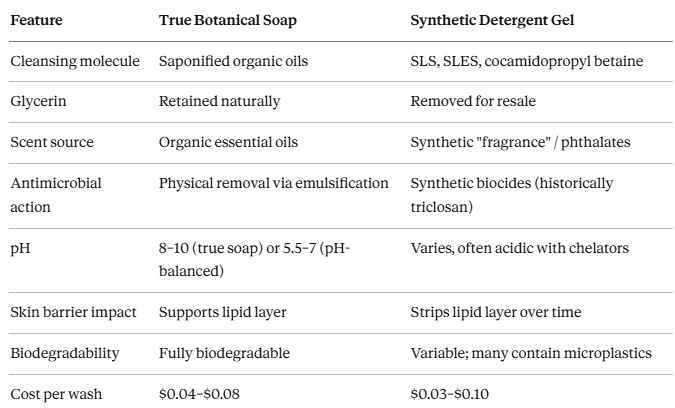
The cost-per-wash math is closer than you’d think because real soap formulas are concentrated and a smaller dose gets the job done.
Six Botanical Hand Soaps Worth Putting on Your Counter
These six brands meet three standards: USDA Organic certification or equivalent, true saponification (not synthetic surfactants), and verifiable retail availability for U.S. shoppers.
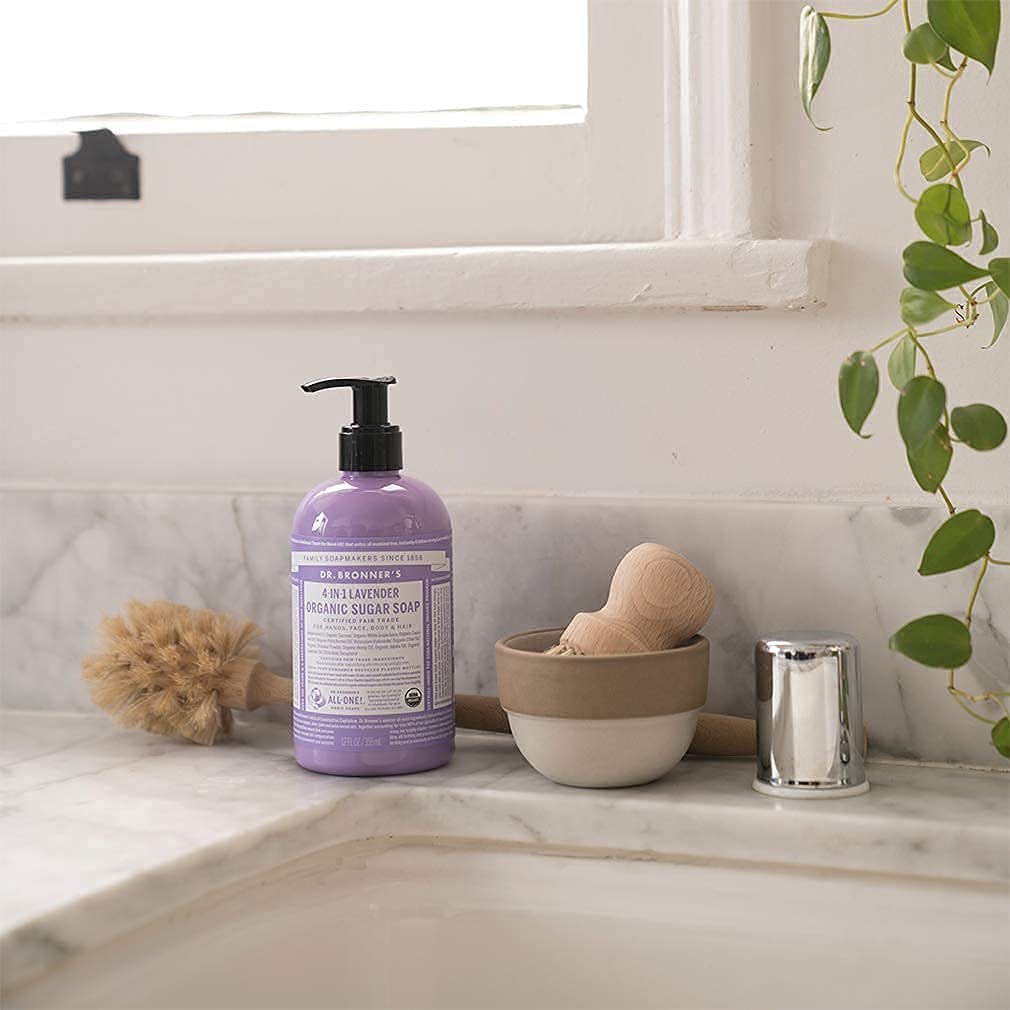
1. Dr. Bronner’s 4-in-1 Organic Sugar Soap (12 fl oz pump)
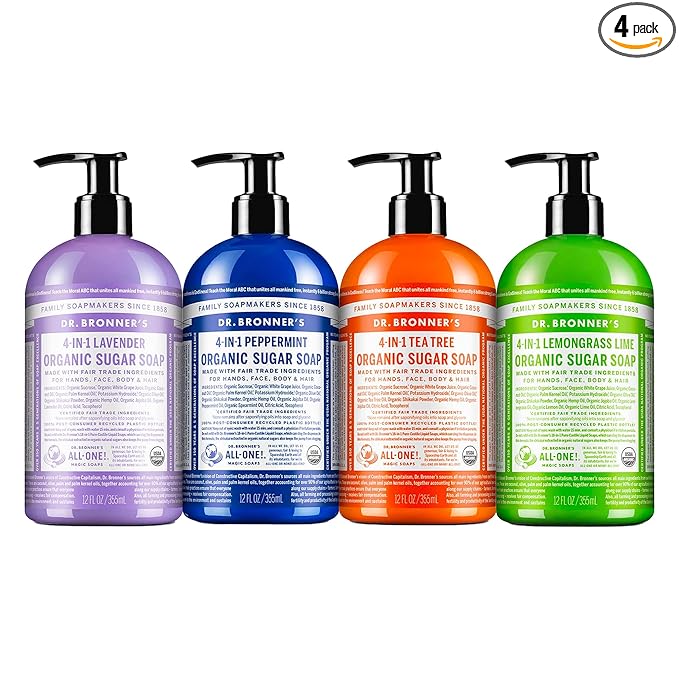
Dr. Bronner’s built the modern organic soap movement on its 18-in-1 Pure Castile formula. The newer Sugar Soap line is purpose-built for sink-side use — slightly milder than full-strength castile, with organic sucrose and white grape juice acting as humectants alongside saponified coconut, olive, and hemp oils. Organic shikakai powder (from the South Asian Acacia concinna tree) adds a smooth, conditioning lather without clogging the pump. USDA Organic and Fair Trade certified across every ingredient.
- Best for: people who want a single multipurpose cleanser for hands, face, body, and hair.
- Scents available: Lavender, Peppermint, Lemongrass Lime, Tea Tree, Baby Unscented.
- What sets it apart: EWG Verified ingredient disclosure, no synthetic detergents, no foaming agents.
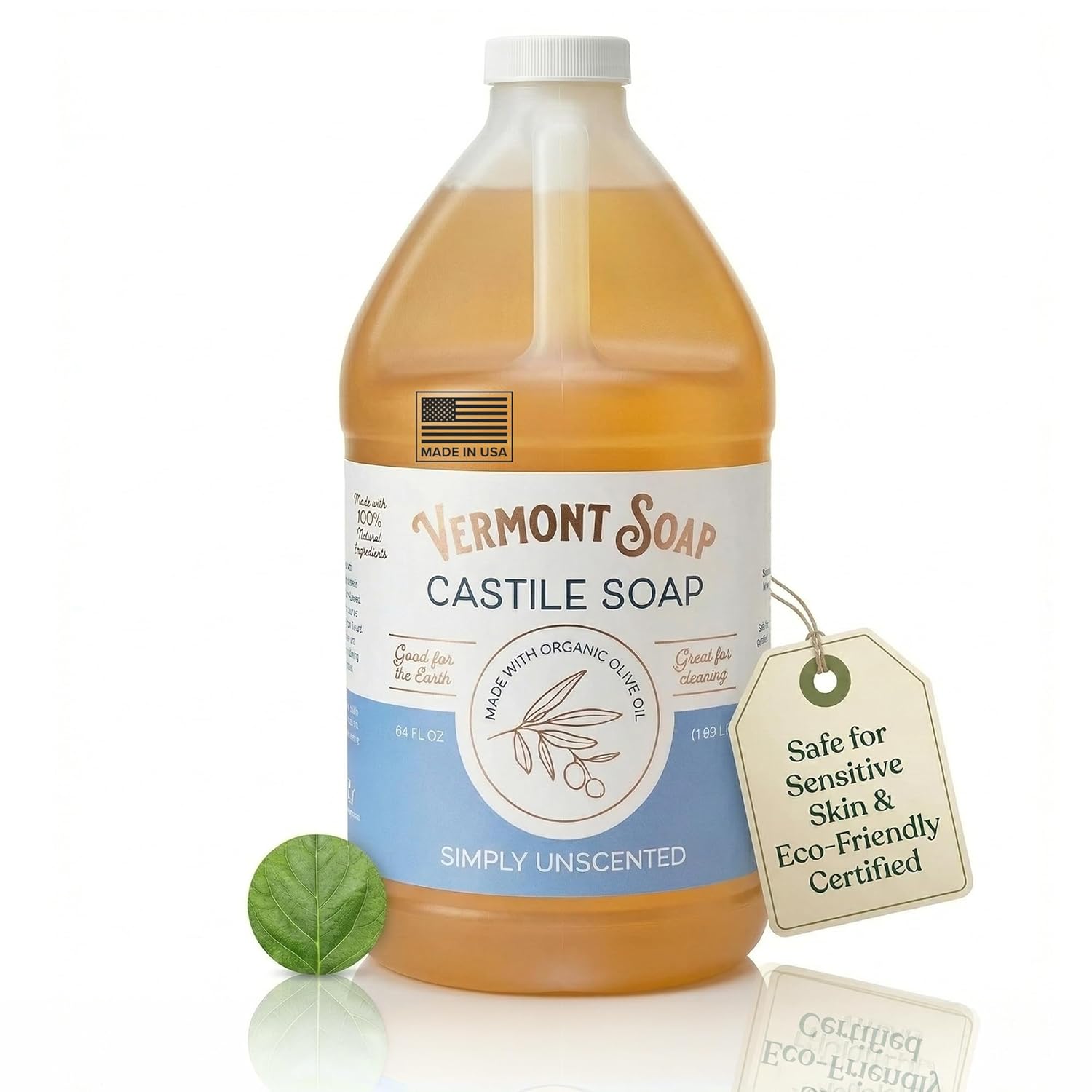
2. Vermont Soap Simply Unscented Foaming Hand Soap
 [click to view…]
The shortest ingredient list in this lineup, by design. Vermont Soap has been making organic castile since 1992, and their unscented foamer is the answer for anyone with eczema, perfume sensitivities, or reactive skin: organic saponified coconut, olive, and jojoba oils, vegetable glycerin, organic rosemary extract, organic aloe vera. That’s it. Six ingredients. USDA Organic certified. The jojoba is a quiet detail that matters — its fatty acid profile mirrors human sebum, so it integrates into the skin barrier instead of sitting on top.
- Best for: sensitive skin, eczema-prone hands, fragrance-free households, sensory-sensitive kids.
- Refill options: 16 oz, 64 oz, and 1-gallon refill sizes available — drops cost-per-ounce dramatically.
- What sets it apart: zero added scent, zero synthetic preservatives, made in Vermont.
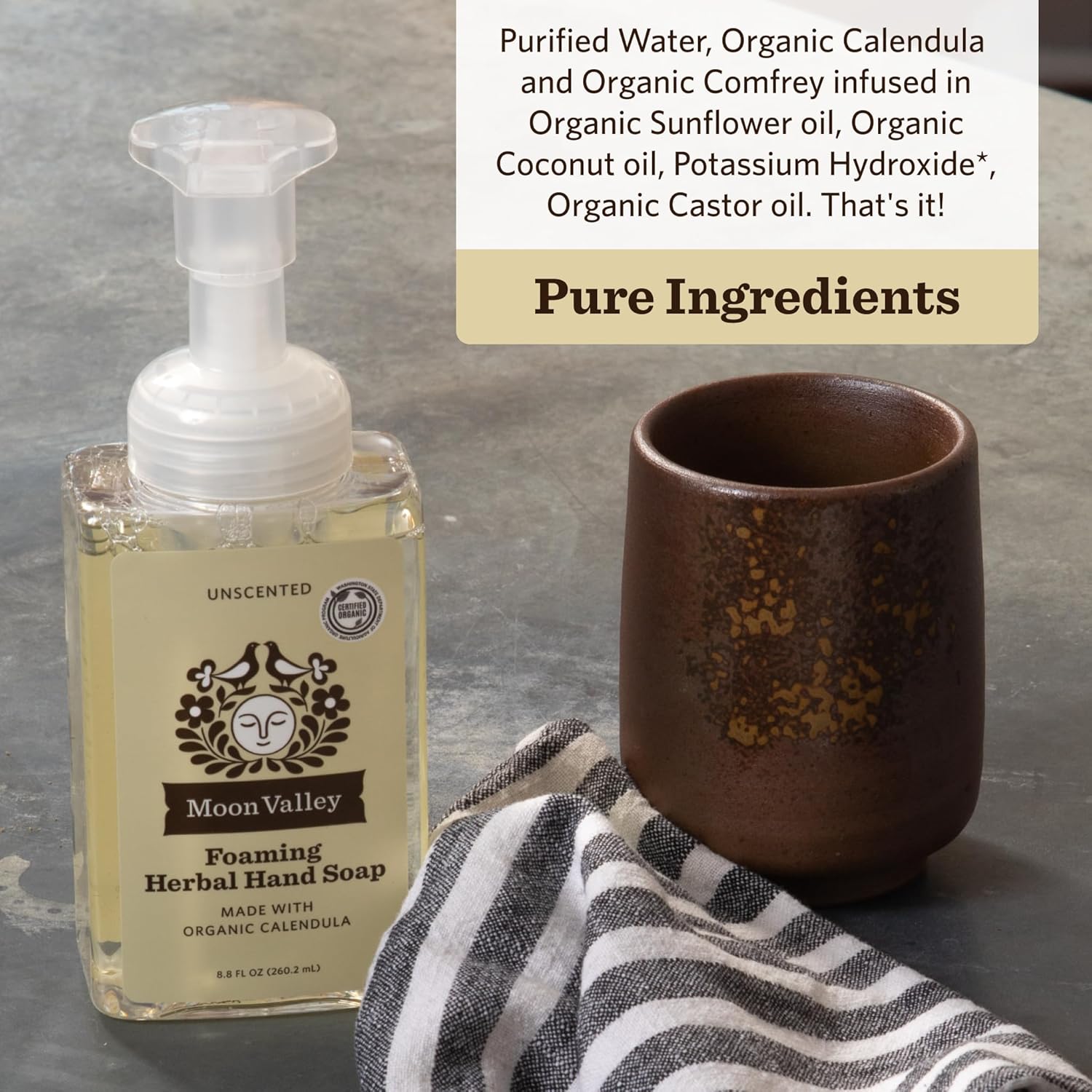
3. Moon Valley Organics Foaming Herbal Hand Soap
 [click to view…]
The medicinal pick. Moon Valley starts with organic sunflower, coconut, and castor oils, then infuses them with organic calendula and organic comfrey before saponifying. Calendula is a recognized anti-inflammatory; comfrey contains allantoin, a compound that promotes skin cell regeneration. If your hands crack from frequent washing, this formula was built for that exact problem. The brand also sells concentrated refill pouches that mix with water at a 1:2 ratio, turning one pouch into three full bottles and slashing shipping weight.
- Best for: chapped, cracked, or healing hands. Outdoor workers, healthcare staff, frequent washers.
- Scents available: Unscented, Lemon Rosemary, Grapefruit Thyme, Orange Spice, Siberian Fir.
- What sets it apart: infused herbs (not just essential oils), concentrate refill pouches.
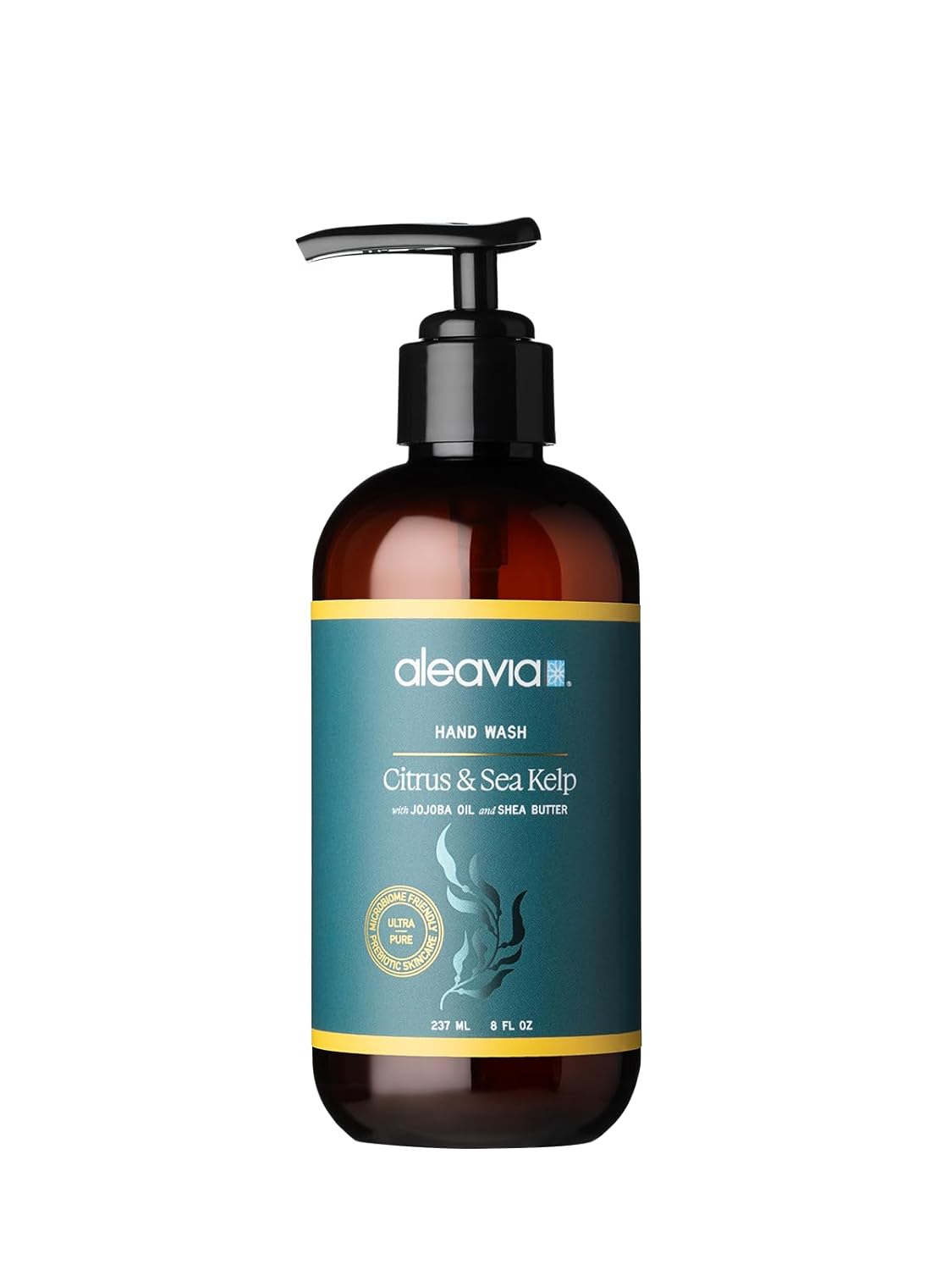
4. Aleavia Citrus & Sea Kelp Prebiotic Hand Wash
 [click to view…]
The microbiome pick. Aleavia takes a different angle than traditional soap — it uses prebiotics and Acadian sea kelp to feed the beneficial bacteria that live on your skin’s surface. The principle is competitive exclusion: a healthy microbiome crowds out pathogens better than chemical biocides. Aleavia’s pH sits closer to skin’s natural 6.4–6.8 range, so it cleans without the alkaline tightness some users get from traditional castile.
- Best for: rosacea, eczema, chronic skin conditions, anyone with a “reactive” skin barrier.
- What sets it apart: prebiotic formulation, pH-matched to human skin, sea kelp mineral content.
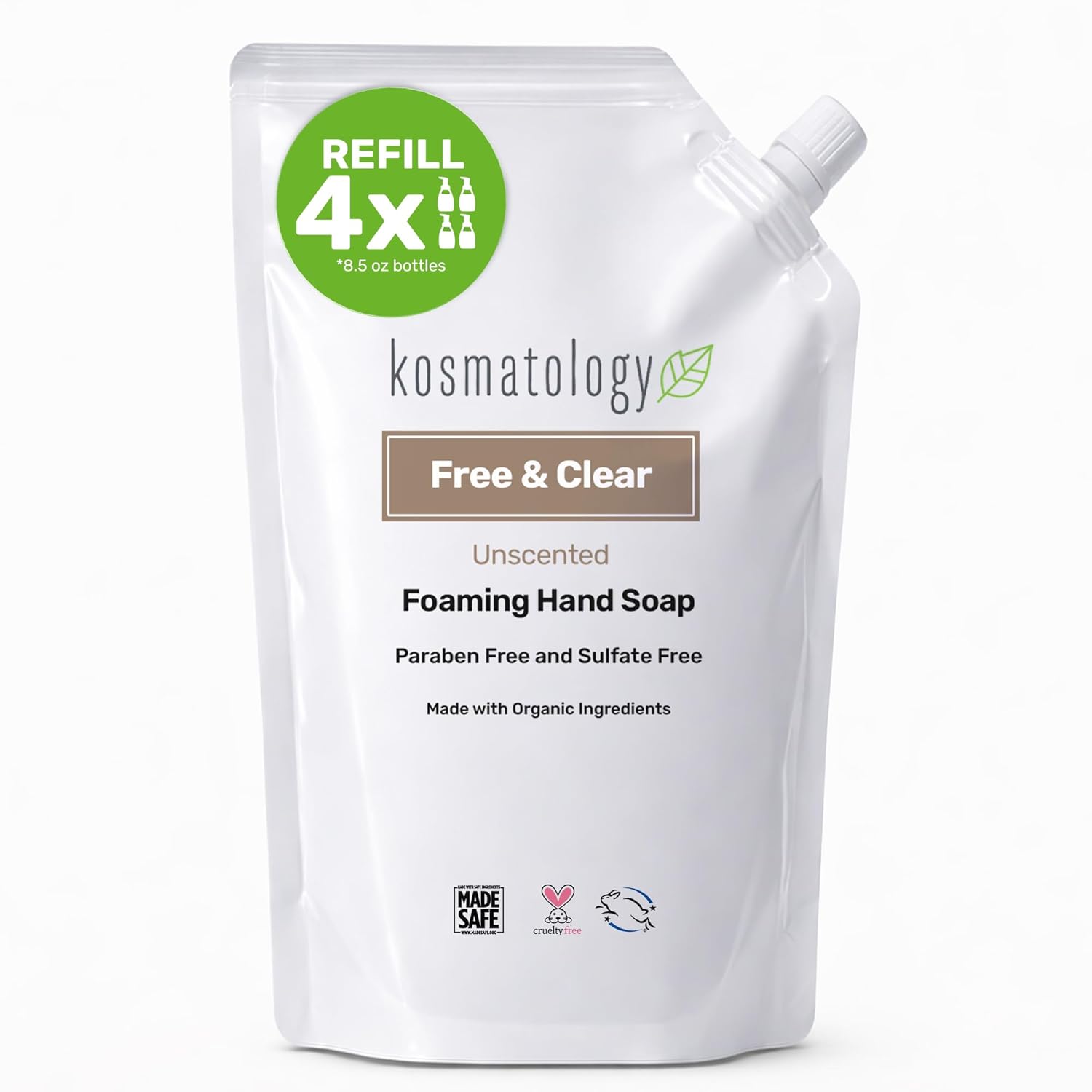
5. Kosmatology Foaming Hand Soap
 [click to view…]
Founded by a pharmacist after her children developed eczema. Kosmatology earned MADE SAFE® certification, which screens ingredients for both human and environmental toxicity. The base is saponified organic coconut, olive, and safflower oils. Safflower’s high linoleic acid content actively supports the skin lipid barrier. Scented exclusively with organic essential oils — Goody-Goody Grapefruit and Botanical Bliss are the bestsellers.
- Best for: family households, parents prioritizing third-party-verified safety standards.
- What sets it apart: MADE SAFE® certification, pharmacist-founded, eczema-aware formulation.
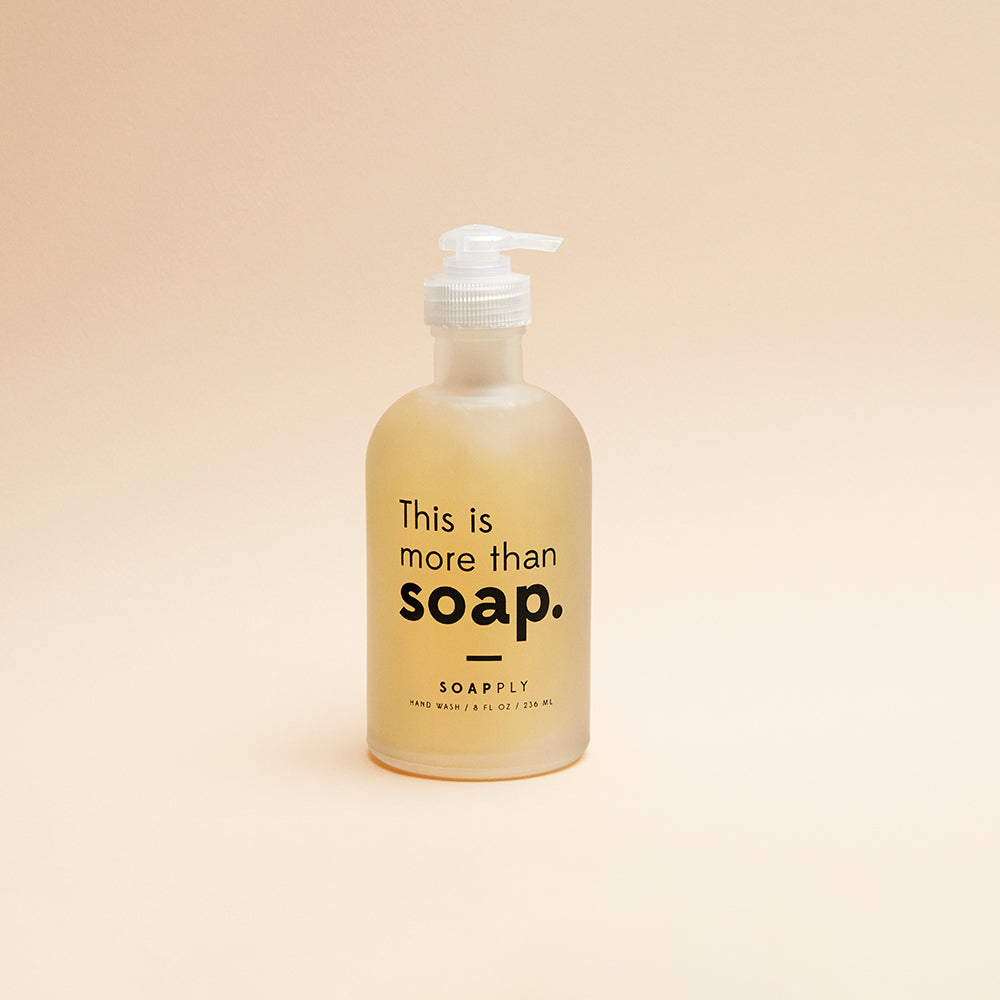
6. Soapply Liquid Hand Wash in Recycled Glass
 [click to view…]
The premium pick with a social mission. Soapply uses a 300-year-old saponification recipe with food-grade organic oils, bottled in recycled glass “Always Bottles” designed for indefinite refilling. Every 8 oz sold funds $1 toward global water sanitation programs. The price-per-bottle runs higher, but the bottle itself becomes a permanent fixture you refill from concentrate.
- Best for: zero-waste households, design-conscious sinks, anyone willing to pay a premium for both ethics and aesthetics.
- What sets it apart: recycled-glass refillable bottle, 1-for-1 sanitation donation model.
What to Look For on the Label
Real botanical soap will list ingredients you recognize. Use this fast checklist when comparing bottles.
Green flags:
- “Saponified” oils (coconut, olive, jojoba, sunflower, castor, safflower)
- Vegetable glycerin or naturally retained glycerin
- USDA Organic, EWG Verified, MADE SAFE®, or Non-GMO Project Verified seals
- Named essential oils (lavender, peppermint, tea tree, lemongrass) with the word “organic”
- Aloe vera, calendula, comfrey, chamomile, rosemary extract
Red flags:
- Sodium lauryl sulfate (SLS), sodium laureth sulfate (SLES)
- Cocamidopropyl betaine
- “Fragrance” or “parfum” without further specification
- Methylisothiazolinone, methylchloroisothiazolinone
- Triclosan, triclocarban (banned but still appears in older inventory)
- Parabens (methyl-, propyl-, butyl-)
- Phthalates (DEP, DBP, DEHP)
- Triethanolamine (TEA), diethanolamine (DEA)
Picking the Right Formula for Your Skin
Different skin profiles want different formulas. Match yourself to the right pick:
- Cracked, chapped, frequently-washed hands → Moon Valley Organics (calendula and comfrey actively heal).
- Sensitive skin, fragrance allergies, eczema → Vermont Soap Simply Unscented (six ingredients, no essential oils).
- Reactive skin, rosacea, microbiome concerns → Aleavia (prebiotic, pH-balanced).
- Family households with kids → Kosmatology (MADE SAFE® verified, gentle).
- Versatile multi-use household → Dr. Bronner’s Sugar Soap (works for hands, face, body, hair).
- Design-conscious zero-waste setup → Soapply (refillable glass, social mission).
The Move
Stop pumping detergent. Real organic hand soap costs roughly the same per wash, lasts as long or longer, and supports the skin barrier that synthetic gels have been quietly stripping for decades. Pick one of the six formulas above based on your skin’s actual needs, get the refill size, and put one bottle by every sink in the house.
Your hands will thank you within a week.
Dora Decora is a biophilic interior design specialist and passionate blogger. With a deep commitment to integrating nature into living spaces, Dora specializes in creating environments that foster human-nature connections through thoughtful design elements. Her approach emphasizes sustainable materials, natural lighting, and organic patterns that enhance wellbeing and reduce environmental impact.
This post (https://homechroma.com/best-organic-hand-soap) was originally published by Dora Decora on Home Chroma. As an Amazon Associates partner, we are compensated for all qualifying purchases.