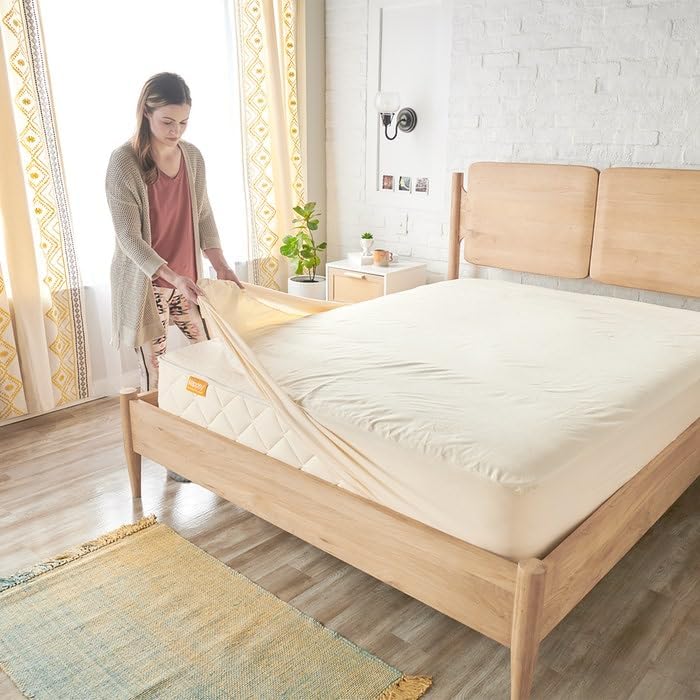
 You spend roughly a third of your life in bed. That’s 8 hours every night pressed against your mattress protector — breathing through it, sweating into it, absorbing whatever chemicals it holds.
Here’s what most people don’t know: the word “organic” on a mattress protector label means nothing unless you know exactly what to look for. Some of the most popular “natural” protectors on the market today are loaded with PFAS — per- and polyfluoroalkyl substances — a class of synthetic chemicals so resistant to breakdown they’ve earned the nickname “forever chemicals.”
They don’t leave your body easily. Some compounds have a half-life of over a decade.
This guide breaks down exactly what PFAS are, the 6 warning signs your current protector may be exposing you to them, and which certified organic products actually deliver on their promises.
What Are PFAS — and Why Are They in Your Mattress Protector?
PFAS have been used in consumer goods since the 1940s. They’re synthetic chemicals engineered to repel water, oil, and stains. That makes them incredibly useful for textiles — and incredibly common in bedding.
The problem: PFAS don’t stay put. They migrate into household dust, sweat, and the air you breathe. Over time, they accumulate in your body and your environment. Research links long-term PFAS exposure to:
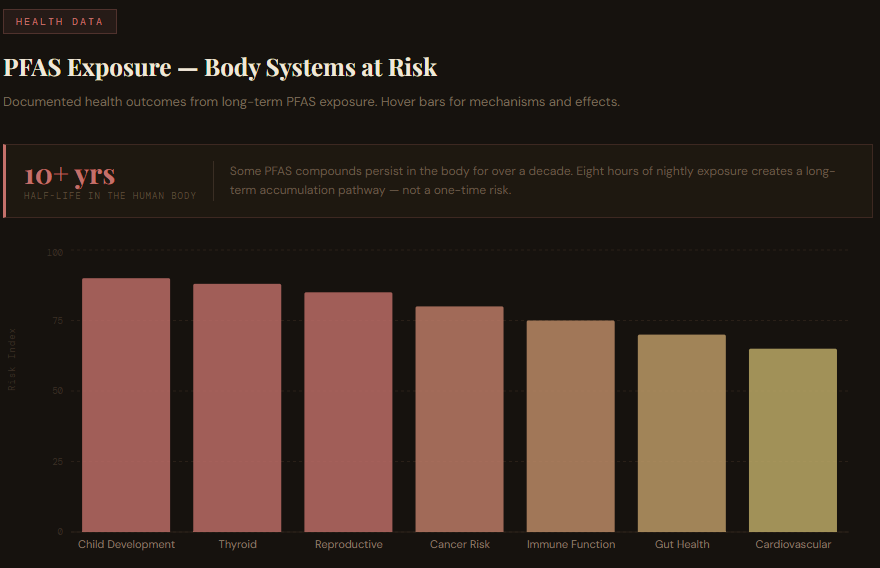
- Thyroid dysfunction — PFAS interfere with the enzymes that regulate thyroid hormones and can bind directly to thyroid hormone receptors
- Ulcerative colitis — these chemicals disrupt the gut microbiome and damage the intestinal lining
- Reduced fertility — in both men (lower sperm counts) and women (decreased fertility, elevated blood pressure during pregnancy)
- Increased cancer risk — kidney, testicular, and prostate cancers are all associated with long-term PFAS exposure
- Cardiovascular disease — through cholesterol elevation and metabolic disruption
Children face a higher proportional risk. They inhale more air per kilogram of body weight than adults and spend more of their lives in direct contact with bedding. Studies have specifically linked certain chemical compounds in mattress covers to respiratory symptoms in children.
The catch: there is no mandatory labeling requirement for PFAS treatments on textile products in the US. You will not see “contains PFAS” on the tag. You have to know the warning signs.
The 6 Warning Signs Your “Natural” Mattress Protector Is Hiding PFAS
Warning Sign #1: Water-Resistance Claims with No Physical Membrane Listed
This is the clearest red flag.
Organic cotton, bamboo, and TENCEL are hydrophilic — they absorb moisture. That’s their nature at a molecular level. If a protector made entirely of these materials claims to be waterproof or water-resistant without specifying an internal barrier, ask yourself: how?
The answer is almost always a chemical finish. If no physical membrane is mentioned — specifically thermoplastic polyurethane (TPU) or food-grade polyethylene — the waterproofing is almost certainly chemical in origin.
Look for explicit language like: “TPU membrane,” “polyurethane barrier layer,” or “food-grade polyethylene.” If that language isn’t there, move on.
Warning Sign #2: The Product Is Marketed as “Stain-Resistant”
Waterproofing can be achieved with a physical membrane. Stain resistance cannot.
To repel oil-based and protein-based stains — sweat, food, biological fluids — manufacturers need a chemical coating that changes how the fabric’s surface interacts with liquids. PFAS are uniquely suited to this because they are both water-repellent (hydrophobic) and oil-repellent (oleophobic).
Independent testing by Toxic-Free Future found that 72% of products marketed as stain- or water-resistant contained detectable levels of PFAS.
If a protector’s marketing leads with “stain-resistant,” treat it as a signal that PFAS are likely present. A truly organic, PFAS-free protector will describe itself as waterproof through a physical barrier — not through chemical treatment.
Warning Sign #3: The Listing Mentions a “Coating” Rather Than a “Membrane”
There’s an important distinction between a surface coating and a laminated membrane.
A laminated membrane is sandwiched between two layers of fabric, protected from friction, heat, and laundering. It’s structurally stable. A surface coating sits on the outside of the fabric, directly exposed to wear. It degrades with washing, heat, and friction — and as it breaks down, it releases particles into household dust and potentially into the sweat of the person sleeping on it.
Watch for phrases like: “waterproof finish,” “moisture-resistant coating,” or “treated fabric.” These indicate a surface application. Safer products say “membrane,” “barrier layer,” or “laminated TPU.”
Warning Sign #4: Vague or Proprietary Waterproofing Language
Legitimate non-toxic brands have nothing to hide about their materials. Brands using PFAS or PVC often do.
Marketing language like “advanced fiber technology,” “moisture-wicking shield,” or “magic membrane” — without naming the actual material — is a deflection. It prevents you from looking up the safety data on what’s actually there.
A GOTS-certified TPU is verifiable. “Proprietary protection technology” is not.
If a company won’t tell you exactly what their waterproofing membrane is made of, that’s your answer.
Warning Sign #5: Pilling, Unusual Dust, or Visible Fiber Shedding
PFAS don’t stay bonded to fabrics permanently. They flake off over time, especially as a protector ages and goes through repeated wash cycles.
If your mattress protector is producing unusual amounts of fine lint, pilling excessively, or generating dust you can see on the surface beneath your sheets — the chemical finish may be degrading and shedding directly into your sleep environment. At that stage, inhalation and dermal absorption become active exposure routes, particularly for infants and toddlers on or near bedding.
Physical TPU membranes from quality organic brands don’t shed chemicals this way. When they degrade, they show it mechanically — cracking or allowing liquid through — which is a visible, identifiable signal to replace the product.
Warning Sign #6: High Polyester Content or Unspecified “Laminates”
Polyester microfiber is the synthetic fabric most commonly treated with PFAS-based finishes. It lacks the breathability of organic cotton and doesn’t manage moisture naturally, so manufacturers compensate with chemical coatings.
Products that blend “natural-sounding” fibers with high percentages of polyester — or that list “laminate” without specifying the material — are frequent vehicles for fluorinated stain-resistance treatments.
A genuinely safe protector lists its materials clearly: 100% GOTS-certified organic cotton surface, with a named, certified waterproof barrier.
What Safe Waterproofing Actually Looks Like
Not all synthetic barriers are equal. Here’s how the main options compare:
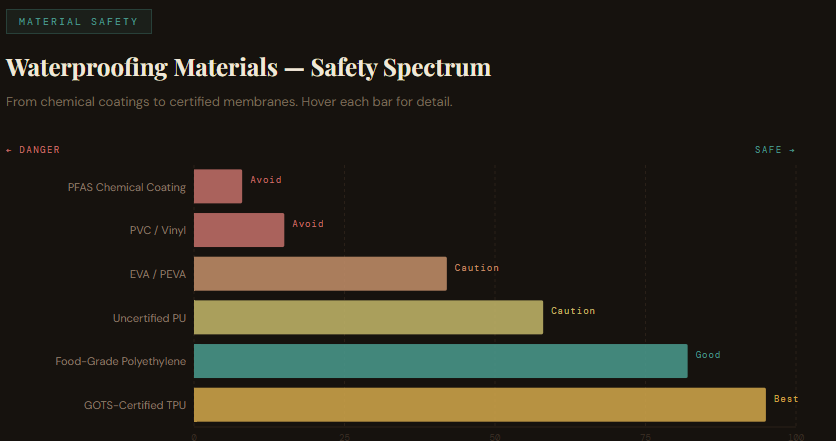
The Top Organic Mattress Protectors — Reviewed
These products hold third-party certifications that specifically restrict PFAS, phthalates, formaldehyde, and toxic chemical finishes. Each uses a physical TPU barrier between organic cotton layers.
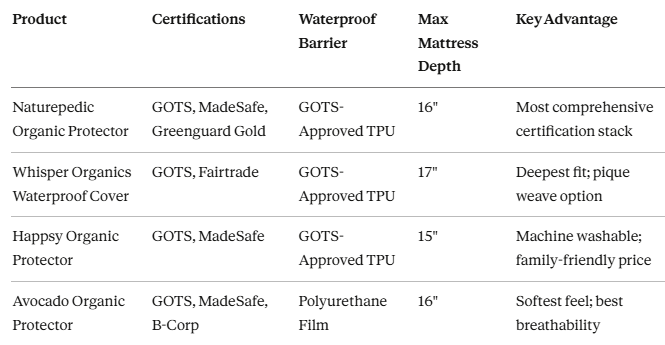
1. Naturepedic Organic Waterproof Mattress Protector Pad — Best Overall
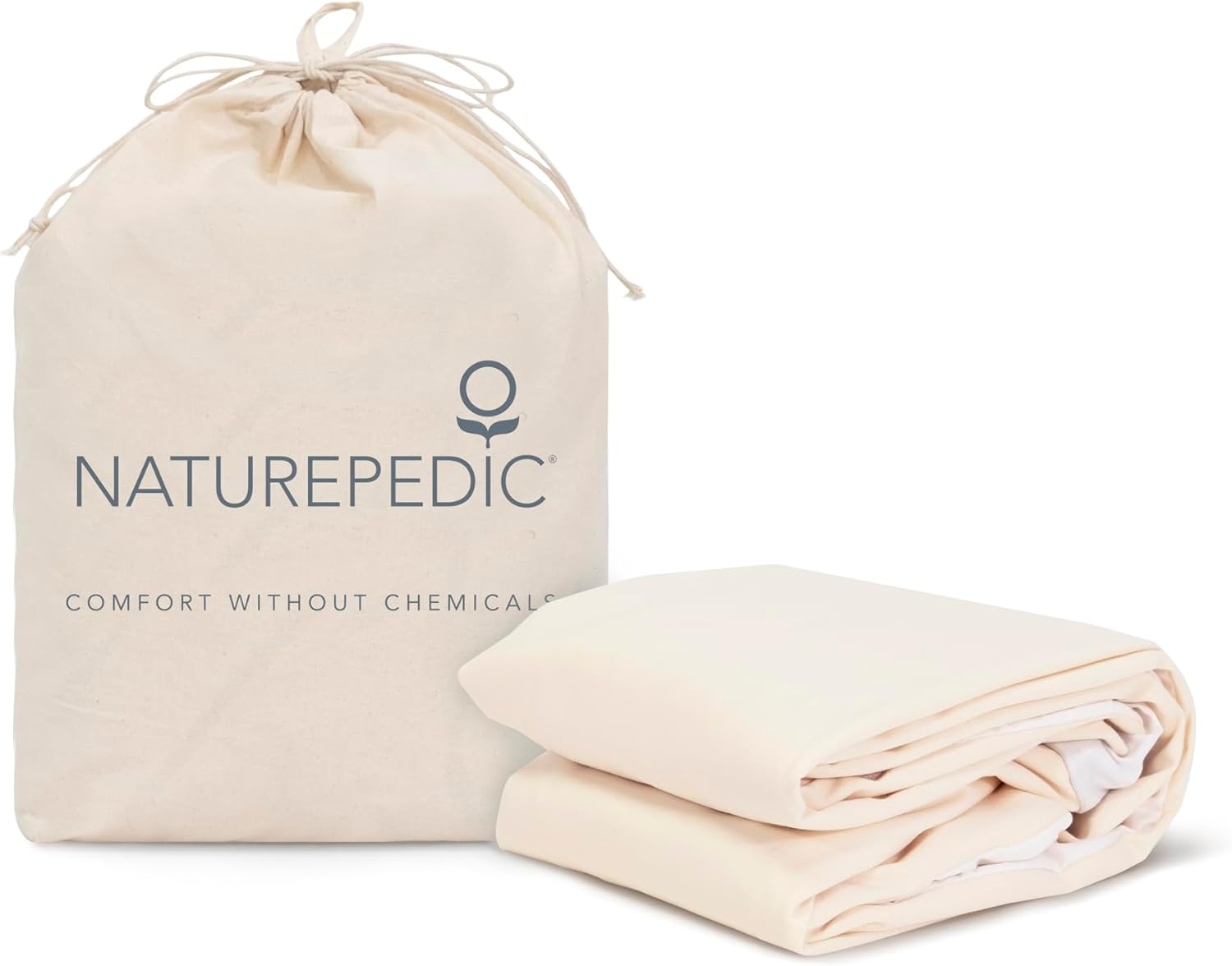
Naturepedic holds the most comprehensive certification stack in this category.
Certifications: GOTS, MadeSafe, Greenguard Gold, UL Formaldehyde-Free
Materials: 100% GOTS-certified organic cotton jersey (top and bottom), GOTS-approved micro-porous TPU membrane center layer
Waterproofing: Their “DrySleep” technology uses a micro-porous TPU layer that allows water vapor to pass through while blocking liquids. The result is a breathable surface that doesn’t trap heat.
Fit: Organic cotton elasticized skirt; fits mattresses 9–16 inches deep
User experience: Reviewers consistently describe it as feeling like a fitted sheet — no plastic sound, no temperature spike. Quiet under movement.
Free of: Vinyl, PVC, phthalates, PFAS, formaldehyde, chemical finishes
Naturepedic’s use of MadeSafe certification is particularly significant. MadeSafe screens every ingredient against known hazards — not just the final product, but the input chemicals used in production. That’s a higher bar than most brands clear.
2. Whisper Organics 100% Waterproof Mattress Protector — Best Value
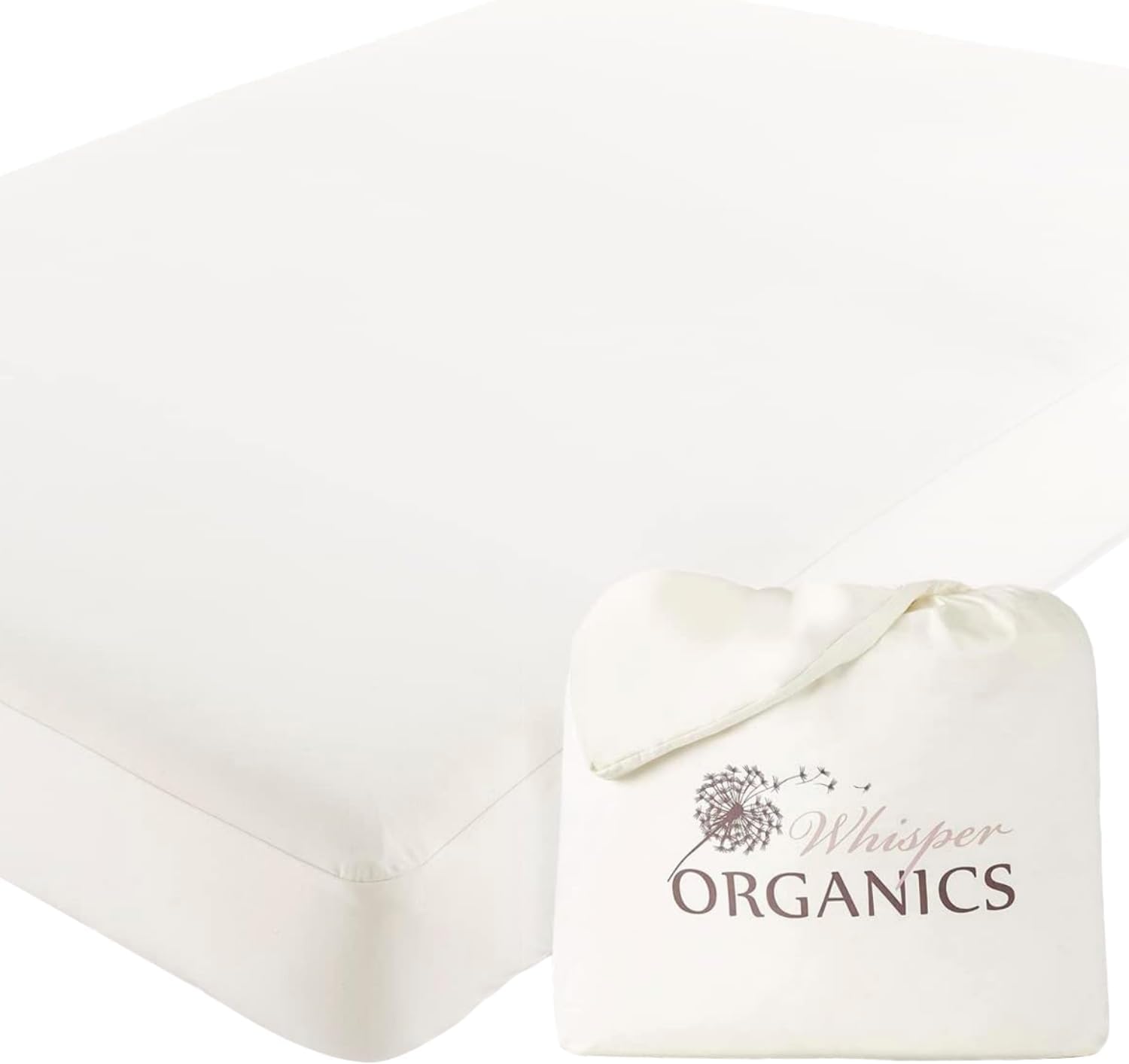
Whisper Organics offers GOTS-certified protection at a more accessible price point, with Fairtrade-certified cotton sourcing.
Certifications: GOTS, Fairtrade
Materials: 100% GOTS-certified organic cotton (available in jersey knit 140 GSM and pique weave 180 GSM), non-toxic TPU barrier
Waterproofing: TPU sandwiched between two cotton layers. The pique weave option has greater surface absorption capacity, slowing the spread of minor spills before they reach the barrier.
Fit: 17-inch deep pocket — one of the deepest in this category, accommodating thick luxury mattresses
User experience: Praised for the fully waterproof skirt on some models, which provides 360-degree protection rather than just a top panel. Verified free of vinyl, phthalates, and latex.
3. Happsy Organic Waterproof Mattress Protector Pad — Best for Families
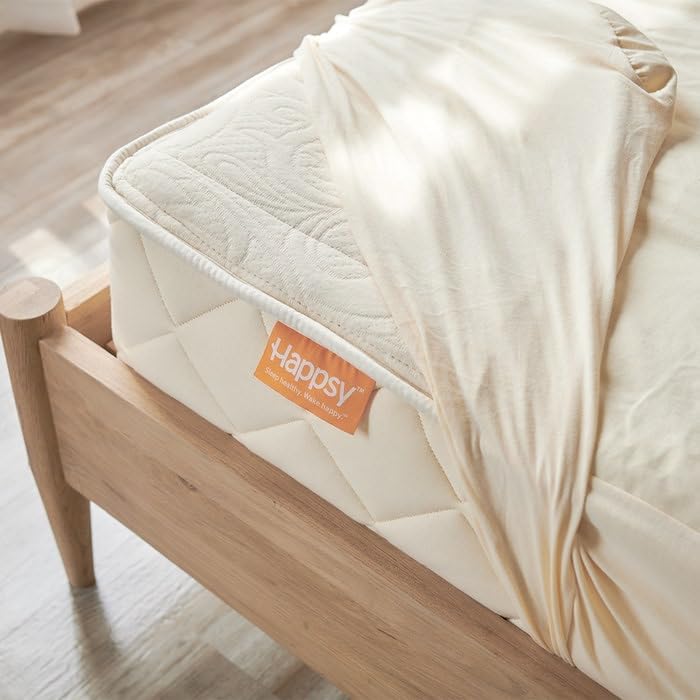
Happsy is a sister brand to Naturepedic, focused on making certified organic sleep products more widely accessible.
Certifications: GOTS, MadeSafe
Materials: 100% GOTS-certified organic cotton jersey, GOTS-approved TPU barrier
Fit: Fits mattresses up to 15 inches. Highly stretchable construction.
Practical advantage: Machine washable and dryable, which makes it a realistic choice for households with children or pets. No vinyl, PVC, phthalates, PFAS, or chemical finishes.
4. Avocado Organic Waterproof Mattress Protector — Best for Hot Sleepers

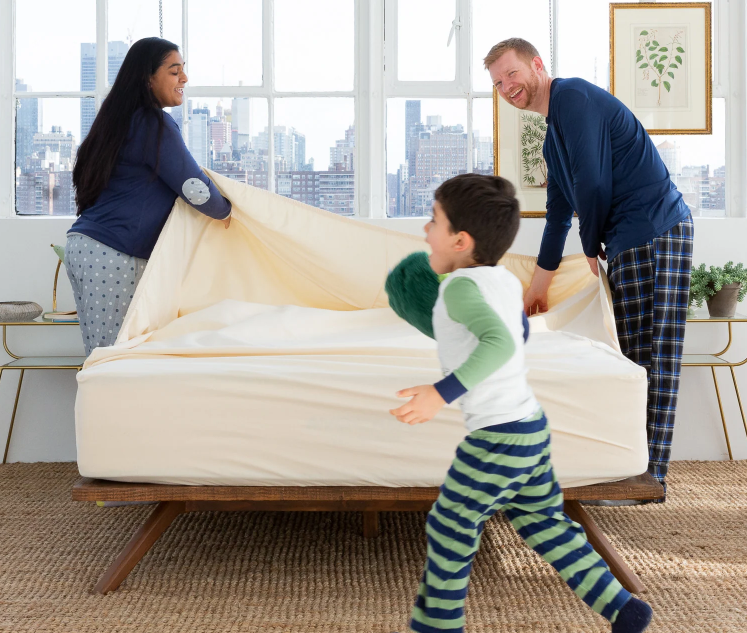
Avocado is a certified B-Corp and Climate Neutral brand. Their protector prioritizes breathability.
Certifications: GOTS, MadeSafe, Climate Neutral, 1% for the Planet
Materials: Two layers of organic cotton jersey with a thin polyurethane waterproof film
User experience: Consistently rated as one of the softest and quietest organic protectors available. Particularly suited to hot sleepers due to high breathability.
Note: Avocado is primarily available through specialty retailers. Verify current availability before purchasing.
Comparison Table
Certifications That Actually Mean Something
Not all “organic” certifications restrict PFAS. Here’s what to look for:
- GOTS (Global Organic Textile Standard) — The most rigorous textile certification. Prohibits PFAS, PVC, phthalates, formaldehyde-releasing finishes, and toxic adhesives throughout the entire production chain.
- MadeSafe — Screens every ingredient against a database of known hazards. The only certification that explicitly prohibits PFAS at the input level.
- Greenguard Gold — Tests for VOC emissions and chemical off-gassing in the finished product. Strong for indoor air quality.
- OEKO-TEX Standard 100 — Tests the finished product for harmful substances. Useful but less restrictive than GOTS on production inputs.
What doesn’t cut it: “Natural,” “eco-friendly,” “chemical-free,” “non-toxic” — none of these terms are regulated. They require zero verification.
How to Care for Your Protector Without Compromising It
A PFAS-free protector is only as good as how you wash it.
Detergent matters. Many commercial detergents contain PFAS, artificial fragrances, dyes, and 1,4-dioxane. Residues left in the fabric after washing become their own exposure source. Use fragrance-free, non-toxic detergents. A cup of white vinegar added to the rinse cycle strips old detergent buildup effectively.
Temperature management. 60°C kills dust mites — but frequent high-heat cycles degrade the TPU membrane over time, causing it to crack and lose waterproofing. Wash in warm water when possible. Tumble dry on low, or air dry.
Know when to replace it. Most organic protectors last 5–7 years. Replace yours when it starts to yellow, crinkle excessively, or allows liquid through in isolated patches. A compromised protector can trap moisture against your mattress, accelerating mold growth inside the core.
Frequently Asked Questions
Is TPU safe? GOTS-certified TPU is considered inert in its final form. It contains no phthalates or chlorine and is used in food-grade and medical applications. The production process involves some toxic precursors, but third-party certified TPU is screened to confirm negligible residual levels in the finished product.
Can bamboo or TENCEL be waterproof without chemicals? No. Both are hydrophilic fibers. Any waterproofing claim on a bamboo or TENCEL protector must be backed by a named physical membrane. If no membrane is listed, a chemical treatment is almost certainly the waterproofing method.
How do I know if my current protector has PFAS? You likely can’t confirm it without lab testing. But if it has any of the 6 warning signs above — especially stain-resistance marketing, no named membrane, or vague proprietary terms — there’s meaningful risk. Replacing it with a GOTS + MadeSafe certified product is the safest course.
Do organic protectors feel different? High-quality TPU-laminated organic protectors — particularly Naturepedic and Avocado — are consistently described as feeling like a thick fitted sheet. No plastic sound, no heat trap, no noticeable stiffness.
Is a waterproof protector necessary if I don’t have children or pets? Yes. Adult sweat, body oils, and allergens penetrate unprotected mattresses over time. A non-toxic, breathable protector extends mattress life and keeps your sleep surface hygienic without adding chemical risk.
The Bottom Line
“Organic” on a label costs a company nothing. What costs something is third-party verification, transparent material disclosures, and the use of certified-safe waterproofing technology.
The 6 warning signs in this guide — invisible waterproofing on natural fibers, stain-resistance claims, surface coatings, vague proprietary terms, fiber shedding, and synthetic blends — are the gap between marketing and reality.
The products that close that gap are the ones holding GOTS and MadeSafe certifications with a documented, named TPU barrier: Naturepedic, Whisper Organics, Happsy, and Avocado.
Your mattress protector is the first surface between you and your mattress for every hour you sleep. It should be the last place a hidden chemical exposure is hiding.
Dora Decora is a biophilic interior design specialist and passionate blogger. With a deep commitment to integrating nature into living spaces, Dora specializes in creating environments that foster human-nature connections through thoughtful design elements. Her approach emphasizes sustainable materials, natural lighting, and organic patterns that enhance wellbeing and reduce environmental impact.
This post (https://homechroma.com/best-organic-mattress-protector) was originally published by Dora Decora on Home Chroma. As an Amazon Associates partner, we are compensated for all qualifying purchases.