Tossing and turning at 2 AM again? Staring at your phone hoping for sleep that never comes? You’re not alone in this nightly battle. Nearly 70 million Americans struggle with sleep disorders, and many more deal with poor sleep quality that leaves them dragging through the next day.
Recently, a “Navy SEAL sleep secret” has been making waves in the wellness community, promising military-grade sleep optimization through something as simple as changing your light bulb. But what’s the real story behind this claim, and can red light actually transform your sleep?
The answer might surprise you.
The Truth Behind the Navy SEAL Sleep Secret
Let’s cut through the marketing hype and get to the facts. The “Navy SEAL sleep secret” narrative combines two completely separate military research projects into one compelling story.
The actual Navy connection involves NASA-funded research that provided red light LED devices to U.S. Navy crews. However, this wasn’t for sleep improvement – it was for treating training injuries. The study showed remarkable results:
- 40% greater improvement in musculoskeletal injuries
- 50% faster healing time for lacerations
This research focused on photobiomodulation therapy for physical recovery, not sleep enhancement. The confusion comes from a separate Navy SEAL technique: the 10-minute power nap with elevated legs to promote blood flow. This method has zero connection to red light therapy.
Marketing teams cleverly wove these two distinct concepts together, creating the illusion of a secret military sleep technique. While the marketing story is fabricated, the science behind red light for sleep is completely legitimate.
The Science: How Red Light Actually Improves Sleep
Your body runs on an internal clock called the circadian rhythm, controlled by the suprachiasmatic nucleus in your brain. This master clock responds to light signals from specialized cells in your retina, which then tell your pineal gland when to produce melatonin – your body’s natural sleep hormone.
For millions of years, humans evolved with the sun’s natural light cycles:
- Bright blue light during the day = Stay alert, suppress melatonin
- Warm red light at sunset = Wind down, increase melatonin production
- Darkness at night = Deep sleep
Modern life has completely disrupted this natural pattern. The blue light from phones, tablets, LED bulbs, and TV screens tricks your brain into thinking it’s still daytime, even at midnight. This suppresses melatonin production and keeps you wired when you should be winding down.
Red light works differently. It sits at the longer end of the visible light spectrum (around 625-660 nanometers) and doesn’t stimulate the photoreceptors that suppress melatonin. By using red light in the evening, you can create a lighting environment that supports your body’s natural sleep preparation process.
Categories of Red Light Sleep Products
Not all red light products are created equal. Understanding the three main categories will help you choose the right solution for your needs:
1. Ambient Red Light Bulbs
Purpose: Create circadian-friendly lighting that blocks blue light Best for: Simple, dedicated evening lighting Technology: Incandescent or LED bulbs that filter out blue/green wavelengths
2. Smart Color-Changing Bulbs
Purpose: Versatile lighting with red options and automation features Best for: Tech enthusiasts who want customizable routines Technology: Multi-LED systems that can produce various colors including red
3. Therapeutic Red Light Devices
Purpose: Targeted health benefits through specific therapeutic wavelengths Best for: Athletes or those with pain/inflammation affecting sleep Technology: High-powered LED arrays delivering concentrated light therapy
Best Red Light Bulbs Available on Amazon USA
Based on extensive analysis of customer reviews, technical specifications, and expert evaluations, here are the top options in each category:
Dedicated Ambient Red Bulbs
Neporal Red Light LED Bulbs

Neporal 625nm Red Light Bulbs for Sleep [click to view…]
- Technology: LED at 625nm wavelength
- Brightness: 800 lumens (60W equivalent)
- Key Feature: High brightness suitable for reading
- Price Range: Budget-friendly
- Best For: Those needing brighter red light for evening activities
Smart Color-Changing Bulbs
Wiz LED Smart Light Bulb
WiZ LED Smart Light Bulbs [click to view…]
- Colors: 16 million options including red
- Brightness: 800 lumens
- Connectivity: Wi-Fi (no hub required)
- Key Features: Easy setup, scheduling, Matter compatibility
- Price Range: Budget-friendly entry into smart lighting
Philips Hue White and Color Ambiance
Philips Hue A19 LED Smart Light Bulb [click to view…]
- Colors: 16 million colors with superior accuracy
- Brightness: Up to 1521 lumens
- Connectivity: Zigbee (hub recommended for full features)
- Key Features: Premium reliability, extensive smart home integration
- Price Range: Premium pricing for advanced features
All-in-One Sleep Solutions
Hatch Rest 2nd Generation
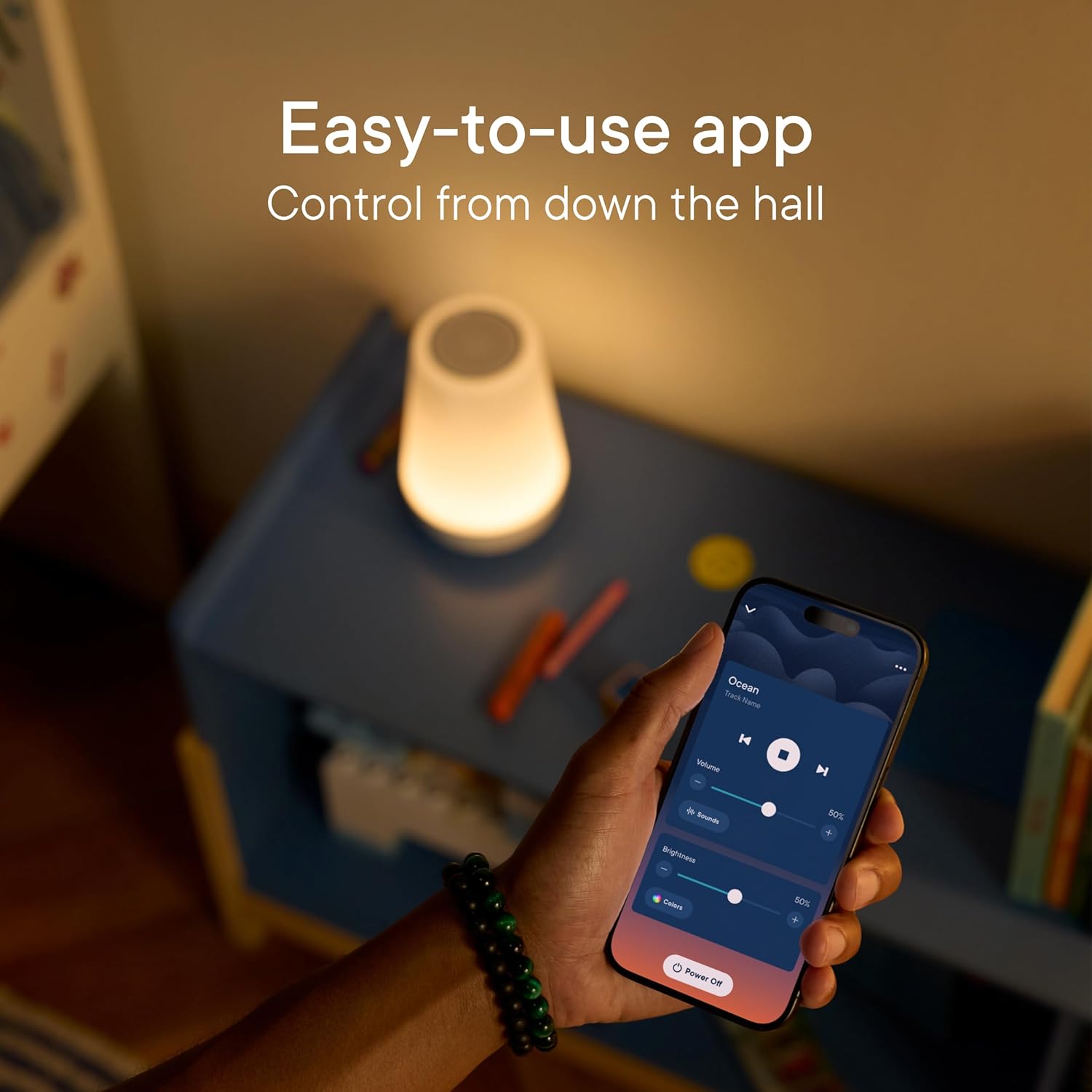
Hatch Rest 2nd Generation [click to view…]
- Features: Night light, sound machine, time-to-rise functionality
- Connectivity: Wi-Fi with smartphone app control
- Target Users: Families and individuals wanting comprehensive sleep routines
- Note: Subscription service available for additional content
How to Use Red Light for Better Sleep
The timing and intensity of your red light exposure matter more than the specific bulb you choose. Here’s how to maximize the benefits:
Timing Protocol
- 2-3 hours before bedtime: Switch to red lighting throughout your space
- 1 hour before bed: Dim the red lights further
- 30 minutes before sleep: Use only the lowest red light setting or complete darkness
Best Practices
- Replace bedroom overhead lighting with red bulbs during evening hours
- Use red light for bedside reading instead of bright white light
- Avoid ALL blue light sources (phones, tablets, bright LEDs) after sunset
- Maintain consistency – use red light at the same times each night
Integration with Sleep Hygiene
Red light works best as part of a comprehensive sleep strategy:
- Keep your bedroom cool (65-68°F)
- Maintain regular sleep and wake times
- Avoid caffeine after 2 PM
- Create a consistent bedtime routine
- Use blackout curtains for complete darkness while sleeping
Recommendations by User Type
For Smart Home Users: Wiz bulbs offer excellent value with full automation features, while Philips Hue provides premium reliability for serious smart home enthusiasts.
For Families: Hatch Rest combines red lighting with sound and routine features, making it ideal for establishing consistent sleep habits.
For Athletes/Biohackers: Consider therapeutic red light panels like Mito Red Light devices for addressing physical recovery that impacts sleep quality.
The Bottom Line
The “Navy SEAL sleep secret” marketing story may be fiction, but the science behind red light for sleep is solid. Red light doesn’t interfere with melatonin production, making it the ideal choice for evening lighting.
Remember, red light is just one piece of the sleep puzzle. Combine it with consistent sleep hygiene practices for the best results. Most users notice improvements within 1-2 weeks of consistent use.
Start with a single red bulb in your bedroom and experience the difference for yourself.
Dora Decora is a biophilic interior design specialist and passionate blogger. With a deep commitment to integrating nature into living spaces, Dora specializes in creating environments that foster human-nature connections through thoughtful design elements. Her approach emphasizes sustainable materials, natural lighting, and organic patterns that enhance wellbeing and reduce environmental impact.
This post (https://homechroma.com/best-red-light-bulb-for-sleep) was originally published by Dora Decora on Home Chroma. As an Amazon Associates partner, we are compensated for all qualifying purchases.