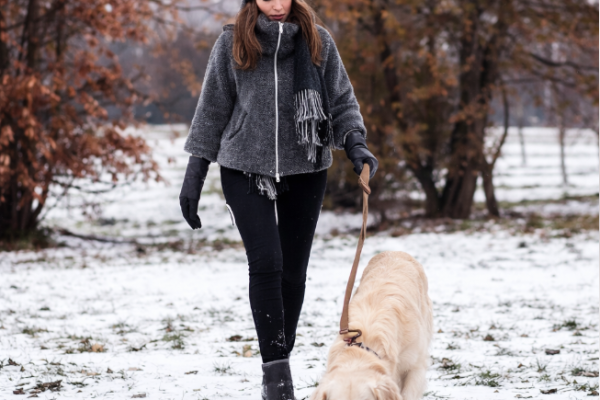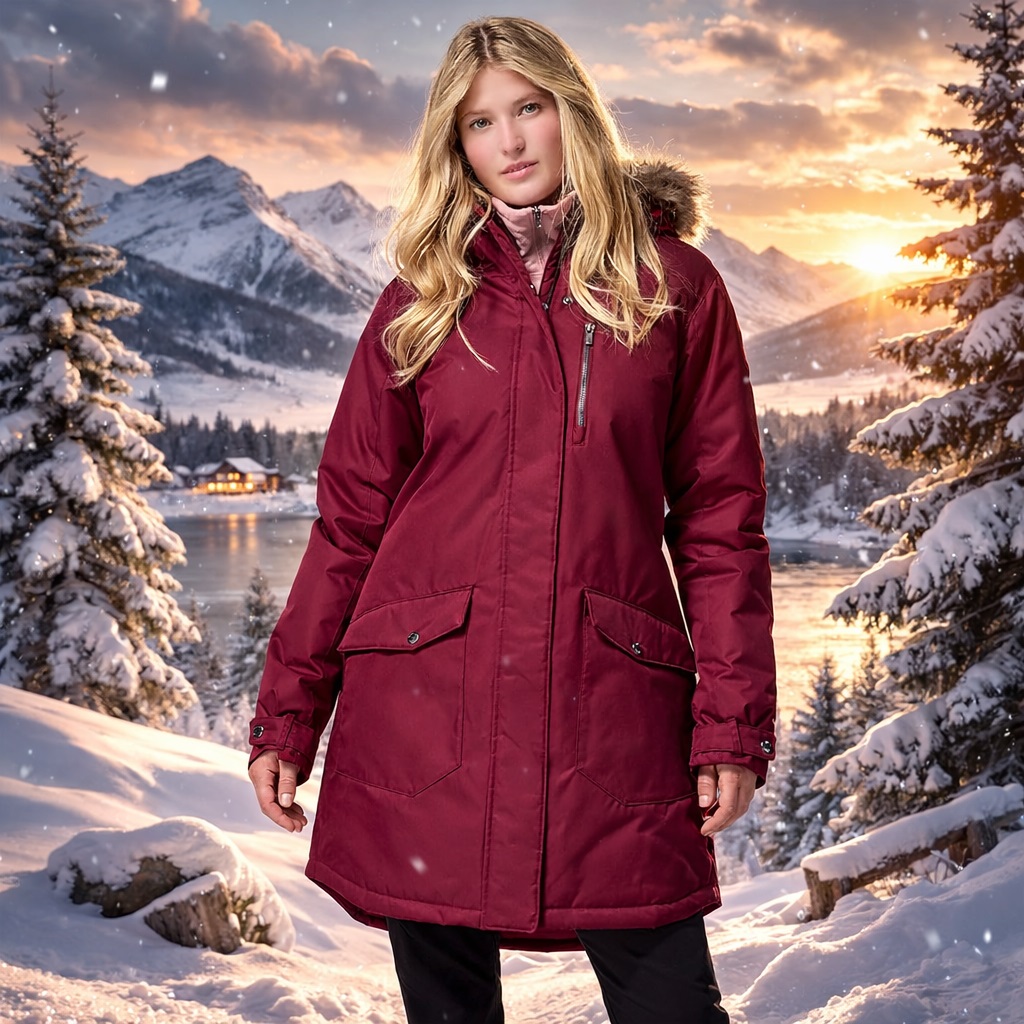
You’ve seen it. The woman at the bus stop who’s technically warm but looks like she got stuffed inside a duvet and sent out the door. You’ve probably owned one of those coats yourself.
Here’s the thing: the “bulk or freeze” choice is over.
The winter jacket market has quietly solved the problem that plagued outerwear for decades. You can now stay genuinely warm in sub-zero temperatures and walk into a restaurant without someone asking if you need help removing your sleeping bag.
This guide breaks down the best women’s winter jackets available right now — what they’re made of, who they’re best for, and exactly why they keep you warm without the bulk.
Why Most Winter Jackets Look Terrible (And How to Spot the Ones That Don’t)
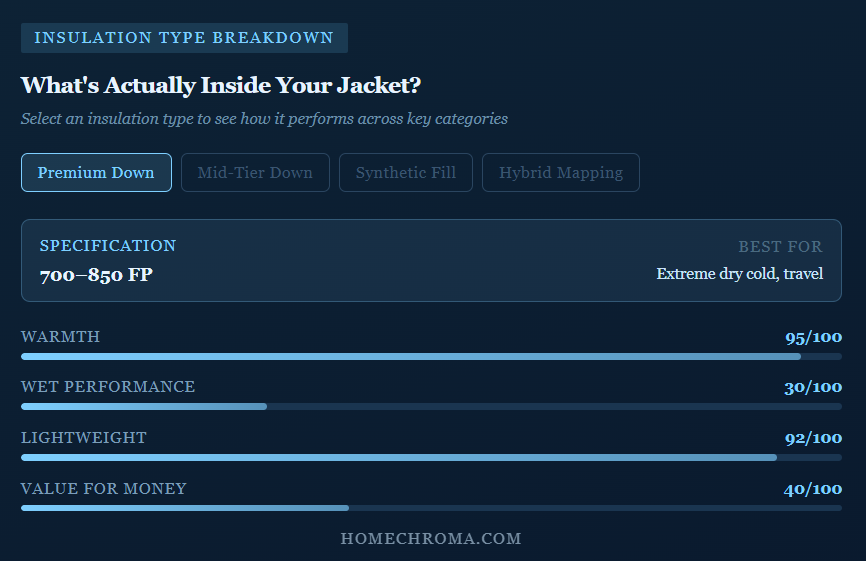
The “sleeping bag” silhouette comes from one thing: poor insulation efficiency.
When a jacket uses low-quality fill, it compensates with volume. More puffing. Bigger baffles. More fabric to trap the same amount of heat. The result is a coat that makes you look like a marshmallow.
High-efficiency jackets fix this at the engineering level. Here’s how:
- Higher fill power — Fill power measures how much volume one ounce of down occupies. Premium jackets use 700–850 fill power down. Higher fill power = more warmth per ounce = thinner jacket.
- Body-mapped insulation — The warmest parts of your body (core) get more insulation. High-flex zones like underarms get lightweight synthetic fill that moves with you.
- Structural design — Princess seams, chevron baffling, and internal cinching all work together to keep the jacket shaped to your body instead of ballooning around it.
Once you know what to look for, picking the right coat gets a lot easier.
The Best Women’s Winter Jackets This Year
1. The North Face Arctic Parka — Best Overall

Who it’s for: City commuters who face real winter (Chicago, New York, Minneapolis) and need a coat that works from the office to the grocery run.
The Arctic Parka runs on 600-fill recycled down held in internal baffles behind a DryVent™ 2L waterproof shell. That smooth exterior is the key — instead of the aggressive horizontal channels that scream “puffer,” the outer shell looks closer to a structured wool coat.
A subtly cinched waist and faux-fur-lined hood do the styling work. Rib-knit storm cuffs seal heat at the wrists without adding visual mass.
Specs:
- Insulation: 600-fill RDS-certified recycled down
- Shell: DryVent™ 2L waterproof/breathable
- Length: Mid-thigh
- Weight: ~1,290g
Bottom line: Heavy-duty protection with a polished look. It’s not the lightest jacket on this list, but every ounce earns its place.
2. Rab Deep Cover Down Parka — Best for a Slim European Fit
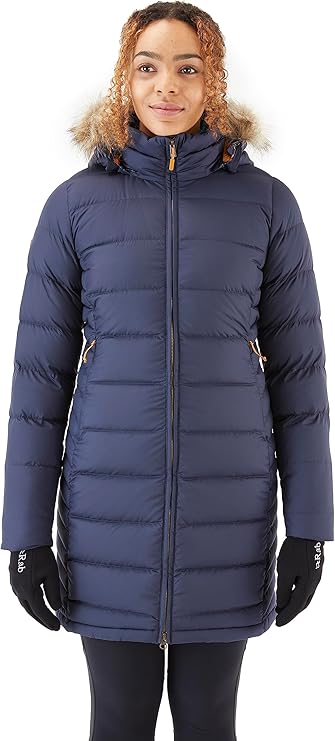
Who it’s for: Women who want a calf-length coat that still reads as tailored, not tubular.
The Rab Deep Cover uses 700-fill recycled goose down inside a Pertex® Quantum shell — one of the lightest, most technical fabrics in outerwear. That thin shell lets the down loft fully while keeping the overall profile tight to the body.
The fit is specifically cut for the female form: pinched at the waist, slightly flared at the hem. It provides full-leg coverage without any of the boxy silhouette that ruins most long parkas.
Specs:
- Insulation: 700-fill recycled down
- Shell: 50D Pertex® Quantum (DWR-treated)
- Length: Calf/thigh
- Weight: ~1,006g
Bottom line: If the Arctic Parka is an architect’s coat, the Deep Cover is a tailor’s coat. Lighter, slimmer, and exceptionally warm.
3. Patagonia Down With It Parka — Best for Urban Style
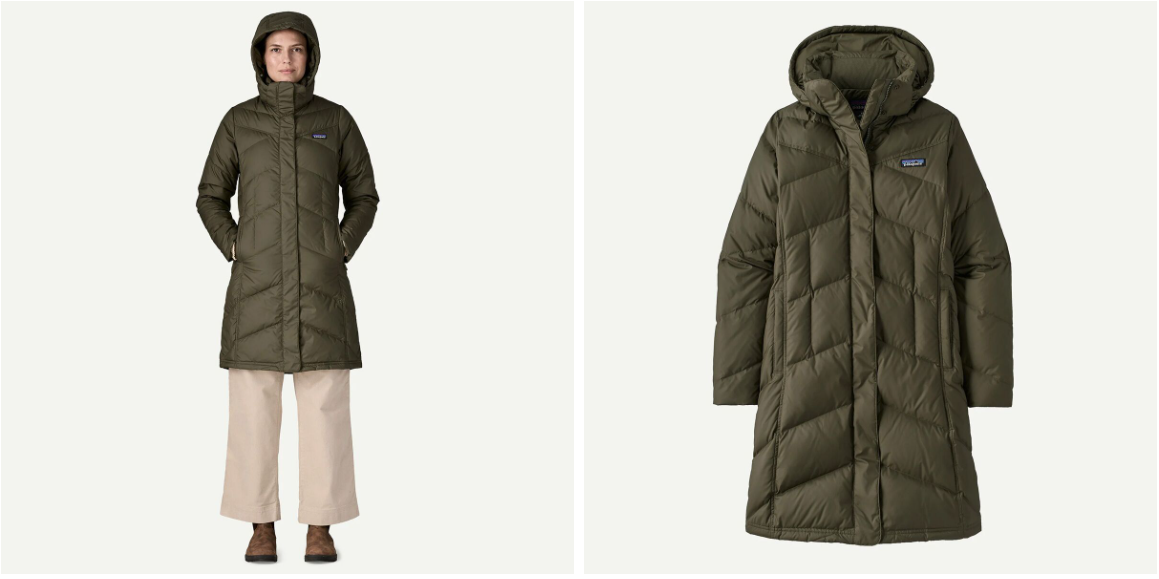
Who it’s for: Anyone who needs a serious winter coat that doesn’t look like outdoor gear.
The secret here is the chevron baffling combined with vertical princess seams running front and back. Princess seams follow the body’s actual curves — they build the waist into the coat instead of letting the jacket hang like a box. The chevron pattern draws the eye inward toward the center of the body, creating a slimming effect that horizontal baffling simply cannot replicate.
600-fill recycled down does the thermal work. The silhouette does everything else.
Specs:
- Insulation: 600-fill recycled down
- Design features: Chevron baffles + princess seams
- Length: Hip/thigh
- Available in standard and plus sizes
Bottom line: The most stylish parka on this list. Wear it to work, wear it out — it never looks like gear.
4. Columbia Suttle Mountain Long Insulated Jacket — Best Value for Cold Wet Winters
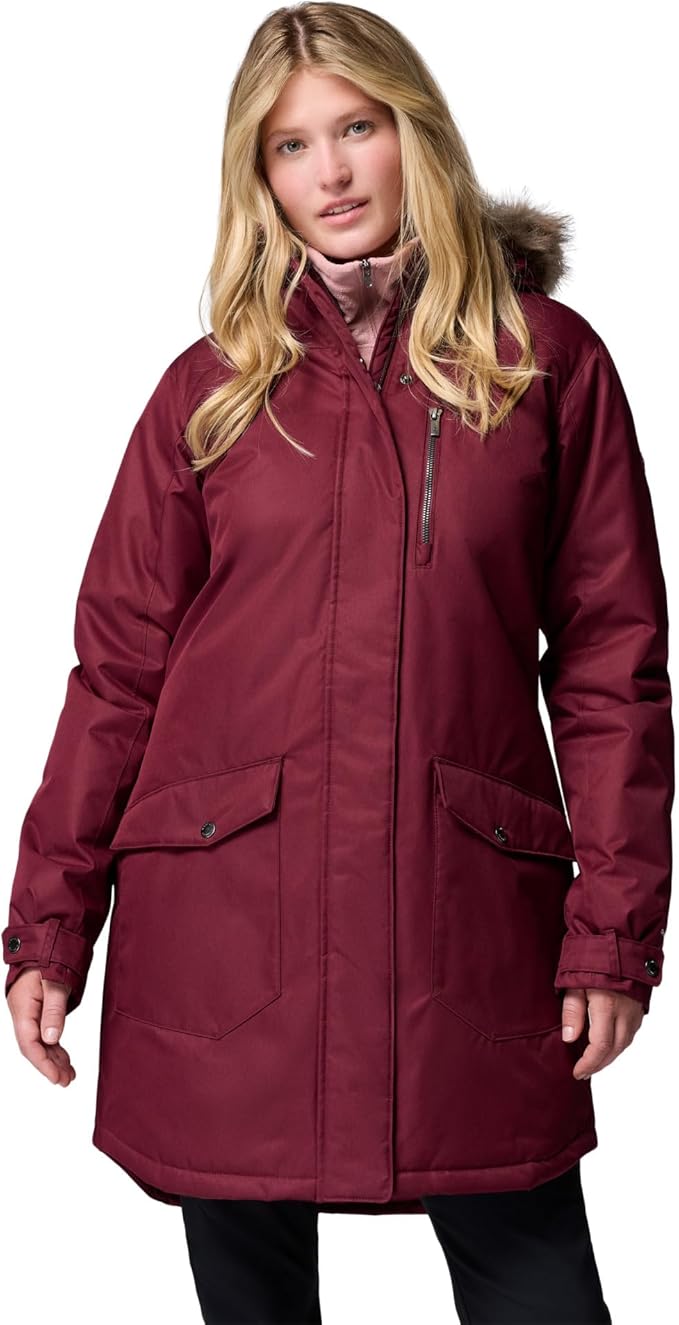
Who it’s for: The Pacific Northwest or humid East Coast, where wet cold is the enemy.
Columbia’s Omni-Heat™ technology is the differentiator here. Thousands of small silver reflective dots on the interior lining redirect body heat back toward the wearer. This radiant warmth strategy means you get high heat ratings using synthetic fill — which stays warm even when damp, unlike down.
The 36-inch length creates a vertical line that elongates the torso, and the sherpa-lined hood adds warmth without widening the shoulder profile.
Specs:
- Insulation: Synthetic (Omni-Heat™ reflective lining)
- Best for: Wet climates
- Length: 36 inches
- Rating: 4.5/5 (889+ reviews)
Bottom line: The smart choice when it’s wet outside. Synthetic fill + thermal reflectivity = warm and dry without the puff.
5. Eddie Bauer Sun Valley Down Parka — Best Buy
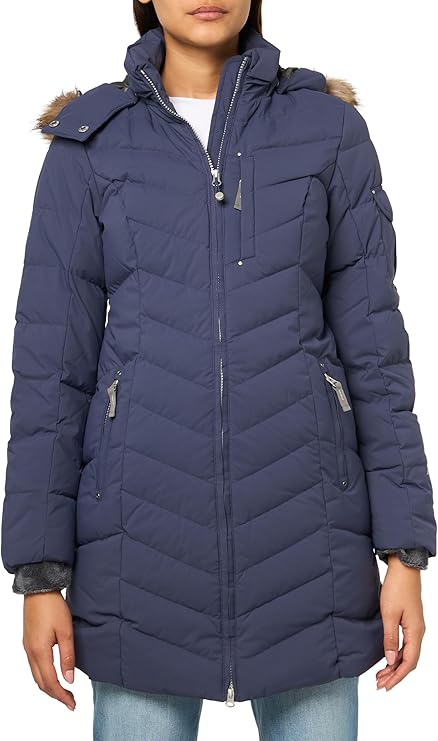
Who it’s for: Moderate winter climates and anyone who wants solid warmth without paying premium prices.
The Sun Valley delivers 650-fill-power down in a form-fitting cut with chevron baffling — the same slimming technique used in jackets that cost twice as much. Reviewers consistently praise its “easy wearability”: lightweight, non-restrictive across the shoulders, and genuinely flattering.
Available in Petite, Tall, and Plus sizes, making the slim fit accessible regardless of body type.
Specs:
- Insulation: 650-fill power down
- Technology: StormRepel® DWR finish
- Rating: 4.4/5 (4,200+ reviews)
- Sizes: Petite, Regular, Tall, Plus
Bottom line: Overperforms at its price point. Best choice for anyone in a moderate climate who doesn’t want to spend over $200.
6. Orolay Thickened Down Jacket (“The Amazon Coat”) — Best for Fashion-Forward Warmth
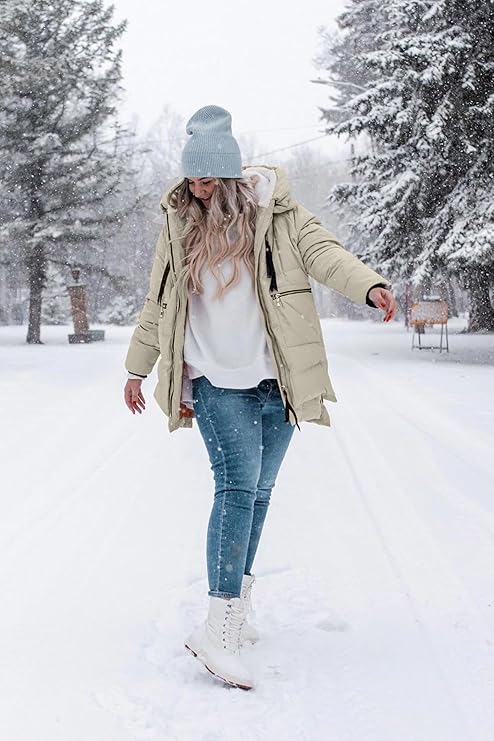
Who it’s for: Women who want to make a statement and stay warm down to -30°C.
The Orolay went viral for good reason. It uses 90% white duck down with approximately 700 fill power — serious insulation — but avoids the sleeping bag look through a completely different method: adaptive volume via side zippers.
Those zippers let the jacket expand when you sit or move, then close back down to a tighter profile when you’re walking. The structured oval shape uses proportion as the design tool rather than body-mapping or princess seams.
Specs:
- Insulation: 90/10 white duck down, ~700 fill power
- Key feature: Side zippers for adaptive fit
- Temperature rating: Down to -30°C
Bottom line: Not for minimalists. But if you want warmth, personality, and a coat people will ask about — this is it.
Quick Comparison: At a Glance
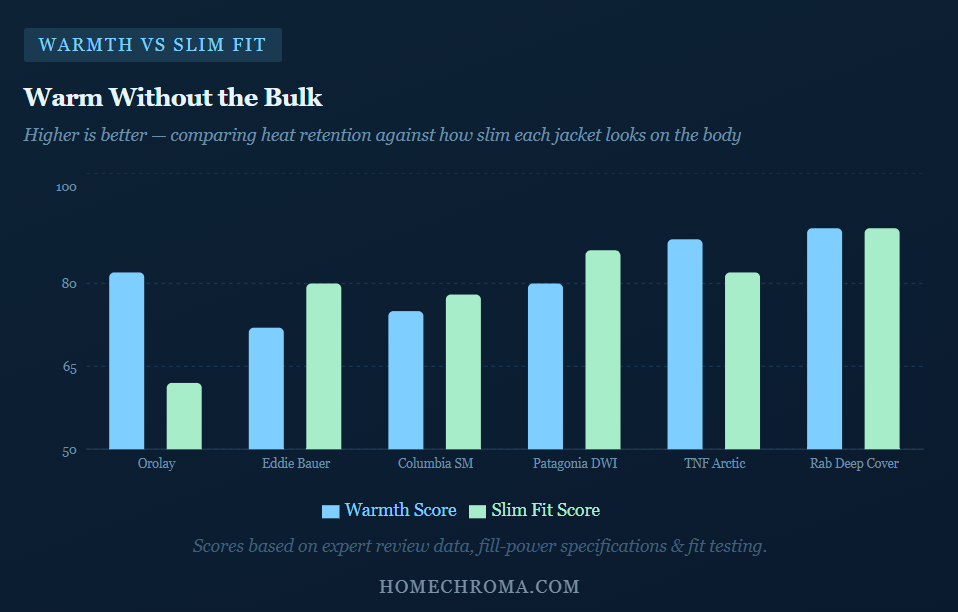
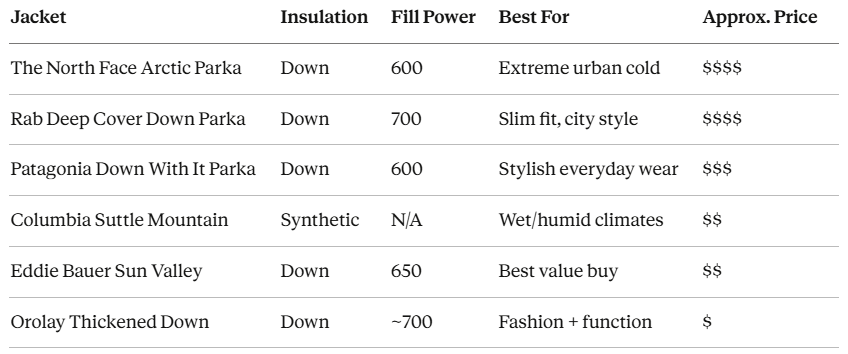
How to Pick the Right Jacket for Your Climate

Buying a jacket rated for -40°F when you live in Atlanta is a fast way to spend good money on a coat you’ll never wear. Match the jacket to your actual winter.
Extreme dry cold (Chicago, Minneapolis, northern states) → Go high fill power: North Face Arctic or Rab Deep Cover
Wet, slushy winters (Pacific Northwest, East Coast) → Go synthetic or waterproof hybrid: Columbia Suttle Mountain
Variable mild winters (Southeast, Texas, California) → Go packable and lightweight: Eddie Bauer Sun Valley or a packable puffer
Urban commuters who want style + substance → Patagonia Down With It or Orolay
3 Features That Always Signal a Non-Bulky Jacket
Before you buy any jacket — these three things separate the coats that flatter from the ones that inflate:
- Internal cinching toggle or waist bungee — Lets you pull the coat in at the waist, trapping heat more efficiently while defining your shape
- Vertical seam lines — Princess seams, angled baffles, or chevron patterns draw the eye up-and-down instead of across, creating a slimmer visual profile
- Low-denier shell fabric — Lighter outer fabric (like Pertex® Quantum) lets the down loft close to the body instead of standing away from it
Keep It Looking Good: The One Maintenance Step Most People Skip
Down clumps when it absorbs moisture and oils from daily wear. That’s what makes a jacket start looking “lumpy” after a season or two — flat spots and uneven puff that are entirely avoidable.
Fix it: Wash with a specialized down-specific detergent, then dry on low heat with two or three clean tennis balls or dryer balls. The agitation breaks up the clumped clusters and restores the loft. A properly re-lofted jacket looks smooth, stays warmer, and holds its shape season after season.
Staying warm this winter doesn’t require choosing between warmth and looking put together. The technology exists. The jackets are available. The only question left is which one fits your winter.
Pick the right fill power for your climate, look for the structural details that do the shaping work, and you’ll have a coat that earns its place in your wardrobe for years.
Dora Decora is a biophilic interior design specialist and passionate blogger. With a deep commitment to integrating nature into living spaces, Dora specializes in creating environments that foster human-nature connections through thoughtful design elements. Her approach emphasizes sustainable materials, natural lighting, and organic patterns that enhance wellbeing and reduce environmental impact.
This post (https://homechroma.com/best-womens-winter-jackets) was originally published by Dora Decora on Home Chroma. As an Amazon Associates partner, we are compensated for all qualifying purchases.