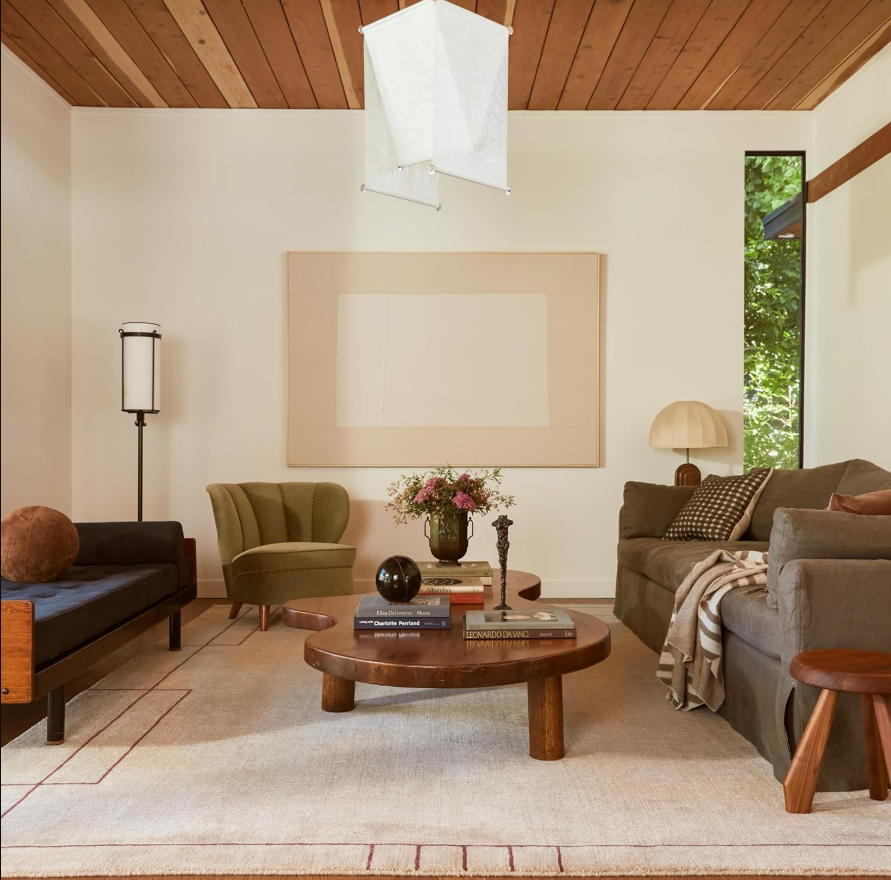
You can repaint a wall. You can swap out a light fixture. You can rearrange furniture for the hundredth time.
Or you can unroll a rug in fifteen minutes and watch the entire room click into place.
That’s not a marketing claim — it’s a structural reality of how rooms work. But here’s the honest part: the wrong rug, in the wrong room, made from the wrong material, is absolutely a waste of money. The difference between a smart buy and a regrettable one comes down to three things — material, scale, and function.
This article breaks all of it down. You’ll know exactly what to buy, what to avoid, and why geometric patterns specifically punch above their weight in spatial transformation.
Why a Rug Transforms a Room Faster Than Anything Else
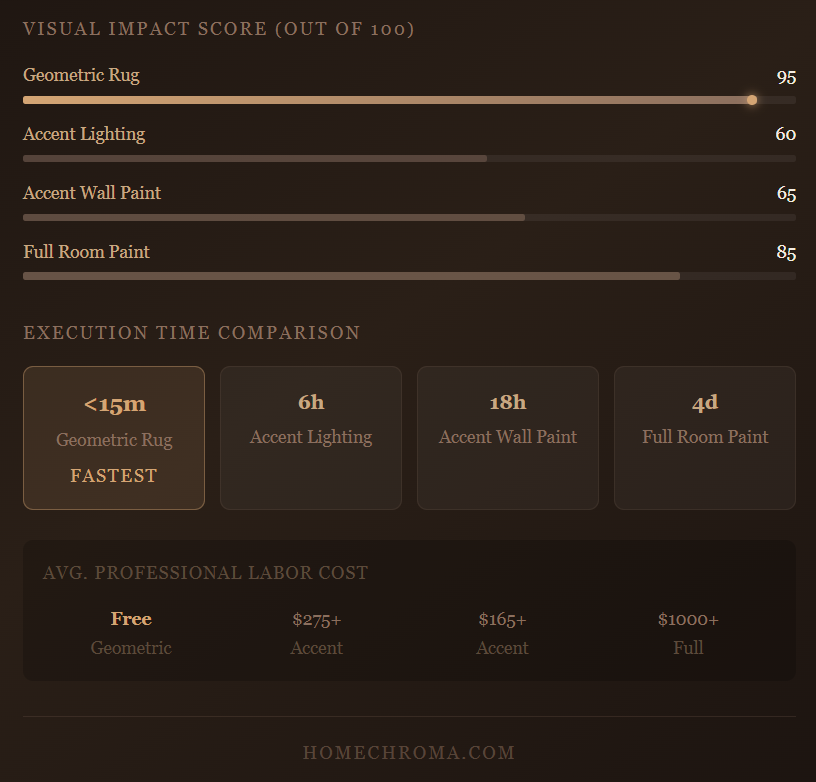
A geometric rug isn’t just decorative. It functions as an architectural anchor — the same way a wall or partition defines space, a rug does it without committing to permanence.
In open-plan rooms especially, a rug creates what designers call “visual gravity.” It tells the eye where to stop, where to sit, and what belongs together. Furniture that looks scattered becomes a cohesive zone the moment a rug appears beneath it.
Geometric patterns take this further. Repeating angles and forms create rhythm and visual logic — a linear pattern stretches a narrow hallway, a large-scale grid pulls disparate furniture into alignment, a bold diamond anchors a sitting area in an otherwise amorphous space. It works because geometry echoes the architectural lines already present: window frames, doorways, ceiling beams, the legs of furniture.
The result is a room that feels intentional — even if nothing else changed.
How Does It Stack Up Against Paint and Lighting?
This is where the speed argument becomes undeniable.
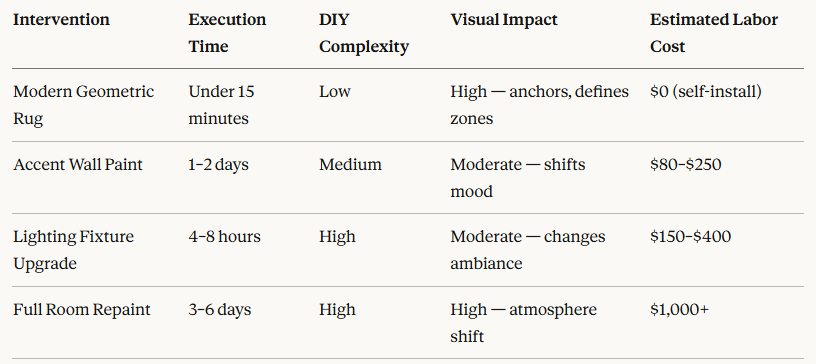
Paint changes vertical surfaces — it’s two-dimensional. Lighting sets mood, but a room without a rug often still feels acoustically hollow and visually ungrounded no matter how good the lighting is. A rug adds tactile depth, acoustic softening, and spatial structure simultaneously.
That said, the fastest transformation and the best transformation aren’t always the same thing. A cheap synthetic rug unrolled in fifteen minutes may look good on day one and be replaced in eighteen months. The real question is whether the rug earns its cost over time.
The Material Decision: Where the Money Is Made or Lost
This is the single most important choice you’ll make. Natural and sustainable fibers last longer, look better with age, and don’t off-gas synthetic chemicals into your home.
Wool — The Long-Term Investment
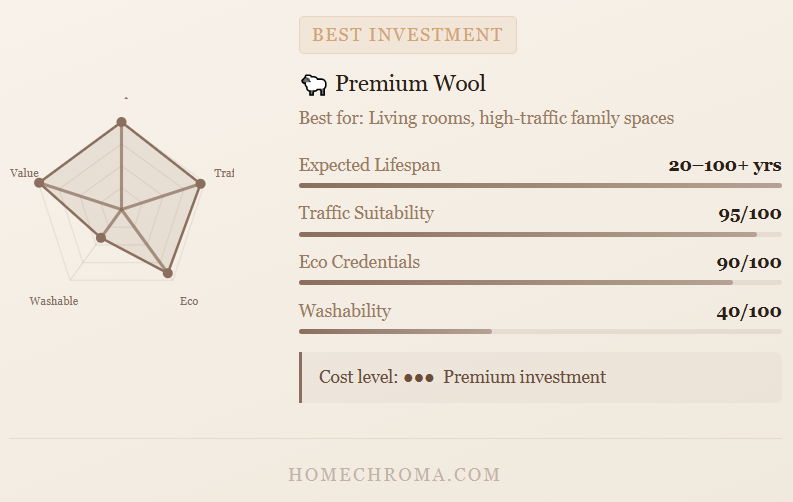
Wool is the benchmark for area rug longevity. Its fiber structure withstands up to 25,000 bends before breaking — a threshold that synthetic fibers don’t come close to matching. The natural lanolin oils in wool resist staining and dirt without chemical treatment.
- Lifespan: 20–100+ years depending on construction
- Best for: Living rooms, bedrooms, high-traffic family spaces
- Maintenance: Vacuum on high setting (avoid beater bar), professional clean every 1–2 years
- Upfront cost: Higher — but the per-year cost is lower than any alternative over a decade
A hand-knotted wool rug can become a family heirloom. A hand-tufted wool rug typically lasts 8–15 years. Neither requires the replacement cycle of a synthetic.
Jute — Earthy, Affordable, Context-Dependent
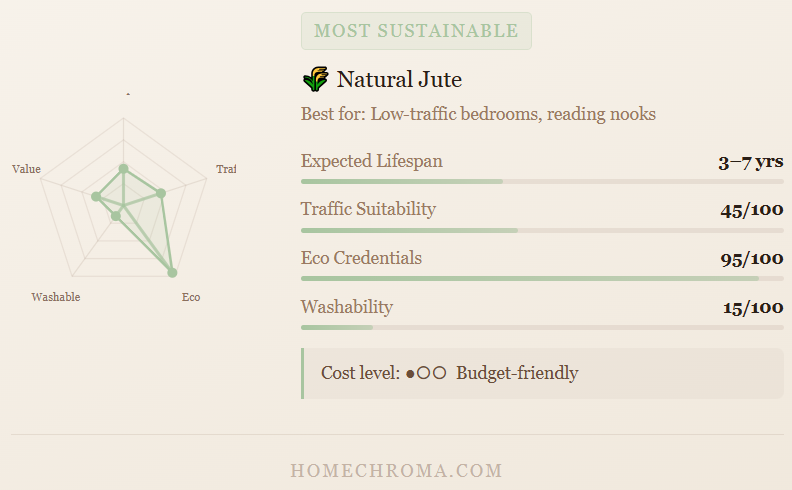
Jute is harvested from plant stalks with minimal water and no pesticides. It’s one of the most sustainable fibers available and provides a warm, textured look that pairs naturally with geometric patterns.
The limitation is moisture. Jute is highly absorbent — spills penetrate fast and can cause mold, permanent staining, or an unpleasant grassy odor if the rug stays damp. That rules it out for kitchens, dining rooms, and any humid space.
- Lifespan: 3–7 years in moderate traffic
- Best for: Bedrooms, reading nooks, low-traffic living areas
- Avoid: Kitchens, high-humidity rooms, homes with frequent spills
Sisal — Tougher Than It Looks
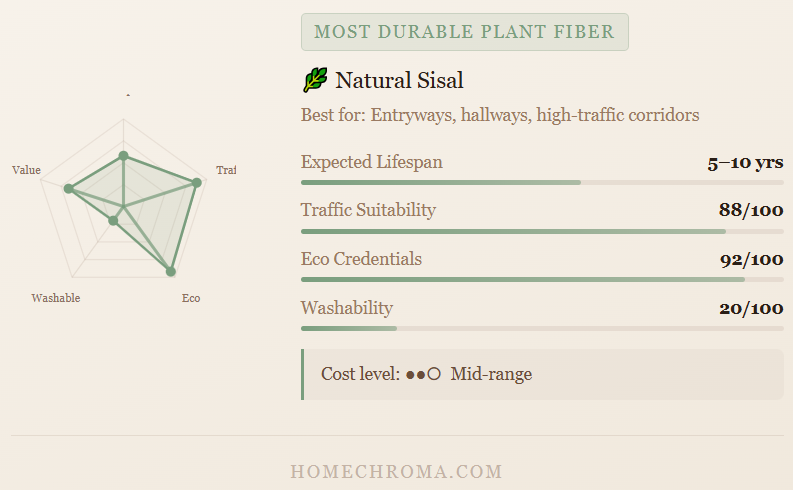
Sisal comes from the agave plant and is significantly harder-wearing than jute. It handles foot traffic well, resists wear, and works particularly well in entryways and hallways where other natural fibers would deteriorate.
- Lifespan: 5–10 years
- Best for: Entryways, hallways, stairs, high-traffic corridors
- Note: Rough texture — not ideal for bare-feet comfort zones
Organic Cotton — Soft, Safe, and Washable
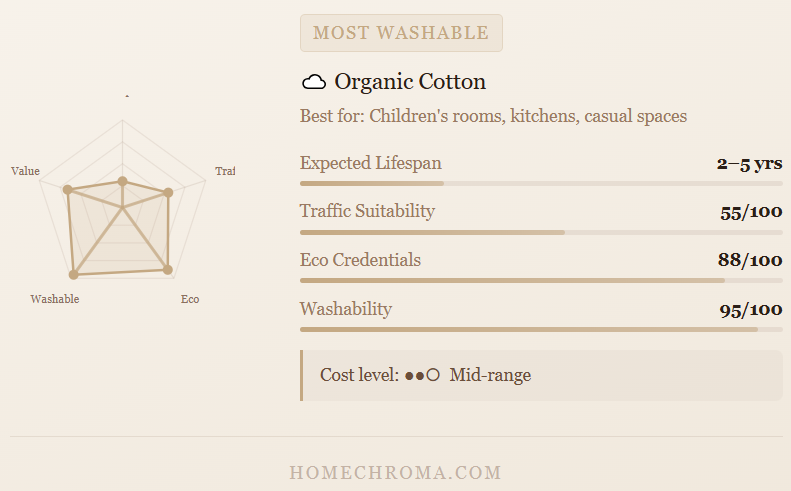
Organic cotton is grown without synthetic pesticides or GMOs. Many organic cotton rugs are machine-washable, which significantly extends their practical life in households with children or pets.
- Lifespan: 2–5 years (longer with regular washing)
- Best for: Children’s rooms, bathrooms, kitchen mats, casual living spaces
- Key advantage: Toss it in the washing machine — no professional cleaning required
Recycled PET / Recycled Textiles
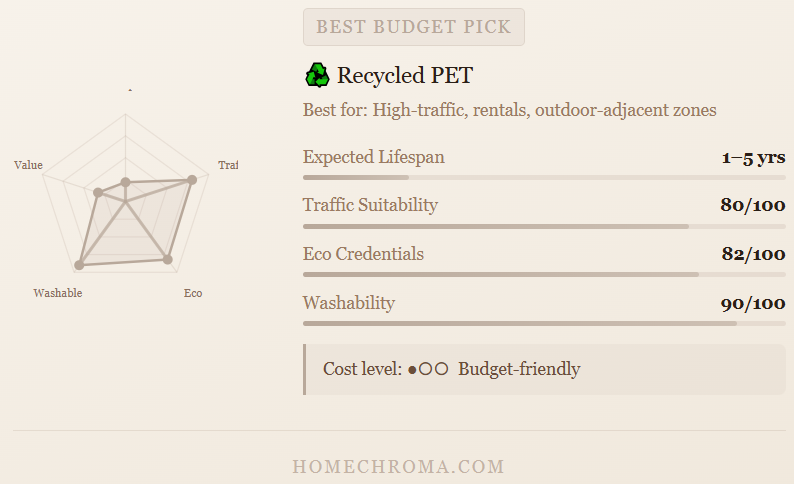
Made from post-consumer plastic bottles or reclaimed fibers, these rugs divert waste from landfill and produce a durable, often stain-resistant surface. They’re machine-washable and a solid choice for high-traffic areas where wool isn’t practical.
- Lifespan: 1–5 years
- Best for: High-traffic areas, outdoor-adjacent zones, rental properties
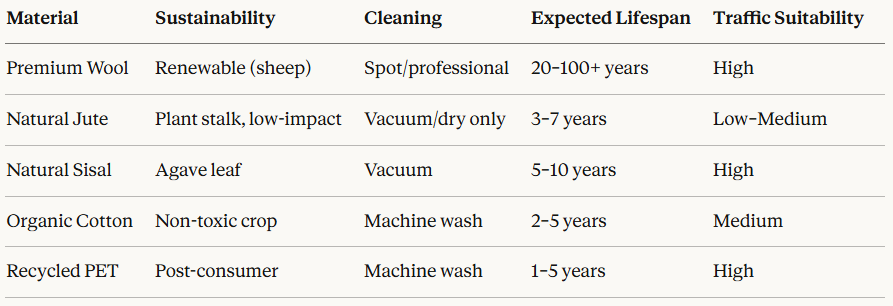
Full Material Comparison
When a Rug Actually Is a Waste of Money
There are three common mistakes that turn a good idea into a bad purchase:
1. Wrong material for the room A jute rug in a kitchen. A low-pile sisal in a bedroom. A machine-made synthetic in a formal living room you expect to last a decade. Material mismatch is the most frequent cause of buyer regret.
2. Wrong size A rug that’s too small makes a room feel more disjointed, not less. In a living room, the rug should be large enough for at least the front legs of the sofa and chairs to rest on it. For a queen or king bed, that means an 8×10 or 9×12 minimum. Sizing down to save money works against the entire purpose of the purchase.
3. Skipping the rug pad A rug pad isn’t an upsell — it prevents slipping, adds cushioning, protects your floor from the abrasive backing of natural fiber rugs, and allows airflow that prevents mold in jute and sisal. Without one, you’re shortening the life of both the rug and the floor beneath it.
Recommended Sustainable Geometric Rug Collections
These are currently available through major US retailers and represent the strongest combination of natural materials and geometric design:
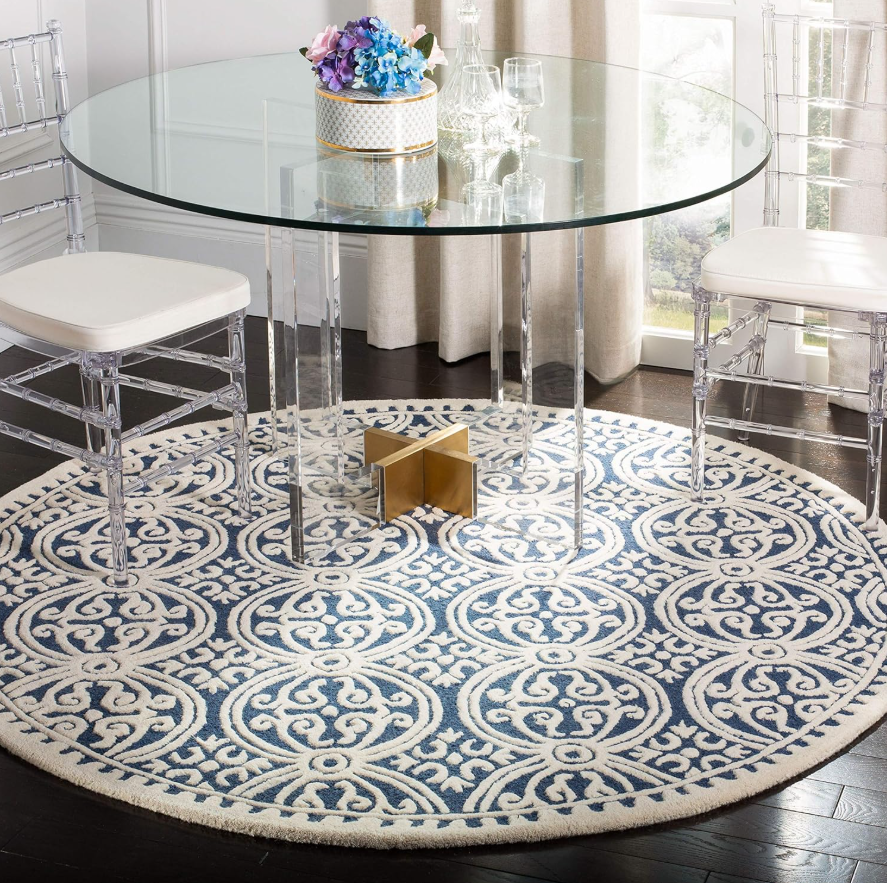
Safavieh Cambridge Collection: 100% premium wool, hand-tufted, Moroccan-inspired geometric patterns. High-low pile construction adds texture and reduces room echo. Widely regarded as a reliable mid-range investment in natural fiber quality.
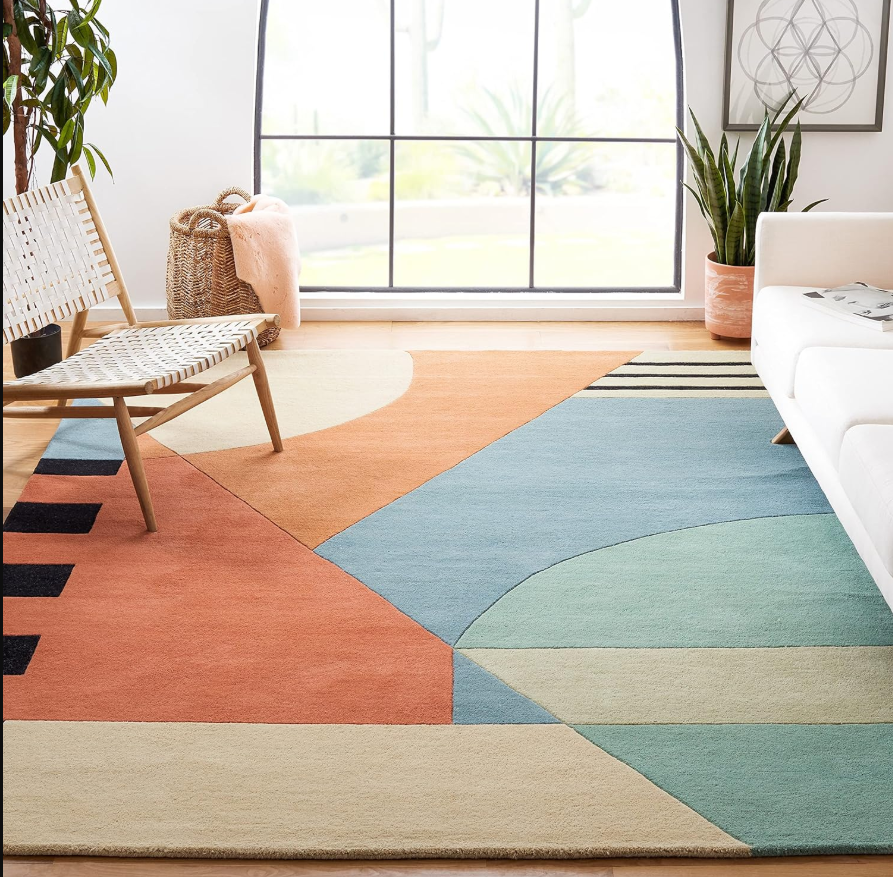
Safavieh Rodeo Drive Collection: Handmade 100% wool with abstract geometric and mid-century modern patterns. The color depth and pile thickness place it well above mass-market alternatives. Built for spaces where the rug will serve as a long-term design anchor.
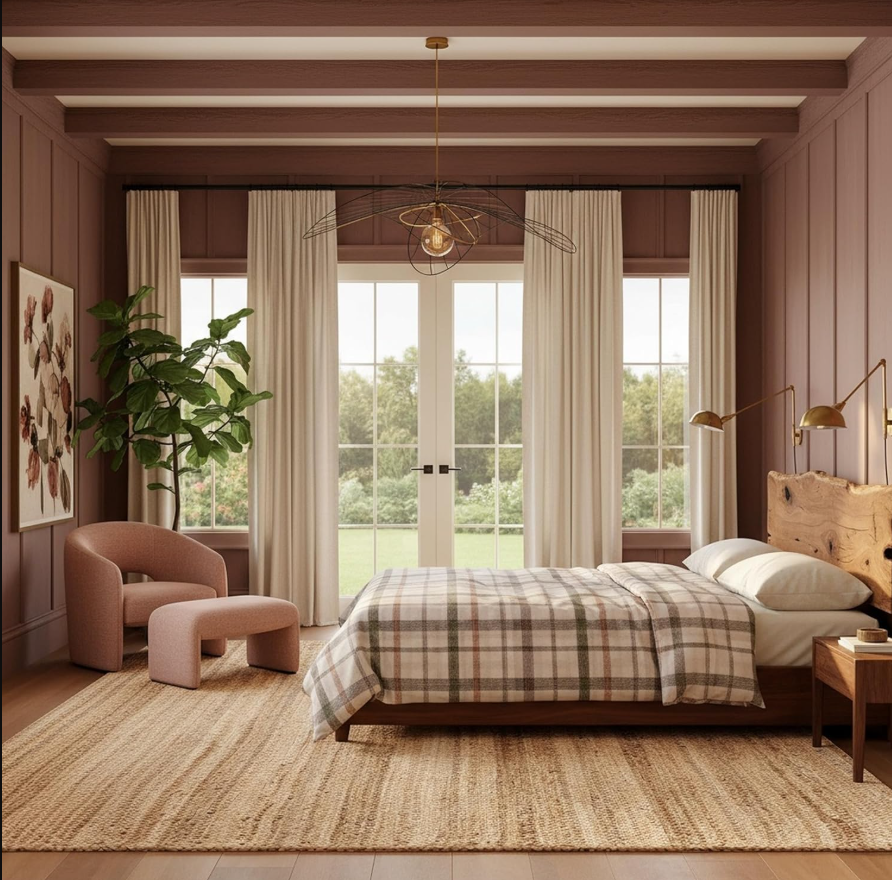
nuLOOM Rigo Jute Collection: Hand-woven from 100% natural jute. Best suited for low-to-moderate traffic rooms. Earthy texture pairs well with neutral geometric interiors. Expect shedding initially — this normalizes with regular vacuuming.
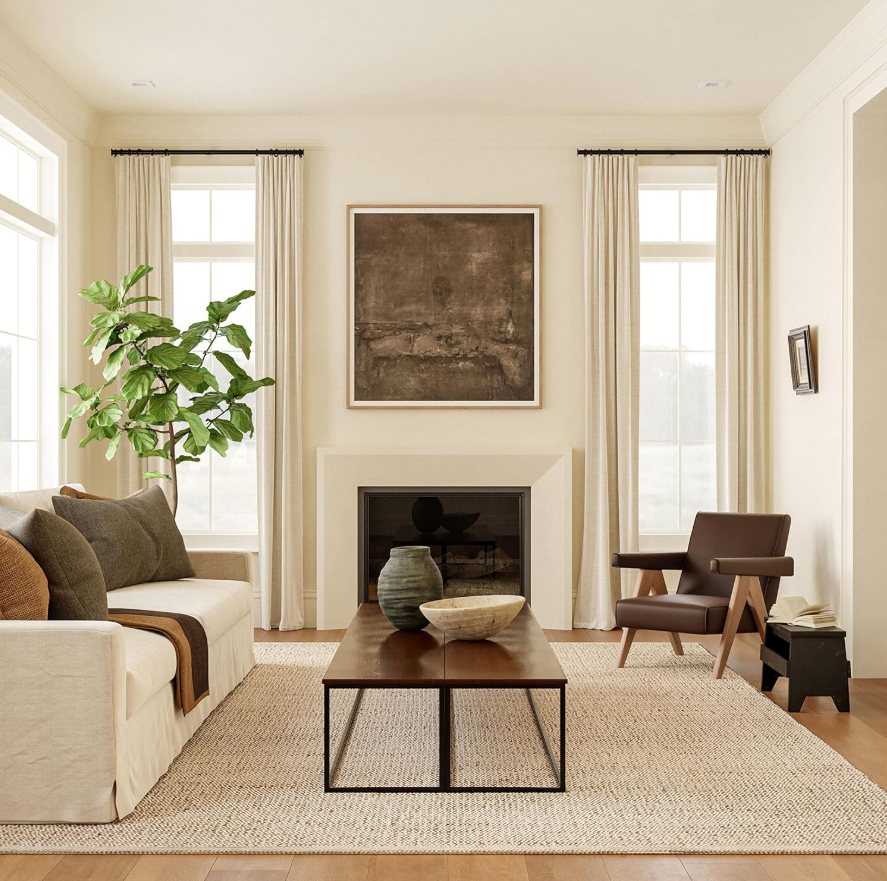
nuLOOM Elfriede Jute & Cotton Blend: A 60/40 jute-to-cotton weave that’s more stable and durable than pure jute. Works well in kitchens and hallways where you want natural fiber without jute’s moisture vulnerability.
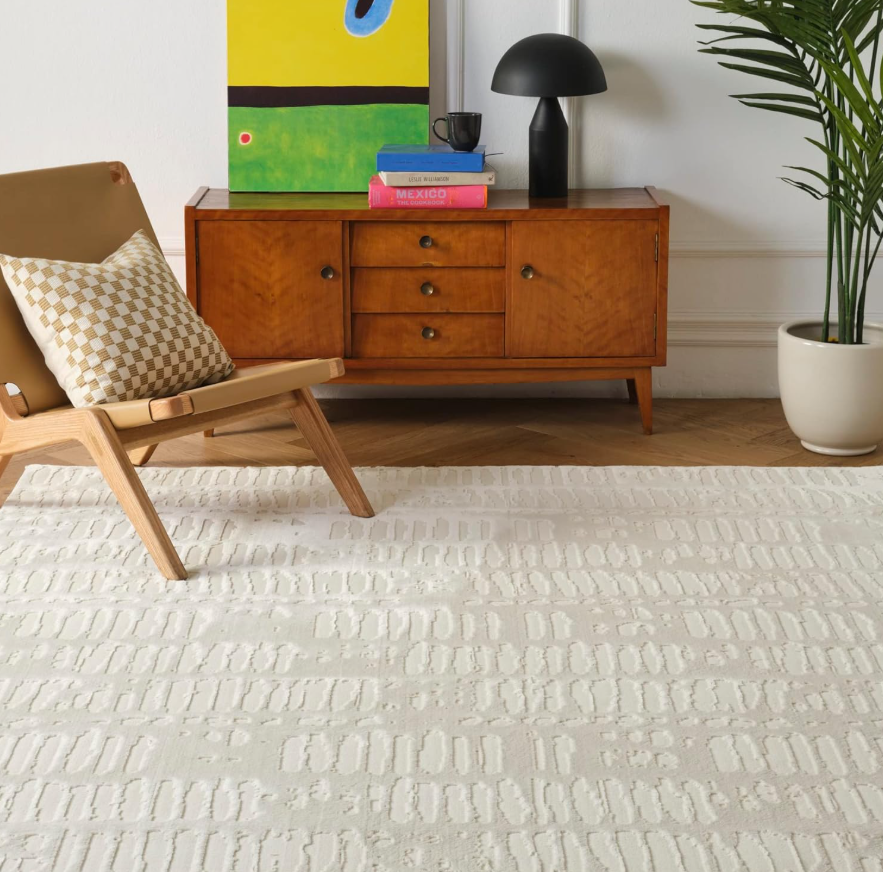
Revival Rugs — Shell Collection: Machine-washable, OEKO-TEX certified, made from 100% recycled polyester. Geometric line patterns in a neutral palette. Strong choice for families who want sustainable credentials without sacrificing washability.
Rugs USA — Arvin Olano Wool-Blend: Designer-level geometric aesthetics with a natural wool and jute blend. Hits a middle ground between premium and budget without sacrificing material integrity.
Sizing and Maintenance Quick Reference
Size by room:
- Living room: 8×10 minimum; front legs of all seating on the rug
- Bedroom (queen/king): 9×12 preferred; rug extends 18–24 inches past bed edges
- Dining room: Rug should extend at least 24 inches past the table on all sides
- Entryway/hallway: Runner format; sisal or wool recommended
Maintenance by material:
- Wool: Vacuum weekly on highest setting, no beater bar; rotate every 3–6 months; professional clean every 1–2 years; blot spills immediately
- Jute/Sisal: Vacuum only; no water cleaning; treat spills with dry absorbent material; keep away from humid rooms
- Organic cotton/recycled PET: Machine wash on gentle cycle; air dry flat or low heat
The Verdict
A modern geometric rug is the fastest high-impact intervention available for a dull room — faster than paint, less disruptive than new lighting, and more immediately transformative than furniture rearrangement.
It becomes a waste of money only when the material doesn’t match the room’s function, the size is too small to anchor the space, or it’s made from synthetic fibers that flatten and degrade within two years.
Buy wool if you’re investing in a space long-term. Buy organic cotton or recycled PET if you need washability. Use jute and sisal where moisture isn’t a factor. Size up rather than down. Use a rug pad without exception.
Do those things, and a geometric rug won’t just change how the room looks — it’ll change how the room works. That’s worth every cent.
Dora Decora is a biophilic interior design specialist and passionate blogger. With a deep commitment to integrating nature into living spaces, Dora specializes in creating environments that foster human-nature connections through thoughtful design elements. Her approach emphasizes sustainable materials, natural lighting, and organic patterns that enhance wellbeing and reduce environmental impact.
This post (https://homechroma.com/modern-geometric-rugs) was originally published by Dora Decora on Home Chroma. As an Amazon Associates partner, we are compensated for all qualifying purchases.