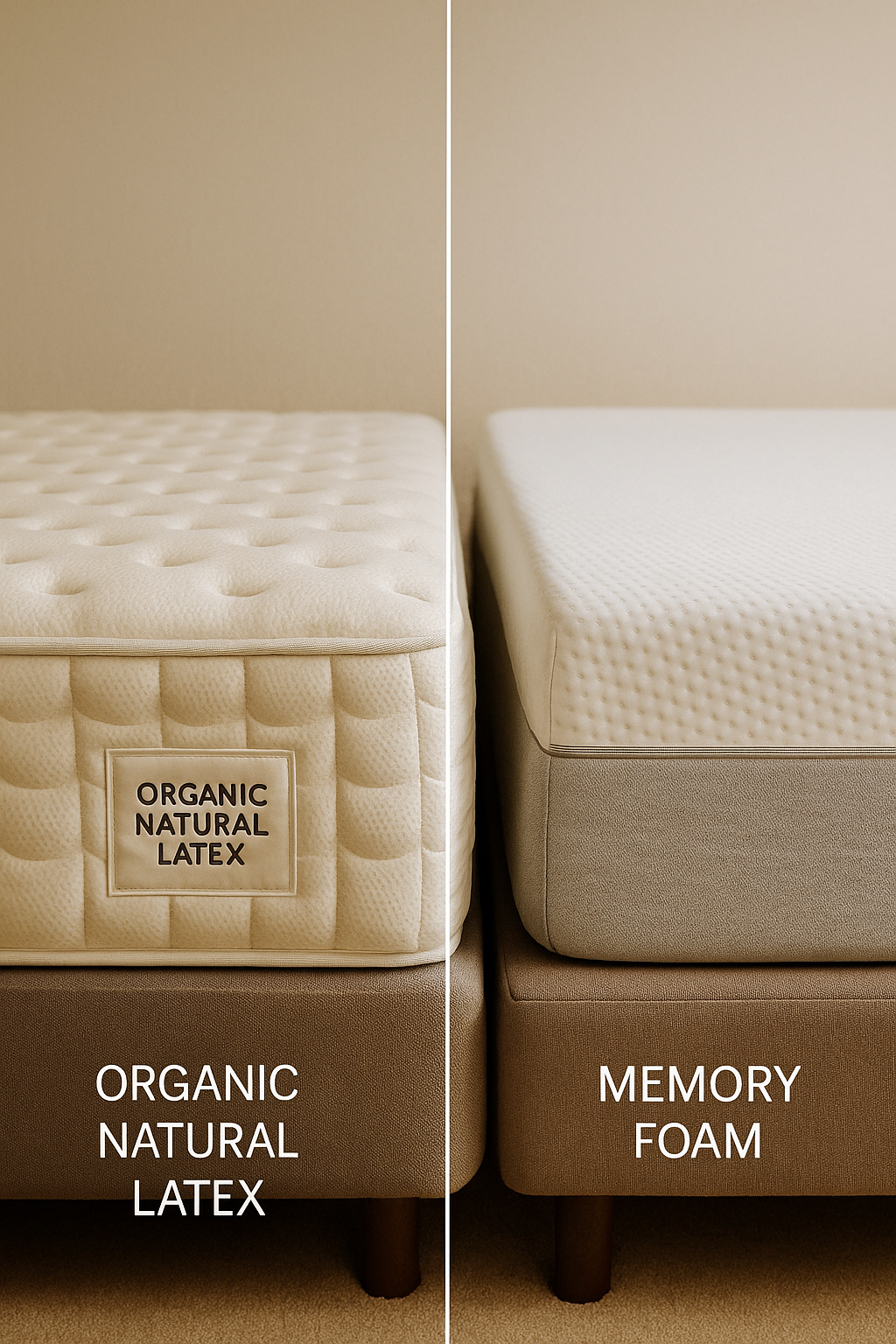
Choosing the right mattress is one of the most important decisions you’ll make for your sleep quality and overall health. Two materials dominate today’s premium mattress market: organic natural latex and memory foam. While both promise superior comfort, they deliver completely different sleep experiences through fundamentally different approaches.
This comprehensive guide cuts through the marketing noise to give you the facts you need to make an informed decision.
What You Need to Know First
Memory foam excels at deep body contouring and motion isolation, creating that signature “sinking in” sensation many sleepers love. However, it comes with trade-offs: heat retention, potential chemical off-gassing, and environmental concerns.
Organic natural latex offers a responsive, “floating” feel with exceptional breathability and durability. It’s naturally hypoallergenic and environmentally sustainable, though it comes with a higher upfront cost.
The choice isn’t about which is “better” – it’s about which aligns with your specific needs, health priorities, and values.
Understanding the Source Materials
Memory Foam: Synthetic Chemistry Marvel
Memory foam (viscoelastic polyurethane) is created from petroleum-based chemicals:
- Primary components: Polyols and isocyanates
- Manufacturing: Complex chemical reactions create the foam structure
- Variants: Traditional, plant-based (partial), and gel-infused versions
The manufacturing process involves mixing chemicals, creating foam through exothermic reactions, and curing the material. Additional flame retardants and adhesives are typically added during mattress assembly.
Organic Natural Latex: Renewable Resource
Natural latex comes from the sustainable harvesting of rubber tree sap:
- Source: Hevea brasiliensis rubber trees
- Harvesting: “Tapping” process that doesn’t harm the tree
- Sustainability: Trees produce sap for 25+ years and act as carbon sinks
- Processing: Two main methods – Dunlop (denser, firmer) and Talalay (lighter, softer)
The key distinction: latex can be 100% natural, synthetic (petroleum-based), or blended. Always verify you’re getting genuine natural latex through certifications.
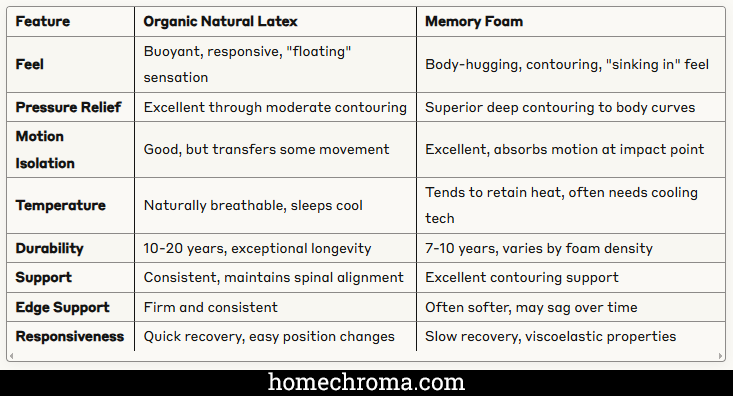
Performance Head-to-Head Comparison
Health and Safety Considerations
Chemical Exposure and Off-Gassing
Memory Foam Concerns:
- Emits volatile organic compounds (VOCs) including toluene, formaldehyde, and benzene
- “New mattress smell” indicates chemical off-gassing
- Potential short-term effects: headaches, respiratory irritation, eye/throat irritation
- Long-term exposure concerns: hormonal disruption, immune system effects
- Off-gassing can persist for weeks to months
Natural Latex Advantages:
- Minimal off-gassing due to natural origin
- Naturally hypoallergenic and antimicrobial
- Resists dust mites, mold, and bacteria
- No petroleum-based chemicals or synthetic additives
Who Should Prioritize Natural Latex
- Individuals with chemical sensitivities or allergies
- Parents seeking safer options for children’s bedrooms
- Those with respiratory conditions like asthma
- Anyone prioritizing indoor air quality
Environmental Impact Analysis
Production Footprint
Natural Latex:
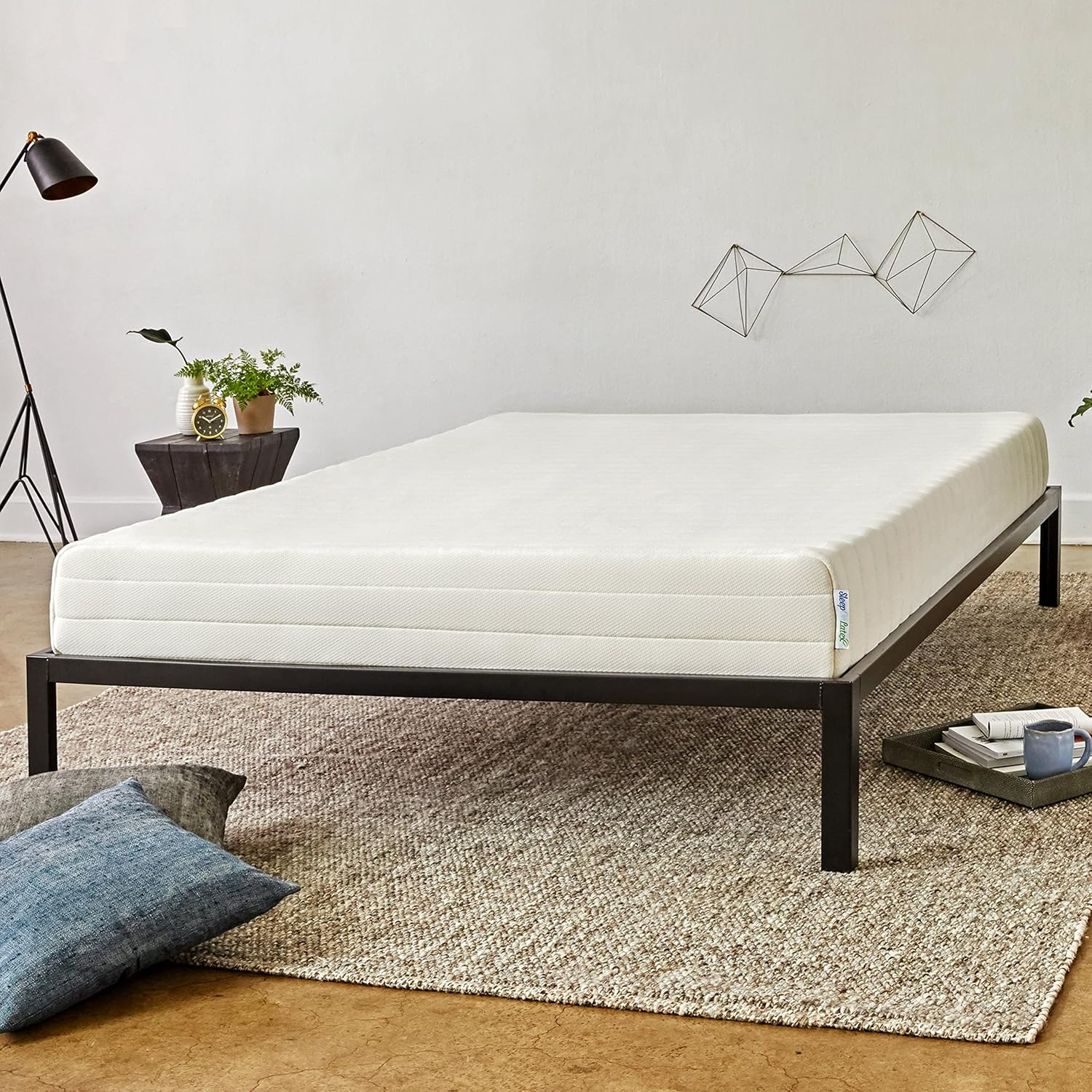
Pure Green Organic Latex Mattress [click to view…]
- Renewable resource from rubber trees
- Trees act as carbon sinks, absorbing CO2
- Minimal chemical processing required
- Lower energy consumption in manufacturing
Memory Foam:
- Petroleum-based, non-renewable resource
- Energy-intensive chemical manufacturing
- Significant CO2 emissions during production
- Multiple synthetic chemicals required
End-of-Life Disposal
Natural Latex:
- Biodegradable (breaks down in 6 months to 4 years)
- Returns to earth naturally
- Minimal landfill impact
Memory Foam:

ZINUS 10 Inch Green Tea Memory Foam Mattress [click to view…]
- Non-biodegradable petroleum plastic
- Persists in landfills for hundreds of years
- Difficult to recycle
- May release harmful chemicals during decomposition
Cost Analysis: Beyond the Price Tag
Initial Investment Ranges
Natural Latex (Queen Size):
- Range: $1,299 – $5,000
- Factors affecting price: Dunlop vs. Talalay, certifications, organic covers
- Higher cost due to sustainable sourcing and processing
Memory Foam (Queen Size):
- Range: $236 – $5,699 (basic to premium)
- Factors affecting price: Foam density, cooling features, brand reputation
- Wider price range accommodates various budgets
Long-Term Value Calculation
Despite higher upfront costs, natural latex often provides better long-term value:
Example Comparison:
- Natural Latex: $2,000 ÷ 15 years = $133/year
- Memory Foam: $800 ÷ 8 years = $100/year
The difference narrows significantly when you factor in replacement costs. A single latex mattress may outlast 2-3 memory foam mattresses.
Certifications That Matter
Understanding certifications helps you avoid misleading marketing:
For Natural Latex:

Pure Green Organic Latex Mattress – Medium Firmness – Queen [click to view…]
- GOLS (Global Organic Latex Standard): Ensures 95%+ organic content and sustainable practices
- OEKO-TEX Standard 100: Tests for over 1,000 harmful substances
For Memory Foam:
- CertiPUR-US: Ensures foam is free from harmful chemicals and has low VOC emissions
- GREENGUARD Gold: Verifies low chemical emissions for indoor air quality
Making Your Decision: Key Questions to Ask
Comfort Preferences
- Do you prefer sinking into your mattress or sleeping on top of it?
- Do you sleep hot or cold?
- How important is motion isolation for you and your partner?
- What’s your preferred sleeping position?
Health Priorities
- Do you have allergies or chemical sensitivities?
- Are you concerned about indoor air quality?
- Do you have respiratory conditions?
Environmental Values
- How important is sustainability in your purchasing decisions?
- Are you willing to pay more for environmentally responsible products?
- Do you prefer renewable vs. synthetic materials?
Financial Considerations
- What’s your budget for initial purchase vs. long-term cost?
- How long do you typically keep a mattress?
- Is durability a priority for your investment?
Specific Recommendations by Sleeper Type
Side Sleepers
- Memory foam or soft Talalay latex for pressure relief on hips and shoulders
- Priority: Deep contouring for joint comfort
Back Sleepers
- Medium-firm latex (Dunlop) or supportive memory foam
- Priority: Balanced support and contouring for spinal alignment
Stomach Sleepers
- Firm latex to prevent hip sinking and back strain
- Priority: Consistent support without excessive conforming
Combination Sleepers
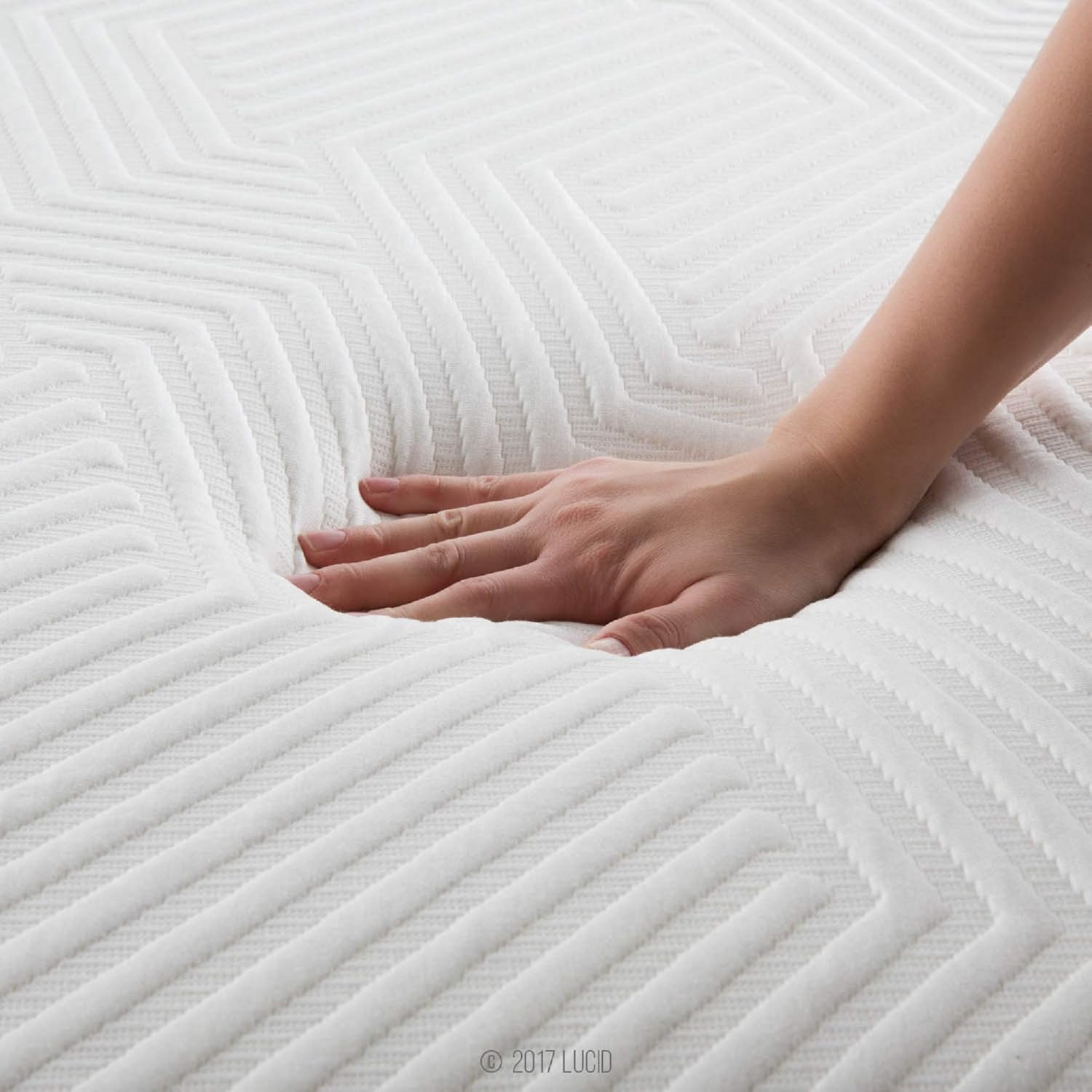
LUCID Responsive Latex Foam [click to view…]
- Responsive latex for easy position changes
- Priority: Quick recovery and movement freedom
Hot Sleepers
- Natural latex for superior breathability
- If choosing memory foam: Look for gel-infused or open-cell variants
Red Flags to Avoid
When shopping for either mattress type, watch out for:
Memory Foam:
- Extremely low prices (often indicates poor foam density)
- Strong chemical odors that persist
- Lack of CertiPUR-US certification
- Excessive marketing claims about cooling (traditional memory foam sleeps warm)
Natural Latex:
- Vague “latex” labeling without specifying natural vs. synthetic
- Prices significantly below market average (may indicate synthetic/blended content)
- Absence of GOLS or similar organic certifications
- Claims of being “100% natural” without third-party verification
The Bottom Line
Choose memory foam if you:
- Love deep, contouring pressure relief
- Need maximum motion isolation
- Have a limited budget for initial purchase
- Don’t have chemical sensitivities
Choose organic natural latex if you:
- Prefer responsive, buoyant support
- Sleep hot or want natural temperature regulation
- Have allergies or chemical sensitivities
- Prioritize environmental sustainability
- Want maximum durability and long-term value
- Prefer natural materials over synthetic
Enhancing Your Sleep Environment Beyond Your Mattress
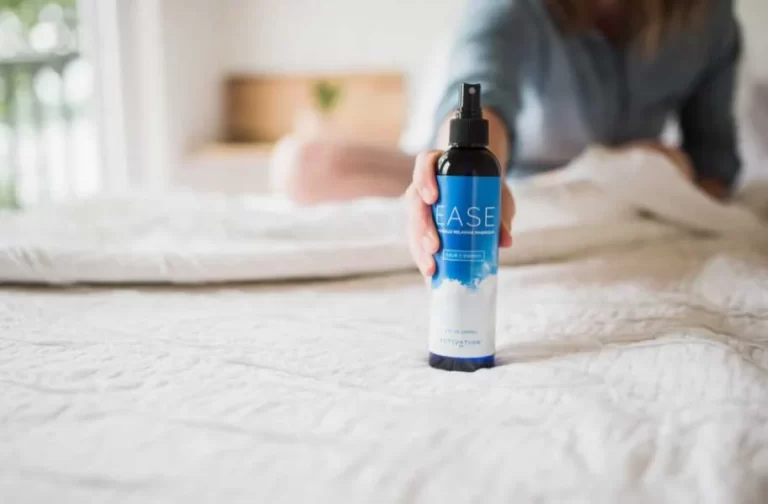
Ease Magnesium Spray [click to view…]
While choosing the right mattress is fundamental to quality sleep, optimizing your overall sleep environment can amplify the benefits of your investment. Ease Magnesium offers a natural, fast-absorbing transdermal spray that delivers pharmaceutical-grade magnesium chloride directly through your skin, promoting relaxation and supporting healthy sleep patterns. With approximately 22mg of bioavailable magnesium per spray, this Dead Sea-sourced supplement works within minutes to calm muscles, ease tension, and prepare your body for restorative sleep—making it an ideal complement to either a supportive latex or contouring memory foam mattress. The spray absorbs completely within 90 seconds without leaving residue, allowing you to enhance your nighttime routine regardless of which mattress type you choose.
Final Thoughts
Both organic natural latex and memory foam can provide excellent sleep when properly matched to your needs. The key is understanding that this choice involves trade-offs between immediate comfort, long-term health, environmental impact, and financial considerations.
Memory foam offers immediate gratification with its unique contouring feel and lower entry price, but comes with potential health and environmental concerns. Natural latex requires a higher initial investment but delivers superior longevity, health benefits, and environmental responsibility.
Consider your priorities carefully, test both options when possible, and remember that the best mattress is the one that aligns with your specific sleep needs, health concerns, and values. With proper research and consideration of the factors outlined in this guide, you’ll be well-equipped to make a decision that supports quality sleep for years to come.
Dora Decora is a biophilic interior design specialist and passionate blogger. With a deep commitment to integrating nature into living spaces, Dora specializes in creating environments that foster human-nature connections through thoughtful design elements. Her approach emphasizes sustainable materials, natural lighting, and organic patterns that enhance wellbeing and reduce environmental impact.
This post (https://homechroma.com/organic-natural-latex-vs-memory-foam-mattresses) was originally published by Dora Decora on Home Chroma. As an Amazon Associates partner, we are compensated for all qualifying purchases.