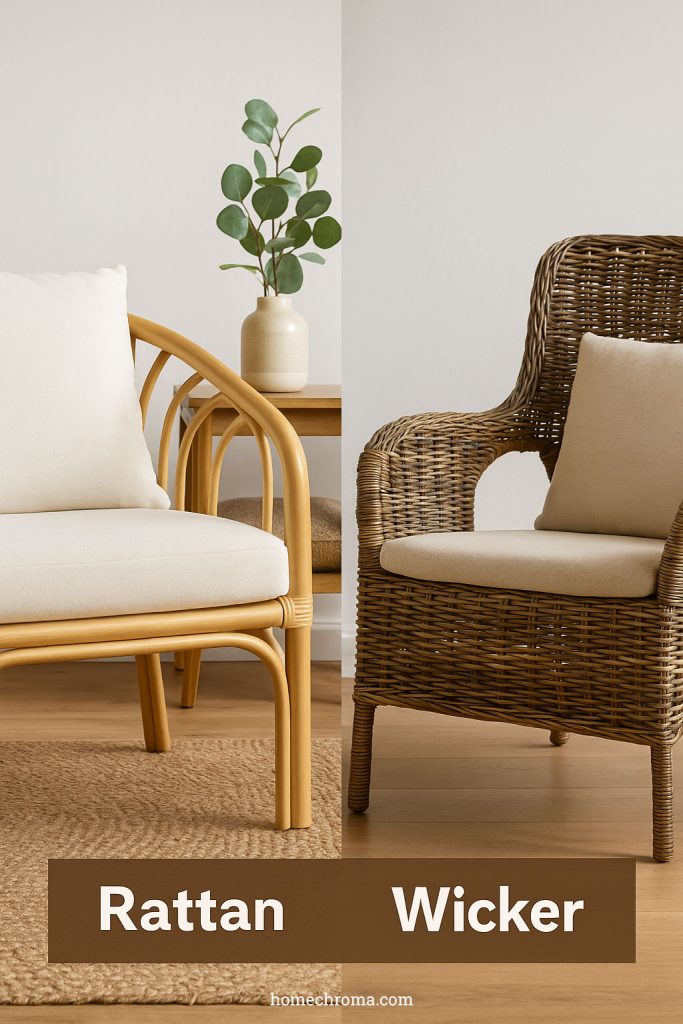
 Wondering about the difference between rattan and wicker furniture? This common confusion affects many shoppers and interior designers. Here’s everything you need to know about these popular furniture options.
The Fundamental Difference
Rattan = Material | Wicker = Technique
The most important distinction:
- Rattan is a specific natural material (a type of climbing palm)
- Wicker is a weaving technique that can use various materials
This explains why you often see “rattan wicker furniture” – it’s furniture made from rattan material using the wicker weaving technique.
Rattan: The Natural Material
Rattan comes from climbing palm species belonging to the Arecaceae family. These vine-like plants grow in tropical forests across Southeast Asia, Africa, and Australia.

Key characteristics of rattan:
- Natural climbing vines that can reach 100-200 meters in length
- Consists of a hard outer layer and flexible inner core
- Harvested from mature plants (5-7 years old)
- Undergoes processing: sunning, smoking, and peeling
- Contains high levels of cellulose (40-60%) and lignin (18-30%)
Advantages of rattan furniture:
- Exceptional strength-to-weight ratio
- Natural flexibility allows for curved designs
- Biodegradable and relatively sustainable when properly harvested
- Brings warm, natural texture to interiors
Limitations:
- Not naturally weather-resistant without treatments
- Requires regular maintenance with oils or lacquers
- Typically lasts 5-7 years indoors without treatment
- Degrades quickly outdoors without protection
Wicker: The Versatile Technique
Wicker describes the method of weaving pliable materials into furniture, baskets, and other items. The term comes from the Scandinavian word vika meaning “to fold.”
Materials commonly used in wicker weaving:
- Rattan (most traditional)
- Willow
- Bamboo
- Sea grass
- Synthetic materials (HDPE, resin)
Common wicker weaving patterns:
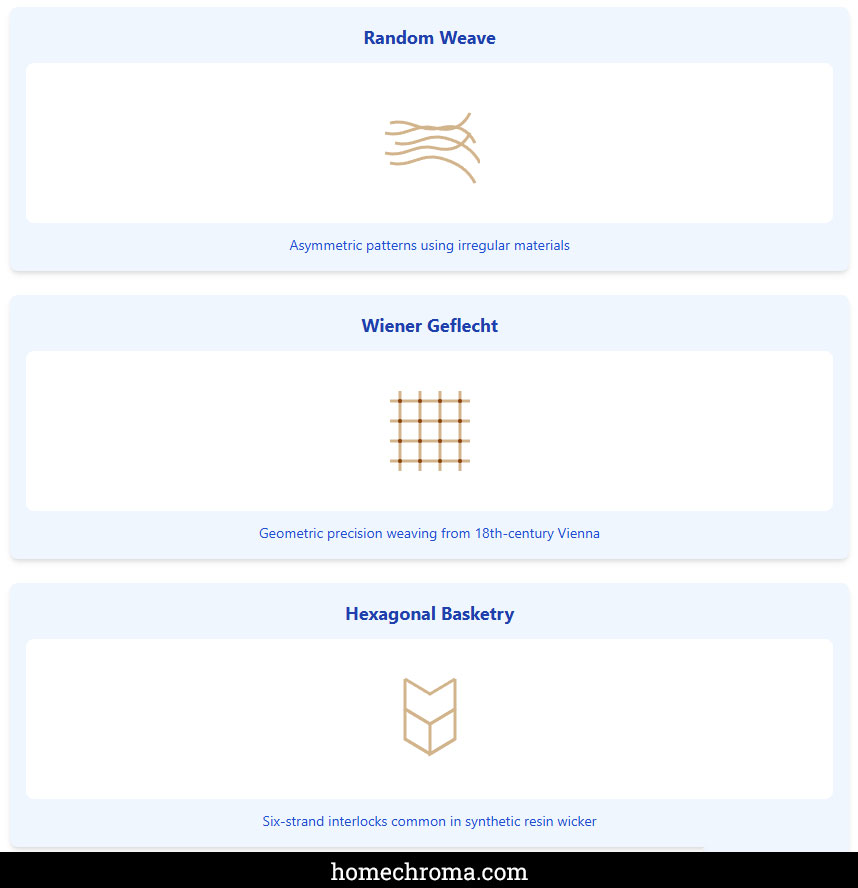
- Random weave (asymmetric, often using sea grass)
- Wiener Geflecht (geometric precision weaving)
- Hexagonal basketry (six-strand interlocks)
Benefits of wicker furniture:
- Creates strong yet lightweight structures
- Allows for air circulation (stays cool in hot weather)
- Can be adapted to various materials based on needs
- Offers distinctive texture and visual interest
Material Comparison in Wicker Furniture
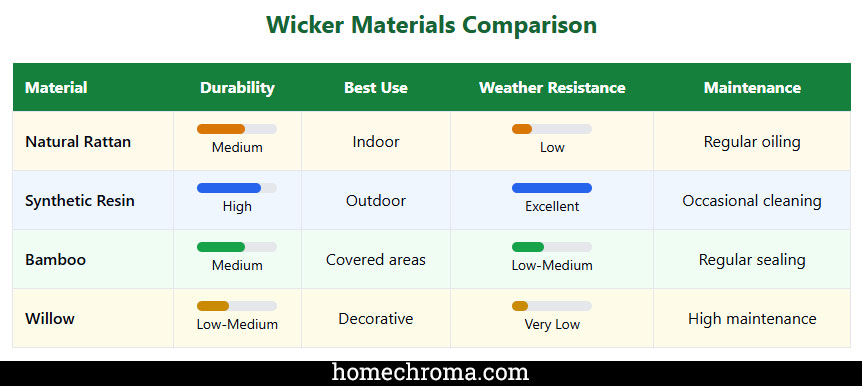
Practical Considerations for Buyers
For indoor use:
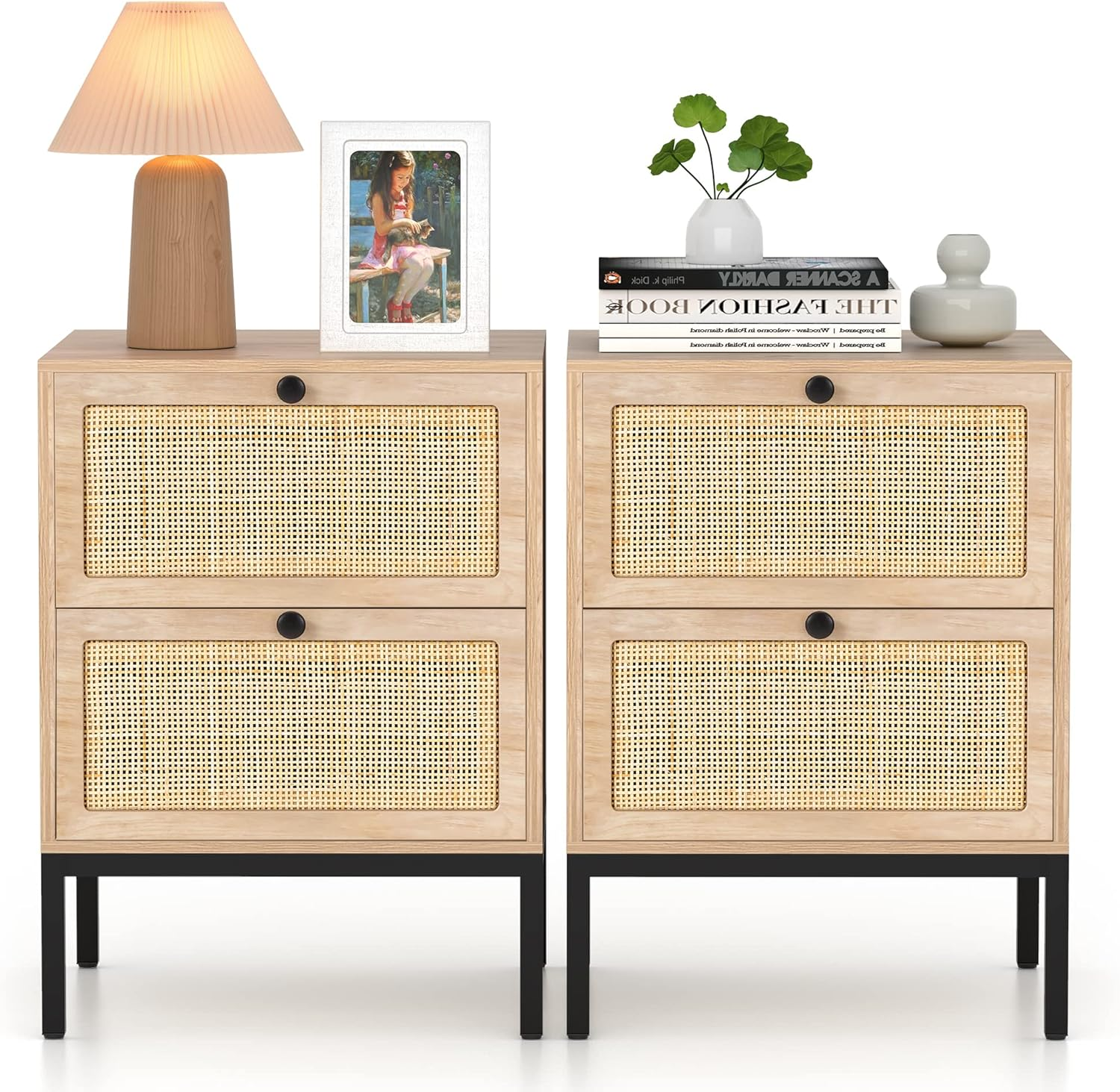
XIAO WEI Natural Rattan Nightstand Set of 2 [click to view…]
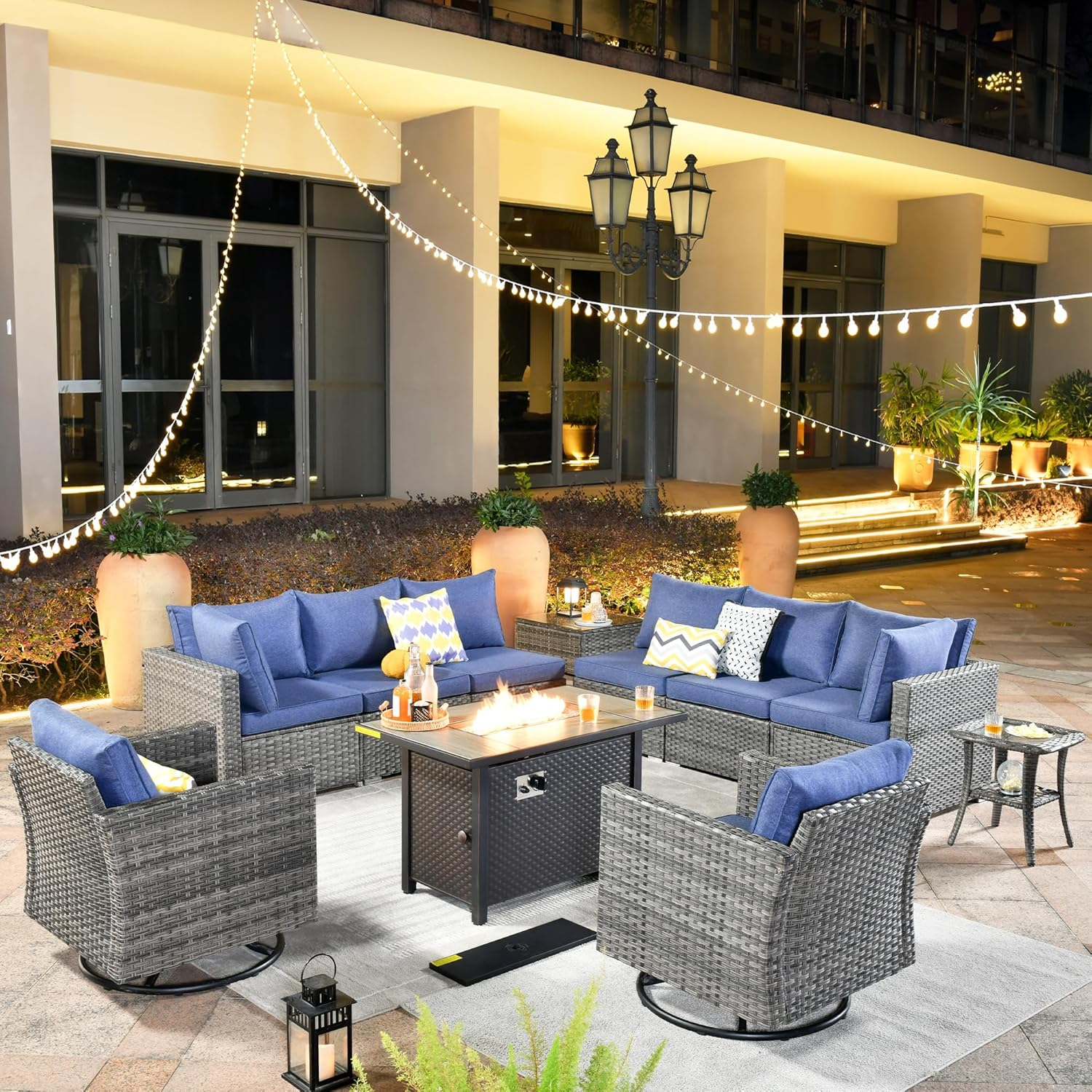
ovios 11 Piece Outdoor Patio Furniture Set [click to view…]
- Natural rattan wicker furniture provides the classic aesthetic
- Requires protection from high humidity and direct sunlight
- Annual treatments with linseed oil prevent cracking
- Best for areas with stable climate conditions
For outdoor use:
- Synthetic resin wicker is the practical choice
- Look for UV-resistant HDPE materials
- Can withstand temperature ranges from -20°C to 60°C
- Requires only occasional cleaning with mild detergents
Identifying quality:
- Examine joints for tight, uniform weaving
- Test weight-bearing capacity before purchase
- Check for even coloration and finish
- Inspect frame materials (aluminum frames are lightweight and durable)
Environmental Impact
Natural rattan:
- Sustainable when properly harvested
- Supports approximately 500 million people in developing nations
- Non-timber forest product that preserves canopy cover
- Some species now endangered due to overexploitation
Synthetic wicker:
- Petroleum-based materials have higher carbon footprint
- Longer lifespan may offset environmental impact
- Look for products with recycled content
- Some manufacturers offer take-back recycling programs
Modern Innovations
The distinction between rattan and wicker continues to evolve with new technologies:
- Hybrid materials: Rattan-plastic composites combine natural fibers with synthetic durability
- Advanced synthetics: UV-stable polymers mimic natural textures with enhanced performance
- Digital fabrication: AI-driven manufacturing optimizes weaving patterns for strength and material efficiency
- Nanocellulose treatments: Enhance natural rattan’s durability with minimal environmental impact
Making the Right Choice
When shopping for furniture, keep these factors in mind:
- Location: Where will the furniture be used? Indoor or outdoor?
- Climate: High humidity areas may require synthetic materials
- Maintenance: How much time can you commit to upkeep?
- Aesthetics: Natural materials offer unique variations; synthetics provide consistency
- Budget: Natural rattan typically costs more than synthetic alternatives
- Environmental concerns: Consider the lifecycle impact of your choice
Common Misconceptions Clarified
- “Wicker furniture is always made of rattan” – False. Wicker can be made from many materials.
- “Rattan and wicker are interchangeable terms” – False. One is a material, one is a technique.
- “All wicker furniture is suitable for outdoors” – False. Natural materials require protection.
- “Rattan furniture is always brown” – False. It can be stained or painted in various colors.
Understanding the difference between rattan and wicker helps you make informed decisions about furniture that meets your needs for style, durability, and sustainability.
Dora Decora is a biophilic interior design specialist and passionate blogger. With a deep commitment to integrating nature into living spaces, Dora specializes in creating environments that foster human-nature connections through thoughtful design elements. Her approach emphasizes sustainable materials, natural lighting, and organic patterns that enhance wellbeing and reduce environmental impact.
This post (https://homechroma.com/rattan-vs-wicker-furniture-understanding-the-key-differences) was originally published by Dora Decora on Home Chroma. As an Amazon Associates partner, we are compensated for all qualifying purchases.