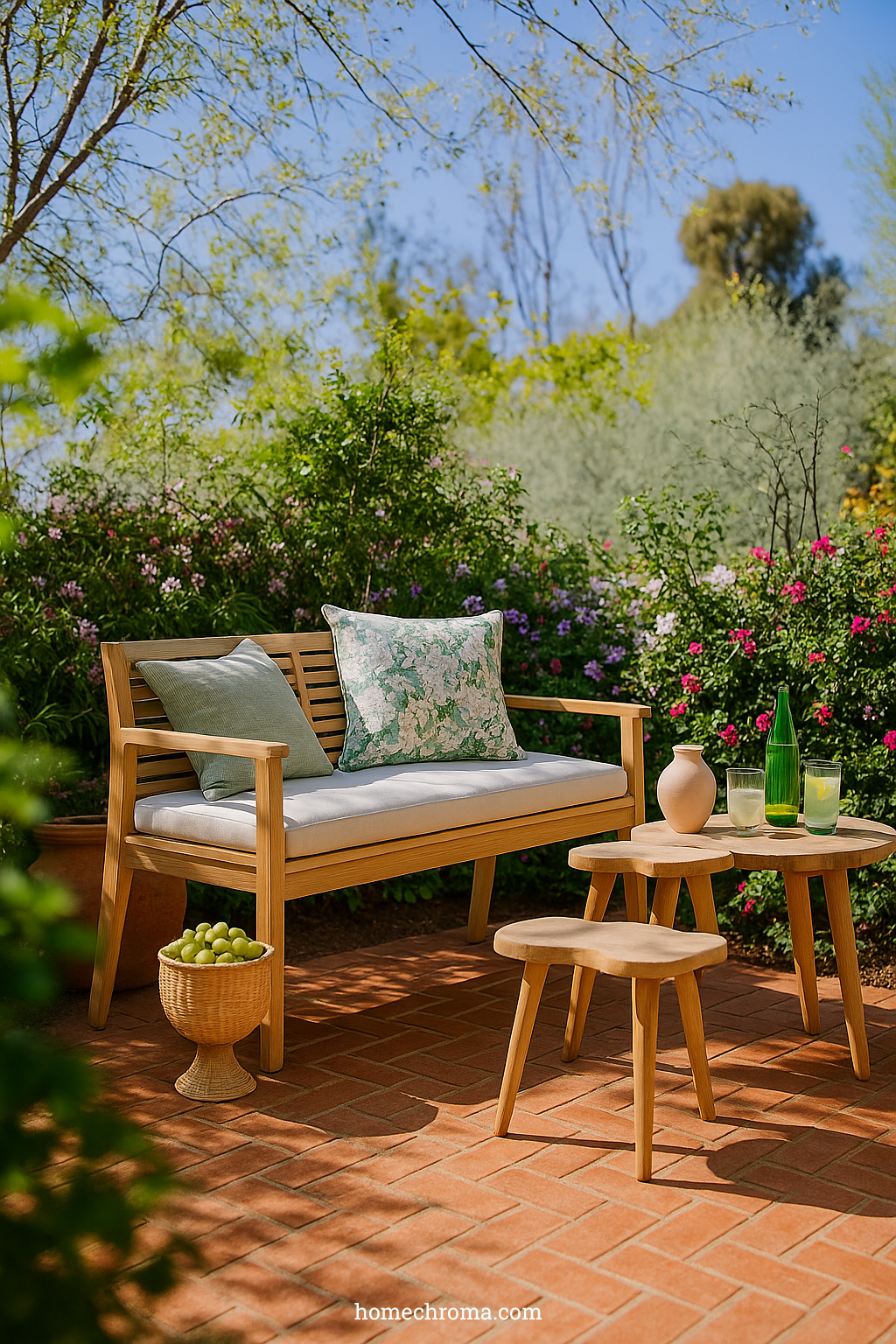
Teak outdoor furniture represents a significant investment in both quality and aesthetics. With its rich golden hue and exceptional durability, this premium hardwood commands attention and respect. Yet many homeowners fall into the trap of believing teak is completely “maintenance-free” — a costly misconception that can compromise their furniture’s stunning appearance within months.
The truth? While teak’s structural integrity remains virtually indestructible without treatment, preserving its visual beauty requires strategic intervention. Your furniture will face a critical choice: maintain its warm golden character through proactive protection, or allow it to gracefully weather into an elegant silver-gray patina.
Why Teak’s Natural Properties Create Both Strength and Vulnerability. Teak outdoor furniture contains approximately 41 pounds per cubic foot of dense hardwood, packed with natural oils that create its legendary durability. These natural oils act as a built-in preservative, offering protection against decay, insects, and moisture. However, this same protective system creates a vulnerability that many homeowners don’t anticipate.
UV radiation gradually carbonizes these oils, causing the wood’s rich golden-brown color to fade to a silvery-gray within 5-12 months of outdoor exposure. This isn’t structural damage — it’s purely cosmetic — but it represents a permanent aesthetic transformation unless you intervene.
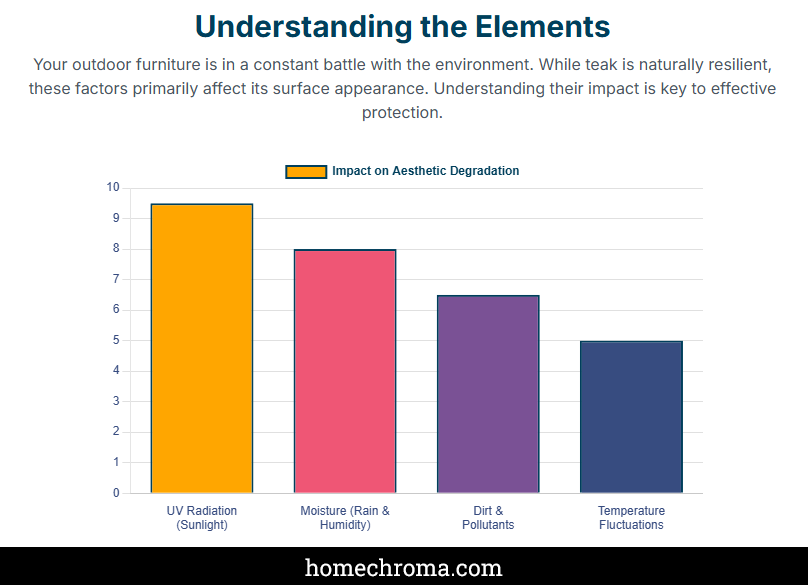
The key insight: teak’s structural strength remains virtually unchanged during this weathering process, but its visual character undergoes a complete makeover. Understanding this distinction helps you make informed decisions about protection strategies.
Your Aesthetic Choice: Golden Preservation vs. Natural Patina
Before investing in any protection products, decide which “natural beauty” appeals to you. Teak offers two distinct paths:
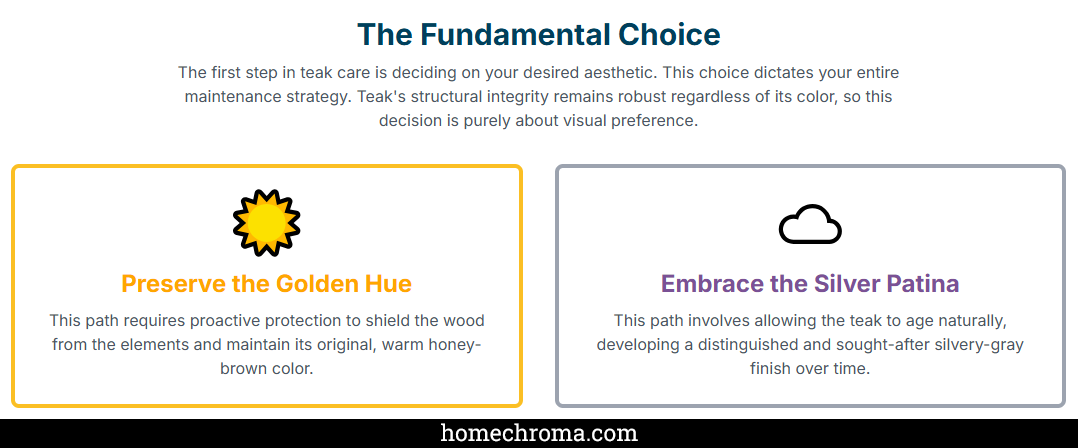
Path 1: Maintain the Original Golden Hue
- Requires proactive sealing and UV protection
- Annual maintenance commitment
- Preserves the “new furniture” appearance indefinitely
Path 2: Embrace the Silver-Gray Patina
- Minimal intervention approach
- The gray patina develops as natural defense against weather and has no effect on structural integrity
- Creates a sophisticated, weathered aesthetic many prefer
Both choices represent authentic “natural beauty” — the difference lies in your maintenance philosophy and aesthetic preference.
Foundation Care: The Non-Negotiable Basics
Regardless of your chosen aesthetic path, proper cleaning forms the cornerstone of teak preservation. Use a soft brush with mild dish soap, always scrubbing with the grain for best results.
Critical Cleaning Guidelines:
• Frequency: Clean at least twice yearly, more often in high-use areas • Method: Soft-bristled brush with mild soapy water solution • Direction: Always scrub across the grain, not with it • Spill Response: Blot liquids immediately; use cornstarch for oil-based spills
Dangerous Mistakes to Avoid:
❌ Never use pressure washers — they strip protective oils and damage surface fibers ❌ Avoid steel wool or abrasive cleaners — these permanently damage teak’s surface ❌ Skip harsh chemicals — they disrupt the wood’s natural protective balance
The emphasis on gentle cleaning isn’t arbitrary. While teak heartwood demonstrates exceptional durability, the surface layers where natural oils concentrate are surprisingly vulnerable to aggressive mechanical forces. Aggressive cleaning can compromise both aesthetic and functional integrity.
Strategy 1: Preserving the Golden Hue with High-Performance Sealers
For homeowners committed to maintaining teak’s original warm coloration,
sealers provide the most effective protection. Unlike oils, sealers “seal” the wood, keeping oils in and harmful UV rays out.
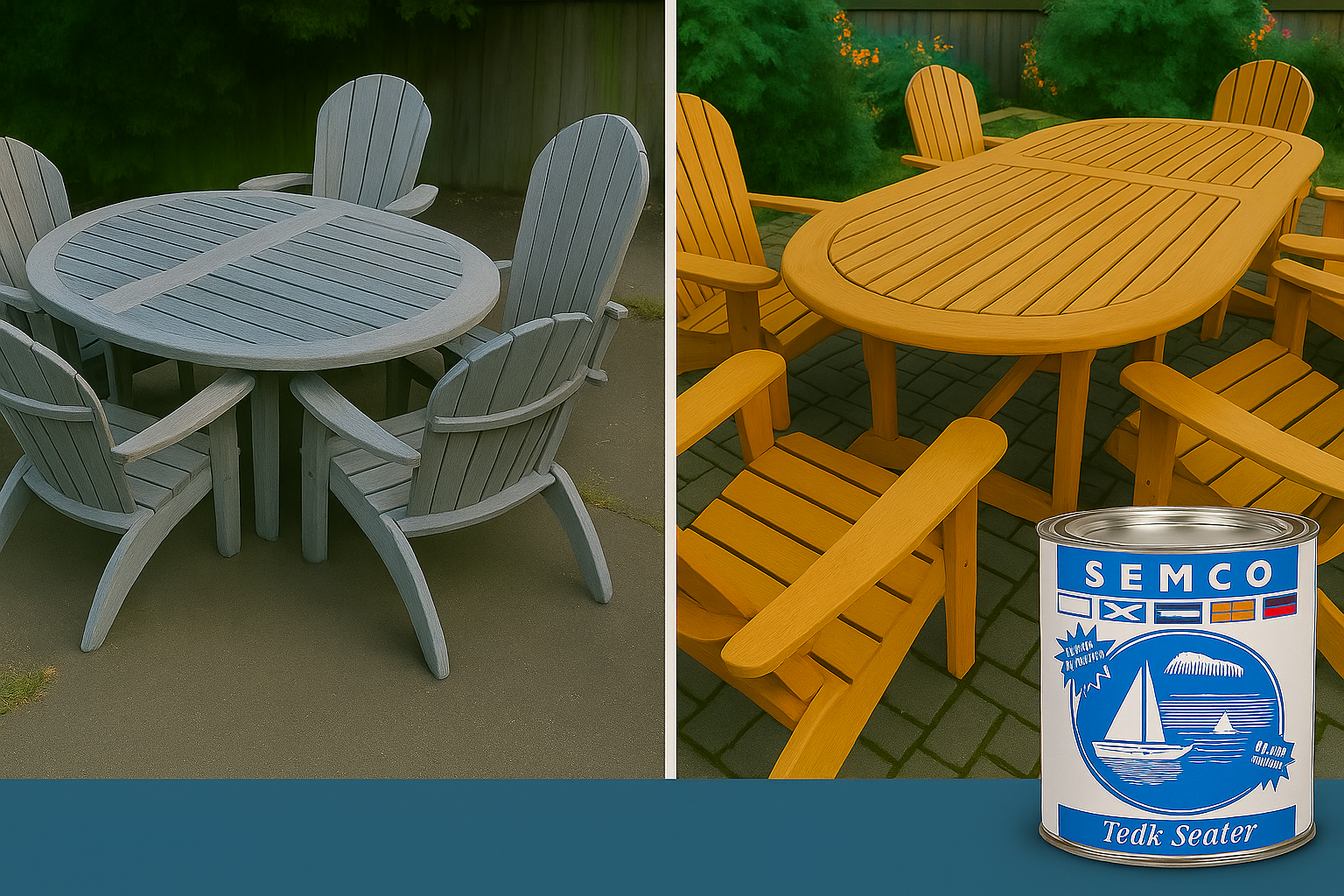
New Semco Teak Wood Natural Finish Sealant [click to view…]
Sealer Advantages:
• Extended Protection: Annual application provides year-round UV protection • Moisture Resistance: Creates barrier against water absorption and staining • Mildew Prevention: Prevents mildew accumulation on furniture surfaces • Customizable Finish: Available in clear or tinted formulations
Application Process:
- Deep Clean: Use appropriate cleaning products for your teak’s condition
- Sand if Necessary: Progress from 100-grit to 150-grit for weathered pieces
- Complete Drying: Allow minimum 24 hours after cleaning
- Apply Sealer: Use cloth, brush, or sprayer for even coverage
- Second Coat: Apply after first coat dries (typically 1 hour)
Maintenance Schedule:
- Standard Conditions: Annual reapplication
- Harsh Climates: Every 6-12 months for intense sun/humidity exposure
Strategy 2: Embracing Natural Patina with Targeted Protection
If you don’t mind the grayish patina that teak develops over time, it needs minimal maintenance and can be left with occasional dusting. However, even patina enthusiasts benefit from targeted protection against specific issues.
Patina-Friendly Protection Options:
• Mildew Shield: Prevents mold growth while allowing natural aging • Water & Stain Guard: Creates temporary moisture barrier for food/beverage protection • Regular Cleaning: Mild soap and water prevents dirt accumulation that accelerates unwanted degradation
This approach respects teak’s natural aging process while protecting against genuine problems like mold, mildew, and permanent staining.
Deep Restoration for Weathered Furniture
Heavily weathered teak can often be restored to its original golden state through intensive cleaning and restoration.
Restoration Process:
Assessment Phase:
- Evaluate extent of graying, staining, or mildew
- Determine appropriate cleaning products (one-part vs. two-part cleaners)
- Plan sanding requirements
Cleaning Phase:
- Light to Moderate Issues: One-part cleaners with longer dwell times
- Severe Weathering: Two-part aggressive cleaners for heavy staining
- DIY Solutions: Water and mild detergent for routine restoration
Sanding Phase:
- Start with coarser grit (80-100) for weathered surfaces
- Progress to finer grit (150-220) for smooth finish
- Sand strictly with the grain direction
- Remove all sanding dust before treatment
Critical Preparation Rule: Furniture must be completely clean and dry before any protective treatment. Trapped moisture under new finishes causes mold, mildew, and premature coating failure.
Product Performance Comparison: Oils vs. Sealers
Understanding the fundamental differences between teak oils and sealers helps you choose the right protection strategy.
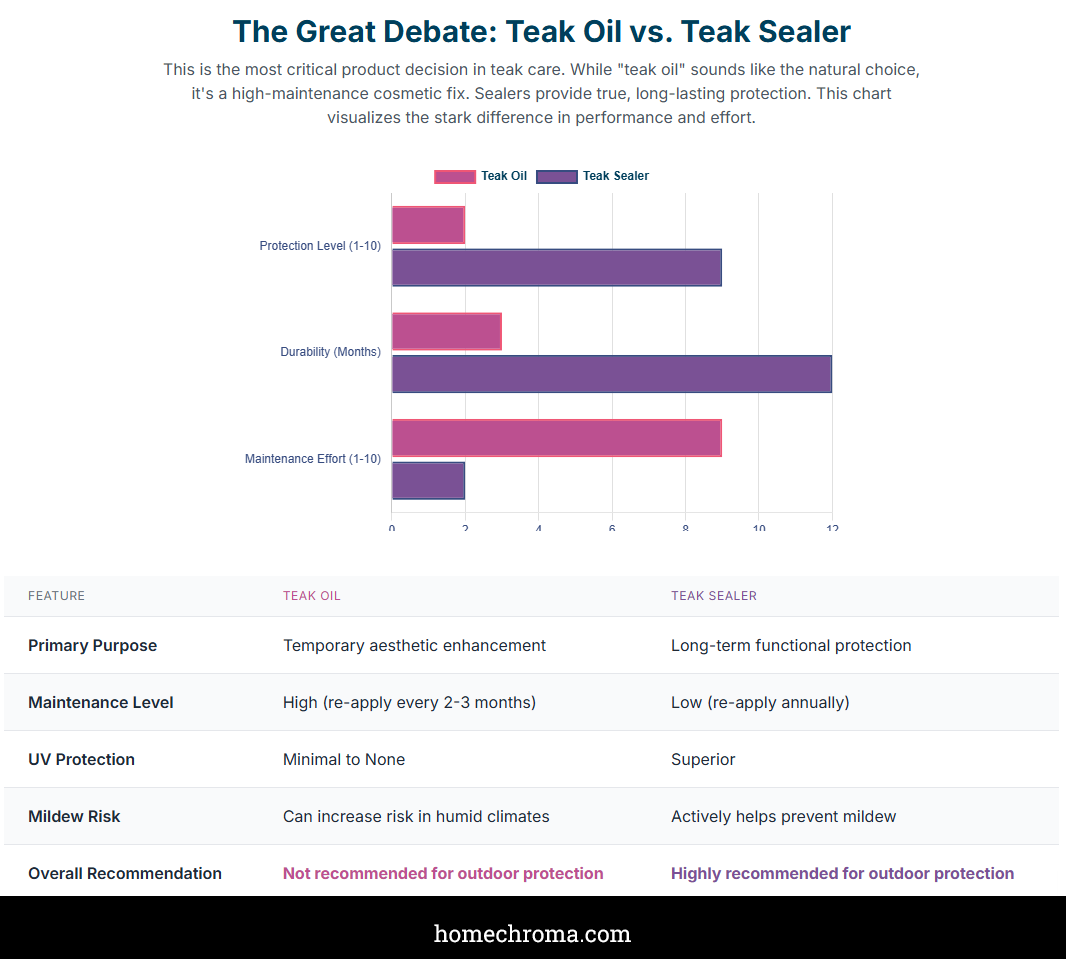
The Oil Misconception: While oiling benefits other wood types, most experts advise against using teak oil on outdoor furniture as it’s unnecessary and can damage the wood. Commercial teak oil may not settle properly on teak’s naturally oily surface, and frequent reapplication can actually remove natural oils over time.
Professional Recommendation: For outdoor teak furniture prioritizing long-term protection with minimal maintenance, high-quality sealers consistently outperform oils in durability, protection, and cost-effectiveness.
Professional Application Tips for Maximum Protection
Surface Preparation Excellence:
- Clean thoroughly with appropriate products for your furniture’s condition
- Allow complete drying (minimum 24 hours, longer for saturated pieces)
- Remove all sanding dust with clean, dry cloth
- Consider final wipe with rubbing alcohol for optimal surface receptivity
Optimal Application Conditions:
- Choose dry, mild weather (60-80°F ideal)
- Avoid direct sunlight during application
- Ensure good ventilation for solvent-based products
- Work in manageable sections for consistent coverage
Common Application Mistakes:
- Applying over dirty or damp surfaces
- Rushing the drying process between coats
- Using excessive product (more isn’t better)
- Failing to address edges and hard-to-reach areas
Climate-Specific Considerations
High-Humidity Environments:
- Allow extra drying time between cleaning and sealing
- Consider mildew-resistant formulations
- Increase inspection frequency for early mold detection
Intense Sun Exposure:
- Prioritize UV-blocking sealers over aesthetic oils
- Consider more frequent reapplication schedules
- Position furniture strategically when possible
Coastal/Salt Air Conditions:
- Clean more frequently to remove salt deposits
- Choose sealers with superior moisture barriers
- Monitor for accelerated weathering patterns
Cost-Effectiveness Analysis
Initial Investment Comparison:
- Quality Sealer: $30-60 per treatment (annual application)
- Premium Oil: $20-40 per treatment (quarterly application)
Annual Cost Projection:
- Sealer Route: $30-60 annually
- Oil Route: $80-160 annually (4x applications)
Five-Year Investment:
- Sealer Strategy: $150-300 total
- Oil Strategy: $400-800 total
The sealer approach delivers superior protection at approximately 50-60% lower cost over time, while requiring significantly less maintenance effort.
Making Your Decision: Practical Steps Forward
Step 1: Define Your Aesthetic Goal
- Golden preservation: Choose high-quality teak sealer
- Silver patina acceptance: Minimal intervention with targeted protection
- Custom appearance: Consider tinted sealers for specific outcomes
Step 2: Assess Current Condition
- New furniture: Immediate sealer application for golden preservation
- Lightly weathered: Clean and seal for color recovery
- Heavily grayed: Deep restoration process before sealing
Step 3: Commit to Maintenance Schedule
- Sealer route: Annual application, seasonal cleaning
- Patina route: Bi-annual cleaning, occasional targeted treatments
Step 4: Budget Appropriately
- Factor long-term costs, not just initial product prices
- Consider time investment alongside financial costs
- Account for climate-specific maintenance requirements
The Bottom Line: Strategic Protection for Lasting Beauty
The most effective way to protect teak outdoor furniture’s natural beauty starts with understanding that “natural beauty” encompasses both the original golden hue and the gracefully aged silver patina. Your protection strategy should align with your aesthetic preference and maintenance commitment level.
For Golden Preservation Enthusiasts: High-quality teak sealers provide superior protection, cost-effectiveness, and convenience. Annual application maintains the warm honey-brown appearance while protecting against UV damage, moisture penetration, and mildew formation.
For Patina Appreciation: Gentle cleaning with targeted protection products allows natural aging while preventing genuine problems like mold, mildew, and permanent staining.
Remember that teak’s legendary durability means your furniture will remain structurally sound regardless of your chosen approach. The protection strategy you select simply determines how that enduring strength will look as it ages gracefully in your outdoor space.
Your teak furniture represents a significant investment in quality and beauty. By choosing the right protection strategy and committing to appropriate maintenance, you ensure that investment pays dividends in lasting enjoyment for years to come.
Dora Decora is a biophilic interior design specialist and passionate blogger. With a deep commitment to integrating nature into living spaces, Dora specializes in creating environments that foster human-nature connections through thoughtful design elements. Her approach emphasizes sustainable materials, natural lighting, and organic patterns that enhance wellbeing and reduce environmental impact.
This post (https://homechroma.com/teak-outdoor-furniture-most-effective-way-to-protect-its-beauty) was originally published by Dora Decora on Home Chroma. As an Amazon Associates partner, we are compensated for all qualifying purchases.