You’re sitting there, straining, uncomfortable, and nothing works right. You’ve tried everything—fiber supplements, water intake, dietary changes. Nothing delivers real relief. What if the answer wasn’t hidden in a bottle but under your toilet bowl?
Here’s the uncomfortable truth: your toilet is working against you.
The standard pedestal toilet represents a fundamental design failure for human biology. While it looks sleek in your bathroom, it forces your body into a position that fights against natural physiology. The result? Unnecessary strain, discomfort, and a host of preventable health issues that millions of people accept as normal.
A toilet stool—commonly called a Squatty Potty—isn’t a luxury item. It’s a straightforward correction to a problem that’s been engineered into modern bathrooms.
The Problem: Modern Toilets vs. Human Anatomy
For most of human history, people squatted to defecate. Your ancestors did it. Most of the world still does. Then the Western toilet arrived, and everything changed—for the worse.
When you sit on a standard toilet, your body can’t achieve the geometry it needs for efficient elimination. Your knees stay level with your hips. Your spine stays relatively upright. This position creates a mechanical problem inside your body that forces you to work harder than nature intended.
Inside your rectum, there’s a muscle called the puborectalis. When you’re standing or sitting upright, this muscle creates a natural bend—called the anorectal angle—that’s typically about 80 to 90 degrees. This bend acts like a kink in a garden hose.
Your body needs to straighten this kink to allow elimination to happen effortlessly. When you sit on a regular toilet, that kink stays in place. You end up straining—pushing hard against a mechanical barrier your own body creates. This excessive straining becomes chronic. Over time, it leads to constipation, hemorrhoids, anal fissures, and contributes to pelvic floor damage.
Most people treat these as isolated problems. They’re not. They’re symptoms of a posture problem.
The Science: The Anorectal Angle That Changes Everything
Medical imaging studies using something called defecography—essentially x-rays taken during bowel movements—show exactly what happens when you change your position.
When a person squats or elevates their knees higher than their hips, the anorectal angle opens dramatically. Instead of a sharp 80-90 degree bend, it straightens to approximately 35 degrees. This straightening relaxes the puborectalis muscle. The “kink” disappears.
What happens next is simple: elimination becomes effortless.
The research is clear. People using a squatting position experience:
- Less straining required for bowel movements
- Faster elimination time compared to sitting
- Stronger sensation of complete evacuation
- Reduced need for expulsive effort
This isn’t anecdotal. It’s measurable. It’s reproducible. It’s biological.
But the benefits extend far beyond comfort.
Why This Matters for Your Health
Excessive straining triggers something called the Valsalva maneuver. Your body holds its breath while pushing against a closed airway. This creates a sudden spike in abdominal pressure. That pressure shoots up blood pressure instantly.
For most healthy people, this pressure spike is temporary and harmless. For others, it’s dangerous.
If you have cardiovascular issues, have recently had heart surgery, or are recovering from abdominal surgery, these sudden blood pressure spikes can trigger serious events—heart attacks, strokes, ruptured aneurysms. For these populations, a toilet stool transitions from a comfort device to a health necessity.
But straining damages more than just your cardiovascular system. Chronic straining weakens pelvic floor muscles, leading to incontinence and prolapse. It causes or aggravates hemorrhoids. It creates anal fissures. It worsens irritable bowel syndrome symptoms.
A toilet stool addresses all of these problems by addressing their root cause: posture.
The Solution: How a Toilet Stool Works
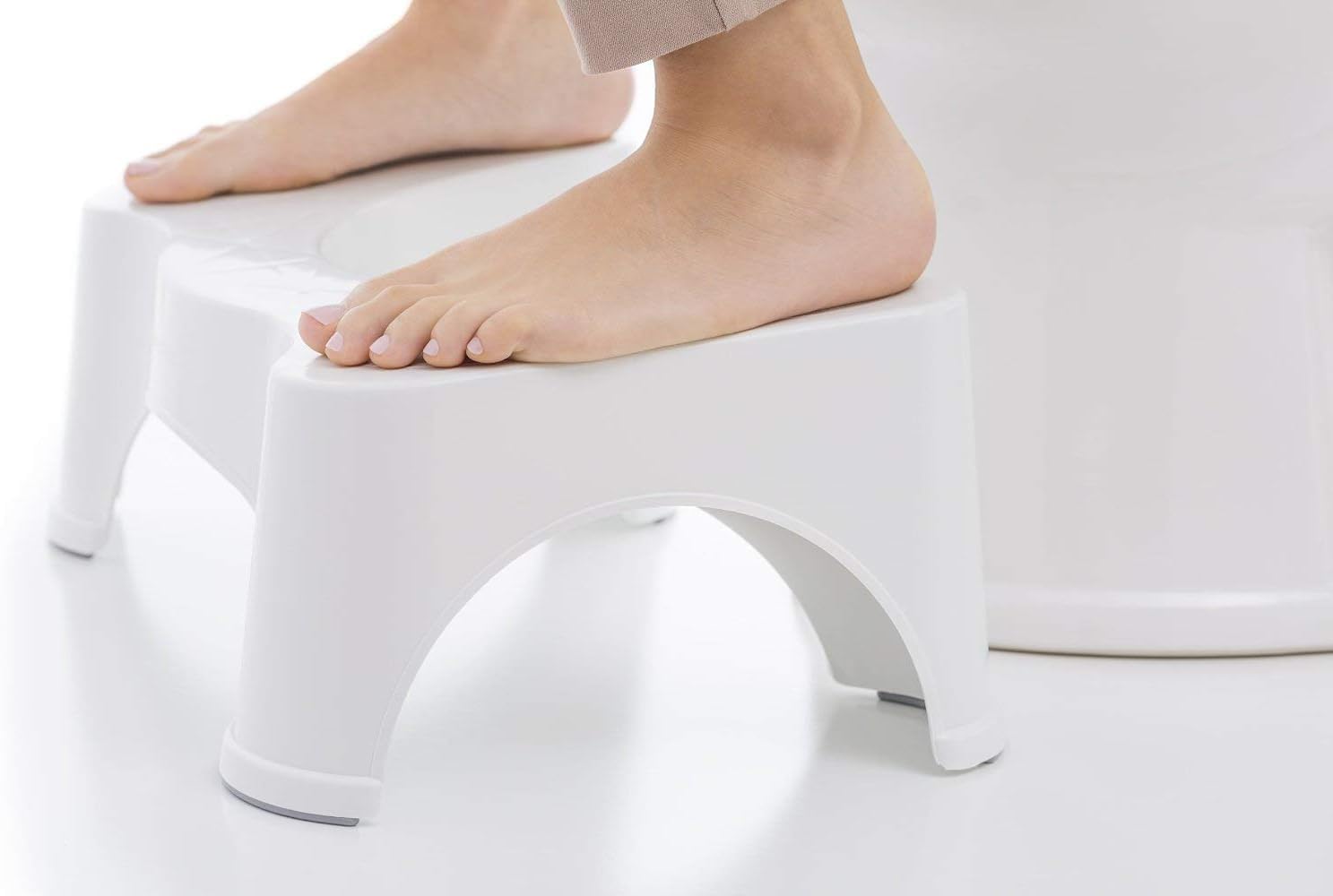
Squatty Potty The Original [click to view…]
A toilet stool—whether it’s the original Squatty Potty or one of its competitors—is elegantly simple.
You place it in front of your toilet. You use it to elevate your feet and knees during bowel movements. This elevation changes your body’s geometry. Your knees rise above your hips. Your torso leans slightly forward. Your body achieves the squatting position while you remain seated on the toilet.
The anorectal angle opens. The kink straightens. Elimination happens naturally. You reduce straining to nearly zero.
That’s it. That’s the entire mechanism. And it works.
The physiological benefits include:
- Constipation relief without laxatives or medications
- Hemorrhoid prevention and healing by eliminating straining
- Reduced anal fissure pain through gentle, passive elimination
- Easier IBS symptom management by promoting effortless bowel movements
- Improved pelvic floor health by preventing chronic straining damage
- Cardiovascular safety by eliminating dangerous blood pressure spikes
Who Benefits Most from a Toilet Stool?
While toilet stools benefit virtually every adult, certain populations experience the most dramatic improvements.
Individuals with Chronic Constipation: These users often report immediate relief. Bowel movements that previously required medications now happen naturally. Many people reduce or eliminate their reliance on fiber supplements, stool softeners, and laxatives.
People with Hemorrhoids: Those dealing with painful hemorrhoids report faster healing and immediate pain reduction. The reduction in straining removes the pressure that causes or aggravates this condition.
Cardiac and Post-Surgical Patients: For those recovering from heart surgery, those with existing heart conditions, or those managing high blood pressure, a toilet stool becomes therapeutic equipment. It removes a significant cardiovascular risk factor.
Families: Toilet stools serve dual purposes. They assist in toilet training for children while ensuring proper posture for the entire family. Many families use them as step stools for multiple purposes.
Older Adults: Aging populations benefit from the reduced straining, the improved stability (many models have non-slip bases), and the ease of use compared to standard toilets.
Top Toilet Stools Available on Amazon USA: Detailed Comparison
1. Squatty Potty The Original (Best Seller)

Squatty Potty The Original [click to view…]
Material: Durable plastic
Height Options: 7 inches (standard toilets) or 9 inches (comfort-height toilets)
Price Range: $25–$30
Best For: First-time buyers, those prioritizing effectiveness and ease of cleaning
The Original Squatty Potty is the benchmark product—the one against which all competitors are measured. It’s been the best-seller for good reason.
The plastic construction means it’s completely waterproof, resistant to moisture damage, and extraordinarily easy to clean and disinfect. No special maintenance required. Simply wipe it down or spray it clean. The curved design allows it to fit neatly under the toilet bowl when not in use, consuming minimal space.
Users report immediate and dramatic improvements in bowel movement ease. The results are consistent and reproducible. If you’re new to toilet stools and want proven effectiveness backed by years of real-world use, this is the product to start with.
2. Lidtop Bamboo Toilet Stool (Best Value)
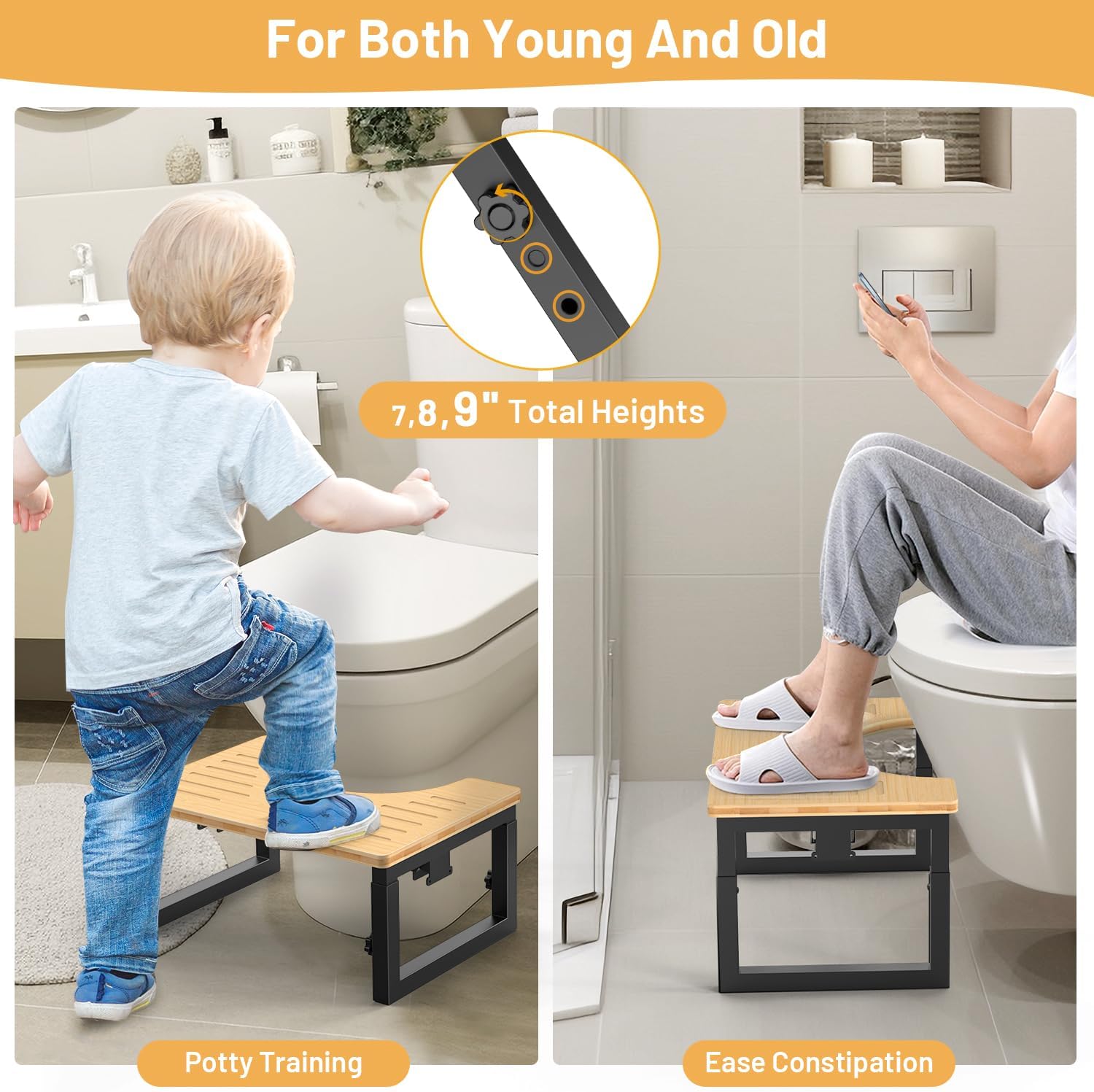
Bamboo Toilet Stool Foldable [click to view…]
Material: Bamboo with powder-coated metal legs
Height: Adjustable from 7 to 9 inches
Weight Capacity: 500 pounds
Price Range: $29–$45
Best For: Households with multiple users, comfort-height toilets, those wanting durability and aesthetics
The Lidtop represents exceptional value for customers who want versatility and quality.
The adjustable height accommodates virtually every toilet type and user height. Whether you have standard toilets, comfort-height toilets, or both, this single stool works for everyone. This eliminates the need to purchase multiple stools for different bathrooms or household members.
The bamboo construction combined with metal legs provides serious durability. This stool safely supports up to 500 pounds, making it reliable for heavier users or even dual-purpose use as a step stool. Bamboo is naturally antimicrobial, resistant to moisture when properly sealed, and aesthetically superior to plastic. It blends into modern bathrooms without looking like medical equipment.
Some variations feature foldable designs, compressing to less than three inches wide for compact storage. For households wanting the best combination of functionality, durability, and design, the Lidtop is the expert recommendation.
3. Tushy Ottoman Toilet Stool (Best Design)
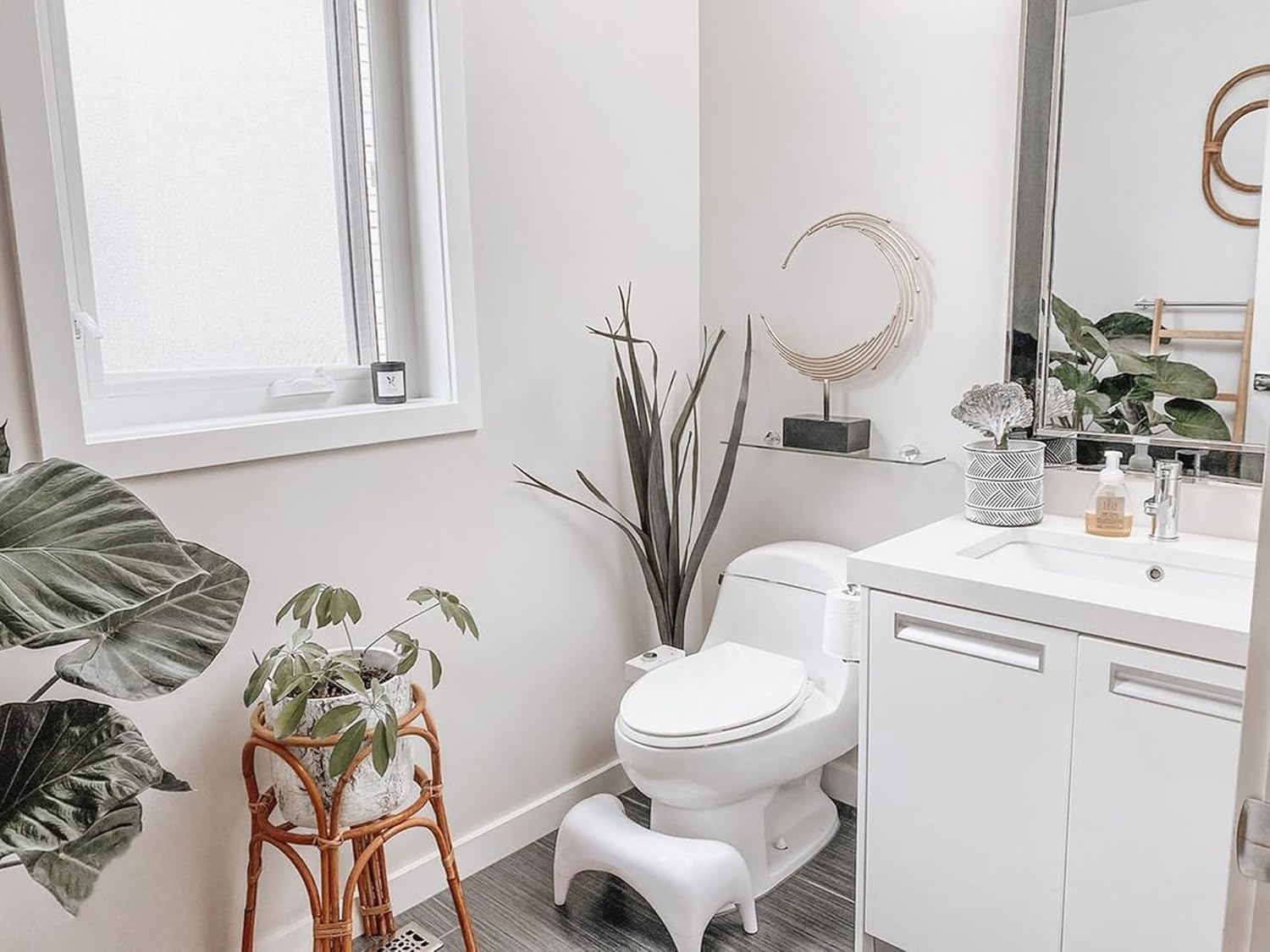
TUSHY Ottoman [click to view…]
Material: Plastic/bamboo hybrid
Height: Fixed (typically 7 inches)
Price Range: $25–$35
Best For: Design-conscious consumers, those wanting bathroom furniture that doesn’t look medical
If your bathroom aesthetic matters and you don’t want a stool that screams “medical device,” the Tushy Ottoman solves that problem.
This stool is designed to resemble actual bathroom furniture rather than functional equipment. The combination of bamboo legs with a plastic top provides easy cleaning while maintaining visual appeal. The top features a unique rounded, arched design that specifically contours to your foot arch, enhancing comfort beyond standard flat-surface alternatives.
The slim profile keeps visual clutter minimal. The price point is comparable to the Original Squatty Potty, but with superior aesthetics. If you’re upgrading your bathroom and want your toilet stool to match your design vision, this is your choice.
How to Choose: Height, Material, and Storage
Height: The Critical Factor
Height determines whether the stool actually works. Get this wrong, and you’ll be disappointed.
Standard-Height Toilets (15–16 inches from floor): Use a 7-inch stool. This provides the ideal knee-to-hip geometry for most adults.
Comfort-Height Toilets (17–19 inches from floor): Use a 9-inch stool. Standard toilets have become less common as building codes update and comfort-height models become standard in new construction.
Unsure about your toilet height? Measure from the floor to the top of the seat. Write it down before shopping.
The Versatility Factor: If you have multiple bathrooms with different toilet heights, or if you share bathrooms with people of significantly different heights, an adjustable-height model (7–9 inches) eliminates guesswork. Spend the extra $10–15 for flexibility that ensures the stool works for everyone.
Storage: Space Matters
Traditional C-shaped or U-shaped designs fit under the toilet bowl. Foldable models compress to less than three inches wide. For small bathrooms or minimalist preferences, foldable designs are game-changers.
The Final Verdict: Expert Recommendation
While the Squatty Potty Original maintains its throne as the proven market leader with the strongest track record, the Lidtop Bamboo Toilet Stool delivers the superior value proposition.
Here’s why:
Adjustable height (7–9 inches) eliminates sizing guesswork for any toilet type
500-pound weight capacity ensures reliability for all users
Premium bamboo material with powder-coated metal legs provides durability that lasts years
Foldable design (select models) solves storage constraints
Competitive pricing ($29–$45) stays reasonable for the quality delivered
For buyers prioritizing proven effectiveness with minimal complications, the Original remains unbeaten. For buyers wanting versatility, durability, and aesthetics in a single investment, the Lidtop is the expert choice.
What to Do Now
Step 1: Measure your toilet height (floor to top of seat).
Step 2: Decide between fixed and adjustable heights based on your household needs.
Step 3: Choose based on your priority:
- Best proven results? → Squatty Potty Original
- Best overall value? → Lidtop Bamboo
- Best design? → Tushy Ottoman
- Best budget? → Tiawudi or Kzeirm
Step 4: Purchase on Amazon where all these options are available with Prime shipping.
Step 5: Use it during every bowel movement. Consistency delivers results.
This isn’t a marginal health upgrade. It’s a fundamental biomechanical correction that addresses a problem engineered into modern life. The investment is minimal. The benefits are substantial. The science is clear.
Your body knows how to eliminate waste efficiently. Modern toilet design prevents it. A toilet stool removes that prevention.
The question isn’t whether you should get one. It’s which one you should choose and when you’re ordering it.
Ready to fix your bathroom and reclaim your health? Choose your toilet stool today from the options above. Your body will thank you.
Dora Decora is a biophilic interior design specialist and passionate blogger. With a deep commitment to integrating nature into living spaces, Dora specializes in creating environments that foster human-nature connections through thoughtful design elements. Her approach emphasizes sustainable materials, natural lighting, and organic patterns that enhance wellbeing and reduce environmental impact.
This post (https://homechroma.com/the-best-squatty-potty) was originally published by Dora Decora on Home Chroma. As an Amazon Associates partner, we are compensated for all qualifying purchases.