 You place a simple paper block on your desk. Your coworker walks by and asks, “What’s that?” Fast forward three months, and that same colleague stops by daily to watch a medieval castle slowly emerge from the pages you’ve been tearing away. By December, five different people have asked where you got it.
This is the reality for anyone who owns a 3D time piece calendar.
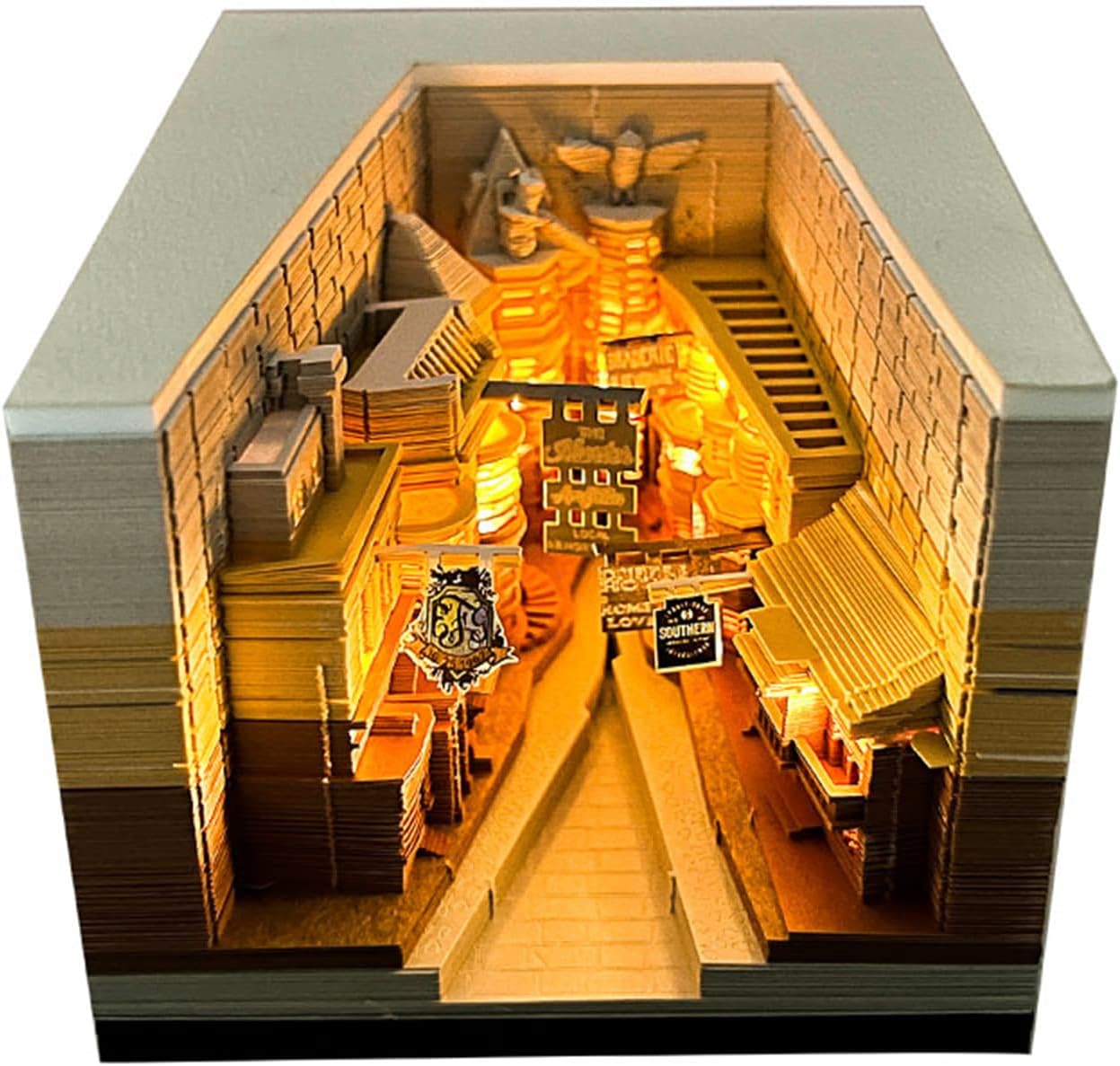
These aren’t your standard flip-through calendars. They’re precision-engineered paper sculptures disguised as desktop organizers. Each day you tear away a page, you’re not just checking off another date—you’re physically revealing intricate architecture, fantasy landscapes, or natural wonders hidden inside a seemingly ordinary paper block.
The reason people can’t stop talking about them? You’re literally building art through the passage of time.
How the Magic Actually Happens
The engineering behind these calendars reads like something from a miniature construction project. Manufacturers use industrial laser-cutting technology to carve each individual sheet with microscopic precision. Stack 300+ of these sheets together, and you’ve got a solid block of paper. But here’s where it gets interesting.
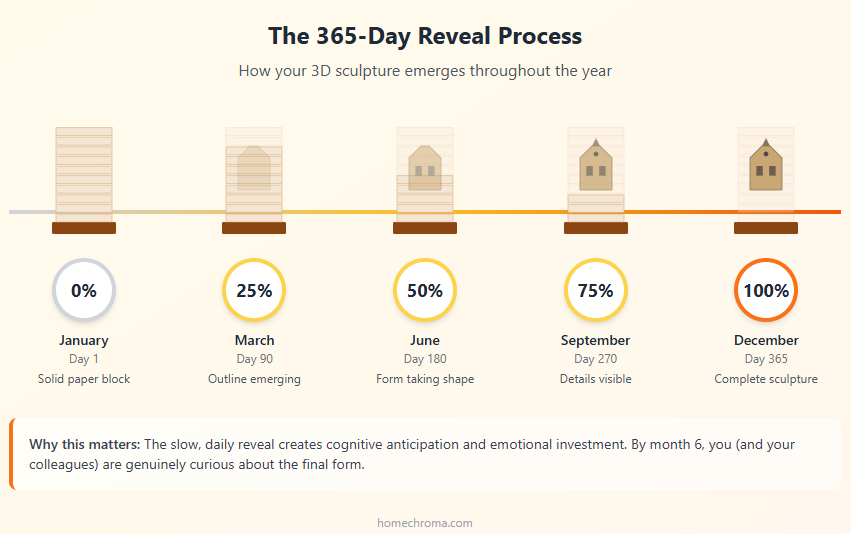
The pages are cut in layers that form negative space. Remove the outer layers, and the shape underneath begins to appear. Keep going, and suddenly you’ve got Big Ben rising from your desk, or the Titanic emerging from a sea of torn paper.
This process requires extreme accuracy. A deviation of even half a millimeter on a single page would create visible misalignment in the final sculpture. That’s why premium models command higher prices—the cutting precision directly impacts how clean your final reveal looks.
Material Science That Matters
Not all paper calendars are created equal. The structural pages typically weigh between 200-250 gsm (grams per square meter), giving them enough rigidity to hold sharp architectural details. The internal memo pages use lighter 70-100 gsm stock so you can actually write on them without ink bleeding through.
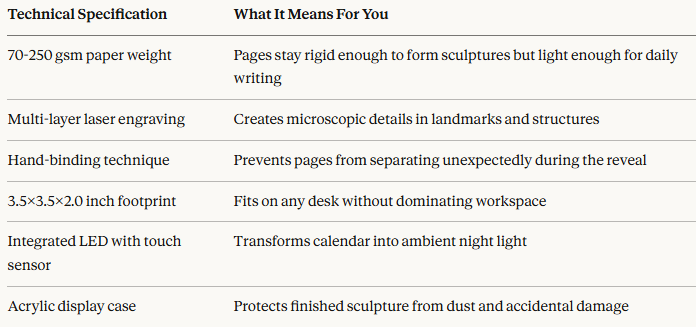
The base—often made from polished wood or high-quality acrylic—anchors the paper stack and houses the battery compartment for LED models. This isn’t just decorative. Without a solid base, the fragile paper layers would collapse under their own weight halfway through the year.
Why Your Brain Loves the Daily Ritual
There’s a reason these calendars trigger so many compliments, and it’s rooted in psychology, not just aesthetics.
The Slow Reveal Effect taps into cognitive anticipation. In a world where you can binge an entire TV series in one weekend, the 3D calendar forces you to wait. You can’t see the final Eiffel Tower or cherry blossom tree without tearing 365 pages. This builds investment—not just from you, but from everyone who watches the progress.
Research shows that objects with intricate natural or architectural forms can reduce cognitive load by up to 18% compared to standard geometric office supplies. Translation: having a castle growing on your desk actually helps your brain relax between tasks.
Then there’s the IKEA Effect. When you partially create something yourself, you value it more highly. You’re not just buying a calendar—you’re excavating a sculpture one day at a time. Each torn page represents your participation in the creation process.
The Sensory Experience Nobody Talks About
Every morning when you tear the page, three things happen simultaneously:
- Auditory feedback: The clean rip of quality paper separating along perforated edges
- Tactile satisfaction: The texture difference between yesterday’s page and today’s emerging sculpture
- Visual progress: The immediate, visible change in the form taking shape
This multi-sensory ritual acts as a psychological anchor. For 15 seconds each morning, you’re completely present—not scrolling, not checking email, just participating in a physical act of time passing. That brief moment of mindfulness is what people really pay for, even if they don’t realize it.
Themes That Match Every Personality
The variety of available designs means there’s a version for virtually anyone on your gift list.
Architectural Landmarks
These dominate the professional gifting category because they project sophistication without being overly personal.
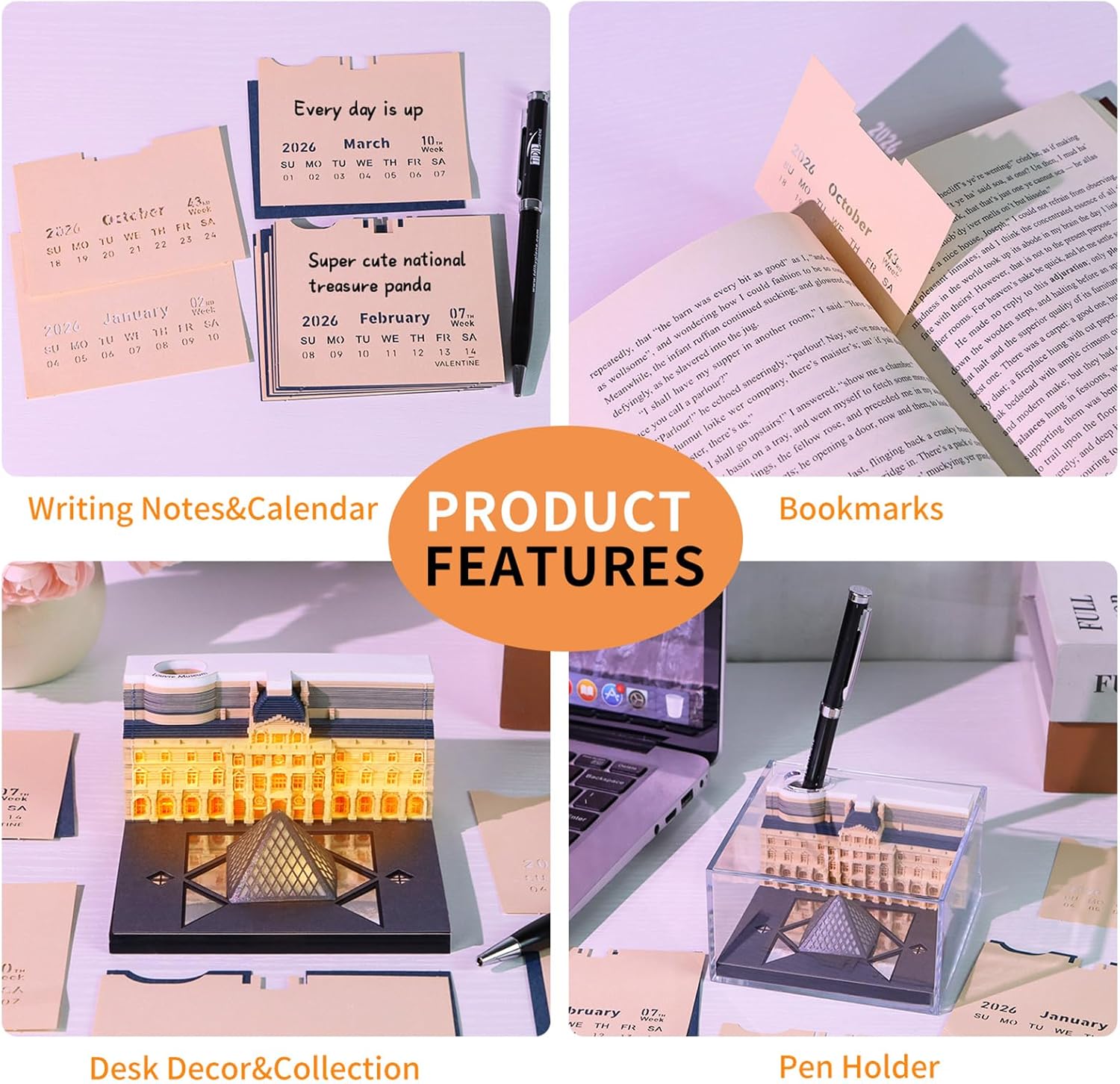
Time Piece Calendar [click to view…]
- The Louvre: Complex excavation reveals the glass pyramid and museum wings
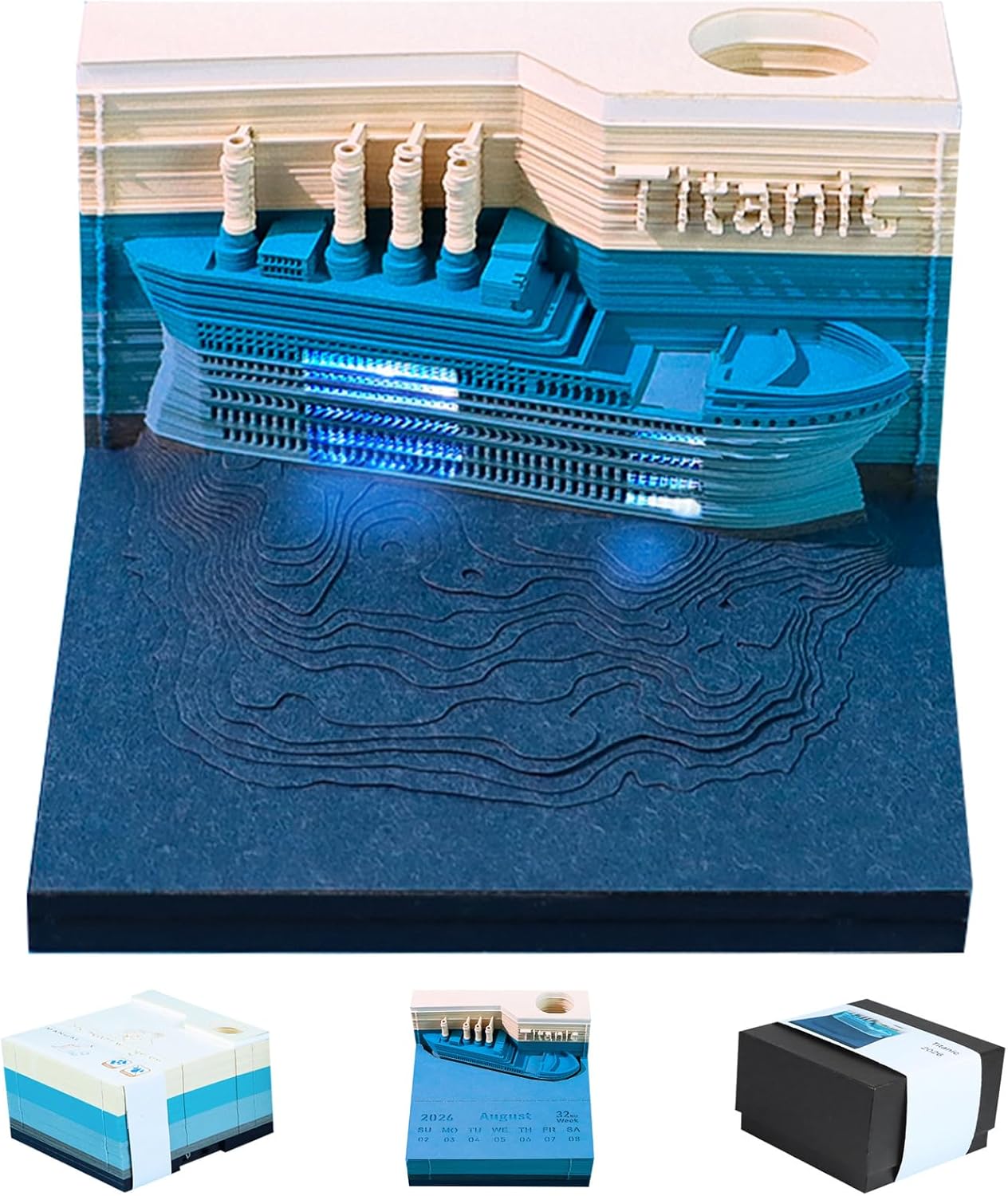
SIWEME 3D Art Calendar [click to view…]
- The Titanic: Ship emerges from the center with silhouettes of passengers visible in individual layers
- Great Wall and Temple of Heaven: High-contrast paper creates dramatic depth in historical Chinese architecture
Natural Forms
Perfect for people who prefer calming, organic designs.
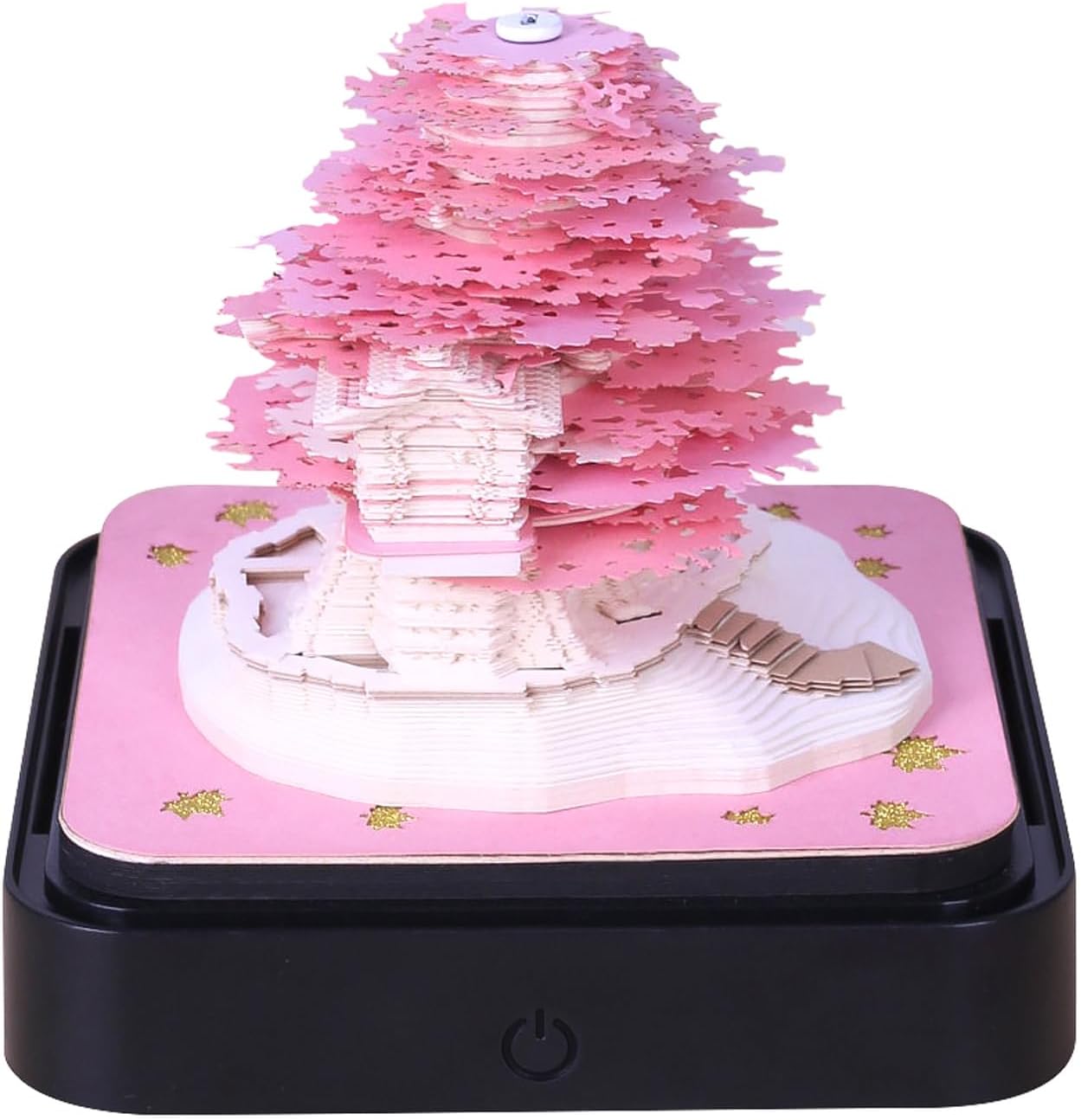
3D Desk Calendar [click to view…]
- Sakura (Cherry Blossom) Trees: Pink and white paper layers create a blooming effect
- Tree of Life / Four Seasons: Foliage color changes through the months (green spring, orange autumn)
- The Earth/Globe: Spherical model revealed from a square block—popular for its philosophical appeal
Fantasy and Pop Culture
High impact for fans and personal desk spaces.
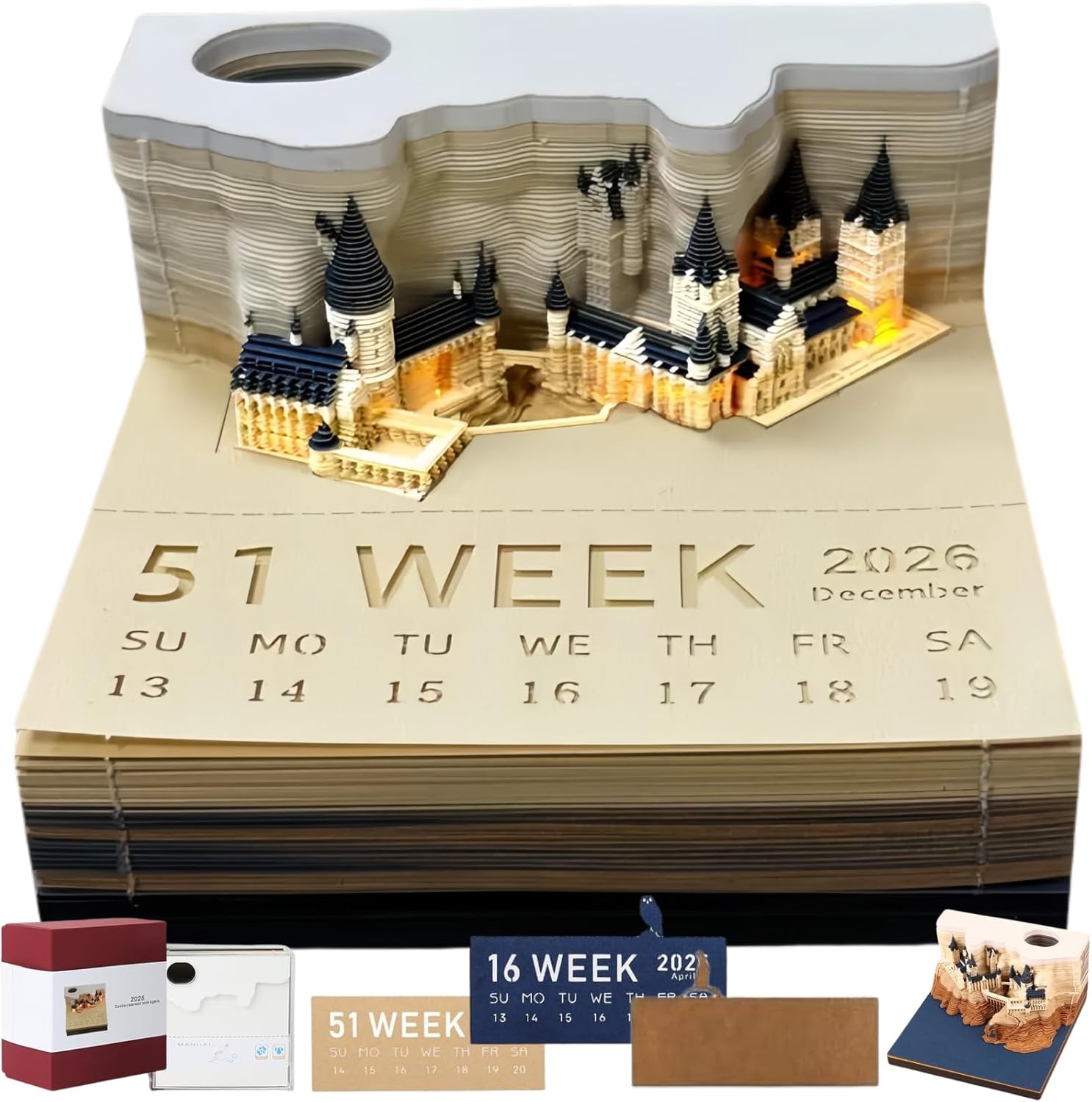
3D Memo Pads Calendar [click to view…]
- Magic Castle: Medieval spires and stone walls with hidden details like owls or brooms on sheets
- Space Exploration: Lunar landscape with astronaut figure
- Carousel: Vintage carnival imagery with intricate mechanical details
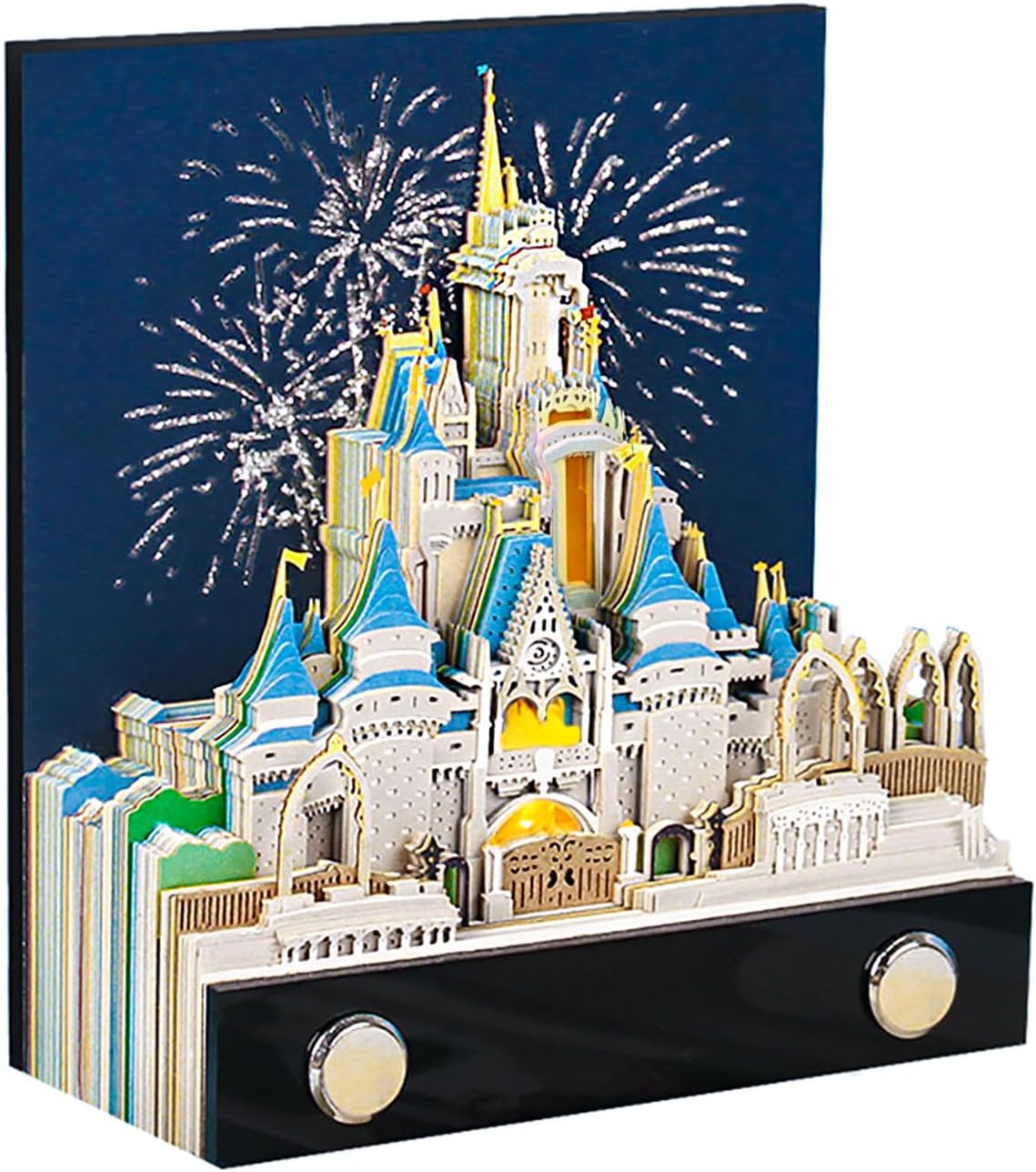
SIWEME 3D Memo Pad [click to view…]
More Than Just a Calendar
The best 3D time piece calendars pack multiple functions into one desktop footprint.
Memo pad functionality: Every torn page doubles as quality writing paper. The 70-100 gsm stock prevents ink feathering, making each sheet perfect for phone numbers, quick notes, or daily to-do lists.
LED backlighting: Touch-activated lights (usually powered by 2-3 AAA batteries) transform the calendar into an ambient lamp. The light shines through the paper layers, creating depth and highlighting the sculpture’s details. At night, it becomes a warm accent light for your desk or bedside table.
Pen holder integration: Many designs carve out sections in the base specifically for storing pens or pencils, eliminating the need for a separate desk organizer.
Bookmark repurposing: The delicate laser-cut patterns on individual pages make them perfect as unique bookmarks after removal. You’re essentially getting 300+ custom bookmarks as a bonus.
Daily vs Weekly Format: Which One Wins?
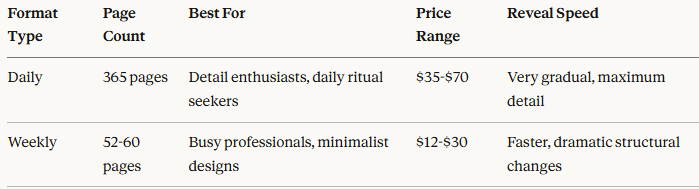
The daily format gives you the full meditative experience. One page per day means the sculpture emerges with extreme gradualness—perfect for those who want maximum engagement with the process.
Weekly formats sacrifice some detail for convenience. If you’re perpetually busy or want a less demanding interaction, tearing one page per week still gives you the reveal experience without the daily commitment.
Why This Solves the “Perfect Gift” Problem
Most gifts fall into two categories: immediately consumable (wine, chocolates) or immediately functional (tools, books). The 3D time piece calendar occupies rare territory—it’s both.
Gender-neutral and age-agnostic: Works equally well for a 25-year-old starting their first job or a 60-year-old retiring from a long career.
Year-long reminder: Unlike flowers that die or gift cards that get spent, this stays on their desk for 365 days. Every single day they interact with it, they think of you.
Conversation generator: The gift you give becomes a tool for the recipient to generate social interactions. You’re not just giving them an object—you’re giving them a year of interesting conversations.
Best Occasions for Gifting
New Year / Christmas: The obvious timing for a calendar, but the 3D reveal adds emotional weight beyond standard desk calendars.
Graduations and New Jobs: Symbolizes building something new, one day at a time.
Retirements: A sentimental piece emphasizing the beauty of time’s passage.
Housewarming: Instantly makes a desk or shelf feel personalized and thoughtful.
Why This Trend Isn’t Going Anywhere
The 3D time piece calendar represents a broader movement toward “analog mindfulness” in an increasingly digital world. People are actively seeking physical objects that demand presence and participation.
You’re not just tracking days. You’re collecting them.
Every torn page represents a memory, a completed task, a day you showed up. By December 31st, you don’t just have a sculpture—you have a physical representation of the year you lived through. That emotional weight is why finished calendars stay on display long after their calendar function ends.
The compliments your 3D calendar generates aren’t really about the object itself. They’re about what it represents: choosing beauty over convenience, patience over instant gratification, and physical presence over digital disconnection.
That’s why everyone wants one. And why, once they get one, they can’t stop talking about it.
Dora Decora is a biophilic interior design specialist and passionate blogger. With a deep commitment to integrating nature into living spaces, Dora specializes in creating environments that foster human-nature connections through thoughtful design elements. Her approach emphasizes sustainable materials, natural lighting, and organic patterns that enhance wellbeing and reduce environmental impact.
This post (https://homechroma.com/3d-time-piece-calendars) was originally published by Dora Decora on Home Chroma. As an Amazon Associates partner, we are compensated for all qualifying purchases.