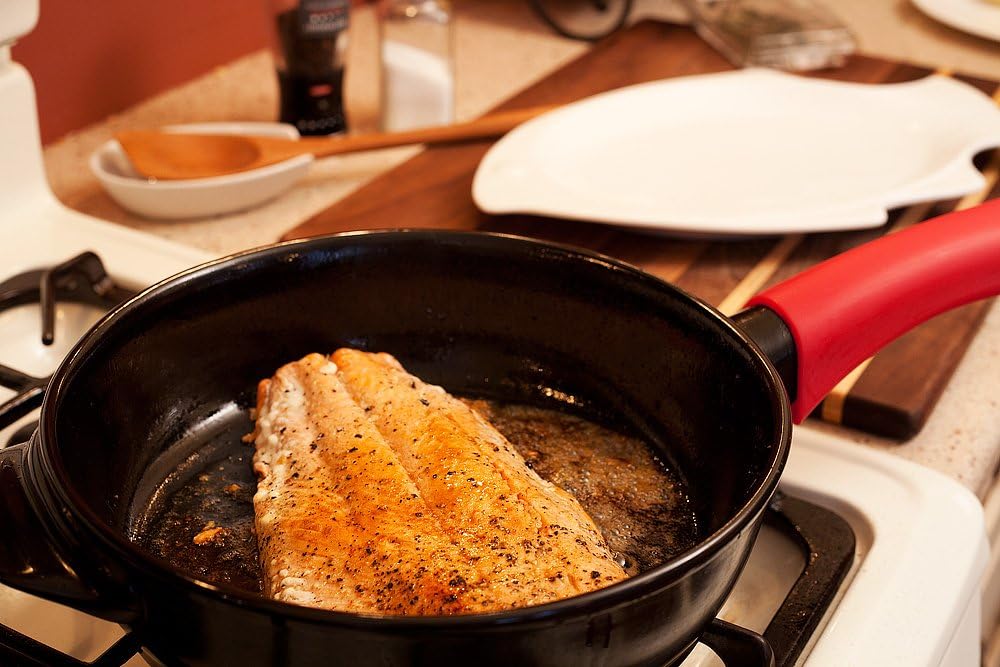
 Tired of cookware that sticks, chips, or releases questionable chemicals into your food?
You’re not alone.
The shift toward ceramic cookware represents more than just a trend – it’s a response to growing health consciousness and the desire for better cooking performance.
Gas stove owners face unique challenges when selecting ceramic cookware. The direct flame creates concentrated heat that can make or break your cookware investment. Choose wrong, and you’ll deal with warping, hot spots, or premature coating failure. Choose right, and you’ll enjoy years of healthy, non-stick cooking performance.
This comprehensive guide reveals exactly which ceramic cookware performs best on gas stoves and how to maximize their lifespan.
Let’s dive into the essential knowledge you need to make the perfect ceramic cookware choice for your gas stove.
Understanding Ceramic Cookware: Two Distinct Categories
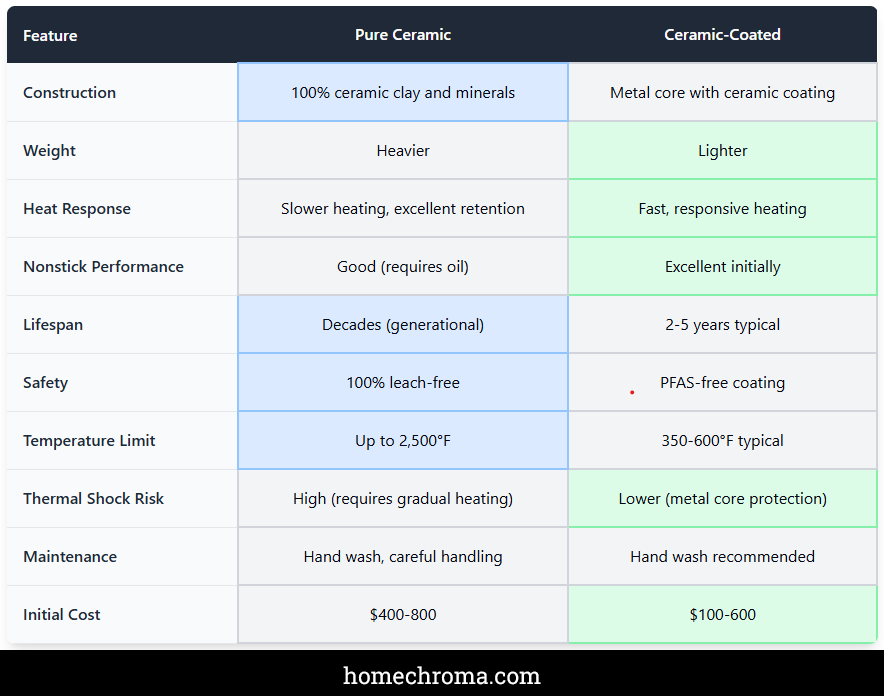
Before selecting cookware, you must understand a critical distinction that manufacturers often blur: pure ceramic versus ceramic-coated cookware.
Ceramic-Coated Cookware
This represents the majority of “ceramic” cookware on the market. These pans feature:
- Metal core (typically aluminum or stainless steel)
- Thin ceramic coating applied as a nonstick surface
- Lighter weight due to metal construction
- Faster, more responsive heating
- Limited lifespan – coating degrades over time
Performance characteristics:
- Excellent initial nonstick properties
- Responsive temperature control
- Typically lasts 2-5 years with proper care
- More susceptible to coating damage from high heat
Pure Ceramic Cookware
Crafted entirely from natural clay and minerals, pure ceramic offers:
- No metal core – 100% ceramic construction
- Fired at extreme temperatures (up to 2,500°F)
- Generational durability when properly maintained
- Complete non-toxicity – zero leaching potential
- Higher initial investment
Performance characteristics:
- Moderate initial nonstick (requires oil)
- Slower heating but excellent heat retention
- Can last decades with proper care
- Susceptible to thermal shock if mishandled
Gas Stove Challenges: What You Need to Know
Gas flames create unique performance demands for ceramic cookware that electric or induction users don’t face.
Heat Distribution Patterns
Gas burners deliver concentrated, direct heat that can cause:
- Hot spots where flames contact the pan bottom
- Uneven heating across the cooking surface
- Rapid temperature changes affecting cookware integrity
Thermal Shock Risks
The intense, localized heat from gas flames poses specific risks:
For Pure Ceramic:
- Rapid expansion can cause cracking or shattering
- Requires gradual preheating to prevent damage
- Cannot handle sudden temperature changes
For Ceramic-Coated:
- High heat accelerates coating degradation
- Warping possible with thin aluminum cores
- Concentrated heat creates hot spots
Temperature Control Requirements
Success with ceramic cookware on gas stoves demands:
- Low to medium heat settings for optimal performance
- Gradual preheating (3-5 minutes minimum)
- Never heating empty pans on high heat
- Avoiding sudden temperature changes
Top Ceramic Cookware Recommendations for Gas Stoves
Based on comprehensive testing and user reviews, here are the standout performers:
Best Overall: Caraway Nonstick Ceramic Cookware Set
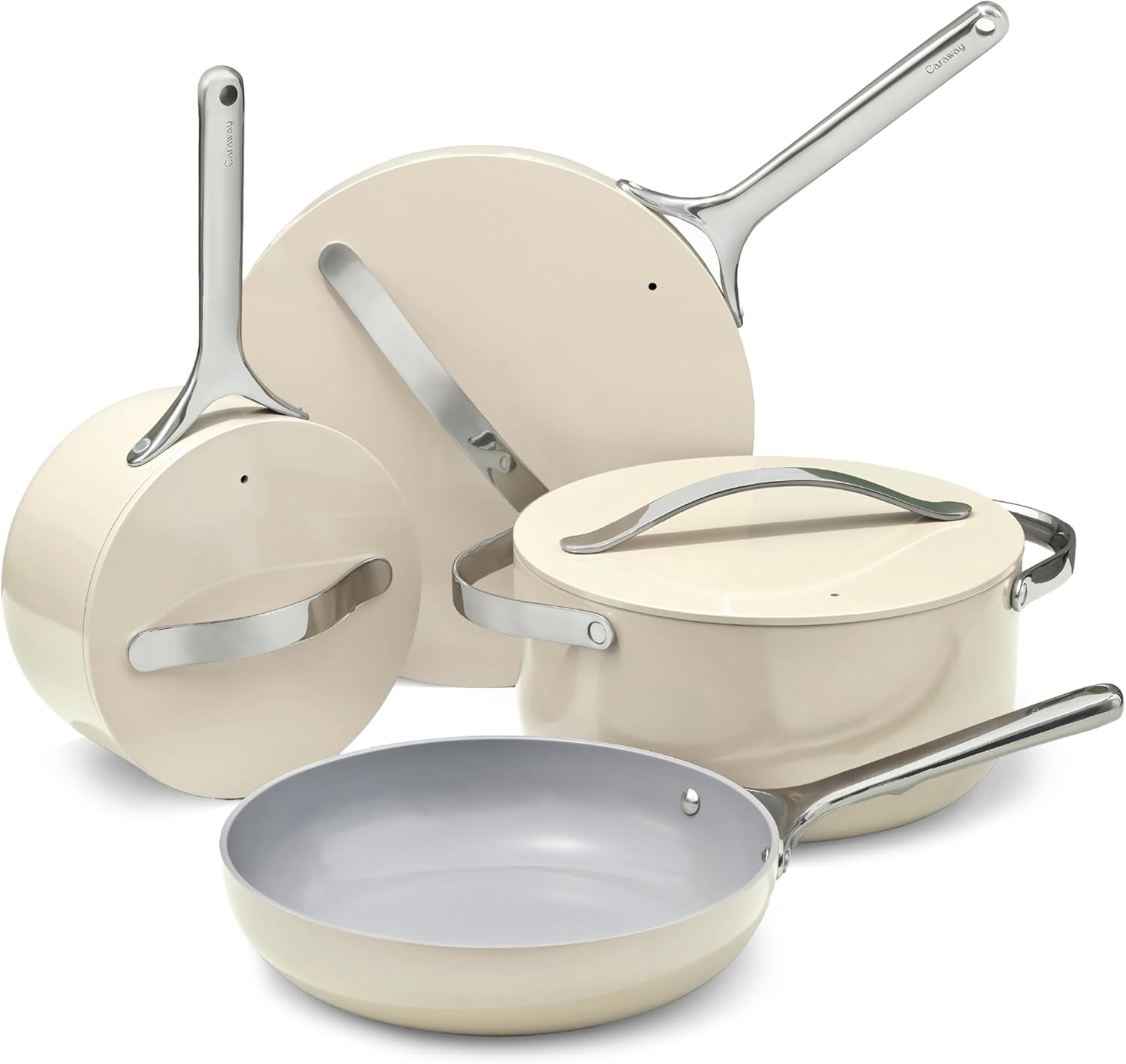
Caraway Nonstick Ceramic Cookware Set [click to view…]
Price Range: $395 – $595
Core Material: Aluminum
Oven Safe: Up to 550°F
Why it excels on gas stoves:
- Heats faster than cast iron while maintaining even distribution
- Responsive to temperature changes for precise cooking control
- Exceptional nonstick performance lasting 5+ years with proper care
- Minimal hot spot development
Key advantages:
- Non-toxic manufacturing (PFAS/PTFE/PFOA-free)
- Attractive, minimalist design
- Includes storage solutions (magnetic rack, lid holder)
- Versatile (works on all cooktop types)
Considerations:
- Higher price point
- Hand-washing recommended for longevity
- Not suitable for high-heat searing
- May develop cosmetic discoloration on bottom (doesn’t affect performance)
Best Value: GreenLife Stainless Pro Cookware Set
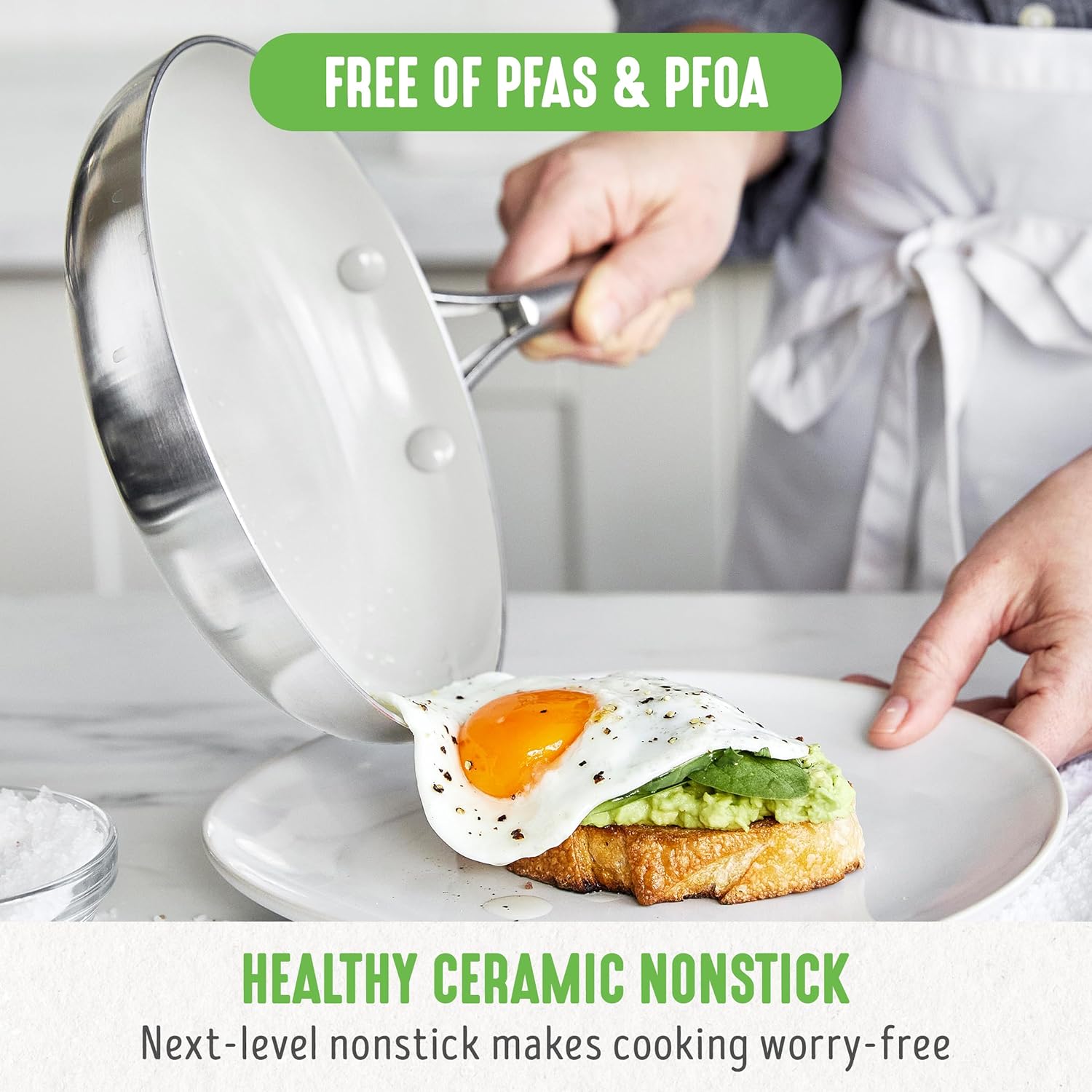
GreenLife Tri-Ply Stainless Steel Healthy Ceramic Nonstick [click to view…]
Price Range: $130
Core Material: Aluminum
Oven Safe: Up to 350°F
Gas stove performance:
- Good heat distribution with aluminum core
- Lightweight for easy handling
- Effective nonstick release for eggs and delicate foods
- Even heating and heat retention
Value proposition:
- Excellent entry-level option
- Thermolon ceramic coating
- Easy cleanup
- Good nonstick performance
Trade-offs:
- Handles get very hot during use
- Not tolerant of high heat
- Occasional inconsistent heat distribution
- Not induction-compatible
Best Pure Ceramic: Xtrema Signature Series
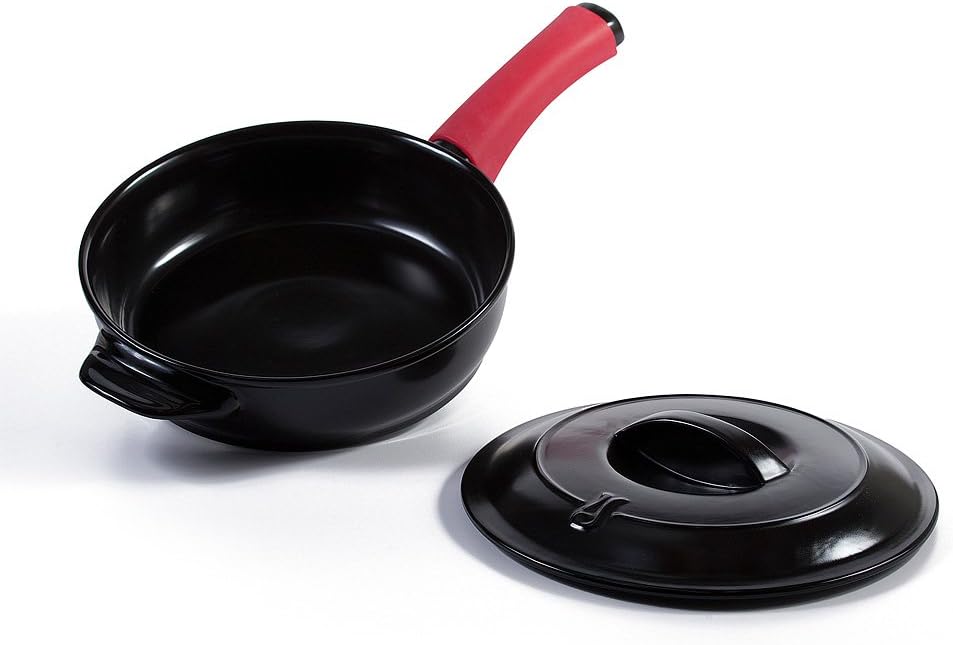
Xtrema – Premium 100% Ceramic Cookware [click to view…]
Price Range: $493 – $580
Material: 100% Pure Ceramic
Oven Safe: Up to 2,500°F
Unique benefits:
- Completely leach-free (no metal core)
- Generational durability potential
- Versatile (oven, grill, microwave, freezer safe)
- 10-year warranty
Gas stove considerations:
- Requires gradual preheating to prevent thermal shock
- Heavier than metal-cored alternatives
- Oil required for optimal nonstick performance
- Slower temperature responsiveness
Best for:
- Health-conscious cooks prioritizing zero chemical exposure
- Long-term investment mindset
- Multiple cooking method versatility
Essential Care Guidelines for Gas Stove Users
Proper maintenance determines whether your ceramic cookware lasts months or years.
Temperature Control Strategies
Critical practices:
- Always use low to medium heat settings
- Preheat gradually for 3-5 minutes before adding ingredients
- Never heat empty pans on high heat
- Adjust flame to prevent flames from extending up pan sides
Cleaning Best Practices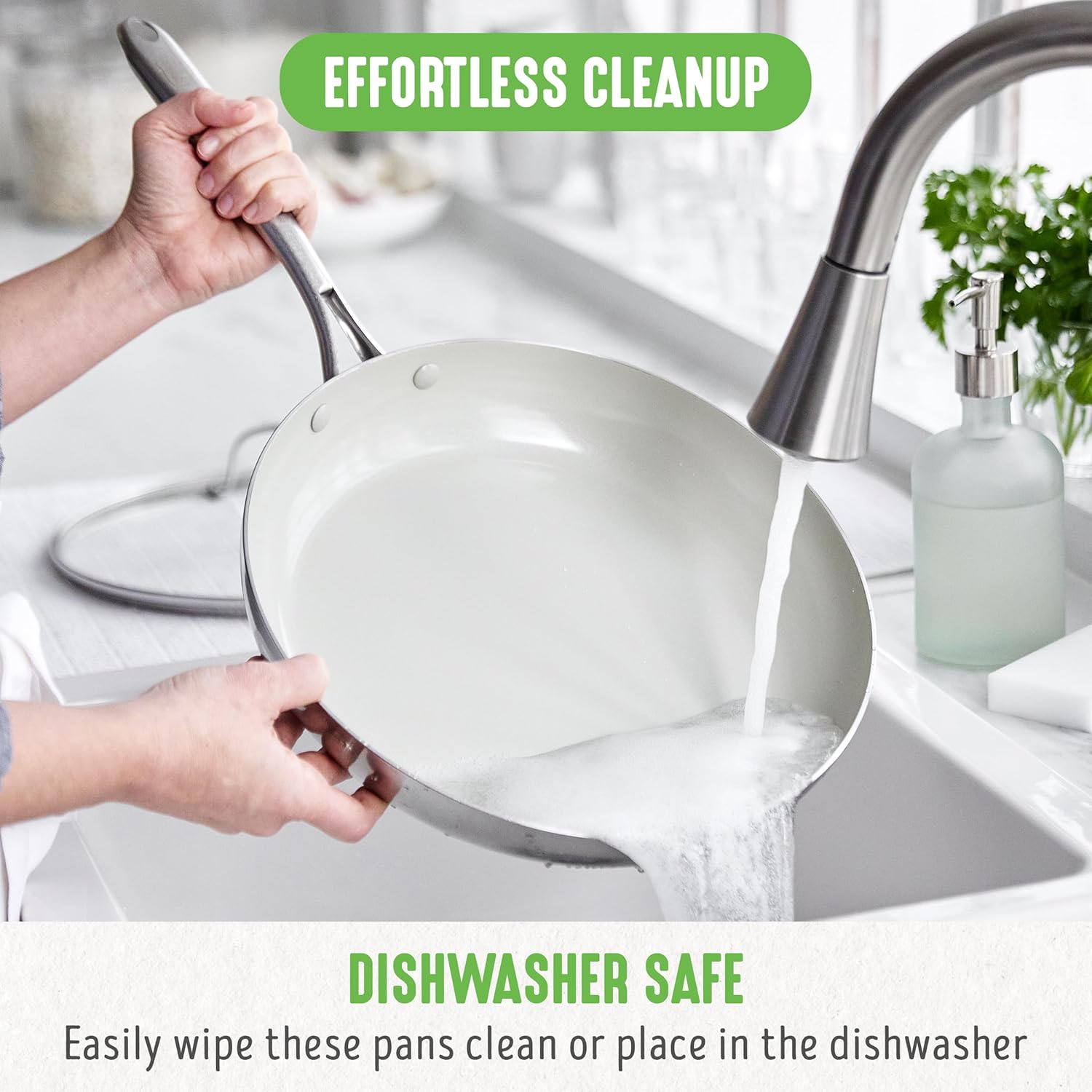
GreenLife Ceramic Nonstick 10 Piece Cookware [click to view…]
Daily maintenance:
- Allow complete cooling to room temperature before washing
- Hand-wash with warm, soapy water
- Use non-abrasive sponges only
- Avoid harsh chemical cleaners
For stubborn residue:
- Simmer soapy water in the pan over low heat
- Gently scrape with non-abrasive tools
- Use baking soda and vinegar mixture for tough stains
Utensil and Oil Guidelines
Recommended utensils:
- Wood, nylon, or silicone tools only
- Avoid metal utensils (even if manufacturer claims compatibility)
- Replace worn utensils that develop sharp edges
Oil recommendations:
- Apply light coating of healthy fats (ghee, avocado oil, olive oil)
- Avoid cooking sprays (create sticky residue buildup)
- Never cook in completely dry pans
Storage Protection
Prevent damage with:
- Protective trivets or dish towels between stacked pieces
- Hanging racks when space allows
- Dedicated storage solutions to prevent scratching
Making Your Final Decision
Priority Assessment Questions
Ask yourself:
- Performance vs. Longevity: Do you prioritize immediate nonstick excellence or generational durability?
- Budget Approach: Prefer lower initial cost with replacement every few years, or higher upfront investment for decades of use?
- Health Concerns: How important is complete chemical-free cooking versus PFAS-free coatings?
- Cooking Style: Do you frequently use high heat or prefer gentle cooking methods?
Budget Considerations
Value calculations:
- Ceramic-coated: $100-600 initial cost, replace every 2-5 years
- Pure ceramic: $400-800 initial cost, potentially last decades
- Total cost of ownership: Factor replacement frequency into decision
Gas Stove Specific Factors
Your gas stove setup affects choice:
- High-BTU burners: Favor pure ceramic or heavy-bottomed ceramic-coated
- Standard burners: Most ceramic-coated options perform well
- Multiple burner sizes: Consider cookware size distribution in sets
The Bottom Line
Regardless of your choice, success with ceramic cookware on gas stoves hinges on proper temperature control, gentle handling, and consistent maintenance. Master these fundamentals, and your ceramic cookware investment will serve you well for years to come.
Ready to upgrade your cooking experience? Start by identifying your primary priorities from the assessment questions above, then select the cookware category that aligns with your needs. Your perfect ceramic cookware match awaits.
Dora Decora is a biophilic interior design specialist and passionate blogger. With a deep commitment to integrating nature into living spaces, Dora specializes in creating environments that foster human-nature connections through thoughtful design elements. Her approach emphasizes sustainable materials, natural lighting, and organic patterns that enhance wellbeing and reduce environmental impact.
This post (https://homechroma.com/best-ceramic-cookware-for-gas-stoves) was originally published by Dora Decora on Home Chroma. As an Amazon Associates partner, we are compensated for all qualifying purchases.