 You drink matcha because it’s supposed to be one of the cleanest, most powerful superfoods on the planet.
But here’s what most matcha drinkers don’t know: you’re eating the entire leaf.
With regular green tea, you steep the leaves, then toss them. About 90% of the lead that accumulated in those leaves stays trapped in the discarded material. You drink a clean cup.
Matcha is different. The leaf is stone-ground into powder. You whisk it directly into water. Every milligram of heavy metal that leaf absorbed — from the soil, from the air, from industrial runoff nearby — goes straight into your cup.
That changes everything.
Why Lead in Matcha Is a Bigger Problem Than Most People Realize
Lead is a bioaccumulative toxin. Your body doesn’t flush it out easily. It stores in your blood, soft tissues, and — primarily — your bones, where it can remain for decades.
There’s no safe exposure level. In children, even trace amounts are linked to IQ loss, behavioral disorders, and developmental damage. In adults, chronic low-level intake is associated with cognitive decline, hypertension, kidney disease, and reproductive complications.
For daily matcha drinkers — especially pregnant women, nursing mothers, or anyone with young children — knowing exactly what’s in your powder matters more than almost any other supplement decision you’ll make.
The good news: the risk is largely avoidable. But only if you know what to look for.
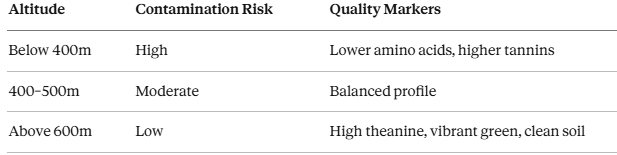
The Altitude-Lead Connection
Camellia sinensis — the tea plant — absorbs what’s in its environment. Lead enters through the root system and settles on leaves through atmospheric deposition.
Altitude changes this equation significantly.
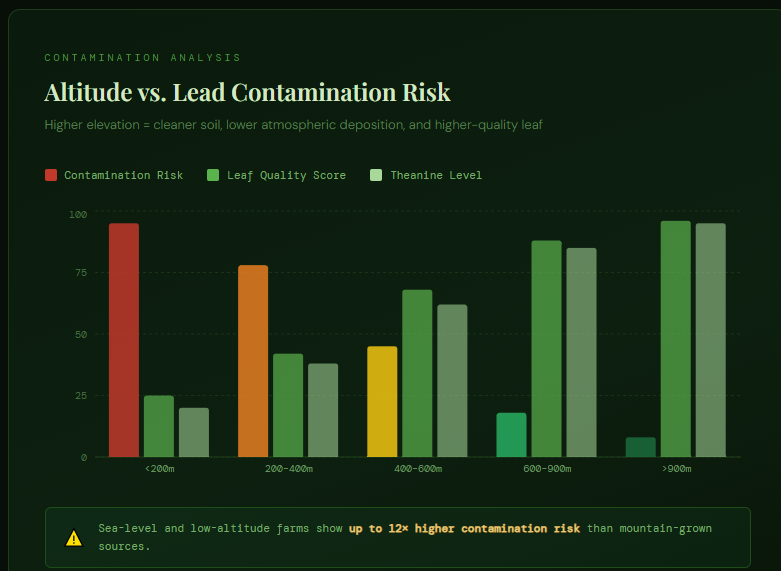
Low-altitude farms sit closer to industrial zones, busy roads, and urban centers. The legacy of leaded gasoline (not banned in China until 2000) left a persistent reservoir of lead in low-lying agricultural soils. Atmospheric particles from nearby highways and factories settle directly onto tea leaves at ground level.
High-altitude farms — above 600 meters — benefit from cooler climates, distance from industry, and lower atmospheric particulate matter. The slower growth cycles at elevation also produce younger, more nutrient-dense leaves with higher theanine content, which is why premium ceremonial matcha consistently comes from mountain-grown sources.
6 Warning Signs Your Matcha May Contain Unsafe Lead Levels
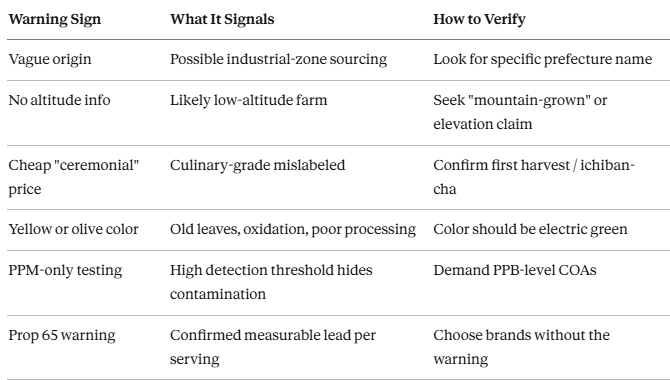
Warning Sign #1: Vague or Missing Geographic Origin
This is the single most important indicator.
Independent testing of thousands of tea samples has found that up to 32% of Chinese-grown green teas exceed international safety limits for lead. Some oolong and black teas sourced from China exceed limits at rates above 50%.
Japanese matcha from established rural prefectures — Uji, Nishio, Kagoshima — tells a very different story. Certain sample sets of Japanese-grown leaves showed 0% exceeding international lead thresholds, largely due to strict government monitoring and geographic isolation from industrial corridors.
Red flag: The label says “Product of Japan” but lists no specific prefecture. Or worse — it reads “globally sourced” or lists no origin at all. This often signals leaves from high-risk industrial regions blended or misrepresented at the packaging stage.
What to look for: A specific prefecture name. Uji (Kyoto), Nishio (Aichi), Kagoshima, Shizuoka. The more specific, the better.
Warning Sign #2: No Mention of Altitude or Farm Type
Reputable ceremonial matcha producers talk about where their tea grows because it matters. High-altitude, mountain-grown sourcing is a verified quality and safety differentiator — not just marketing language.
Brands that say nothing about elevation or estate location may be sourcing from low-altitude flat farms where industrial runoff, proximity to roadways, and atmospheric deposition create measurably higher contamination risk.
Red flag: Zero mention of altitude, elevation, or mountain-grown origins.
What to look for: Specific altitude claims (e.g., “grown above 500m”) or references to named estates and foothills.
Warning Sign #3: The Price Is Suspiciously Low for “Ceremonial Grade”
“Ceremonial Grade” is not a legal standard. It’s an unregulated marketing term. Any brand can print it on any tin.
True ceremonial matcha is produced from first-harvest spring leaves — called ichiban-cha — shade-grown for 3–4 weeks before harvest to boost chlorophyll and amino acid content, then stone-ground to a particle size of roughly 5–10 microns.
Research shows first-harvest leaves contain two to six times less lead than mature leaves harvested later in the season. When low-quality, later-harvest culinary-grade matcha gets labeled “ceremonial” to command a higher price, the consumer gets the toxicant load of older, more contaminated leaves at a premium price point.
Red flag: “Ceremonial Grade” priced under approximately $0.50 per gram.
What to look for: First harvest (ichiban-cha) labeling, spring harvest dates, and stone-grinding confirmation.
Warning Sign #4: Poor Visual and Sensory Quality
The environmental conditions that cause heavy metal accumulation also degrade the sensory quality of matcha. These aren’t separate issues — they’re symptoms of the same problem.
Color: Authentic high-altitude ceremonial matcha is a vibrant, electric green. The shade-growing process dramatically increases chlorophyll. Lead-contaminated or low-altitude matcha often appears dull yellow, olive, or brown — a sign of oxidation, poor leaf selection, or inferior processing.
Texture: Premium matcha feels like baby powder — impossibly fine. Contaminated, lower-grade powders feel coarse or sandy. That gritty texture is a strong indicator of inadequate grinding or inferior leaf quality.
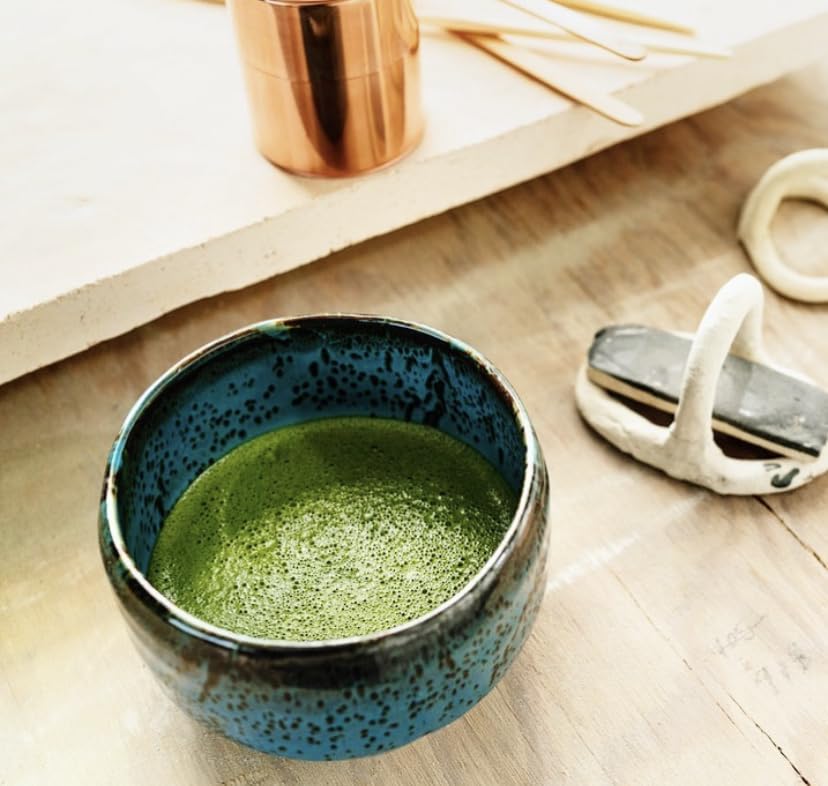
Foam: Whisk ceremonial-grade matcha and it produces a thick, creamy layer of micro-bubbles that holds its shape. Low-quality matcha produces thin foam with large, fast-dissipating bubbles — a sign of poor processing and lower saponin content.
Quick test: Put a small amount between your fingers. It should feel silkier than flour. If it feels gritty, stop there.
Warning Sign #5: Lab Testing Reported in Parts Per Million (PPM) — Not Parts Per Billion (PPB)
This is where the industry plays a particularly misleading game.
Many brands claim their matcha is “toxin-screened” or “lead-free” because their testing showed “non-detect” results. What they don’t tell you: that test was run at a sensitivity threshold of 0.2 parts per million (ppm).
Here’s the math: 0.2 ppm equals 200 parts per billion (ppb). Health researchers and toxicologists studying bioaccumulative heavy metals often set action levels as low as 5 ppb for lead and cadmium. A product that’s “non-detect” at 0.2 ppm could legally contain 199 ppb of lead and still carry that label.
The formula is simple:
Lead ingested per cup (mcg) = Concentration (ppb) × Serving size (grams) ÷ 1,000
At 100 ppb of lead in a 2-gram serving, you’re ingesting 0.2 mcg per cup — below California’s Prop 65 threshold of 0.5 mcg, but compounding daily into significant bone-tissue accumulation over years.
Red flag: Lab reports presented only in ppm, or vague phrases like “toxin screened” and “ultra-pure” with no certificate of analysis (COA) available.
What to look for: Third-party COAs that measure in ppb, with a limit of detection at or below 5 ppb for lead and cadmium. Batch-specific results, not brand-level claims.
Warning Sign #6: A California Proposition 65 Warning on the Label
Under California law, any product containing more than 0.5 micrograms of lead per daily serving must carry a Prop 65 warning label.
This threshold sits 1,000 times below the amount known to cause acute reproductive harm — it’s deliberately conservative. But seeing a Prop 65 warning on a matcha tin is confirmation that the brand’s own testing found measurable, reportable lead at meaningful per-serving levels.
Some physiological signs also correlate with low-quality, high-tannin, low-altitude matcha: significant stomach upset, nausea, and acid reflux — especially when consumed without food. These symptoms primarily indicate high tannin and caffeine concentrations (conditions linked to low-altitude, high-temperature growing environments) and often correlate with products that haven’t passed the agricultural selection standards of high-purity ceremonial estates.
How Popular Brands Measure Up
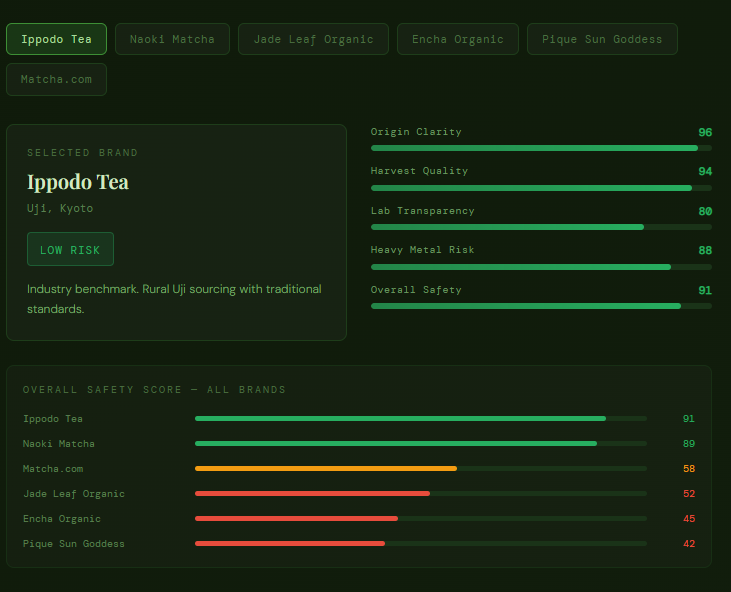
Several well-known ceremonial matcha brands available in the USA have been reviewed against these criteria. Here’s what independent lab testing and sourcing research reveals:
How Popular Brands Measure Up
Several well-known ceremonial matcha brands available in the USA have been reviewed against these criteria. Here’s what independent lab testing and sourcing research reveals:
Ippodo Tea
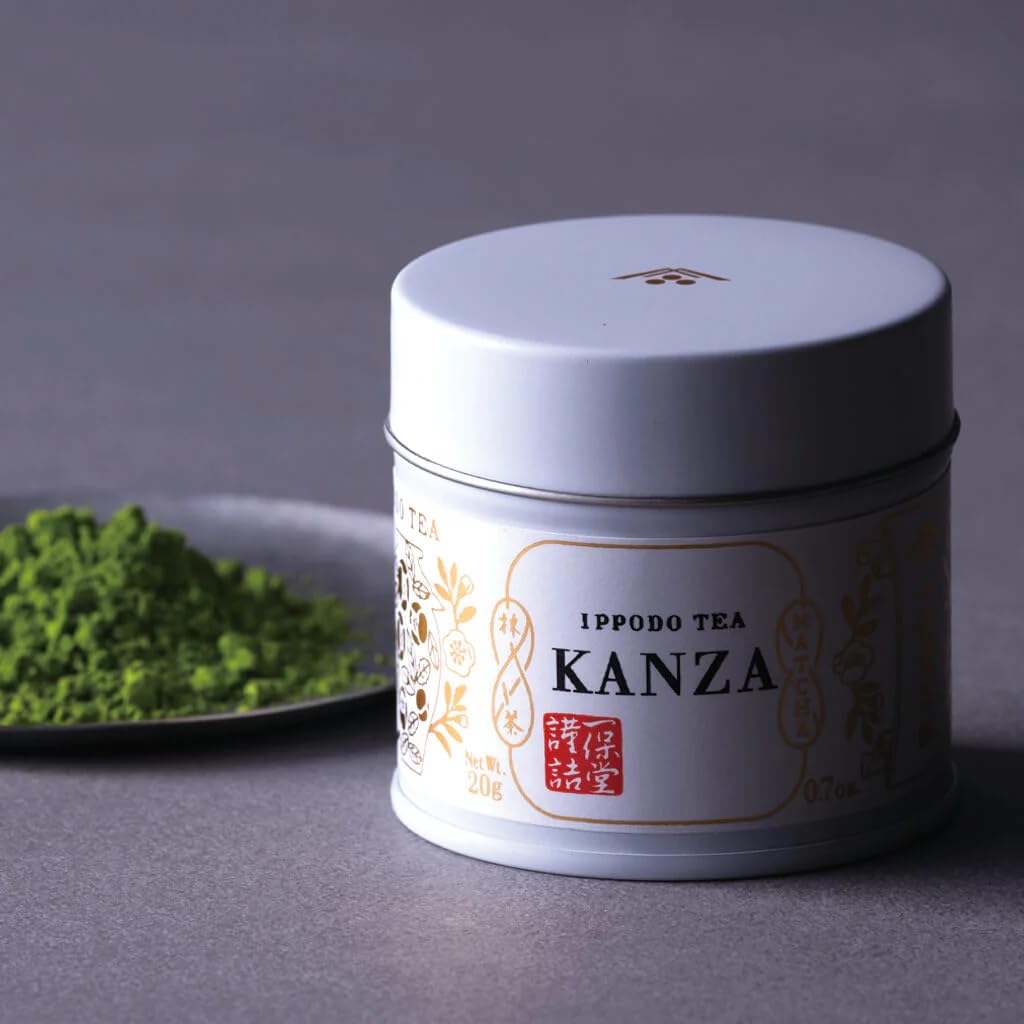
Sourced from Uji, Kyoto. Testing transparency relies on traditional standards with rural, high-altitude sourcing practices. Independent findings indicate low heavy metal risk. Overall risk: Low.
Naoki Matcha
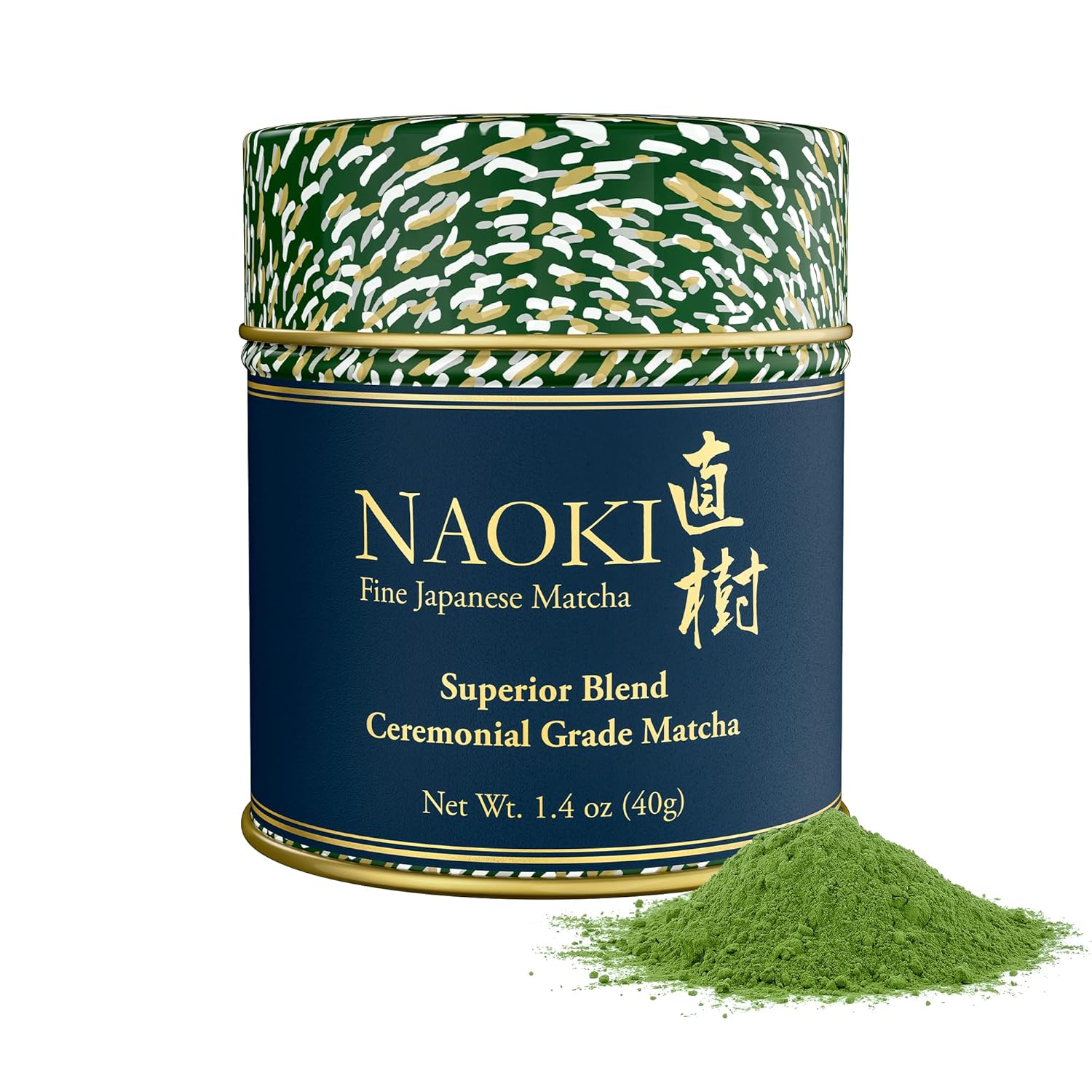
Sourced from Kagoshima and Kyoto. Offers high traceability through named harvest editions. Strong provenance with first-harvest verified sourcing. Overall risk: Low.
Jade Leaf Organic
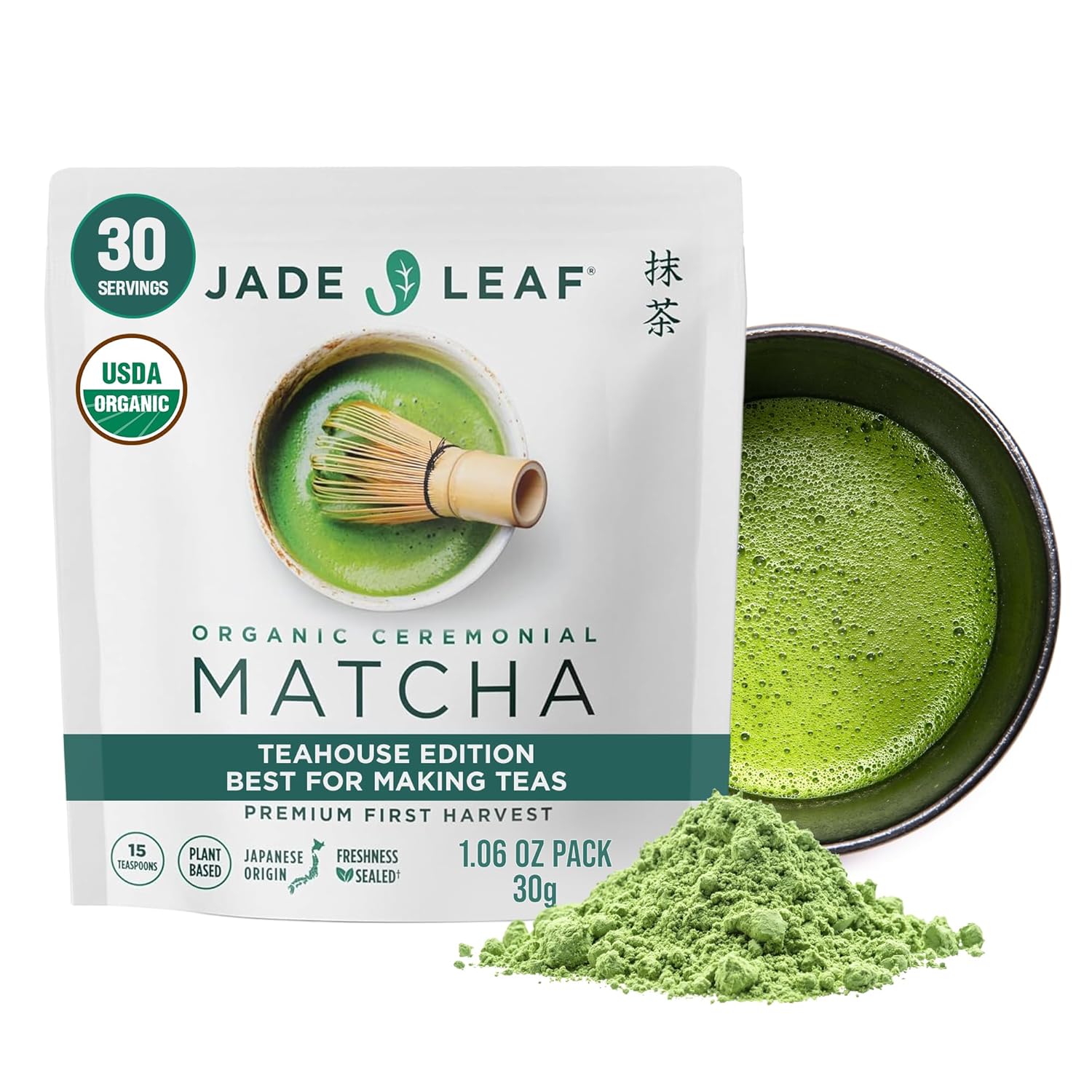
Sourced from multiple Japan prefectures. USDA Organic certified. Third-party testing has identified lead, cadmium, arsenic, and mercury in the Barista Edition. Overall risk: Moderate.
Encha Organic
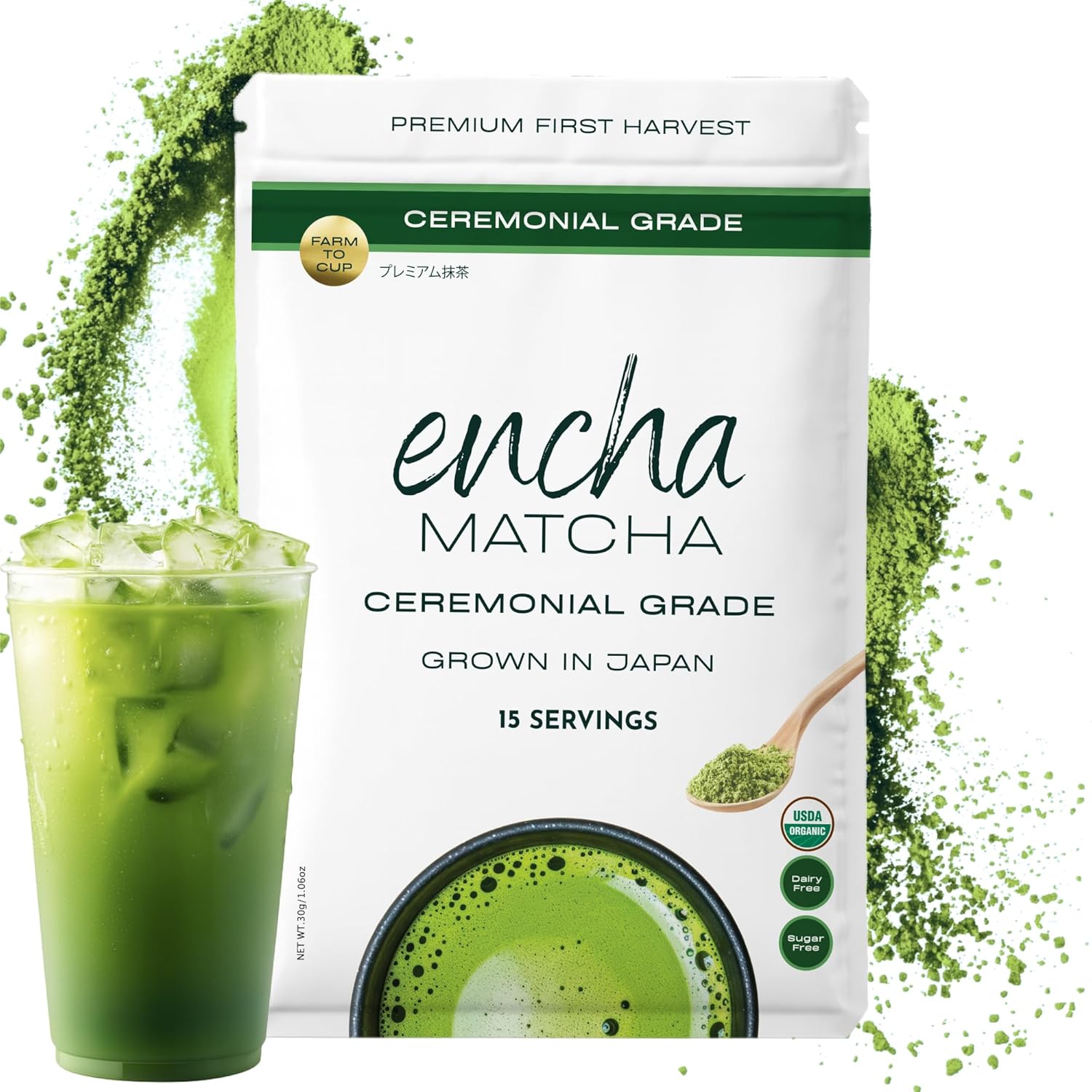
Sourced from Uji with first-harvest claims. Community-funded lab tests in 2025 reportedly found lead, cadmium, arsenic, and mercury (Pb, Cd, As, Hg), with quality control concerns also reported. Overall risk: Moderate–High.
Pique Sun Goddess
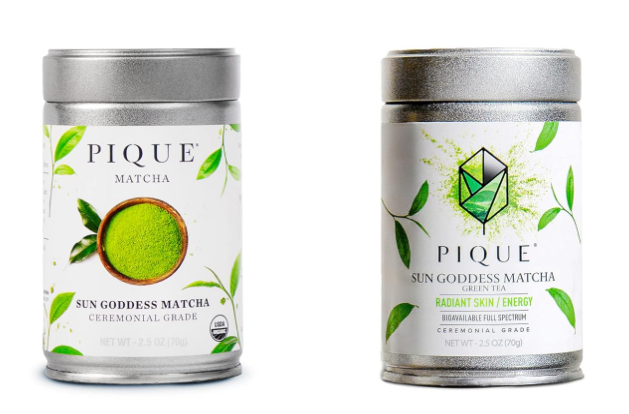
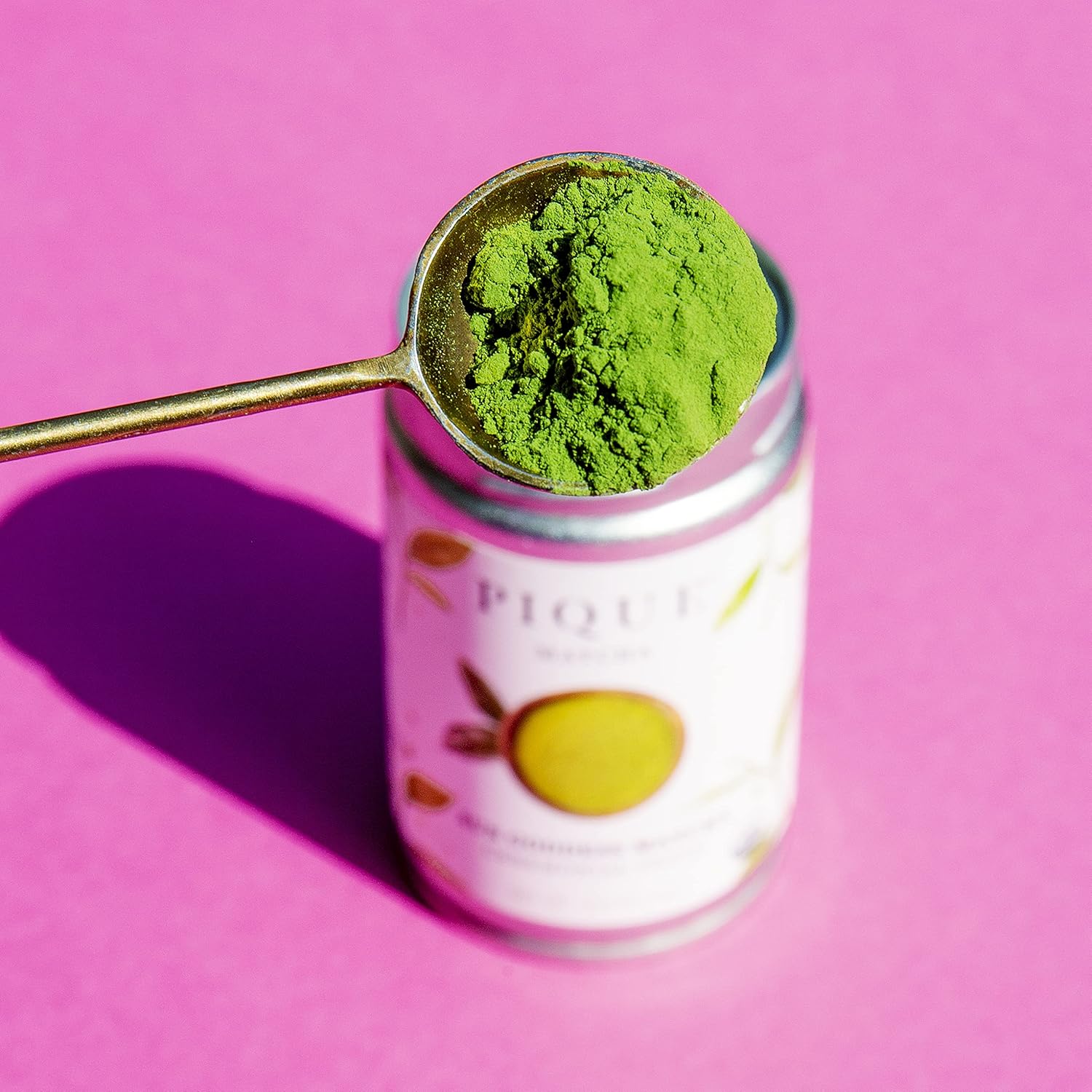 Sourced from Japan Organic farms, marketed as “quadruple toxin screened.” 2025 independent lab results found lead, cadmium, arsenic, and mercury. Overall risk: Moderate–High.
Matcha.com
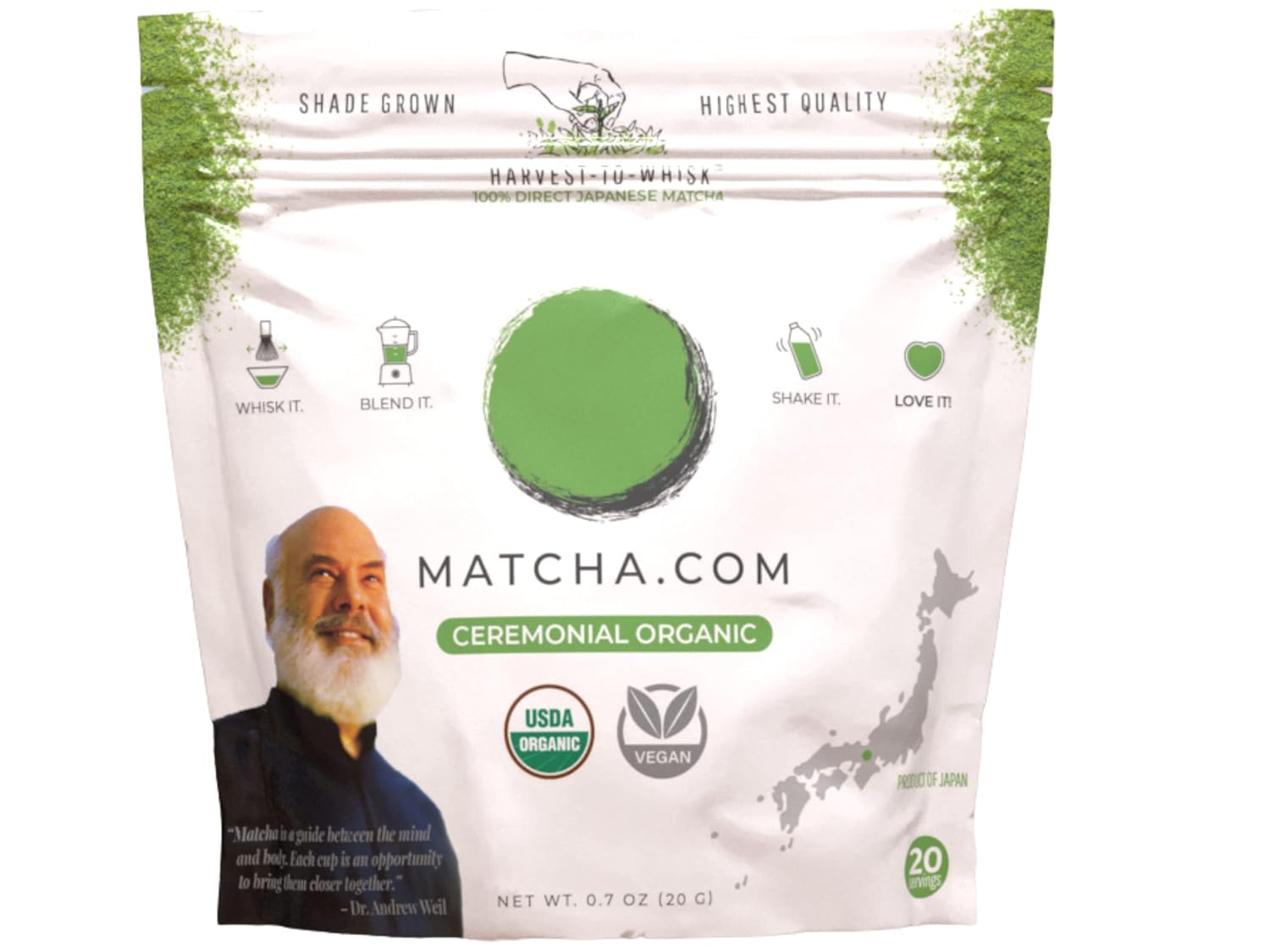
Sourced from Kagoshima and Uji, co-founded by Dr. Andrew Weil. Trace heavy metals found through high-sensitivity PPB testing. Overall risk: Moderate.
Key takeaway: Even USDA Organic certification does not guarantee the absence of heavy metals. Heavy metals are naturally present in soil. Organic farming prohibits synthetic pesticides — it doesn’t clean the dirt of historical lead deposits. Verification must come from third-party, PPB-level COAs.
What Genuinely Safe Ceremonial Matcha Looks Like
The five non-negotiables:
- Specific Japanese prefecture — Uji, Nishio, Kagoshima, or Shizuoka
- First harvest / ichiban-cha — Spring leaves with 2–6x lower lead content than later harvests
- Mountain-grown — Altitude above 400m minimum; above 600m preferred
- PPB-level third-party COA — Batch-specific, published, independently verified
- Electric green color, baby-powder texture, creamy foam — Visual confirmation of quality
For pregnant women, children, and those with heavy daily consumption, consider alternating matcha with high-quality steeped green teas like genmaicha. Because the leaves are discarded after steeping, lead exposure drops by up to 90% compared with ground matcha powder.
Frequently Asked Questions
Is all matcha contaminated with lead? No. Lead levels vary significantly by origin, altitude, harvest timing, and farming practices. Japanese matcha from rural, high-altitude prefectures consistently shows lower contamination than Chinese-grown or low-altitude alternatives. First-harvest leaves carry the lowest risk within any given plantation.
Does organic certification mean lead-free? No. Organic certification addresses pesticide use, not heavy metal content. Lead accumulates in soil over decades from atmospheric deposition and industrial history — no organic farming practice removes it. Third-party heavy metal testing is the only reliable verification.
What does a Prop 65 warning actually mean? It means the product tested at or above 0.5 micrograms of lead per daily serving under California law. It confirms measurable lead at levels requiring disclosure. It does not mean the product is immediately dangerous, but for daily consumers, it warrants a brand switch to one with verified PPB-level clean results.
How do I read a COA? Look for the analyte column listing lead (Pb), cadmium (Cd), arsenic (As), and mercury (Hg). Find the result column and confirm it’s reported in ppb (micrograms per kilogram or parts per billion). A “non-detect” result is only meaningful if the limit of detection (LOD) is 5 ppb or lower. If the LOD is listed in ppm, the test isn’t sensitive enough.
Can I taste lead in matcha? No. Lead is odorless and tasteless. The sensory indicators — dull color, gritty texture, thin foam — correlate with the same poor growing conditions that increase contamination risk, but they’re not direct indicators of lead itself. Lab testing is the only confirmation.
The Bottom Line
Matcha delivers real, well-documented health benefits — L-theanine for calm focus, EGCG for antioxidant protection, chlorophyll at concentrations far higher than steeped teas.
But those benefits only hold if the powder is clean.
A vibrant green tin from an unspecified source at a bargain price is not a deal. It’s a daily dose of whatever accumulated in those leaves over years of growth in conditions you know nothing about.
The brands that get this right tell you exactly where the tea grew, at what elevation, from which harvest, and they back it with published batch-specific lab data. That transparency isn’t marketing. It’s the minimum standard for a product consumed every single day.
Choose accordingly.
Dora Decora is a biophilic interior design specialist and passionate blogger. With a deep commitment to integrating nature into living spaces, Dora specializes in creating environments that foster human-nature connections through thoughtful design elements. Her approach emphasizes sustainable materials, natural lighting, and organic patterns that enhance wellbeing and reduce environmental impact.
This post (https://homechroma.com/best-ceremonial-matcha-reviewed) was originally published by Dora Decora on Home Chroma. As an Amazon Associates partner, we are compensated for all qualifying purchases.