 You scrub on the vitamin C serum. You layer on the collagen cream. You wait.
Eight weeks later, you’re still waiting.
Here’s a question worth sitting with: what if the products aren’t failing because they’re weak — but because they’re working on the wrong layer of your skin?
Your skin has a job. That job is keeping things out. It does this better than almost any other biological barrier in nature. So when you apply a serum or cream to the surface, only a tiny fraction of those active ingredients ever make it past the outer layer to the dermis below — which is where collagen is actually made, where hydration lives, and where real structural change happens.
That’s not a sales pitch. That’s biology.
The fastest-growing segment of skin care right now isn’t a new serum formula. It’s ingestible skin supplements — specifically, skin care gummies. And the science behind them is more compelling than most people realize.
Why Topical Products Hit a Wall
Your skin’s outermost layer — the stratum corneum — follows what scientists call the 500 Dalton rule. Molecules larger than 500 Daltons in molecular weight can’t pass through it. Most collagen molecules weigh several hundred thousand Daltons.
That’s not a typo.
Native collagen in a face cream physically cannot penetrate your skin. It sits on the surface, creates a temporary moisture-trapping film, and washes off. For ingredients like hyaluronic acid and certain peptides, absorption is partial at best.
Compare this to oral supplementation. When you swallow a collagen gummy, the collagen is broken down in your gut into smaller di-peptides and tri-peptides — typically hydroxyproline-rich fragments. These fragments travel through your bloodstream and reach the dermis directly. Once there, they do two things:
- Provide raw material for fibroblast cells to build new collagen
- Signal those same fibroblast cells to ramp up their own collagen production
The dermis makes up roughly 90% of your skin’s total thickness. If you’re spending money trying to fix skin problems, the dermis is where that work needs to happen.
The Science Behind Key Ingredients
Collagen Peptides
Collagen gives skin its structure, bounce, and firmness. After your mid-20s, your body produces less of it every year. A comprehensive review of 40 randomized controlled trials, covering more than 2,000 subjects, found that consistent oral collagen supplementation over 8 to 24 weeks produced measurable improvements in skin moisture retention and reductions in wrinkle volume. Results varied by dose and source, but the direction was consistent.
Dosage matters more than packaging. Many budget gummies contain 100mg of collagen or less per serving. Clinical trials have typically used 2.5g to 10g daily. The gap between those numbers explains why some people see results and others don’t.
Hyaluronic Acid (HA)
HA is a naturally occurring sugar molecule that can hold up to 1,000 times its weight in water. Your skin produces it — until it doesn’t. Production declines steadily with age, which is why skin gets thinner and drier over time. Oral HA has been shown in clinical research to improve skin hydration and reduce roughness after 12 weeks of consistent use.
Ceramides
These are structural lipids that form part of the skin’s barrier. Think of your skin cells as bricks and ceramides as the mortar. When ceramide levels drop, moisture escapes (called trans-epidermal water loss, or TEWL) and the skin feels perpetually tight and dry. Plant-derived ceramides taken orally can help restore this function from the inside.
Vitamin C
Your body requires vitamin C to synthesize collagen. It acts as a mandatory cofactor in the biochemical reaction that stabilizes collagen’s triple-helix structure. Without adequate vitamin C, the collagen your body builds is structurally weak. Research suggests that cells with optimal vitamin C levels can increase procollagen production by 30% to 40%.
Topical vitamin C serums are notoriously unstable — they oxidize rapidly and lose effectiveness quickly. Oral vitamin C maintains a steady supply at the cellular level where it’s needed.
Probiotics (for Acne-Prone Skin)
This one surprises people. Your gut and your skin are in direct communication via what researchers call the gut-skin axis. When your gut microbiome is out of balance, it can trigger systemic inflammation — and for many people, that inflammation shows up as breakouts, rosacea, or eczema flares.
Specific probiotic strains — including Lactobacillus rhamnosus and Bifidobacterium longum — have shown meaningful reductions in acne lesions in clinical studies, with some trials reporting up to a 50% reduction in mild to moderate acne. This is a fundamentally different approach than harsh topical acids that strip the skin’s barrier to fight acne on the surface.
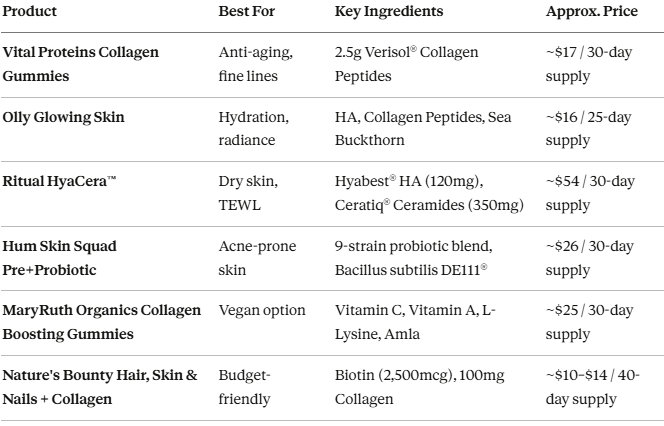
Best Skin Care Gummies: A Breakdown by Concern
Product Spotlights
For Fine Lines and Wrinkles: Vital Proteins Collagen Gummies
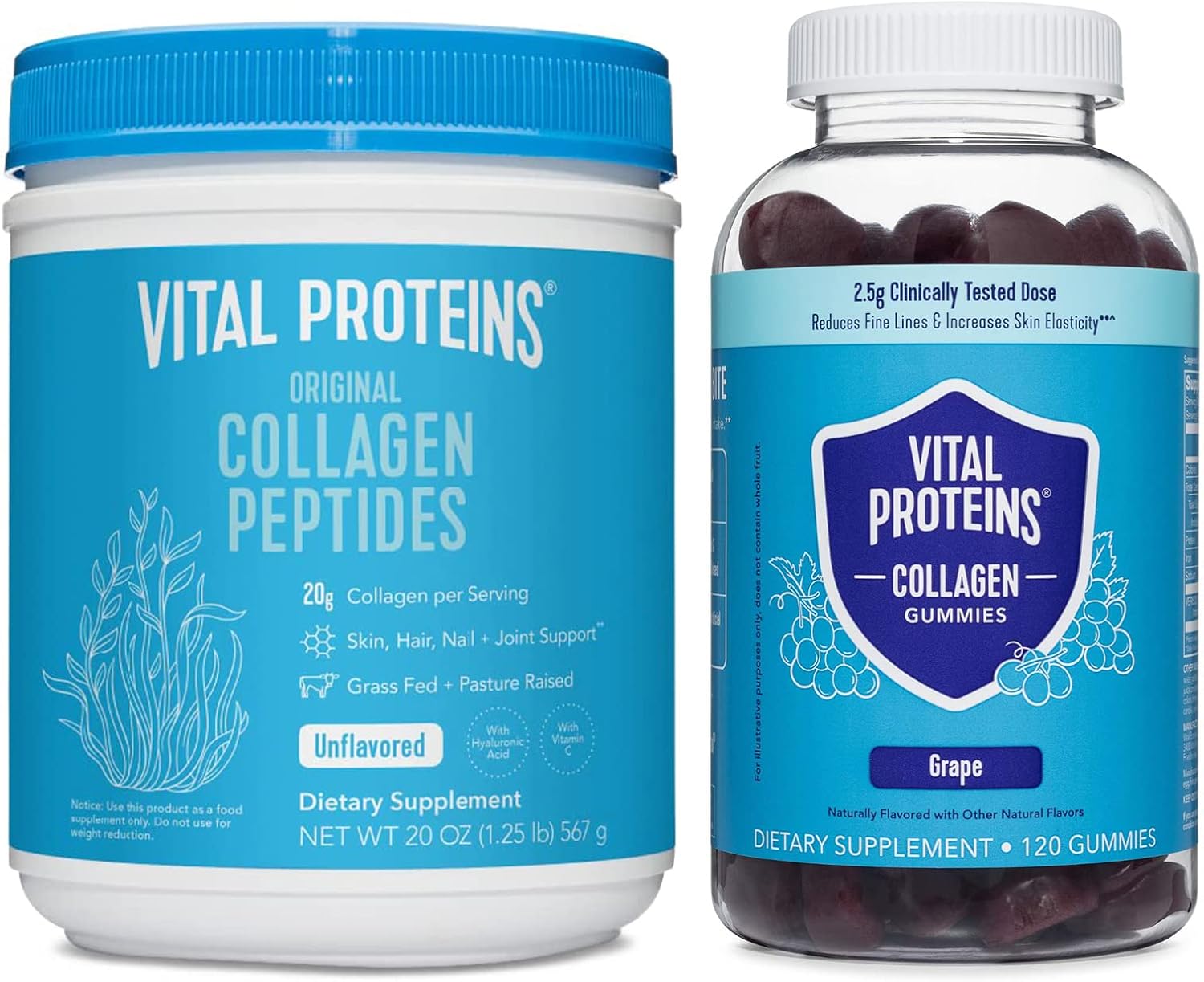
These gummies use 2.5g of Verisol® Bioactive Collagen Peptides per serving — the same clinically tested dose used in published studies. Verisol® is a specific form of hydrolyzed bovine collagen that directly stimulates fibroblast cells in the dermal layer.
The research on Verisol® specifically shows statistically significant improvements in skin elasticity and reductions in periorbital wrinkles after 8 weeks. That timeline matters — don’t expect overnight results, but the mechanism is real.
At roughly $17 for a 30-day supply, the cost-per-day is comparable to a fraction of what most premium serums run. Made without gluten, dairy, or soy. No synthetic colors or artificial flavors.
Best for: Anyone targeting visible signs of skin aging who wants a clinically backed dose of collagen.
For Hydration: Olly Glowing Skin
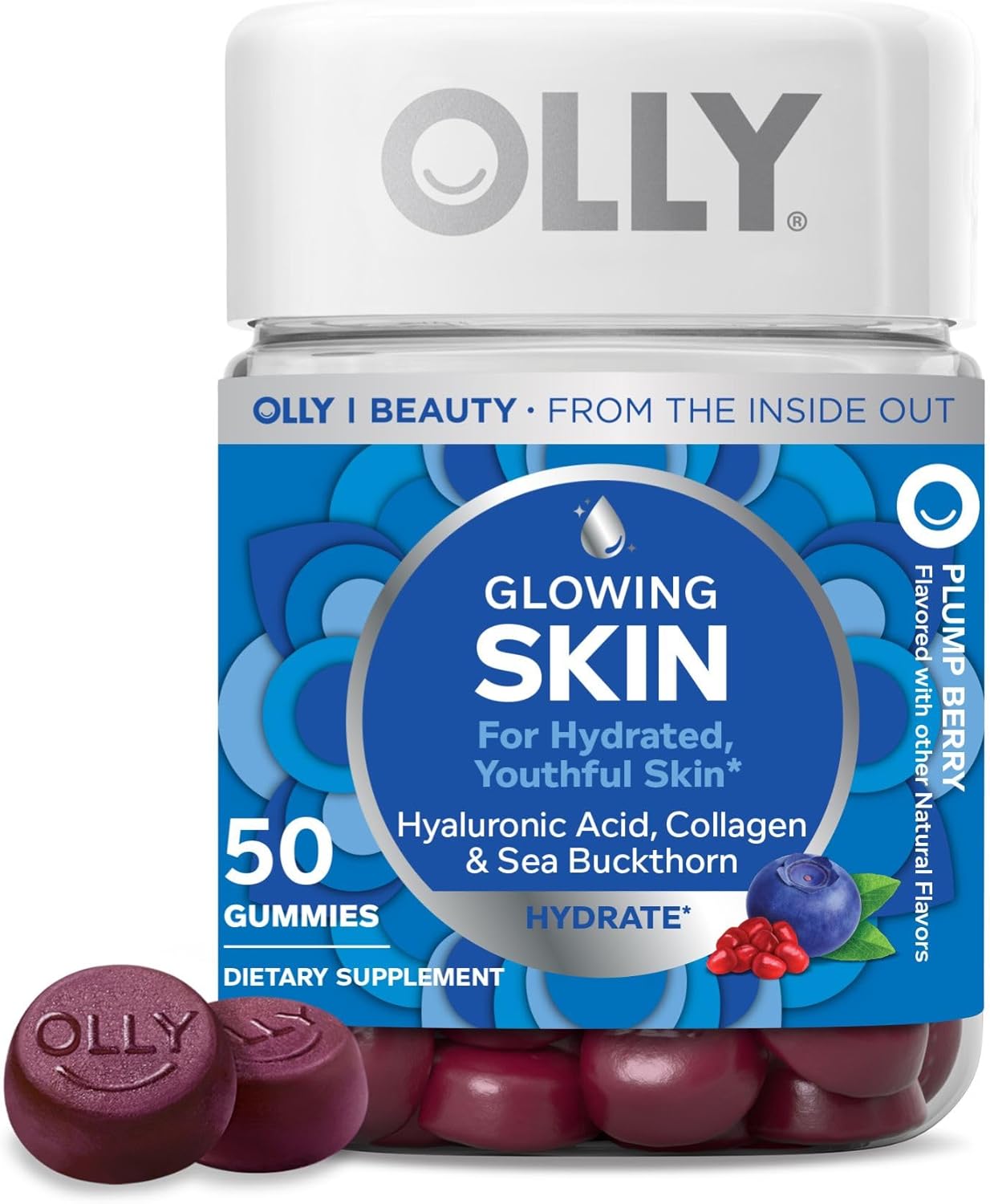
This is one of the most accessible HA-focused skin gummies on the market. Each serving delivers hyaluronic acid, collagen peptides, and sea buckthorn — a berry packed with omega fatty acids and carotenoids that support the skin’s barrier.
The combination of HA for water retention, collagen for structure, and sea buckthorn for barrier nourishment hits three separate hydration mechanisms at once. At ~$16 for a 25-day supply, it’s a low-barrier entry point for anyone new to ingestible skin care.
Best for: Skin that feels perpetually dehydrated, tight, or dull.
For Serious Barrier Repair: Ritual HyaCera™
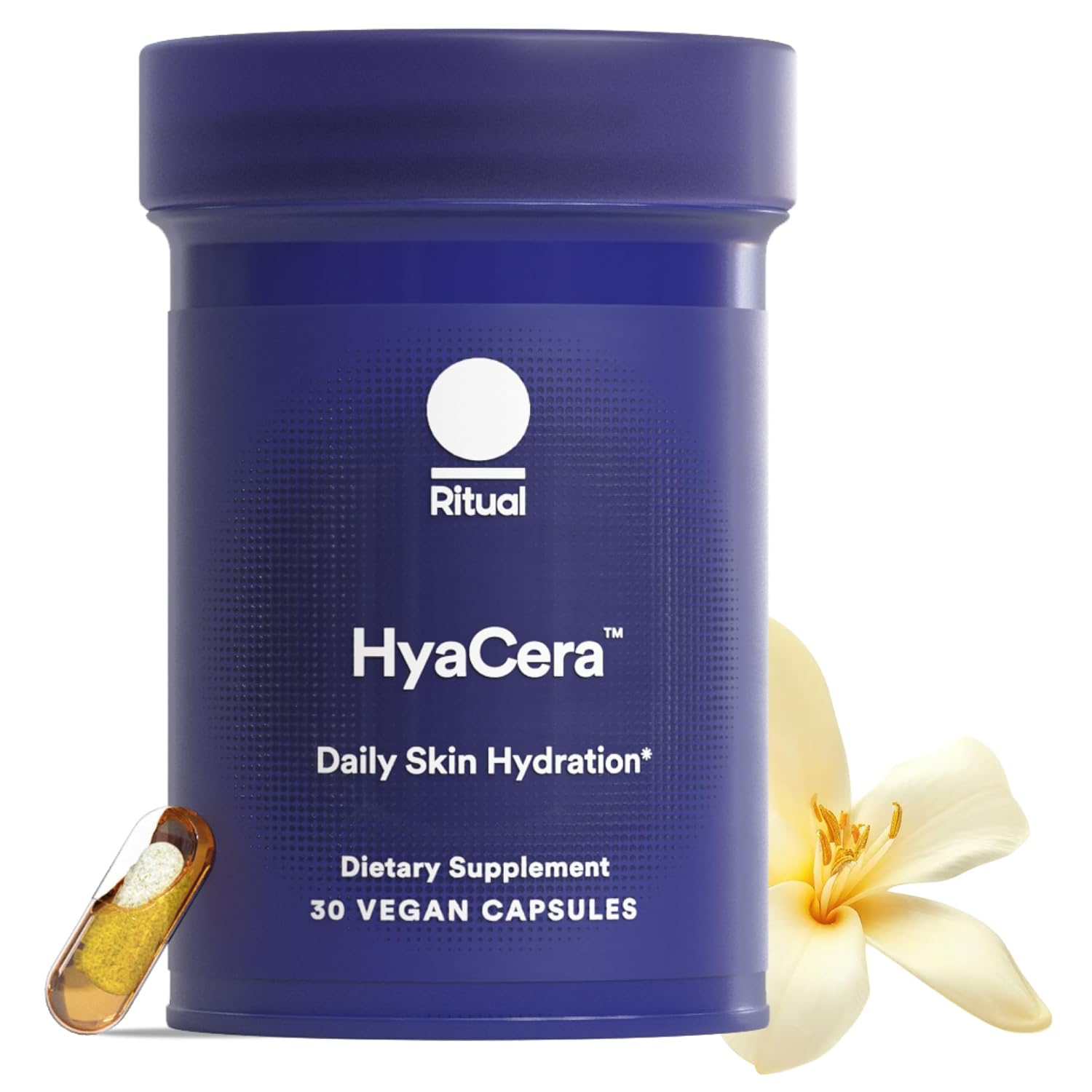
This is the premium option in the HA/ceramide category. Ritual uses two trademarked ingredients: Hyabest® (bio-fermented hyaluronic acid sourced from Japan) and Ceratiq® (sustainably harvested plant ceramides from France). The formulation offers full ingredient traceability — you can see exactly where each compound comes from.
Clinical claims for this specific combination include visible reductions in fine lines and improved skin firmness after 90 days of consistent use. At $54/month, it’s an investment — but for people who’ve tried every moisturizer and still struggle with dryness, addressing the barrier from within is a different solution entirely.
Best for: Persistently dry skin, premature aging, or anyone who gets little relief from topical moisturizers alone.
For Acne-Prone Skin: Hum Skin Squad Pre+Probiotic
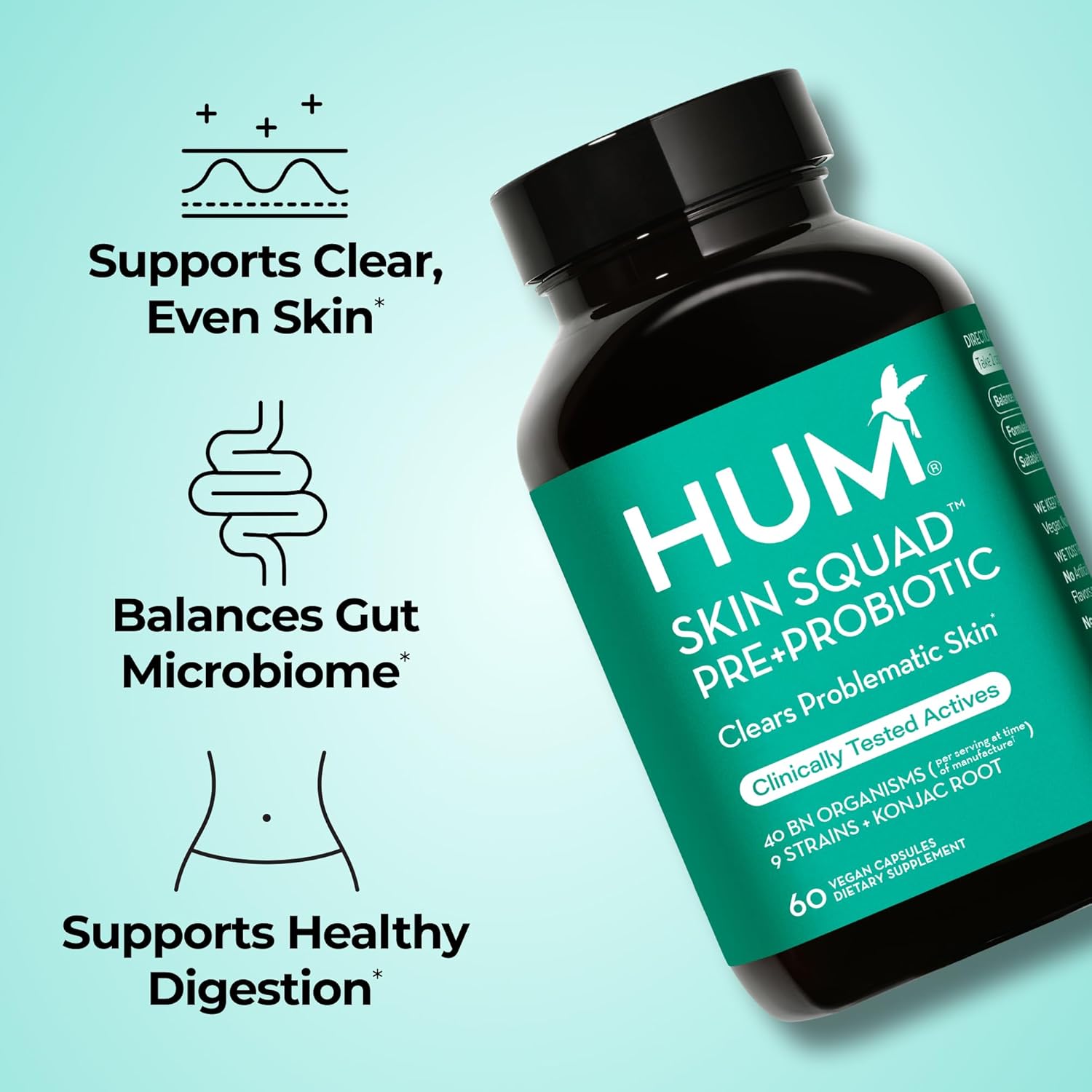
Skin Squad combines a 9-strain probiotic blend with Bacillus subtilis DE111® in capsule form (not technically a gummy, but worth including). In Hum’s internal trials, 88% of participants reported fewer breakouts after consistent use.
The key distinction here is survivability. Many probiotic products don’t survive the acidic environment of your stomach long enough to reach the small intestine where they do their work. Look for products that address this through strain selection or delivery technology.
Best for: Acne-prone skin, skin affected by hormonal fluctuations, or anyone who has found topical acne treatments too harsh.
The Budget Pick: Nature’s Bounty Hair, Skin & Nails + Collagen
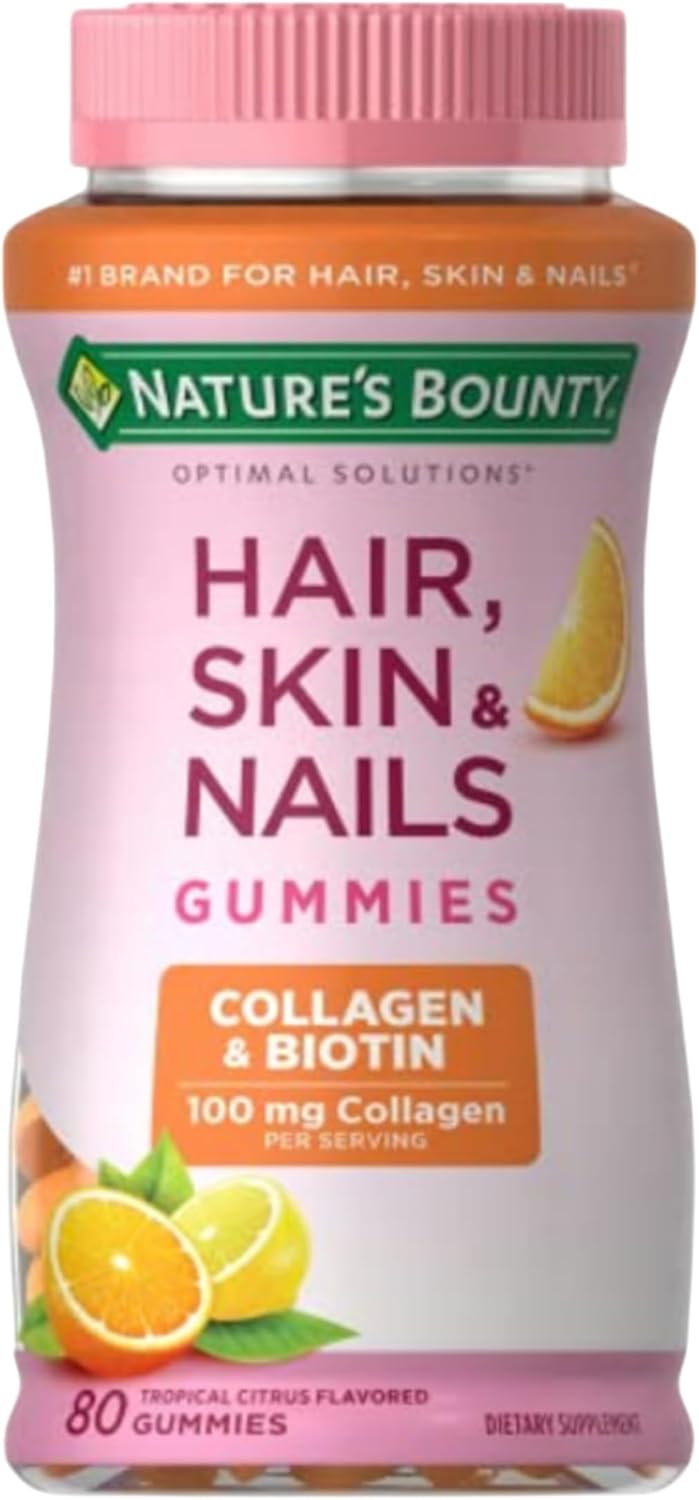
At under $15 for a 40-day supply, this is the most accessible option on this list. It contains 2,500mcg of Biotin and 100mg of Collagen per serving.
One honest note: 100mg of collagen is well below the dosages used in clinical studies. You’re unlikely to see the structural anti-aging benefits at this dose. Where it works well is as a general hair-and-nail strengthening supplement. Think of it as a starter-level option.
Important: High-dose Biotin can interfere with certain lab tests, including thyroid panels. If you’re getting bloodwork done, pause Biotin 2–3 days before your appointment and let your doctor know.
What to Look For — and What to Watch Out For
Look for:
- Collagen dose of at least 2.5g per serving for anti-aging benefits
- Third-party testing certifications (NSF, USP) to verify purity and label accuracy
- Trademarked ingredient forms (Verisol®, Hyabest®) — these have specific clinical data behind them
- Probiotic products with strain-specific research, not just CFU counts
Watch out for:
- Collagen gummies with 100mg or less — this dose is more marketing than mechanism
- High Biotin doses if you’re acne-prone (Biotin can compete with Vitamin B5 for absorption, potentially triggering breakouts)
- Zinc-containing supplements taken on an empty stomach — zinc is effective for oil regulation and wound healing, but notoriously hard on the stomach; always take with food
- Products from unverified third-party sellers — counterfeit or expired supplements are a real concern in the supplement category
Do You Still Need Topicals?
Yes — but for different reasons.
Topical sunscreen protects the skin surface from UV-induced damage. Topical antioxidants can neutralize free radicals at the skin’s surface before they penetrate. A good moisturizer seals in surface hydration.
But none of these rebuild the dermal matrix. None of them stimulate fibroblasts to produce new collagen. None of them fix the gut-skin axis.
The most effective approach treats topicals and ingestibles as two layers of the same strategy — surface protection paired with internal structural repair.
The Real Cost Comparison

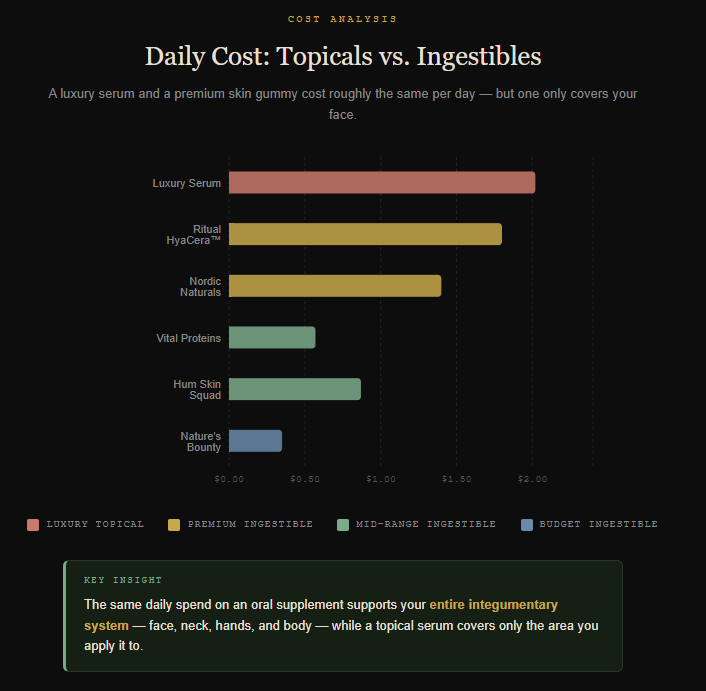
The daily cost of a premium ingestible is roughly comparable to a luxury serum — but the ingestible supports your entire body, not just the skin on your face. For anyone also dealing with aging skin on the neck, hands, or décolletage, the systemic reach of oral supplements offers a far higher return for the same spend.
The Bottom Line
Skin care gummies are not a fad. The science behind oral collagen peptides, hyaluronic acid, ceramides, and skin-targeted probiotics is well-established and growing.
The catch is this: they don’t work overnight. Give any ingestible supplement a minimum of 8 to 12 weeks before drawing conclusions. Skin cell turnover and dermal remodeling are slow. Consistency matters more than anything else.
Start with your primary concern. Wrinkles and firmness? Go for clinically dosed collagen — at least 2.5g daily. Persistent dryness? Look at HA and ceramide combinations. Chronic breakouts? The gut-skin axis may be the place to start.
Your skin doesn’t just live on the surface. Fix it where it actually works.
Always consult a healthcare provider before starting any new supplement, particularly if you have existing medical conditions or take prescription medications.
Dora Decora is a biophilic interior design specialist and passionate blogger. With a deep commitment to integrating nature into living spaces, Dora specializes in creating environments that foster human-nature connections through thoughtful design elements. Her approach emphasizes sustainable materials, natural lighting, and organic patterns that enhance wellbeing and reduce environmental impact.
This post (https://homechroma.com/best-skin-care-gummies) was originally published by Dora Decora on Home Chroma. As an Amazon Associates partner, we are compensated for all qualifying purchases.