 You wake up exhausted after eight hours of sleep. By 3 PM, your energy is gone. The scale jumped two pounds overnight for no obvious reason. And your mood? Unpredictable at best.
You’re not imagining it. Your body is sending you signals — through hormones, glucose levels, and your nervous system — and until recently, decoding those signals required a doctor’s order, a needle, and a wait.
That’s changing fast.
A new generation of wearable devices tracks the biomarkers behind those symptoms 24 hours a day, while you sleep, eat, move, and rest. No lab visits. No prescriptions. Just continuous data that finally connects the dots between what your body is doing and how you feel.
Here’s what’s worth knowing — and what’s worth buying.
Why You Crash, Fluctuate, and Swing
Before picking a tracker, it helps to know what’s actually driving those symptoms.
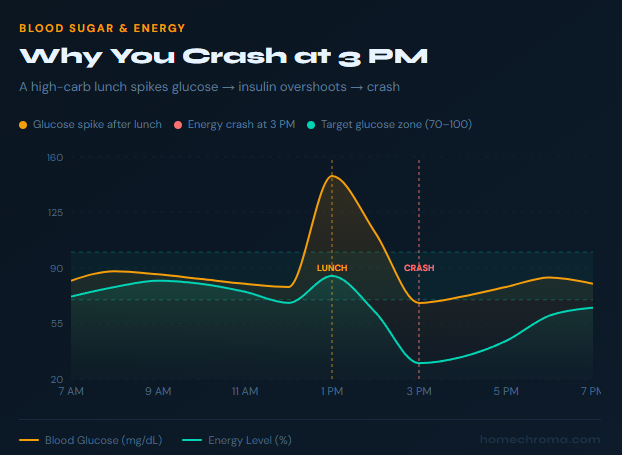
Energy crashes are usually caused by blood sugar spikes followed by an insulin response that drops glucose below baseline — leaving your cells starving for fuel. They can also stem from poor sleep quality that disrupts adenosine clearance.
Weight fluctuations of 2–5 pounds in a few days are rarely fat. They’re almost always fluid shifts driven by hormones — specifically progesterone surges during the luteal phase, which promote sodium and water retention.
Mood swings often trace back to the autonomic nervous system. When your body sits in a prolonged state of “fight or flight” — measured as low heart rate variability (HRV) — it suppresses the calm, regulated state that supports stable mood.
Modern wearables measure all of this. The question is which device measures it best for your specific needs.
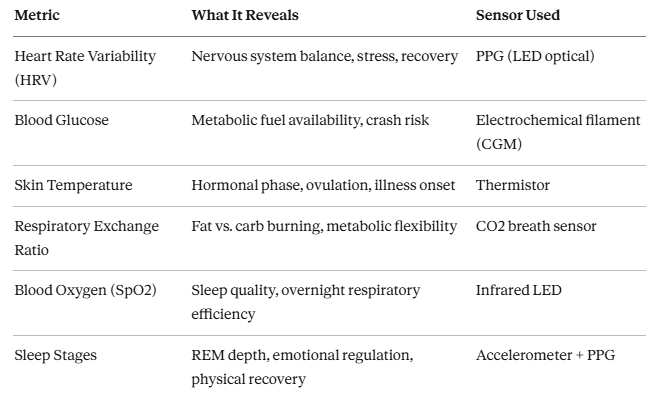
What These Devices Actually Track
The Top Wearable Hormone Trackers
1. Oura Ring 4 — Best Overall for Hormonal and Recovery Tracking
Price: ~$349
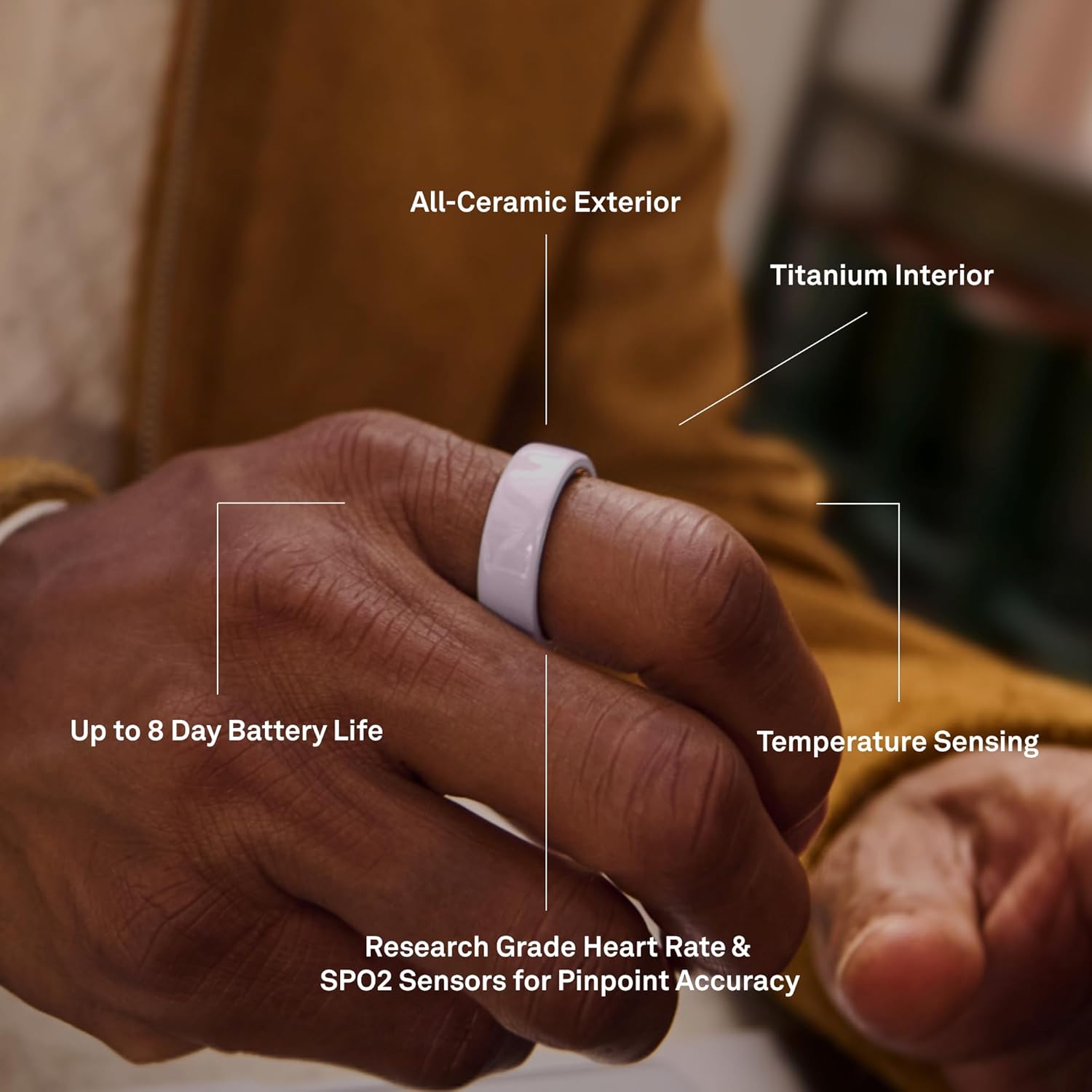
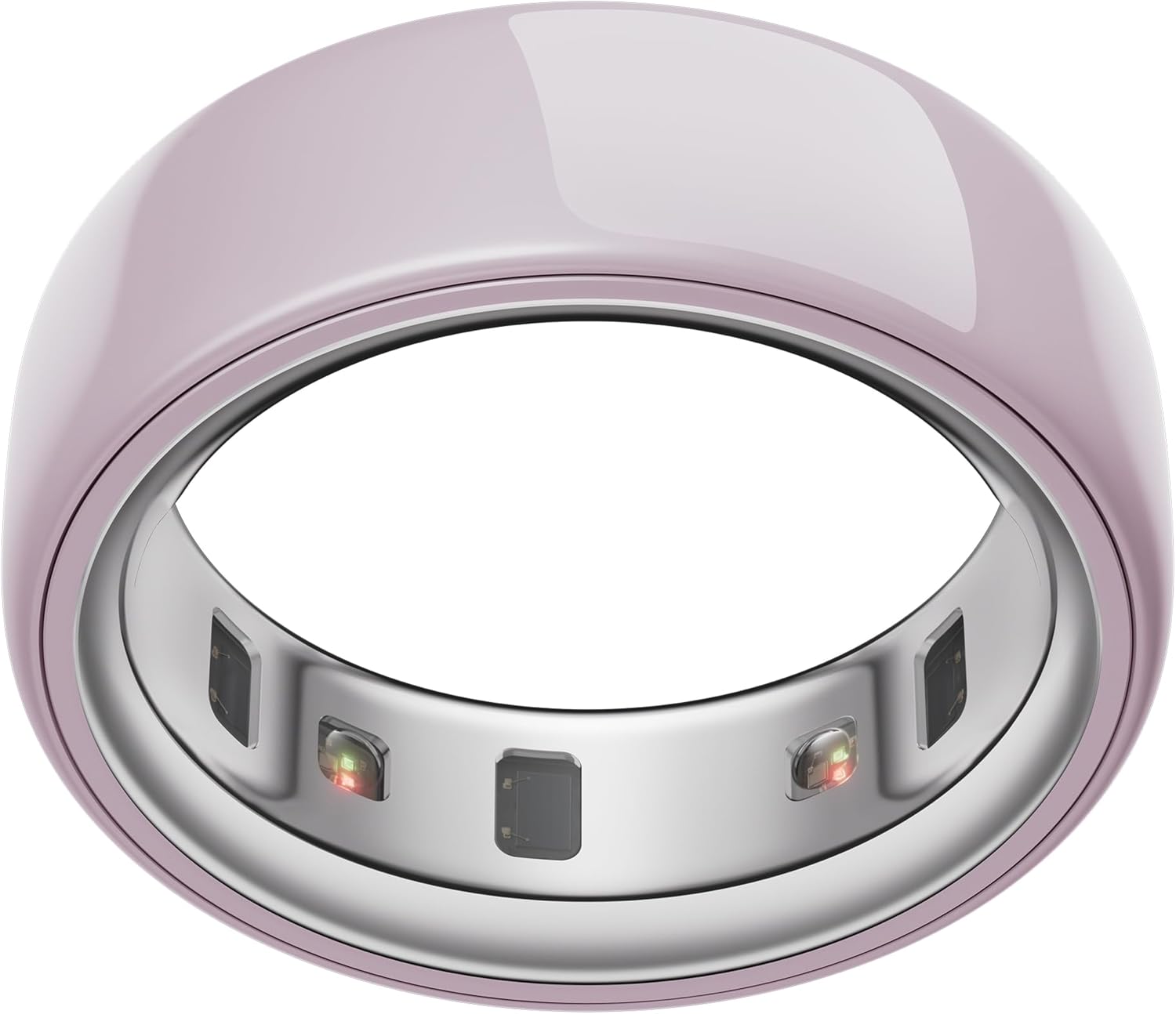
The Oura Ring 4 is the benchmark for continuous physiological tracking. It uses 18 distinct data pathways and its “Smart Sensing” technology keeps monitoring accurate even if the ring shifts position overnight.
What makes it stand out:
- Readiness Score — a 0–100 daily grade built from resting heart rate, HRV, body temperature, and prior sleep
- Symptom Radar — detects nocturnal skin temperature elevations as small as 0.1°C, flagging physiological stress before physical symptoms appear
- Cycle Insights — tracks thermal shifts across follicular and luteal phases, giving users a hormone-based explanation for mood and energy changes without a blood test
For anyone who experiences cyclical mood and energy patterns, the temperature tracking alone makes this worth the price. It turns what feels random into a predictable, data-backed pattern.
Best for: Women tracking cycle-related energy and mood; anyone serious about recovery optimization.
2. Ultrahuman Ring Air — Best for Metabolic and Circadian Optimization
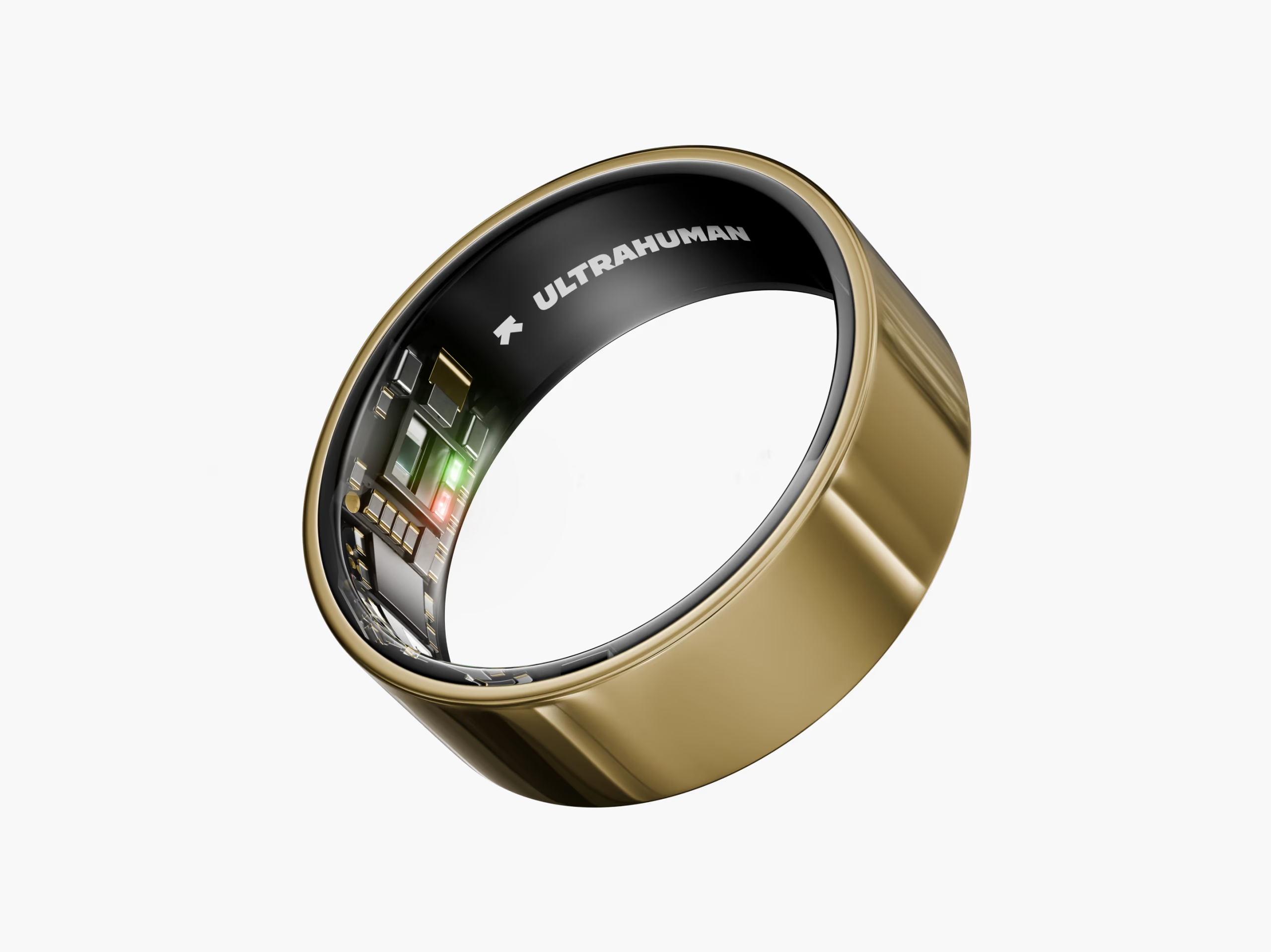
Price: ~$349 (no subscription)
The Ultrahuman Ring Air focuses on metabolic efficiency and behavioral timing. Its Caffeine Permissible Window feature analyzes your circadian data to identify when caffeine will work — and when it will backfire and cause a late-day crash or disrupt sleep.
What makes it stand out:
- Metabolic Score — tracks how efficiently your body recovers from physical and mental load
- Movement Index — sends reminders for light exposure, which resets your circadian master clock and directly governs alertness
- No monthly subscription fee, making long-term use more cost-effective
For people who rely on stimulants to get through the day, this ring provides a science-backed answer to when to use them and why they’re causing problems.
Best for: Biohackers, fitness enthusiasts, anyone who wants to stop guessing about caffeine and sleep timing.
3. RingConn Gen 2 Air — Best Budget Smart Ring
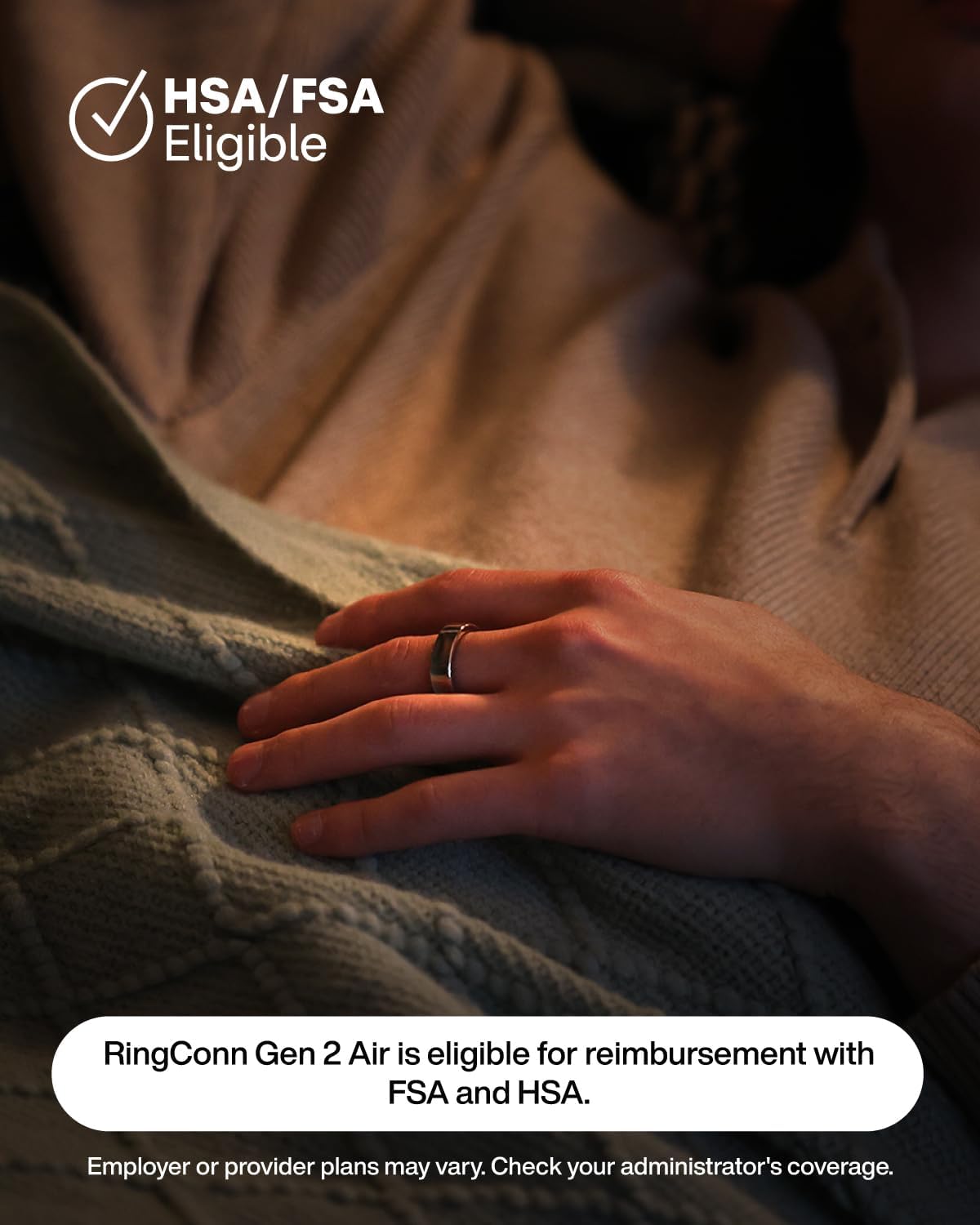
Price: ~$199–$299 (no subscription)
The RingConn Gen 2 Air delivers high-quality vitals monitoring without recurring fees. Its Wellness Balance model uses a four-petal visual — Sleep, Relax Status, Vitals, and Activity — that gives users an instant visual read on what’s dragging down their energy or mood.
What makes it stand out:
- 24/7 SpO2 monitoring detects low-level overnight hypoxia, a common and underdiagnosed cause of morning brain fog
- 10–12 day battery life reduces the daily charging burden that causes most people to stop wearing trackers consistently
- Lightweight titanium construction
If the “Relax Status” petal is consistently low, the ring identifies chronic sympathetic nervous system dominance — the biological state that reliably precedes burnout and mood dysregulation.
Best for: Budget-conscious buyers who want continuous vitals without a subscription.
4. Evie Ring — Best Smart Ring Built for Female Physiology
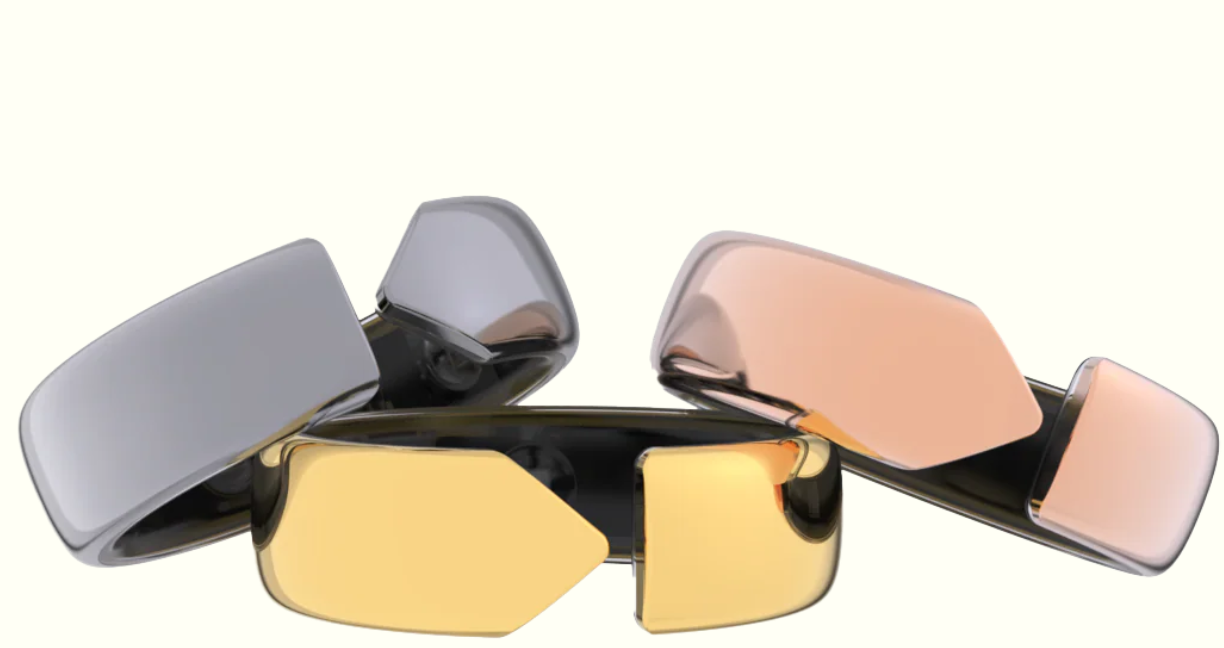
Price: ~$269
The Evie Ring is the only smart ring designed specifically around female biology. Its open-gap construction lets the ring expand during the hormonal swelling that affects finger size in the luteal phase — solving a comfort problem every other ring ignores.
What makes it stand out:
- Logs subjective symptoms (flow intensity, cramps, emotional states) and overlays them against objective HRV and skin temperature data
- Shows why a mood drop is happening — for example, correlating luteal-phase irritability with a decreased resting heart rate and reduced deep sleep
- Provides data validation for experiences that often get dismissed without clinical numbers
Best for: Women who want a device built around menstrual health, not adapted to it.
5. Dexcom Stelo — Best for Understanding Energy Crashes Directly
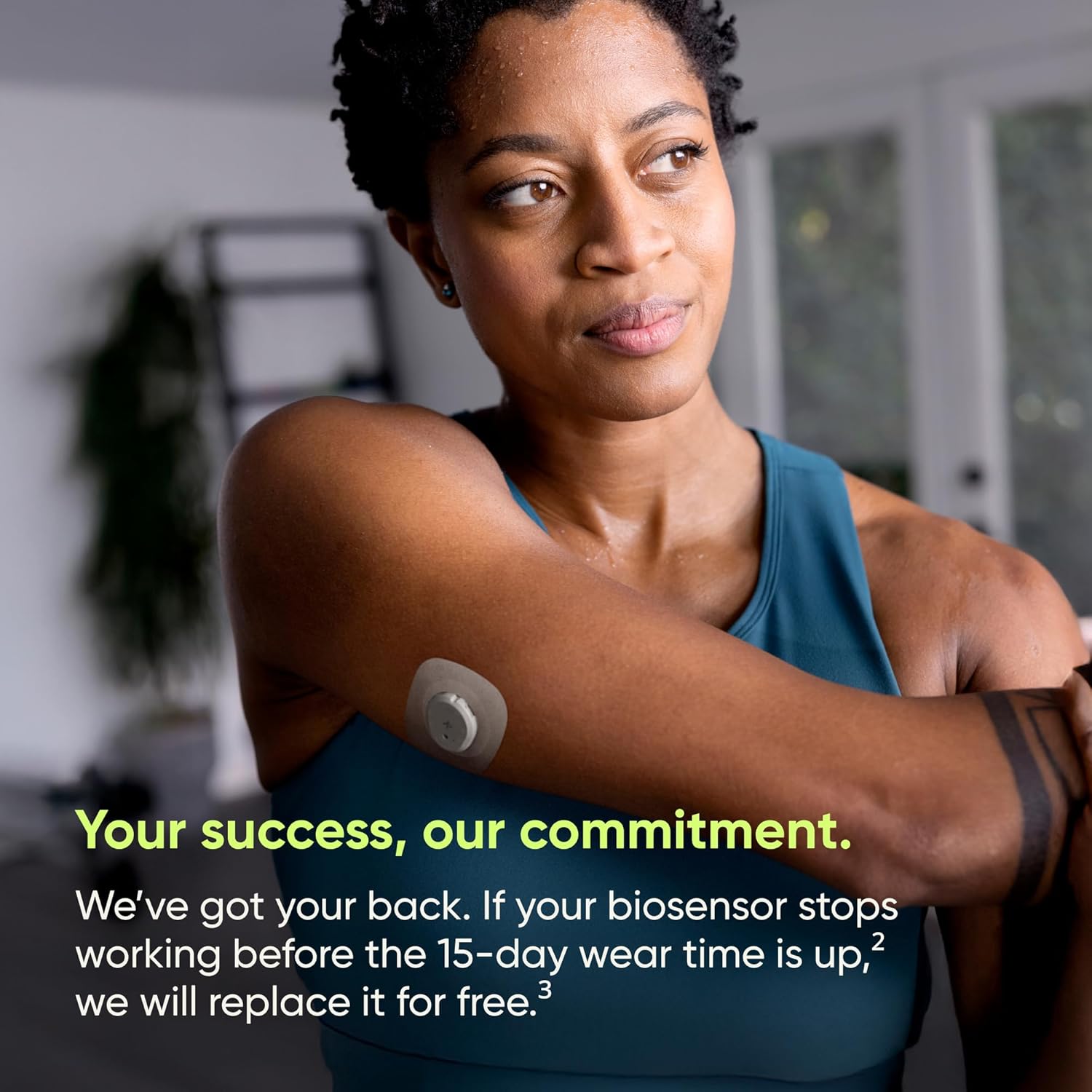
Price: ~$99 for a 30-day supply
The Dexcom Stelo is a continuous glucose monitor (CGM) available without a prescription. A small filament sits just under the skin and reads interstitial glucose every few minutes, feeding data directly to an app.
What makes it stand out:
- Shows glucose spikes and the subsequent insulin-driven crash in real time — the single clearest explanation for afternoon energy collapse
- Visualizes how specific meals, exercise, and stress events affect blood sugar
- Enables strategies like “meal layering” (eating protein and fiber before starches) to flatten the glucose curve and stabilize energy
This is the most direct tool for anyone whose energy crashes feel tied to what — or when — they eat. It answers the “why” behind post-meal fatigue with precision that no ring or watch can match.
Best for: People experiencing frequent post-meal energy crashes; anyone working on weight loss who wants metabolic data to guide food choices.
6. Lumen — Best for Metabolic Flexibility and Weight Plateaus
Price: ~$299
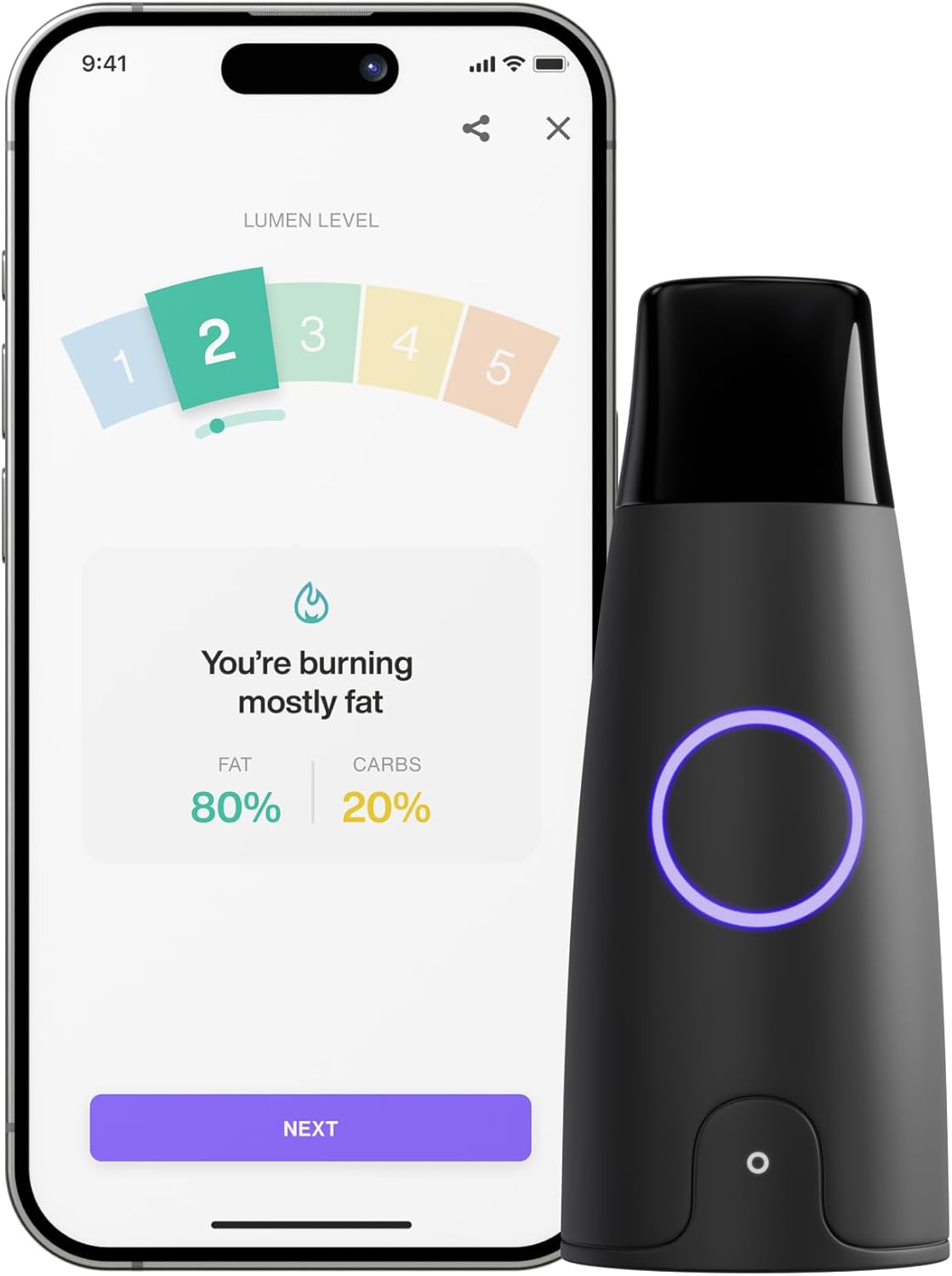
The Lumen is a handheld breath analyzer, not a wearable ring — but it solves a problem no ring can: it directly measures whether your body is burning fat or carbohydrates at any given time.
A high-precision CO2 sensor calculates your Respiratory Exchange Ratio (RER). Higher CO2 means carb-burning. Lower CO2 means fat-burning.
What makes it stand out:
- Flex Score tracks metabolic flexibility over time — the body’s ability to switch fuel sources efficiently
- Morning readings reveal whether your body has entered fat-burning overnight or is still clinging to glucose
- Personalized carb-cycling recommendations train the body to access stored fat more efficiently
The “3 PM slump” is one of the clearest signs of metabolic inflexibility. Lumen shows this in a single breath measurement — and then tells you what to change.
Best for: Anyone hitting weight loss plateaus; people experiencing consistent afternoon energy drops despite eating well.
7. Mira Fertility Max — Best for Quantitative Hormone Profiling
Price: ~$249
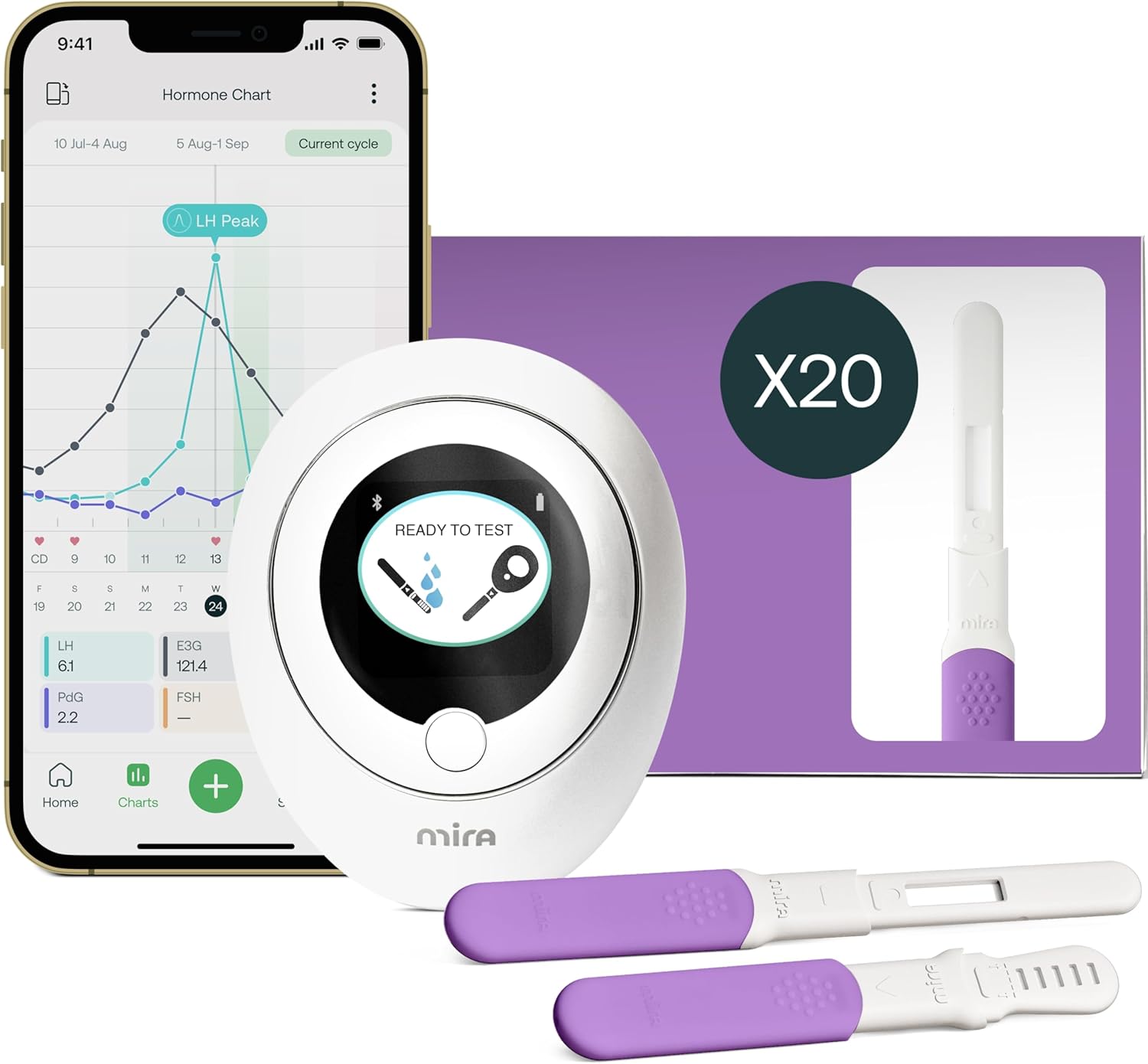
The Mira Fertility Max uses fluorescence-based immunochromatography to measure the actual concentrations of three key hormones in urine: estrogen (E3G), luteinizing hormone (LH), and progesterone (PdG).
Unlike most cycle apps that give a binary “fertile/not fertile” reading, Mira gives real numbers.
What makes it stand out:
- Detects estrogen dominance — often linked to significant mood swings and weight gain — with quantitative data rather than guesswork
- Identifies low progesterone, which causes sleep disturbances and second-half-of-cycle fatigue
- Particularly valuable for women with irregular cycles or PCOS
Best for: Women with unexplained cyclical symptoms; anyone who wants clinical-level hormone data without a lab visit.
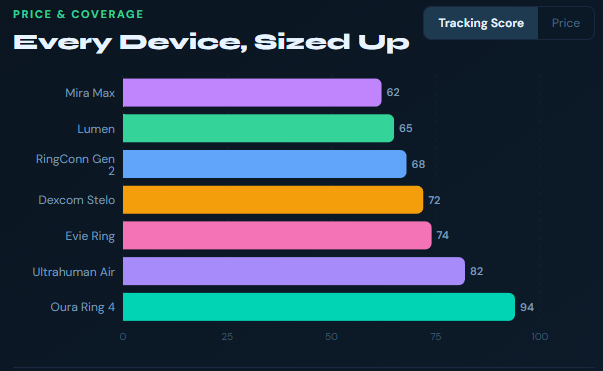
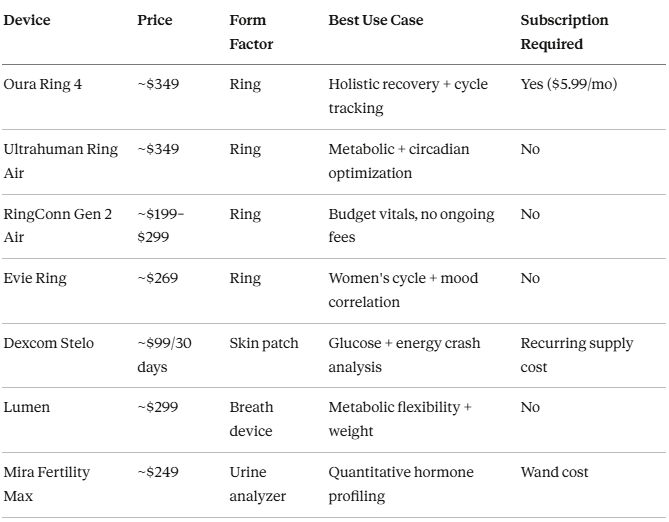
Head-to-Head Comparison
Which One Is Right for You?
You crash hard every afternoon after eating → Start with the Dexcom Stelo. See your glucose curve in real time and pinpoint exactly which meals are triggering it.
Your weight bounces 3–5 lbs for no clear reason → Try the Oura Ring 4 or Mira Fertility Max. Oura tracks the temperature shifts tied to hormonal water retention. Mira gives you the actual hormone numbers.
Your mood feels cyclically unpredictable → The Evie Ring or Oura Ring 4 will connect your daily mood logs to objective biometric data and show you the hormonal driver.
You’re stuck at a weight plateau despite eating well → Lumen is the most direct tool. It shows whether your body is capable of burning fat or is stuck in carb-burning mode.
You want one device that tracks everything → Oura Ring 4 covers the widest ground. For women specifically, pairing it with Mira on difficult days gives a complete hormonal picture.
You want solid tracking with no monthly fees → Ultrahuman Ring Air or RingConn Gen 2 Air.
Frequently Asked Questions
Do these devices actually track hormones directly? Most do not measure hormones in your bloodstream. Instead, they track hormonal proxies — skin temperature, HRV, and sleep patterns that shift predictably as estrogen and progesterone levels change. Mira is the exception; it measures actual hormone concentrations in urine.
Do I need a prescription for the Dexcom Stelo? No. The Stelo is specifically cleared for over-the-counter use by adults without diabetes who want metabolic insights.
How accurate are smart ring temperature readings? Smart rings outperform wrist-based devices for skin temperature because the finger sits closer to digital arteries, providing more stable contact and more reliable readings — especially during sleep.
Can these trackers replace a doctor? No. They provide biometric data to help you understand your body’s patterns. Significant hormonal symptoms — especially related to cycle irregularity, fatigue, or mood — warrant evaluation by a healthcare professional. These tools give you better information to bring to that conversation.
How long does it take to see useful data? Most devices need 2–4 weeks to establish your personal baseline. Once that’s in place, deviations from your norm become much more meaningful than any single reading.
Your body has been sending you these signals for years. Now there are tools that can read them back to you in plain language — without a single lab visit required.
Dora Decora is a biophilic interior design specialist and passionate blogger. With a deep commitment to integrating nature into living spaces, Dora specializes in creating environments that foster human-nature connections through thoughtful design elements. Her approach emphasizes sustainable materials, natural lighting, and organic patterns that enhance wellbeing and reduce environmental impact.
This post (https://homechroma.com/best-wearable-hormone-tracker) was originally published by Dora Decora on Home Chroma. As an Amazon Associates partner, we are compensated for all qualifying purchases.