Traditional composting has limits. You can’t toss in meat scraps. Dairy products attract pests. Oily foods create problems. Most composters spend months waiting for results while following strict rules about carbon-to-nitrogen ratios.
Bokashi composting changes everything.
This Japanese fermentation method works differently than standard composting. You can process nearly all kitchen waste—yes, including meat, fish, and cheese. The system fits under your sink. It produces no foul odors when done correctly.
But here’s what you need to know upfront: The complete process takes 4 to 6 weeks, not the 2 weeks you might have heard about.
Understanding the Two-Phase Timeline
Many people buy a Bokashi bin expecting finished compost in 14 days. They open the bin after two weeks and find acidic, fermented material that can’t go directly into their garden.
Here’s the reality:
Phase 1 (2 weeks): Your food scraps ferment in the sealed bin. This creates “pre-compost”—a preserved, pickled version of your waste.
Phase 2 (2-4 weeks): The fermented material must cure in soil before plants can use it safely. This second phase converts the acidic pre-compost into nutrient-rich “Black Gold.”
Total time: 4 to 6 weeks from kitchen scrap to garden-ready compost.
How Bokashi Actually Works
The Science: Fermentation vs. Decomposition
Traditional composting needs oxygen. Microbes break down organic matter through aerobic decomposition. This requires turning the pile, monitoring moisture, and generating heat.
Bokashi runs on fermentation—an oxygen-free (anaerobic) process. Think of it as pickling your food scraps instead of rotting them.
The process relies on beneficial microorganisms, primarily:
- Lactic acid bacteria (LAB)
- Yeasts
- Photosynthetic bacteria
These microbes come from your Bokashi bran—a wheat bran or sawdust carrier mixed with molasses and cultured microorganisms. The most effective commercial products use Dr. Teruo Higa’s Effective Microorganisms (EM1), a consortium of over 80 specific microbial strains.
When you seal food scraps with this bran, the microbes multiply rapidly—potentially doubling every 20 minutes. They consume proteins and carbohydrates, breaking them into amino acids and enzymes that plants can eventually absorb.

What You Can Compost
Bokashi accepts materials that traditional composting cannot:
- Meat and bones (small pieces)
- Fish and seafood
- Dairy products
- Oils and fats
- Cooked foods
- Coffee grounds and tea bags
- Fruit and vegetable scraps
- Bread and grains
You’ll achieve nearly complete kitchen waste diversion.
Phase 1: The Fermentation Process (Week 1-2)
Step-by-Step Instructions
1. Prepare Your Bin
Sprinkle a light layer of Bokashi bran at the bottom of your airtight container.
2. Add Food Scraps in Layers
- Cut waste into small pieces (speeds up fermentation)
- Add scraps in 2-inch layers
- Sprinkle 1-2 heaping tablespoons of bran over each layer
3. Remove Air
Use the provided tamper or a flat plate to compress each layer firmly. Oxygen causes rot instead of fermentation.
4. Drain the Liquid
Every 2-3 days, drain the liquid (leachate) through the spigot. Allowing liquid to accumulate will ruin your batch.
5. Seal and Wait
Once full, seal the lid tightly. Wait 14 days from when you added the last scraps. Keep the bin at room temperature. Do not open it during fermentation.
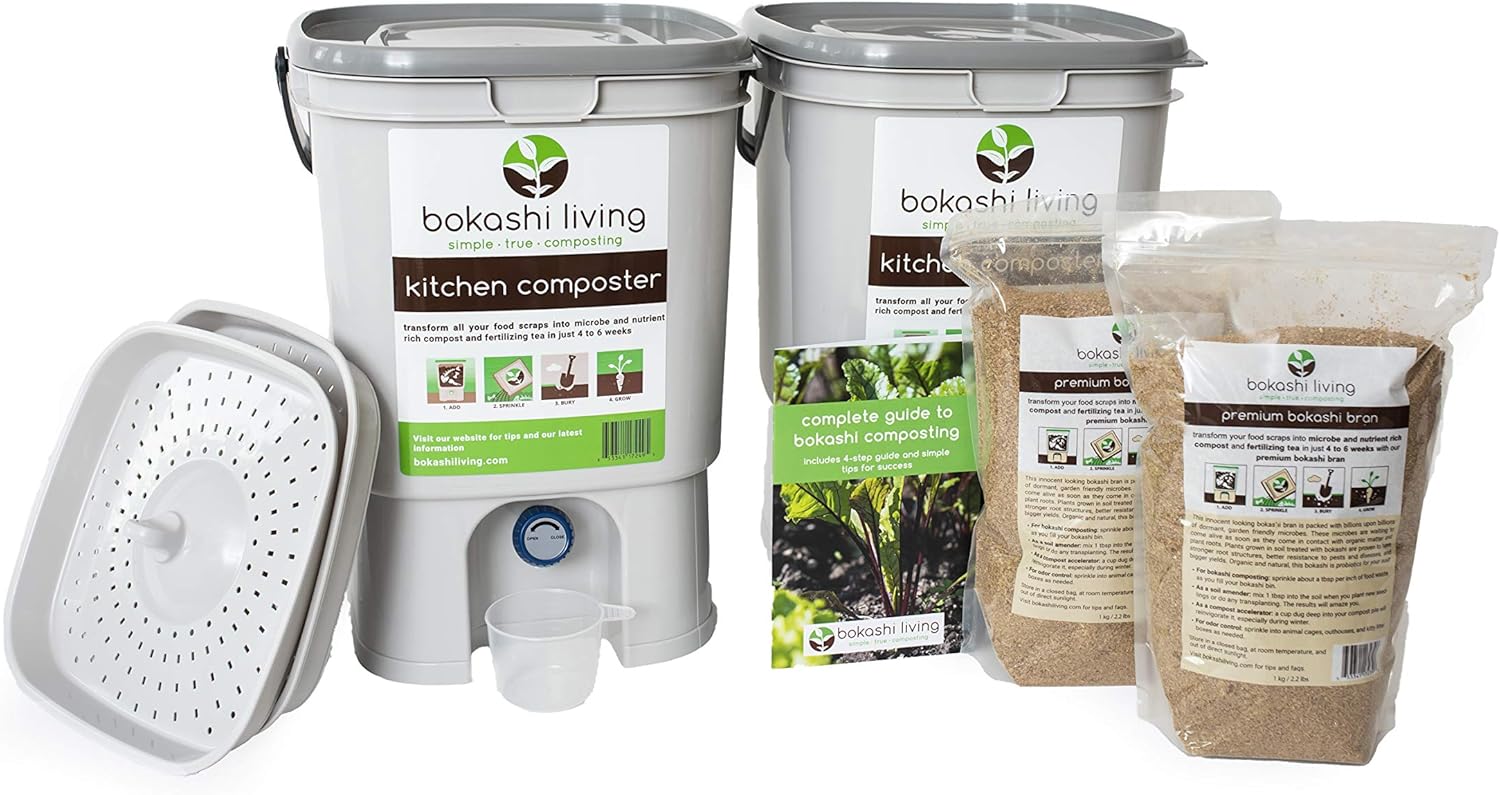
Premium Bokashi Composting Starter Kit [click to view…]
Signs of Success vs. Failure
Good fermentation:
- White, fuzzy mold appears (this is beneficial)
- Smells mildly sweet, yeasty, or like vinegar
- Material looks pickled and preserved
Failed fermentation:
- Black or green mold
- Putrid, rotten smell
- Slimy texture
Failure usually means oxygen got in or liquid wasn’t drained properly.
Phase 2: Creating Usable Compost (Week 3-6)
After two weeks, you have fermented pre-compost. This material is highly acidic and will burn plant roots if applied directly.
The Burial Method
1. Choose Your Location
Pick a spot in your yard or garden where you won’t plant for several weeks.
2. Dig Deep
Create a hole 8-12 inches deep.
3. Layer the Materials
Alternate layers of pre-compost with the soil you dug out.
4. Cover Completely
Top with a thick layer of soil or mulch. This prevents odors and deters animals.
5. Wait
Allow 2-4 weeks minimum before planting in that area. Warmer weather speeds decomposition. Cold temperatures slow it down significantly—you might need 4-6 weeks in winter.
Alternative: Compost Pile Acceleration
Bury the pre-compost deep in an existing compost pile. The fermented material accelerates the entire pile’s decomposition and deters rodents.
Managing Bokashi Liquid (Leachate)
The liquid draining from your bin contains concentrated beneficial bacteria and nutrients. Handle it carefully.
As Fertilizer
Never apply undiluted. The leachate will kill plants.
Dilution ratio: 1:100 (leachate to water) Practical measurement: 2 teaspoons per liter of water
Water the soil around plants (avoid leaves). Use within 24 hours of diluting.
For Household Maintenance
Pour concentrated leachate directly down drains, sinks, and toilets. It prevents blockages, reduces odors, and adds beneficial microbes to septic systems.
Bokashi Byproduct Quick Reference

Choosing Your Bokashi Bin
Essential Features
Airtight seal: Prevents oxygen entry and contains odors
Built-in spigot: Allows easy liquid drainage (critical for success)
Strainer plate: Keeps solids above pooling liquid
Durable materials: BPA-free plastic preferred
Single vs. Dual Bin Systems
Single bin pros:
- Lower initial cost ($50-70)
- Takes up less space
- Good for beginners or small households
Single bin cons:
- Must freeze or store new scraps during the 2-week fermentation wait
- Interrupts daily routine
Dual bin pros:
- Continuous operation (fill one while the other ferments)
- No interruption to waste collection
- Better for families or high-volume users
Dual bin cons:
- Higher cost ($150-180)
- Requires more space
For most households, a two-bin system proves worth the investment.
Top Product Recommendations
Best Single Bin: SCD Probiotics All Seasons Indoor Composter

All Seasons Indoor Composter Starter Kit [click to view…]
- Capacity: 4.4 gallons
- Price: $60-70
- Includes: Spigot, strainer, presser tool, starter bran
- Recognition: Featured on The Spruce’s best composters list
- Benefits: Excellent odor control, suitable for countertop placement
The SCD Organko 4.4 Gallon Kit offers similar functionality with a sleeker, modern design.
Best Dual System: Bokashi Living Starter Kit
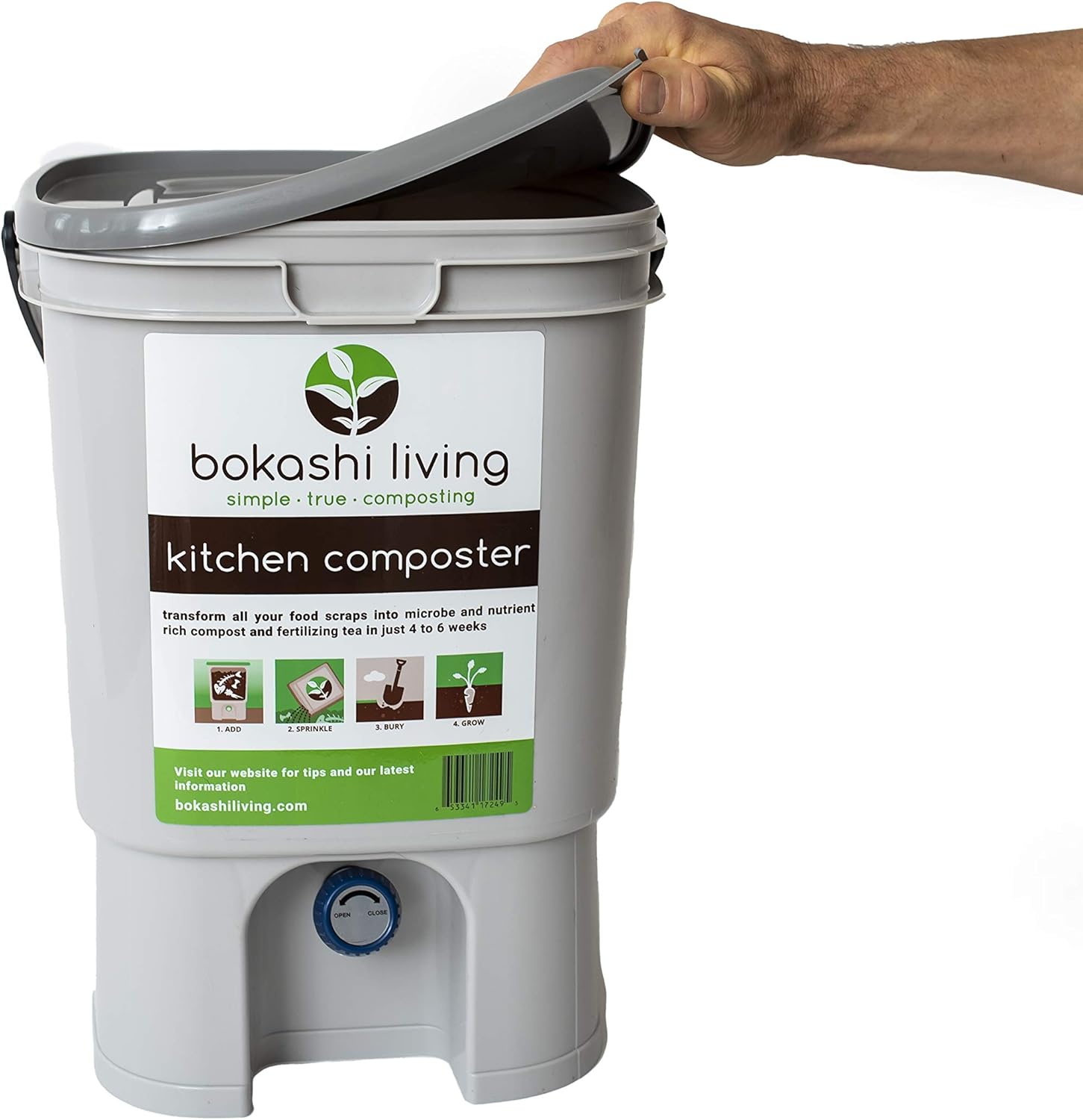
Premium Bokashi Composting Starter Kit [click to view…]
- Includes: Two bins, premium double-fermented bran
- Benefits: Maintains continuous collection, industry standard for serious users
The Ongoing Cost: Bokashi Bran
Unlike traditional composting, Bokashi requires continuous purchase of inoculant. This creates a “subscription-based” composting model.
Why Commercial Bran Matters
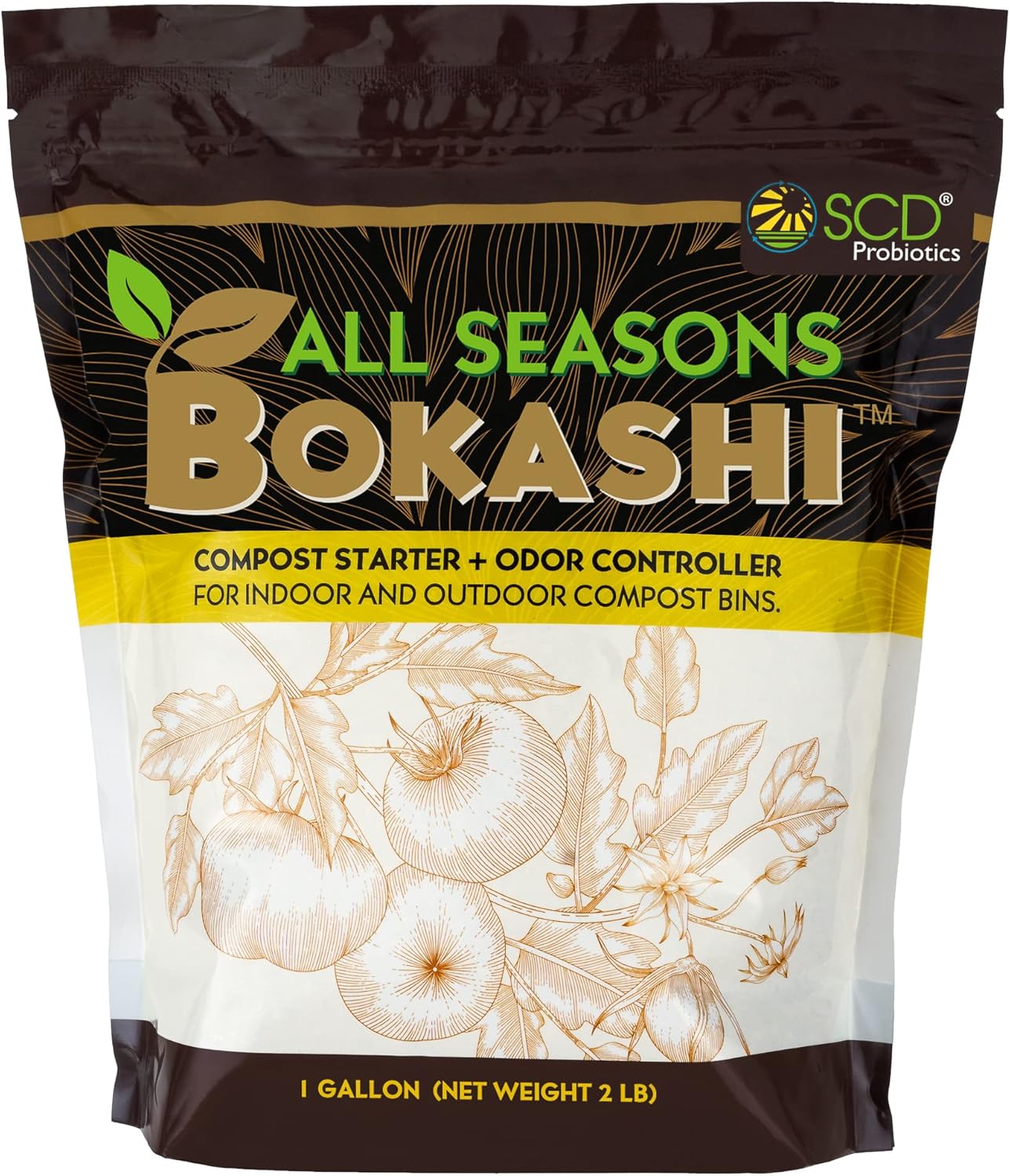
All Seasons Bokashi Compost Starter 2 lbs [click to view…]
You could attempt homemade cultures using yogurt or kimchi starters. These lack the specific consortium of 80+ microbial strains in commercial EM1 products.
The result? Slower fermentation, higher failure rates, and inability to handle difficult wastes like meat and dairy.
Commercial bran guarantees:
- Rapid 14-day fermentation
- Reliable odor control
- Ability to process all food waste types
- Consistent results
Cost Analysis
Small quantities: $8.50-11.50 per pound
Bulk purchases (11 lbs/5 kg): $6.80-8.60 per pound
One 2.2 lb bag processes approximately five full bins—roughly 3-4 months of use for average families.
Reducing Your Bran Costs
Buy in bulk. An 11 lb supply drops your per-pound cost by 25-35%.
Use bran for multiple purposes:
- Accelerate slow outdoor compost piles
- Reduce odors in litter boxes
- Boost houseplants when sprinkled on soil
- Freshen diaper pails
These additional applications increase your return on investment.
Troubleshooting Common Problems
Foul Odor
Cause: Oxygen contamination or undrained liquid
Solution:
- Check lid seal
- Tamp scraps firmly when adding
- Drain spigot every 2-3 days without fail
If rot has started, bury the contents immediately. You cannot recover fermentation from putrefaction.
Leaking Spigot
Cause: Low-quality seals or worn components
Solution:
- Choose high-quality bins (SCD Organko models have better drainage systems)
- Replace seals when needed
- Place bin on a tray to catch drips
Slow Phase 2 Breakdown
Cause: Cold temperatures
Solution:
- Bury pre-compost in an active, hot compost pile instead of cold soil
- Wait longer during winter months (up to 6 weeks)
- Plan your Phase 2 timing around seasons
The Benefits Beyond Waste Reduction
Bokashi pre-compost retains more nutrients than traditional composting. The anaerobic process prevents gaseous nutrient loss, preserving:
- Antioxidants
- Minerals
- Enzymes
- Beneficial bacteria
When buried, this fermented material:
- Improves soil structure
- Increases water retention capacity
- Attracts earthworms (a key indicator of soil health)
- Reduces plant disease susceptibility
- Acts as a powerful microbial soil accelerator
You’re not just reducing waste. You’re actively building healthier garden ecosystems.
Is Bokashi Right for You?
Bokashi works well if you:
- Want to compost meat, dairy, and oils
- Need an indoor, year-round system
- Have limited outdoor space
- Want faster results than traditional composting
- Can commit to regular liquid drainage
- Don’t mind the recurring bran cost
Stick with traditional composting if you:
- Primarily compost yard waste and vegetable scraps
- Want zero ongoing costs
- Have ample outdoor space
- Don’t mind waiting 6-12 months for results
Getting Started
Purchase a quality bin with a reliable spigot and strainer system. For uninterrupted composting, invest in a dual-bin setup from the start.
Stock up on commercial Bokashi bran—buy in bulk to reduce long-term costs.
Start small. Fill your first bin, following the layering and drainage protocols carefully. After the 2-week fermentation, bury the pre-compost and mark the date.
Wait the full 2-4 weeks before planting in that spot. Check the buried material after 3 weeks. You’ll find dark, crumbly, nutrient-rich soil that earthworms have already discovered.
That’s your “Black Gold”—worth the 4 to 6 week wait.
Dora Decora is a biophilic interior design specialist and passionate blogger. With a deep commitment to integrating nature into living spaces, Dora specializes in creating environments that foster human-nature connections through thoughtful design elements. Her approach emphasizes sustainable materials, natural lighting, and organic patterns that enhance wellbeing and reduce environmental impact.
This post (https://homechroma.com/bokashi-bin-how-to-turn-food-scraps-into-black-gold) was originally published by Dora Decora on Home Chroma. As an Amazon Associates partner, we are compensated for all qualifying purchases.