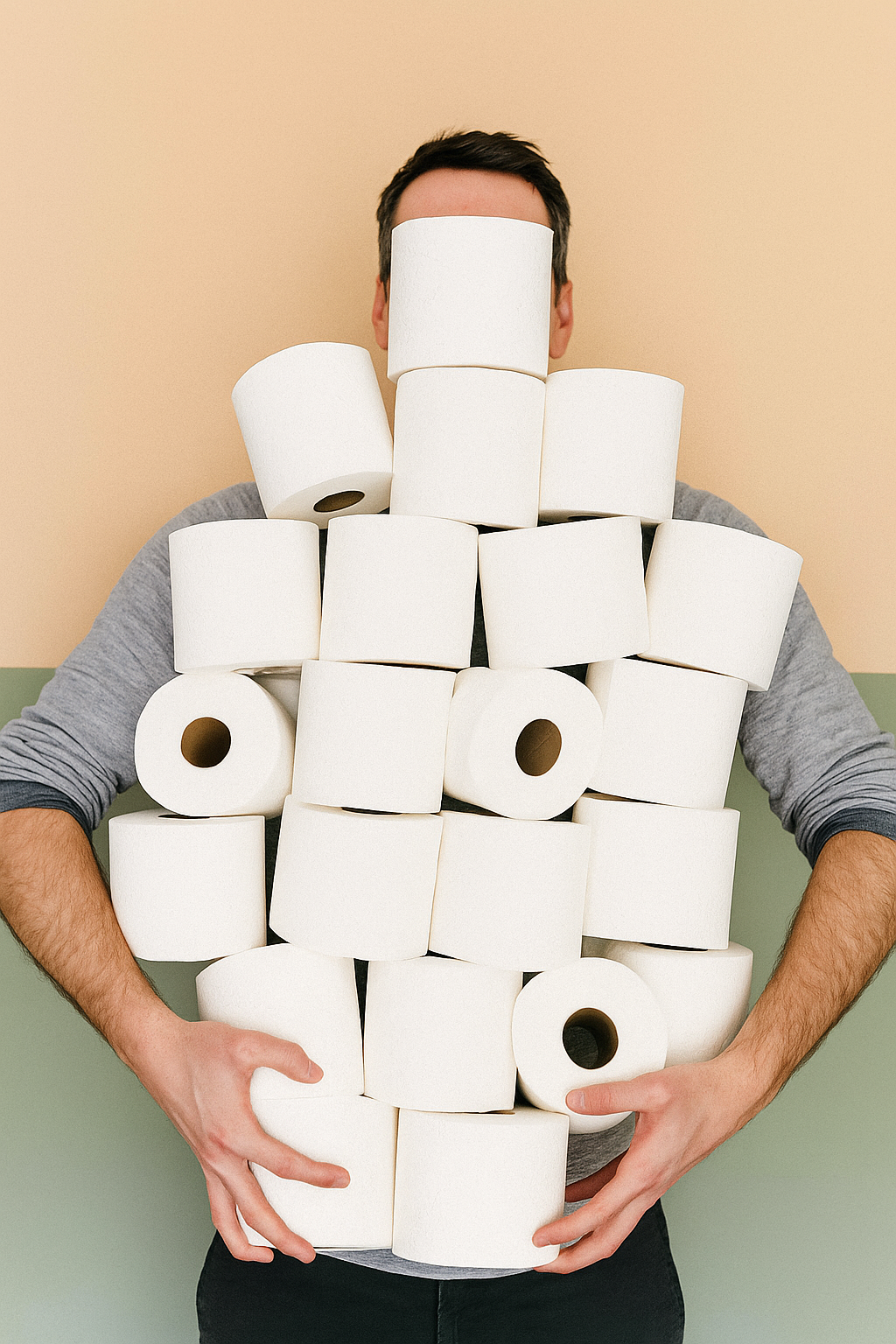
Every single day, 27,000 trees get lost just so people can wipe their bums.
That’s right – while you’re thinking about your morning coffee or evening plans, your toilet paper choice is quietly making a massive environmental impact.
Most people grab whatever’s cheapest at the store. But here’s the thing: traditional toilet paper from virgin wood pulp is destroying more than one million acres of Canada’s climate-critical boreal forest each year. The good news? You have two powerful alternatives that work just as well (or better) than regular toilet paper.
This showdown will help you pick the winner for your bathroom.
How Your Toilet Paper Actually Gets Made
The Recycled Route: From Office Paper to Your Bathroom
Think recycled toilet paper comes from used toilet paper? Wrong. It’s actually made from office paper, newspapers, magazines, and other post-consumer waste.
Here’s the process:
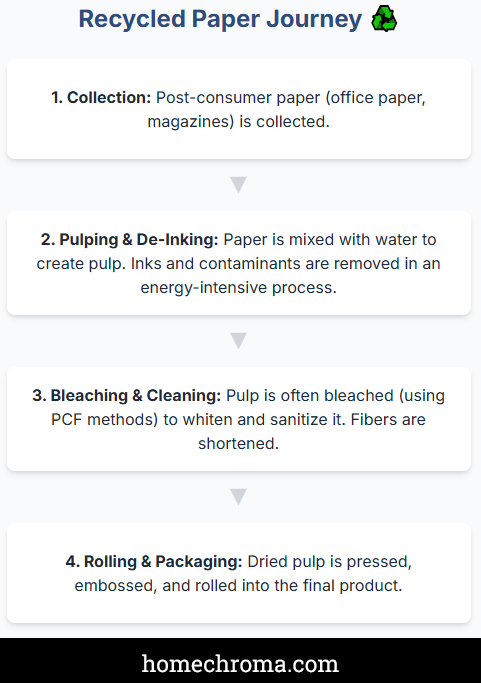
The reality check: This de-inking process is energy- and chemically-intensive, demanding considerable amounts of water and chemicals. Plus, paper fibers can only be recycled 5-7 times before they become too short and weak for reuse.
The Bamboo Path: From Grass to Gold
Bamboo toilet paper starts with the world’s fastest-growing plant. Bamboo can grow up to 35 inches per day and reaches maturity in just 3-5 years.
The manufacturing process:
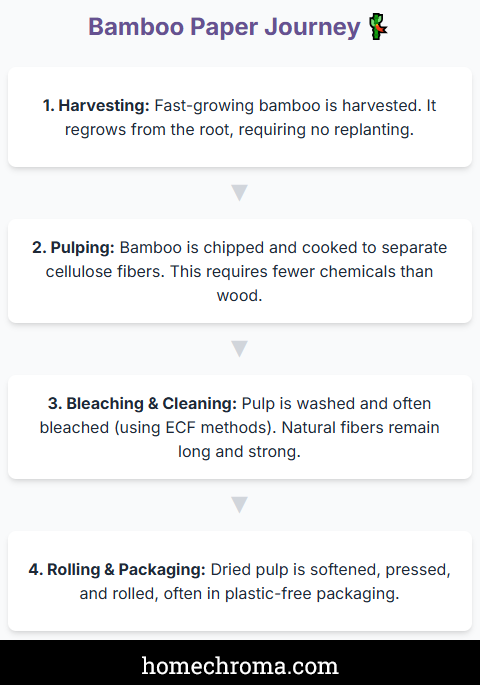
The advantage: Bamboo’s lower lignin content requires fewer chemicals and less energy during processing compared to wood. It also regenerates naturally from its roots after harvesting, preventing deforestation.
Environmental Impact: The Numbers Don’t Lie
Resource Consumption Battle
Recycled Paper:
- Trees saved: Diverts existing paper waste from landfills and reduces demand for virgin trees
- Water usage: High water demand for de-inking and repulping
- Energy consumption: Energy-intensive cleaning process that can rival virgin paper production when fossil fuels power the factories
Bamboo Paper:
- Trees saved: 100% tree-free since bamboo is technically a grass
- Water usage: Bamboo requires less water for growth compared to traditional tree farming
- Energy consumption: More energy-efficient production due to bamboo’s natural properties
Carbon Footprint Comparison
The carbon story gets interesting. One Life Cycle Assessment showed bamboo toilet paper can reflect 45% less life cycle carbon emissions compared to recycled paper, and 27% less than virgin tree-based paper.
Why? Bamboo groves produce approximately 35% more oxygen than equivalent tree stands. Plus, bamboo’s significant carbon sequestration during growth contributes to fighting climate change.
But wait – there’s a catch. Much bamboo gets imported from China, and transportation emissions can impact the overall footprint. Smart manufacturers are locating processing plants within 5 km of bamboo forests to minimize raw material transportation.
Chemical Safety Profile
Recycled paper concerns: Some recycled products contain harmful chemicals like BPA and PFAS (“forever chemicals”) from the de-inking process. However, many reputable brands use safer Processed Chlorine Free (PCF) methods.
Bamboo advantages: Bamboo generally presents a cleaner chemical profile, requires fewer processing chemicals, and is naturally free from pesticides and herbicides. It even contains bamboo-kun, a natural antimicrobial agent.
Performance Test: How They Actually Feel
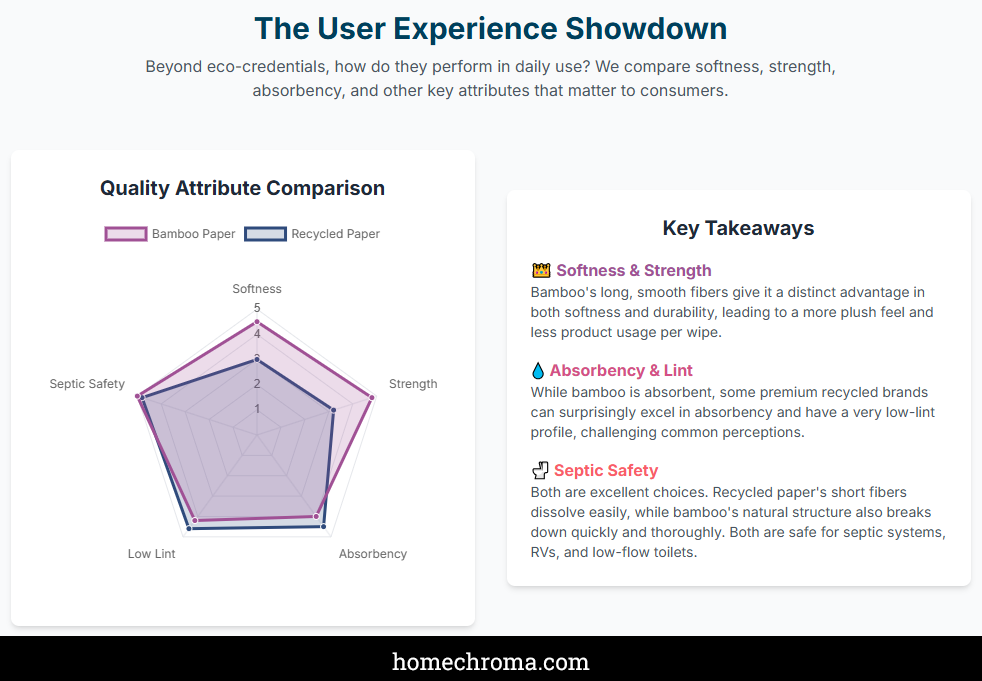
Softness Showdown
Bamboo wins here. Bamboo toilet paper is widely recognized for its natural softness, often described as providing a “plush experience” and being “gentle on sensitive skin”. This superior softness comes from bamboo fibers being naturally smoother than wood fibers.
Recycled paper has improved significantly, but some users still describe it as “thinner and less soft” or having a “rougher texture” due to shorter, mixed fibers.
Strength and Durability Face-Off
Again, bamboo takes the lead. Bamboo toilet paper is consistently praised for being “super strong,” with natural strength that means fewer sheets needed per use.
Recycled paper shows mixed results. While some users report it “holds up VERY well,” others describe it as “thinner” or “not very durable,” sometimes needing “3 times the amount” for satisfactory results.
The Practical Stuff: Septic Systems and Lint
Both types are septic-safe, but they behave differently:
Bamboo: Dissolves quickly and efficiently, produces less lint or dust Recycled: Shorter fibers aid in easier dissolution, making it good for low-flow toilets and RVs. Some brands claim superior absorbency and “no lint”
Cost Reality Check: Your Wallet vs. Your Values
Price Point Analysis
Recycled toilet paper wins on affordability. Prices typically range from $0.18 to $0.77 per 100 sheets, making it accessible for most budgets.
Bamboo toilet paper costs more upfront. Comparable bamboo rolls might cost $0.70 to $0.90 per roll versus $0.40 to $0.50 for standard rolls.
The Hidden Value Story
Here’s where it gets interesting. While bamboo costs more per roll, it’s often 3-ply compared to cheaper 1-ply alternatives, and you use fewer sheets per use. This superior durability can offset the higher upfront cost over time.
Market trends: 67% of Gen Z and Millennials are willing to pay 15-20% more for sustainable household products.
The Final Verdict: Which Should You Choose?
Both options beat traditional toilet paper hands down. Your choice depends on your priorities:
Choose Recycled If You Want:
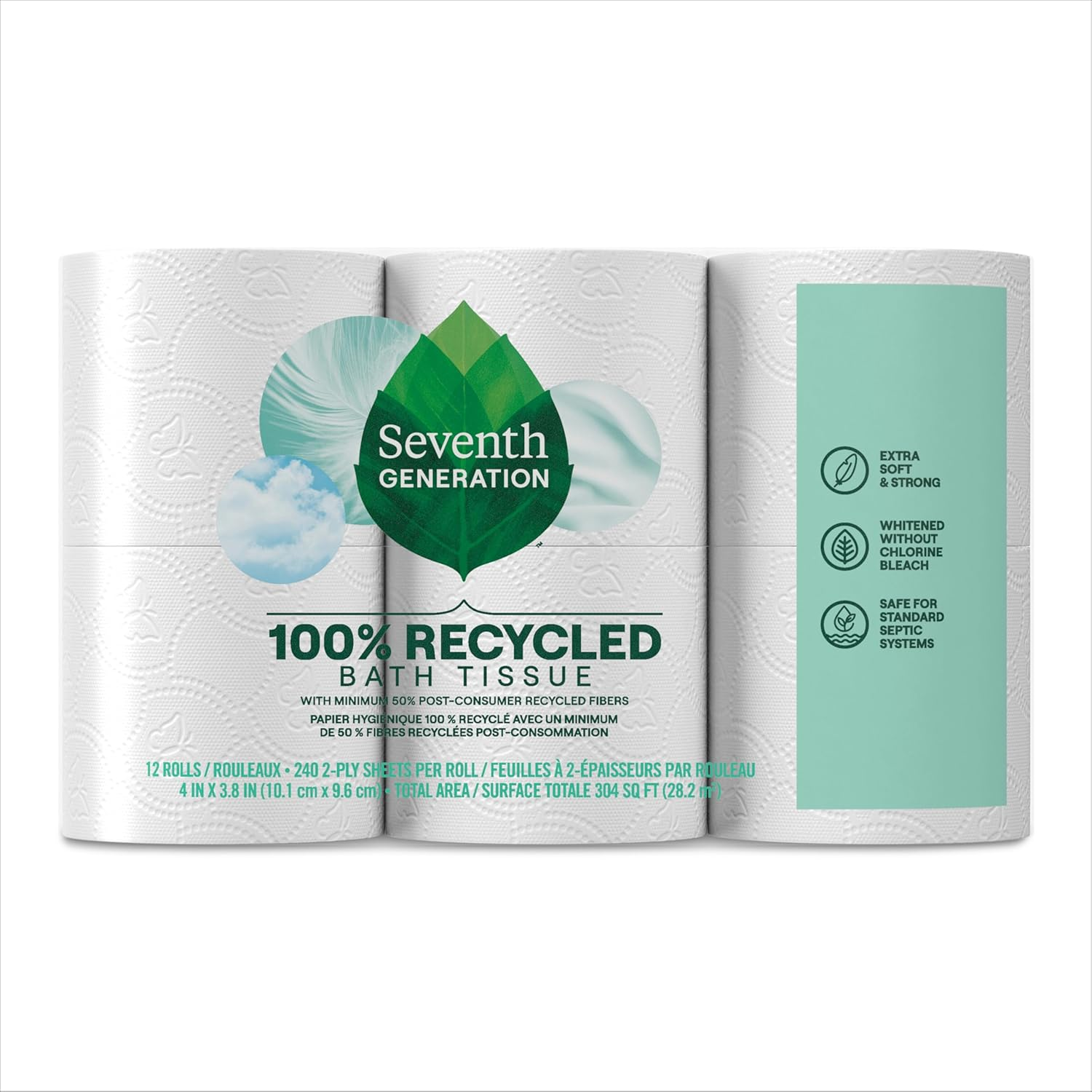
Seventh Generation Toilet Paper Recycled [click to view…]
- Lower upfront cost and wide availability
- Maximum waste diversion from landfills
- Easy shopping at regular stores
- Good septic performance for RVs and boats
Best pick: Look for brands with high post-consumer recycled content like Trader Joe’s, 365 by Whole Foods Market, or Natural Value
Choose Bamboo If You Want:
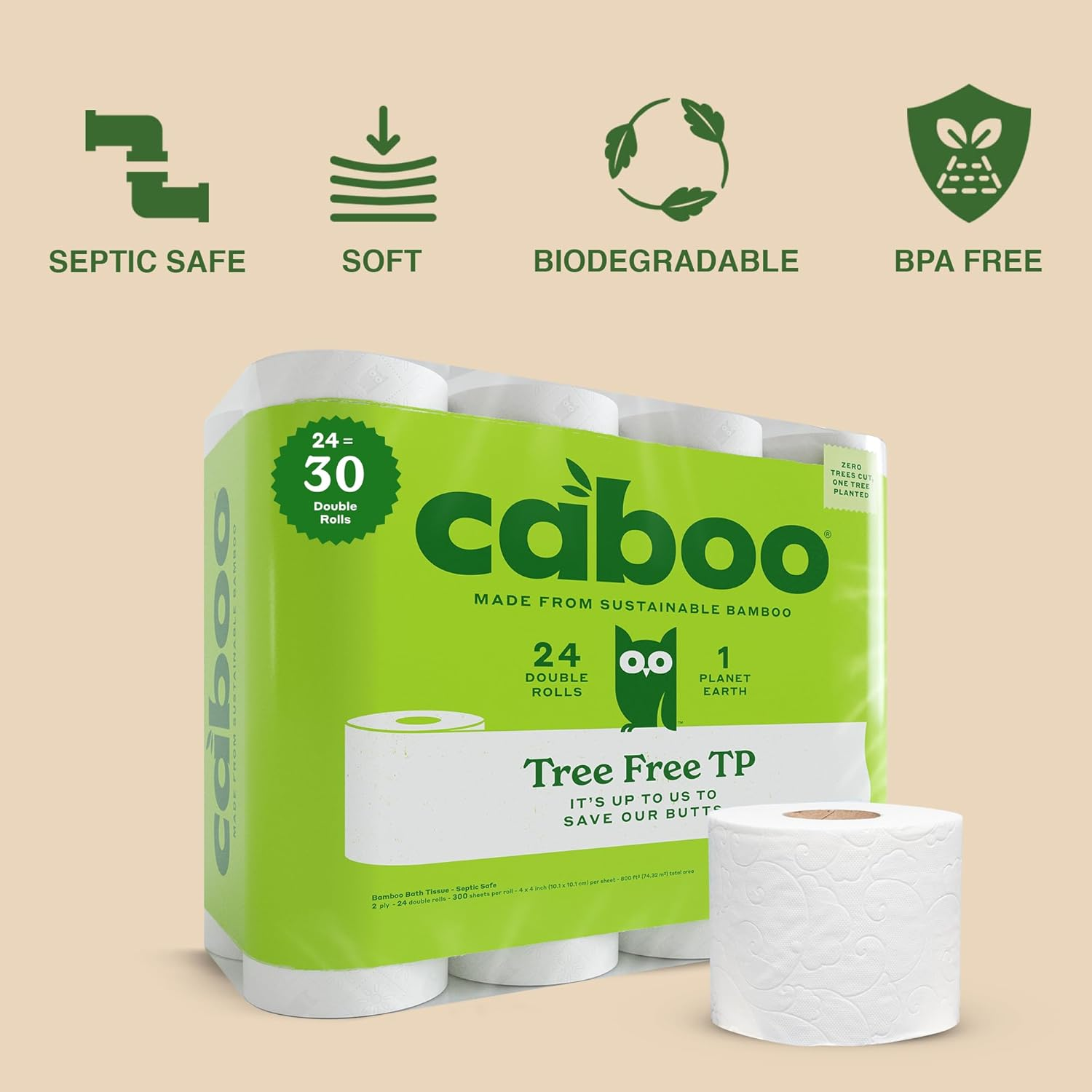
Caboo Tree Free Toilet Paper [click to view…]
- Superior softness and strength
- Cleanest chemical profile and minimal processing
- Lowest carbon footprint (with responsible sourcing)
- Premium user experience with fewer sheets needed
Best pick: Look for FSC-certified bamboo brands that source responsibly
For Maximum Environmental Impact:
Bamboo appears to offer the lowest overall environmental footprint when considering the full life cycle, especially from brands that co-locate processing near bamboo forests
For Budget-Conscious Households:
Recycled toilet paper with high post-consumer content and chlorine-free processing offers the best environmental bang for your buck
Take Action: Make the Switch Today
Your toilet paper choice matters more than you think. With Americans using an average of 96 rolls annually per person, switching to either option creates massive positive impact.
Start simple: Try one pack of either recycled or bamboo toilet paper next time you shop. Both are septic-safe and work in every bathroom.
Go deeper: Set up a subscription service to ensure you never run out while supporting sustainable brands consistently.
Spread the word: Share this information with friends and family. Market trends show growing consumer preference for sustainable options is driving real change in the industry.
The choice is yours – but now you know exactly what that choice means for your comfort, your wallet, and your planet.
Dora Decora is a biophilic interior design specialist and passionate blogger. With a deep commitment to integrating nature into living spaces, Dora specializes in creating environments that foster human-nature connections through thoughtful design elements. Her approach emphasizes sustainable materials, natural lighting, and organic patterns that enhance wellbeing and reduce environmental impact.
This post (https://homechroma.com/recycled-toilet-paper-vs-bamboo-toilet-paper) was originally published by Dora Decora on Home Chroma. As an Amazon Associates partner, we are compensated for all qualifying purchases.