Your kitchen storage choices directly impact your family’s health, your budget, and the planet. When you reach for that food storage bag, you’re making a decision that extends far beyond simple convenience. The battle between reusable silicone freezer bags and traditional Ziploc bags represents a fundamental choice between short-term ease and long-term benefits.
Most families use hundreds of plastic bags annually without considering the hidden costs. These aren’t just financial – they’re health-related and environmental too. This detailed comparison will show you exactly what each option offers, helping you make an informed decision based on facts, not marketing claims.
Material Safety: What’s Really Touching Your Food?
Silicone: The Stable Alternative Food-grade silicone consists primarily of non-toxic silica derived from sand. The FDA has rigorously tested and approved food-grade silicone for direct food contact, ensuring it meets stringent safety and quality standards. Unlike many plastics, high-quality silicone contains no BPA, phthalates, lead, or other harmful chemicals commonly found in traditional storage materials.
Key Safety Benefits of Silicone:

Stasher Premium Silicone Reusable Food Storage Bags [click to view…]
- Undergoes rigorous FDA testing to verify safety for food contact
- Temperature resistant from -60°C to 230°C (-76°F to 446°F)
- Strong resistance to chemicals including ammonia gas, fish oil, corn oil, sodium sulphate, vinegar and tartaric acid
- No microplastic shedding into food
- Water repellent, allowing it to remain resistant to mould or fungal decay
Important Quality Consideration: Not all silicone is created equal. Look for “platinum-cured” food-grade silicone with FDA certification. A simple test: twist a flat surface – if it turns white, it contains fillers that may compromise safety.
Traditional Plastics: The Hidden Concerns
Ziploc bags typically use polyethylene (LDPE or LLDPE) derived from petroleum. While generally considered safe for cold storage, plastic containers are not chemically inert and can release various substances into food, especially when heated or during prolonged contact.
Critical Safety Issues with Plastic:
- Chemical leaching increases with heat and acidic foods
- “BPA-free” doesn’t mean chemical-free – many contain BPS, which may be more toxic than BPA
- Additional chemicals can leach: phthalates, formaldehyde, acetaldehyde, heavy metals
- Microplastic contamination – plastic particles now found in human organs and bloodstream
- Never microwave food in plastic containers, even those labeled “microwave-safe”
Performance Showdown: Durability and Functionality
Lifespan and Reusability
Silicone Performance:

- Expected lifespan: 5-10+ years with proper care
- Can withstand over 10,000 open/close cycles without seal failure
- Temperature range: -40°F to 450°F (-40°C to 232°C)
- Resistant to cracking, hardening, or degradation
Ziploc Performance:

- Average uses per bag: 1.3 times
- Susceptible to punctures and seal degradation
- Limited temperature range (cold storage only)
- Single-use design with minimal reusability
Sealing and Food Preservation
Both options offer effective sealing for freezer storage, but with different mechanisms:
Silicone Advantages:

Stasher Premium Silicone Reusable Food Storage Bags [click to view…]
- Airtight, leak-proof seals prevent freezer burn
- Maintain seal integrity over thousands of uses
- Suitable for liquids without spill concerns
- Complete inversion possible for thorough cleaning
Ziploc Advantages:
- Immediate convenience with press-to-seal closures
- “Stay Open Design” for easy filling
- Variety of sizes readily available
- No learning curve required
Temperature Versatility: The Game-Changing Difference
This represents the most significant practical difference between the two options:
Silicone Capabilities:

Stasher Premium Silicone Reusable Food Storage Bags [click to view…]
- Freezer to oven transitions (-40°F to 450°F)
- Safe for microwave, dishwasher, and sous vide cooking
- No chemical leaching at high temperatures
- Streamlined meal prep workflows
Ziploc Limitations:
- Cold storage only for safety
- Heating plastic releases harmful chemicals
- Requires transferring food to other containers for reheating
- Limited cooking applications
Environmental Impact: The Real Cost
Resource Consumption
Silicone Production:
- Made from abundant silica (sand)
- Higher initial carbon footprint
- Manufacturing energy requirements front-loaded
Plastic Production:
- Petroleum-based (non-renewable resource)
- Contributes to oil demand and price fluctuations
- Continuous production for single-use items
Waste Generation Reality
The numbers tell a compelling story:
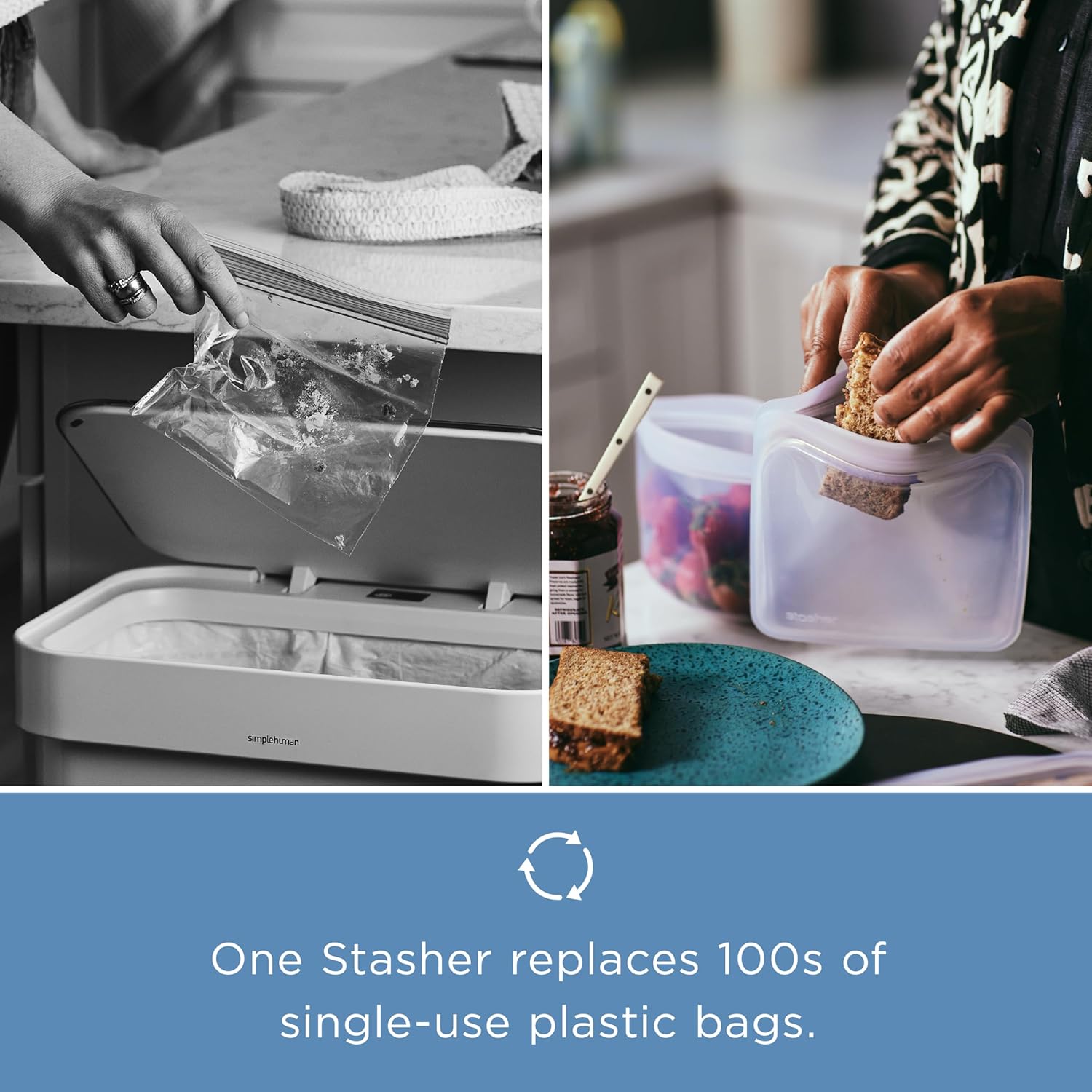
Stasher Premium Silicone Reusable Food Storage Bags [click to view…]
Silicone Impact:
- One bag replaces 1,500+ disposable bags over its lifetime
- Household waste reduction: 30 pounds of plastic annually
- Prevents 11 pounds of plastic from entering oceans yearly
- Breaks down into harmless silica, CO2, and water vapor
Plastic Impact:
- 12-minute average usage time per bag
- Takes 1,000 years to degrade in environment
- Releases toxic chemicals and greenhouse gases in landfills
- Creates persistent microplastics in ecosystems
- Marine life ingestion and entanglement risks
Recycling Challenges
Silicone Recycling:
- Requires specialized facilities (not curbside)
- Some manufacturers offer take-back programs
- Not infinitely recyclable
- Low actual recycling rates
Plastic Recycling:
- Must go to special retail drop-off locations
- Cannot use curbside recycling (clogs machinery)
- Only 6% of plastic waste actually gets recycled
- Contamination risks make food-grade recycling difficult
Financial Analysis: True Cost of Ownership

Long-Term Financial Impact
Annual Ziploc Costs:
- Estimated yearly expense: $107.90 for regular family use
- Cost over 5 years: $539.50
Silicone Investment:
- One-time purchase: $50-100 for complete set
- 5-year savings: $290-440
- 10-year savings: $580-980
Break-Even Point: Most families recover their silicone investment within 6-12 months through eliminated plastic bag purchases.
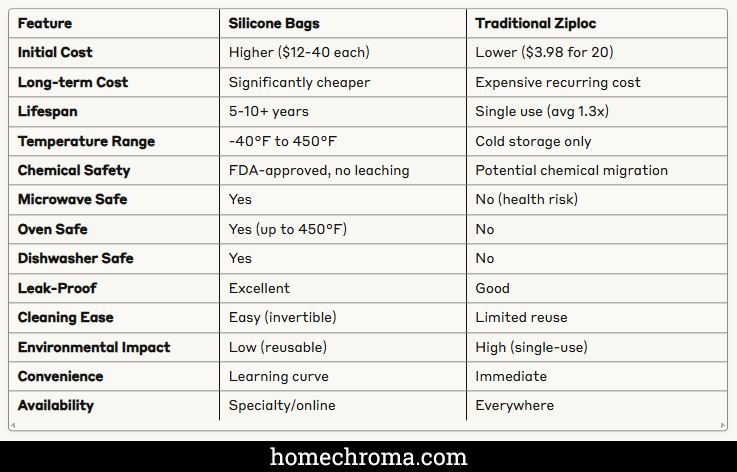
Complete Comparison Matrix
Targeted Recommendations
Choose Silicone If You:

Stasher Premium Silicone Reusable Food Storage Bags [click to view…]
- Prioritize health and chemical safety
- Want long-term financial savings
- Care about environmental impact
- Need temperature versatility (freezer to oven)
- Prefer durable, reusable products
- Cook frequently or meal prep
Choose Ziploc If You:
- Need immediate, low-cost solution
- Rarely use food storage bags
- Prioritize convenience over other factors
- Only need cold storage applications
- Want wide availability and variety
Hybrid Approach:
Many families benefit from using silicone for regular meal prep and heating applications while keeping some Ziploc bags for occasional use, travel, or situations where loss is possible.
Making the Switch: Practical Steps

Stasher Premium Silicone Reusable Food Storage Bag [click to view…]
For Silicone Adoption:
- Start with 2-3 different sizes to test preferences
- Look for FDA-certified, platinum-cured options
- Practice the sealing mechanism before first use
- Establish cleaning routine (dishwasher or hand wash)
- Track savings to reinforce positive decision
For Continued Plastic Use:
- Choose resin codes 1, 2, 4, or 5 (safer options)
- Never heat food in plastic containers
- Avoid reusing single-use containers
- Properly recycle at retail drop-off locations
- Minimize contact time with acidic foods
The Bottom Line
Your choice between silicone and Ziploc bags reflects your priorities: short-term convenience versus long-term benefits. While Ziploc bags offer immediate affordability and ease, silicone bags provide superior health safety, environmental benefits, and long-term financial savings.
The evidence strongly favors silicone for most households. The initial investment pays for itself within months while providing decade-long utility. The health benefits of avoiding plastic chemicals and the environmental impact of reducing single-use waste make silicone the clear winner for conscious consumers.
Take Action Today: Calculate your annual plastic bag spending. If you use more than one box monthly, switching to silicone will save money while protecting your family’s health and reducing environmental impact. Start with a basic set and experience the difference firsthand.
Your kitchen storage choice is an investment in your family’s future – make it count.
Dora Decora is a biophilic interior design specialist and passionate blogger. With a deep commitment to integrating nature into living spaces, Dora specializes in creating environments that foster human-nature connections through thoughtful design elements. Her approach emphasizes sustainable materials, natural lighting, and organic patterns that enhance wellbeing and reduce environmental impact.
This post (https://homechroma.com/silicone-freezer-bags-vs-ziploc-comparison-guide) was originally published by Dora Decora on Home Chroma. As an Amazon Associates partner, we are compensated for all qualifying purchases.