Are you tired of worrying about toxic chemicals leaching from your cookware into your food? You’re not alone. The growing awareness of PFAS, PFOA, and other “forever chemicals” in traditional non-stick pans has sparked a revolution in kitchen safety. But finding truly non-toxic alternatives that still deliver excellent non-stick performance can feel overwhelming.
Here’s the truth: several genuinely safe options exist that won’t compromise your health or cooking results. Let’s cut through the marketing noise and examine the best non-toxic non-stick cookware based on scientific evidence and real-world performance.
Understanding the Chemical Concerns
The “Forever Chemicals” Problem
Traditional non-stick cookware contains PFAS (Per- and Polyfluoroalkyl Substances) – a family of over 10,000 synthetic compounds that never break down naturally. These include:
- PFOA (Perfluorooctanoic Acid): Phased out of US cookware by 2013 due to health concerns
- PTFE (Polytetrafluoroethylene): The chemical behind Teflon, still widely used
- Newer PFAS compounds: GenX and PFBS, whose long-term effects remain unknown
Health risks linked to these chemicals include:
- Increased cancer risk (testicular, kidney, liver, thyroid)
- Hormonal disruptions
- Immune system suppression
- Fertility problems
- Developmental delays in children
Critical distinction: “PFOA-free” doesn’t mean “PFAS-free.” Many manufacturers simply replaced PFOA with other PFAS compounds, maintaining the same underlying concerns.
Top 5 Non-Toxic Non-Stick Cookware Options
1. Ceramic-Coated Cookware (Best Overall for Ease)
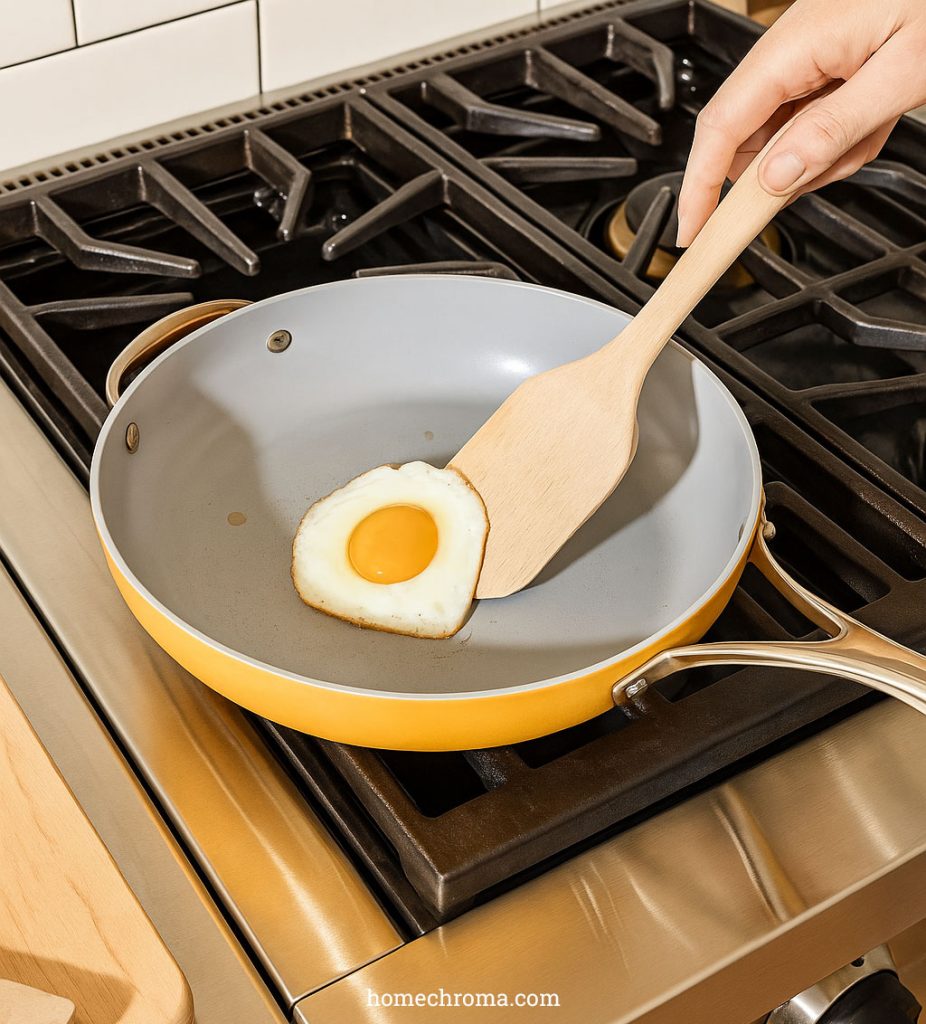
How it works: Uses sol-gel technology derived from silica (sand and water) to create a naturally non-stick surface without fluoropolymers.
Top picks:
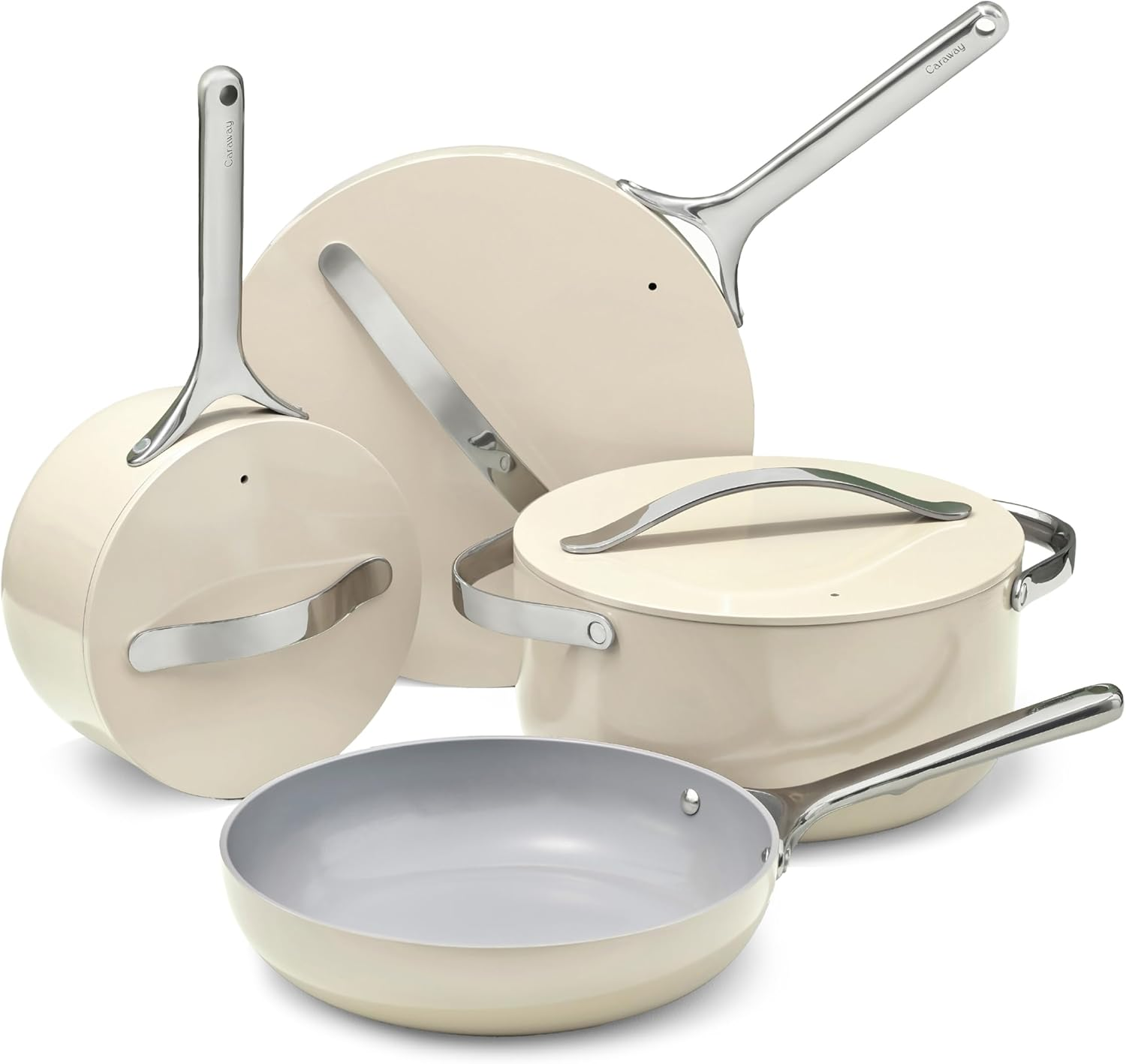
Caraway Nonstick Ceramic Cookware Set [click to view…]
- Caraway Cookware: Excellent non-stick performance, stylish design, explicitly PFAS/PFOA/PTFE/lead/cadmium-free
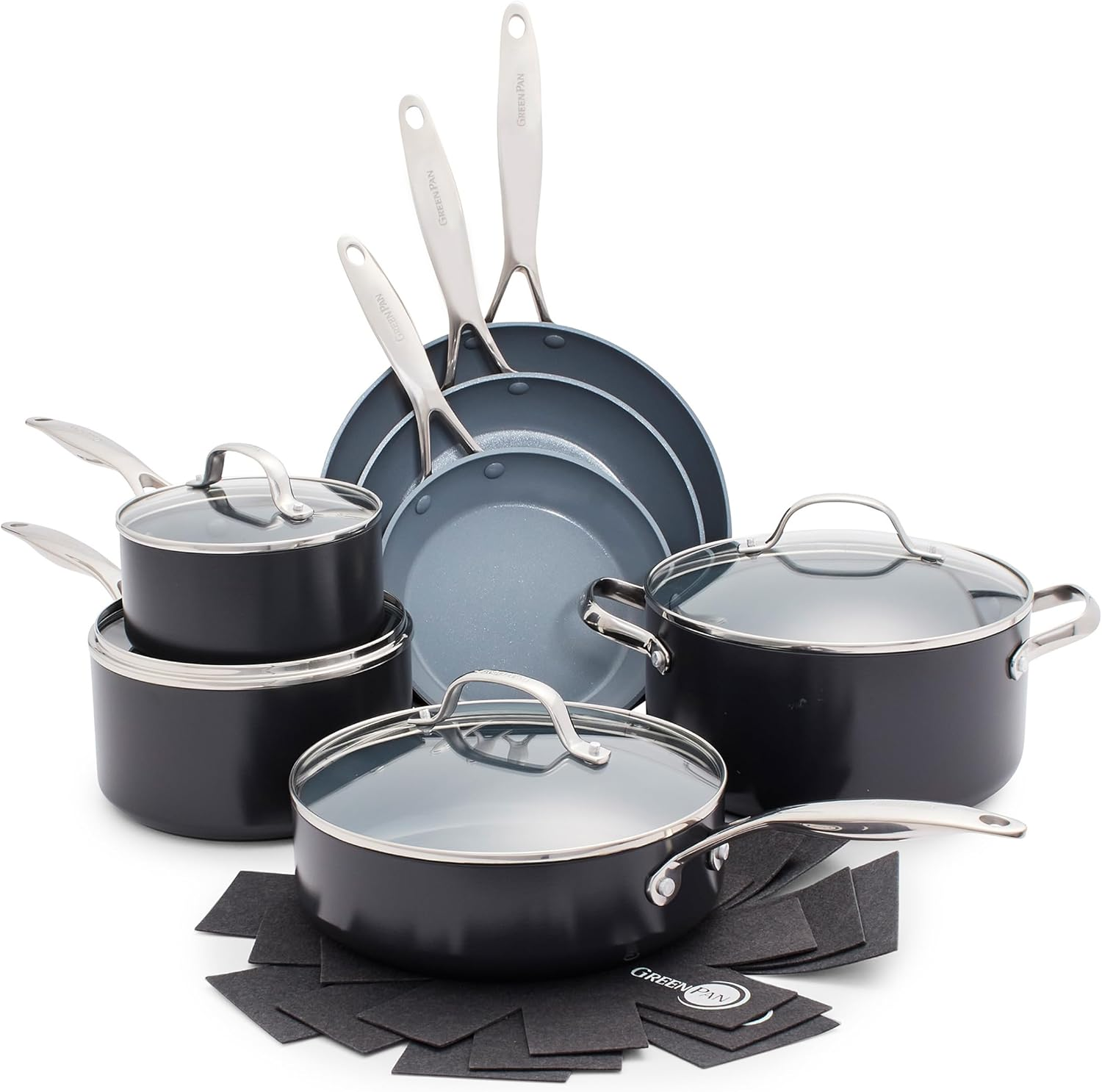
GreenPan Valencia Pro Hard Anodized 11 Piece Cookware [click to view…]
- GreenPan Valencia Pro: Diamond-reinforced ceramic coating, scratch-resistant, recommended by America’s Test Kitchen
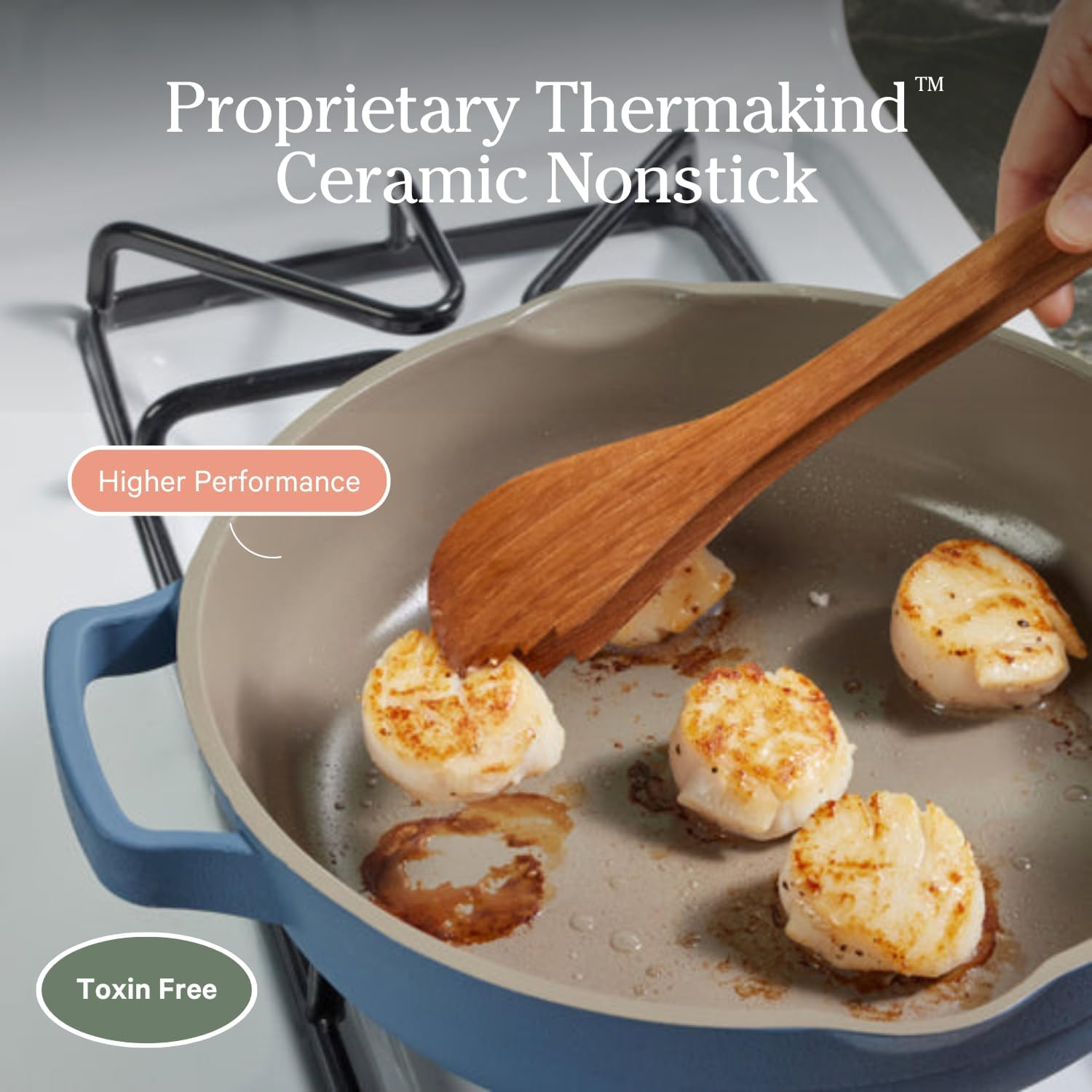
Our Place Always Pan 2.0-10.5” [click to view…]
- Our Place Always Pan: Multi-use design, PFAS-free ceramic coating, oven-safe to 450°F
Pros:
- Effortless food release
- Easy cleanup
- Safe even if coating chips
- Lightweight
Cons:
- Shorter lifespan than traditional non-stick
- Requires gentle care
- Performance degrades over time
2. Seasoned Cast Iron (Best for Durability)
How it works: Develops natural non-stick properties through polymerized oil layers baked onto the iron surface.
Top picks:
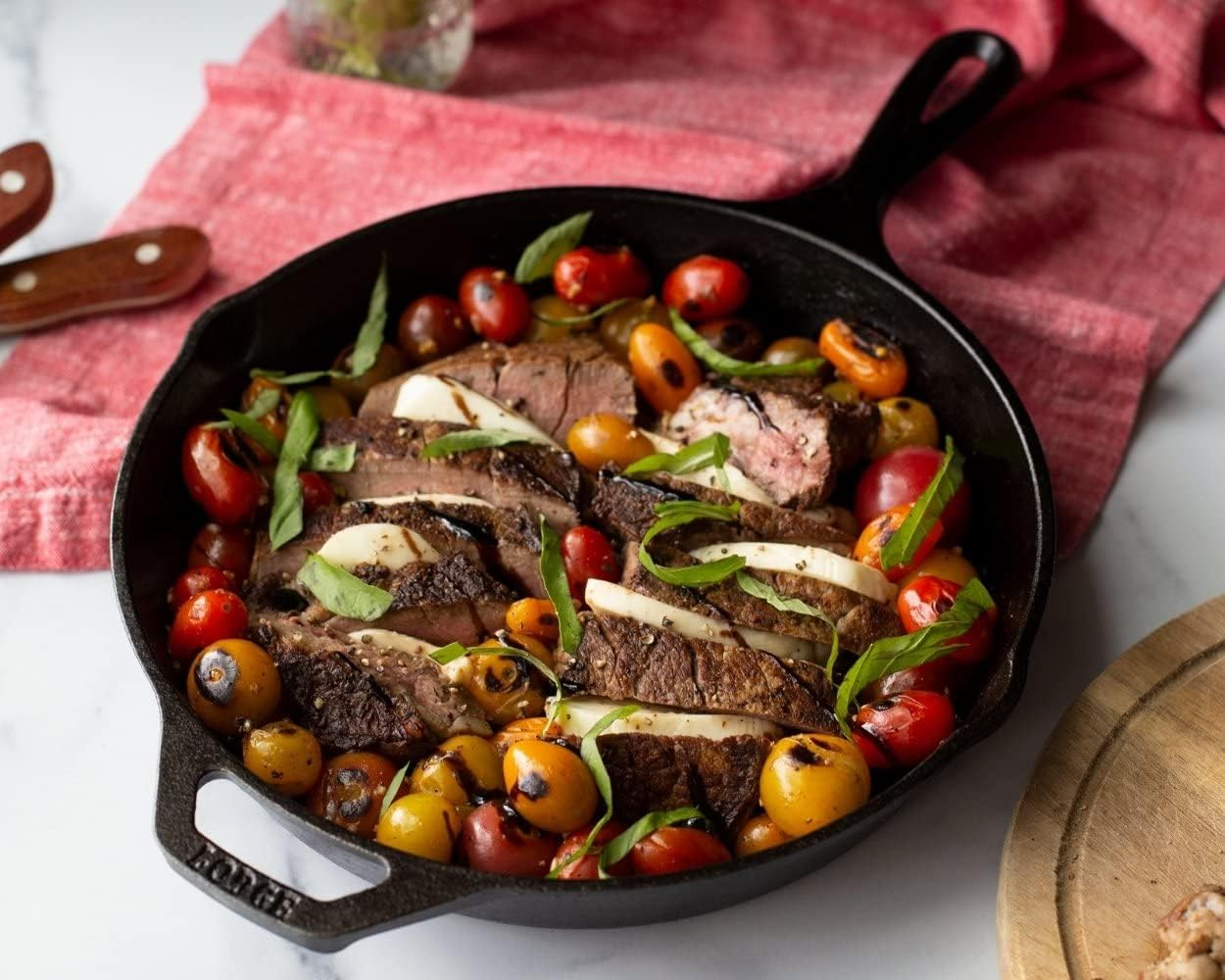 Lodge 10.25 Inch Cast Iron Skillet [click to view…]
- Lodge Cast Iron Skillets: Pre-seasoned, ready to use, exceptional value
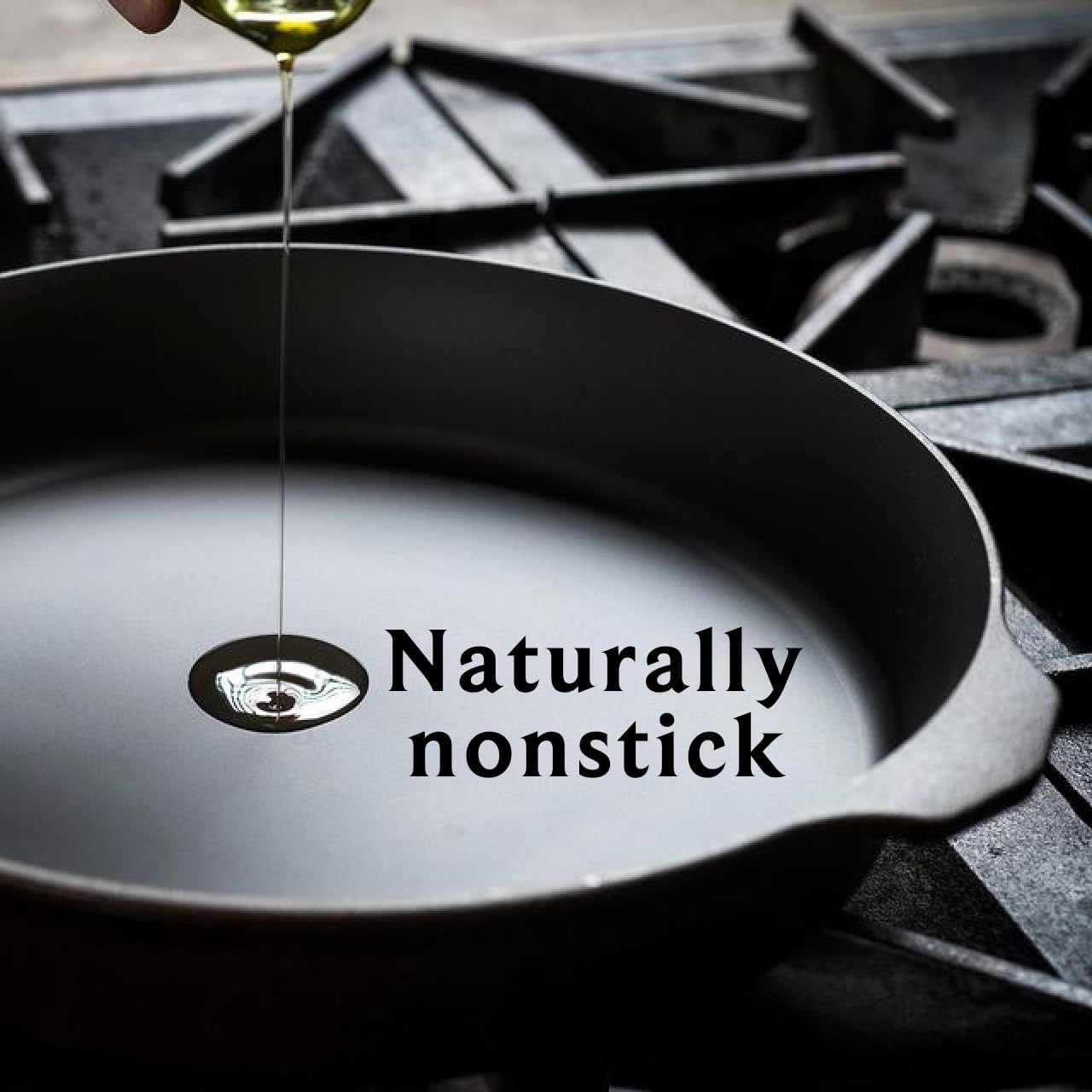 Field Company Starter Set [click to view…]
- Field Company: Lighter weight, smoother surface
Pros:
- Lasts generations with proper care
- Improves with use
- Excellent heat retention
- Can boost iron intake (beneficial for some)
Cons:
- Heavy and requires skill to handle
- Demands consistent seasoning maintenance
- Can leach iron (concerning for those with iron overload conditions)
- Rusts if not properly dried
3. Carbon Steel (Best for Responsive Cooking)
How it works: Similar to cast iron but lighter and more responsive, develops non-stick properties through seasoning.
Top pick:
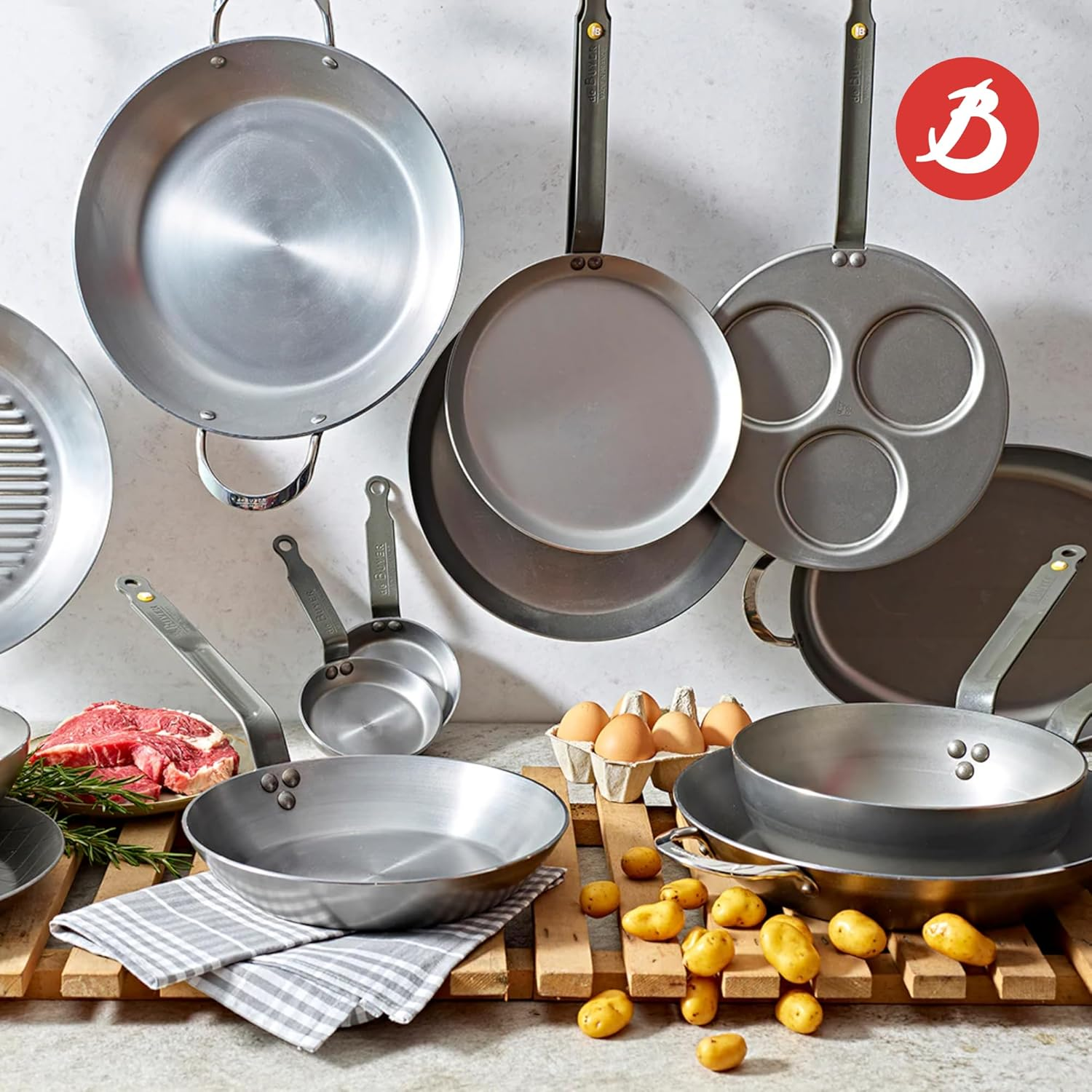 De Buyer MINERAL B Carbon Steel Fry Pan [click to view…]
- De Buyer Mineral B: Professional-grade, lighter than cast iron, excellent heat responsiveness
Pros:
- Lighter than cast iron
- Faster heating and cooling
- Natural non-stick development
- Professional kitchen favorite
Cons:
- Requires seasoning maintenance
- Initial learning curve
- Higher upfront cost
4. Hard Anodized Aluminum (Best Balance)
How it works: Electrochemical process creates a hardened, non-reactive aluminum oxide surface, often paired with ceramic coating.
Pros:
- Excellent heat distribution
- Durable and scratch-resistant
- No aluminum leaching
- Lighter than cast iron
Cons:
- Applied coating eventually wears
- Avoid very high temperatures
- More expensive than basic options
5. High-Grade Stainless Steel (Most Versatile)
How it works: Achieves non-stick results through proper preheating and fat management rather than coatings.
Top picks:
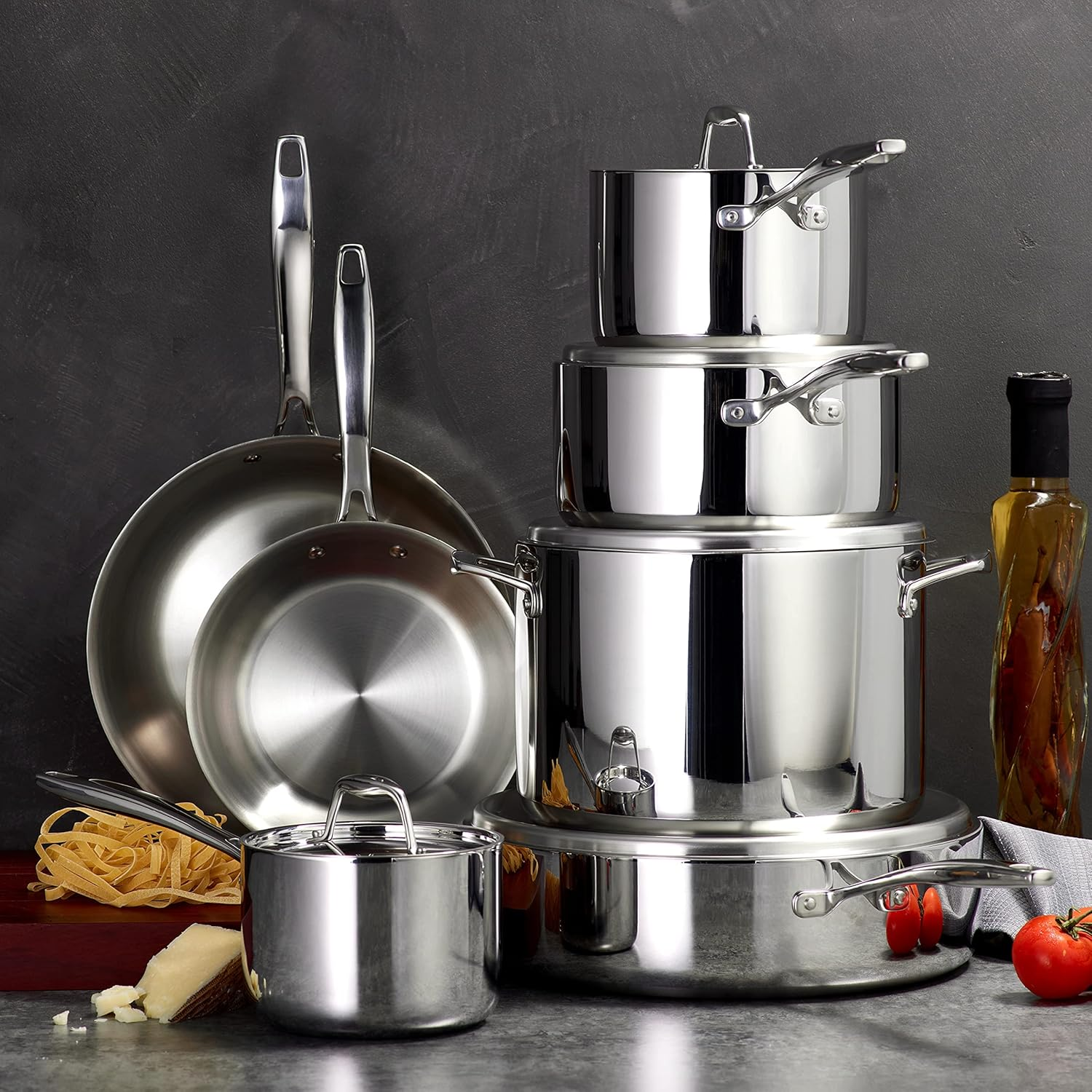
Tramontina Tri-Ply Clad Stainless Steel 12-Piece [click to view…]
- Tramontina Tri-Ply: Excellent value, professional performance
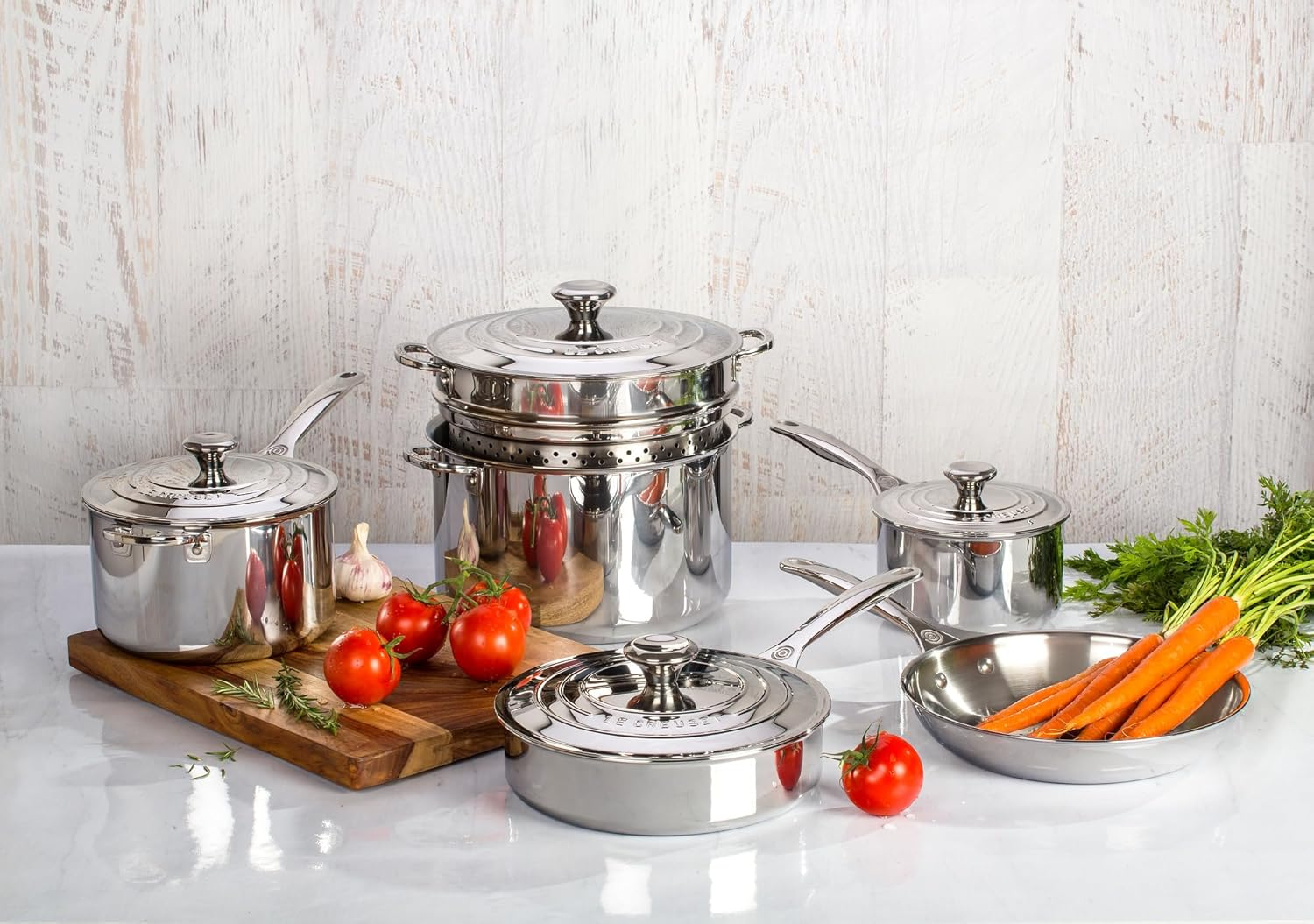 Le Creuset Tri-Ply Stainless Steel 7 pc. Cookware Set [click to view…]
- Le Creuset Stainless Steel: Premium quality, lifetime durability
Pros:
- Extremely durable
- Non-reactive with acidic foods
- Dishwasher safe
- High heat tolerance
Cons:
- Requires cooking technique for non-stick results
- More challenging cleanup if food sticks
- Heavier than coated options
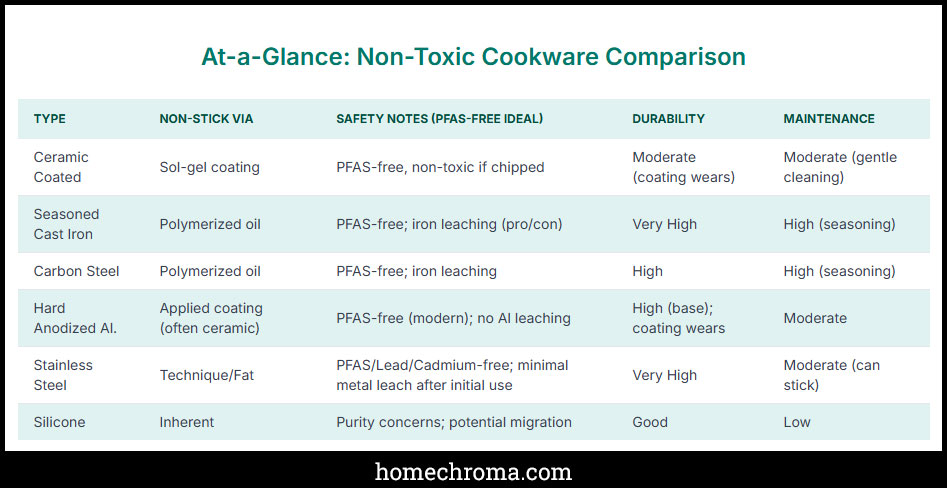
Comparison Table: At-a-Glance Guide
Essential Buying Guidelines
Look for These Certifications
- NSF International: Rigorous third-party testing
- California Prop 65 compliant: Stringent safety standards
- Explicitly PFAS-free: Not just PFOA-free
Avoid These Red Flags
- Vague “non-toxic” claims without specifics
- Imported ceramic with unknown glaze composition
- Brightly colored enamel (may contain cadmium)
- Missing ingredient lists for silicone products
Care Tips for Maximum Longevity
Universal Guidelines
- Temperature control: Avoid extreme high heat for coated pans
- Utensil choice: Use wood or silicone tools
- Hand washing: Recommended for most non-toxic options
- Proper storage: Use pan protectors when stacking
Specific Care by Type
- Ceramic: Low-medium heat, gentle cleaning, avoid temperature shock
- Cast Iron/Carbon Steel: Season regularly, dry immediately, avoid soap myths
- Hard Anodized: Follow temperature limits, gentle cleaning
- Stainless Steel: Preheat properly, use adequate fat, deglazing for cleanup
Making Your Decision
Choose ceramic-coated if you want immediate non-stick convenience with minimal learning curve.
Choose cast iron or carbon steel if you’re willing to invest time in maintenance for lifetime durability and natural non-stick development.
Choose hard anodized aluminum if you want a balance of non-stick performance and durability.
Choose stainless steel if you prioritize ultimate versatility and don’t mind mastering technique-based non-stick cooking.
The Bottom Line
The non-toxic cookware market has matured significantly, offering excellent alternatives to traditional non-stick pans. While each option involves trade-offs between convenience, durability, and maintenance requirements, you no longer need to choose between safety and performance.
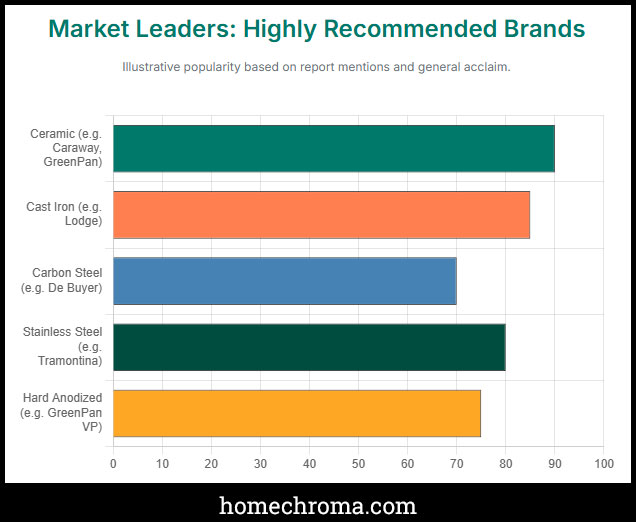
For most home cooks, ceramic-coated options like Caraway or GreenPan provide the best combination of safety, performance, and ease of use. Those seeking maximum durability should consider cast iron, while professional cooks may prefer the responsiveness of carbon steel or the versatility of high-grade stainless steel.
The key is matching your choice to your cooking style, maintenance willingness, and health priorities. With proper care, any of these options will serve you well while keeping toxic chemicals out of your kitchen and your food.
Remember: the “best” non-toxic cookware is the one you’ll actually use and maintain properly. Choose based on your real cooking habits, not aspirational ones, and you’ll enjoy safe, effective non-stick cooking for years to come.
Dora Decora is a biophilic interior design specialist and passionate blogger. With a deep commitment to integrating nature into living spaces, Dora specializes in creating environments that foster human-nature connections through thoughtful design elements. Her approach emphasizes sustainable materials, natural lighting, and organic patterns that enhance wellbeing and reduce environmental impact.
This post (https://homechroma.com/what-is-the-best-non-stick-cookware-that-is-non-toxic) was originally published by Dora Decora on Home Chroma. As an Amazon Associates partner, we are compensated for all qualifying purchases.